Bryopsis (frondes tipo pena): identificação e tratamento
Frondes verde-escuras de formato nitidamente achatado, parecidas com samambaia, crescendo na rocha viva — Bryopsis, notoriamente persistente e quase sempre ignorada pelos pastadores.
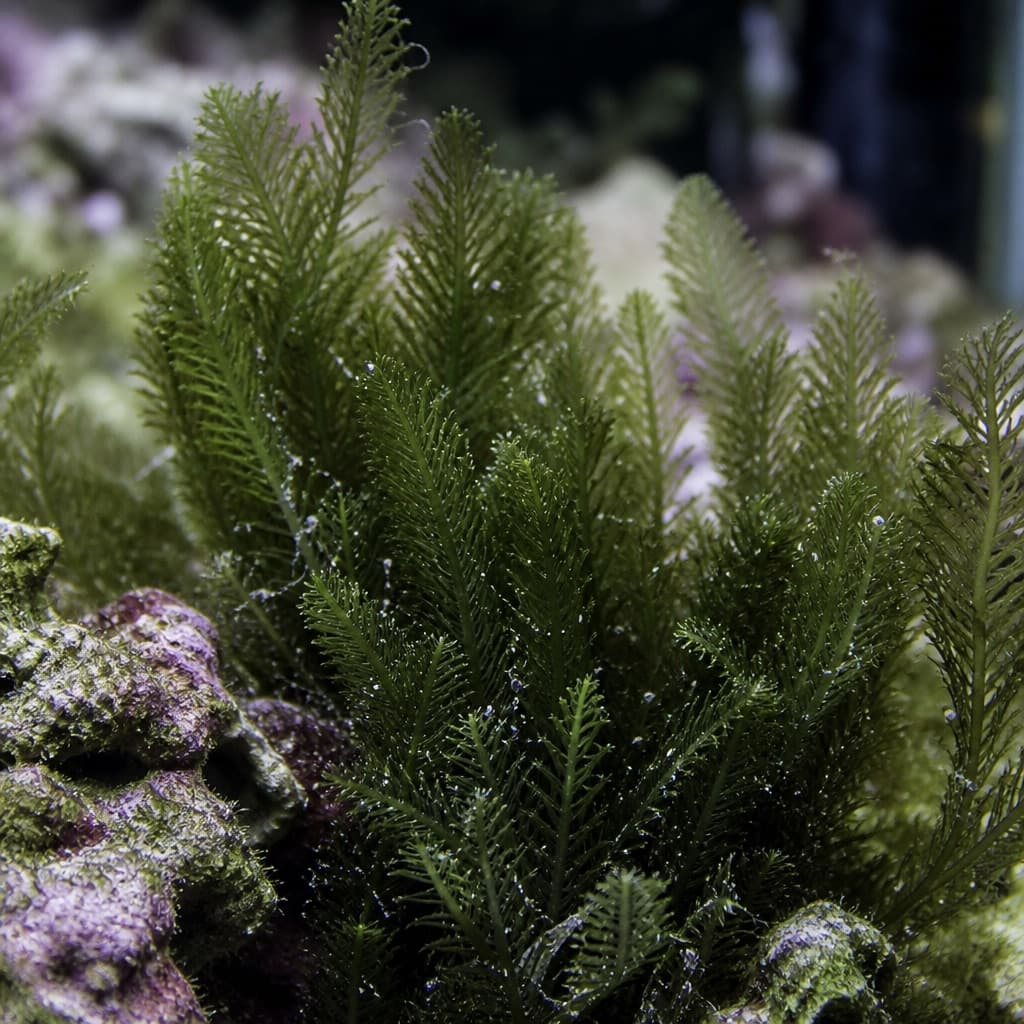
Bryopsis (frondes tipo pena)
Bryopsis (frondes tipo pena): a Studio Scaped acompanha este tipo de alga em aquários marinhos. Este guia mostra como diferenciá-lo dos tipos que mais causam confusão, quais condições o provocam, quais medições vale fazer antes de tratar e como impedir que ele volte. Na maioria dos aquários, o fator decisivo é a luz em relação ao que suas plantas realmente conseguem usar.
Como identificar bryopsis (frondes tipo pena)
Frondes verde-escuras de formato nitidamente achatado, parecidas com samambaia, crescendo na rocha viva — Bryopsis, notoriamente persistente e quase sempre ignorada pelos pastadores.
Compare a foto acima com o seu aquário antes de tratar: vários tipos de alga se parecem à primeira vista, mas respondem a correções completamente diferentes, e tratar o tipo errado custa semanas. Se estiver em dúvida, o guia completo de identificação coloca os tipos comuns lado a lado.
Por que ela aparece
Alga é sintoma, não a doença. Neste caso, o gatilho usual é normalmente introduzida em rocha viva, frags ou macroalgas. A lista completa de causas que vale descartar:
- Normalmente introduzida em rocha viva, frags ou macroalgas
- Nutrientes elevados sustentando o crescimento rápido depois de estabelecida
- Poucos pastadores a tocam, então ela supera o crescimento vizinho
- Fragmentos rebrotam de qualquer fixação deixada na rocha
O que medir, e o que os valores significam
| O que medir | Alvo típico | O que um valor fora do alvo indica |
|---|---|---|
| Nitrato (NO₃⁻) | 5–20 ppm plantado · abaixo de 10 ppm em recife | Nitrato subindo indica mais resíduo entrando do que as trocas de água e as plantas exportam. Perto de zero em um aquário plantado, as plantas passam fome e as algas levam vantagem. |
| Fosfato (PO₄³⁻) | 0,5–1,5 ppm plantado · abaixo de 0,1 ppm em recife | Costuma levar a culpa pelas algas, mas zerá-lo geralmente sai pela culatra: as plantas param primeiro e a alga ocupa o espaço. |
| Intensidade de luz e fotoperíodo | 6–8 horas para a maioria dos aquários plantados | Luz além do que suas plantas conseguem usar sobra para as algas. Reduza a duração antes da intensidade — é a variável mais fácil de controlar. |
| Filtragem e circulação | sem pontos mortos; mídia limpa conforme a rotina | Áreas de pouca circulação acumulam detritos e é onde muitos problemas começam. Mídia entupida reduz a vazão real bem antes de parecer suja. |
Faça essas medições antes de mudar qualquer coisa. Tratar sem uma linha de base deixa você sem saber qual correção funcionou, e problemas de alga costumam ter mais de uma causa contribuindo.
Tratamento e correções
- Remova a rocha afetada e limpe-a fora do aquário principal, quando possível
- Controle os nutrientes por exportação, e não por corte súbito
- A remoção manual sozinha raramente funciona, porque a fixação permanece
- Protocolos de magnésio elevado são muito discutidos, mas arriscados e dependentes do produto — pesquise a fundo e consulte um especialista antes
- Inspecione e ponha em quarentena rochas e frags novos antes de adicioná-los
Como evitar que volte
- Reduza o fotoperíodo antes da intensidade; a luz que suas plantas não usam sobra para as algas
- Garanta que a circulação alcance o aquário inteiro — os pontos mortos são onde isto se instala primeiro
- Dose de acordo com a sua massa de plantas, não até zero — matar o aquário de fome mata as plantas primeiro
- Ponha plantas e hardscape novos em quarentena, que é como a maior parte das algas chega ao aquário
Depois de corrigida a causa, espere de duas a quatro semanas até o recuo visível — o crescimento existente não desaparece junto com a causa, então remova o que puder manualmente e avalie o sucesso pelo surgimento (ou não) de crescimento novo.
Guias relacionados
- Cladophora — frequentemente confundida com este tipo
- Dinoflagelados — frequentemente confundida com este tipo
- Todos os tipos de alga, lado a lado — para identificação
- Iluminação e espectro
Perguntas frequentes
Bryopsis (frondes tipo pena): em quanto tempo o problema desaparece?
Espere de duas a quatro semanas depois de corrigida a causa. Remova a rocha afetada e limpe-a fora do aquário principal, quando possível O crescimento existente geralmente precisa ser removido à mão — corrigir as condições impede que se espalhe, mas não dissolve o que já está lá.
Os comedores de algas resolvem isso por mim?
Pastadores ajudam a manter limpo um aquário já corrigido; raramente consertam um aquário não corrigido. A maioria dos pastadores evita bryopsis. Caranguejos esmeralda às vezes atacam; elevar o magnésio é o caminho mais confiável.
Devo cortar os nutrientes para matá-la de fome?
Geralmente sai pela culatra. As plantas param antes das algas, e os nutrientes que elas deixam de usar ficam disponíveis justamente para as algas. Equilibre luz, CO₂ e dosagem conforme a sua massa de plantas, em vez de zerar a fertilização.