Kit de teste para aquário
Kits de reagente líquido versus tiras, quais parâmetros testar e com que frequência, kit master versus kits de recife, e como ler os resultados com precisão em água doce e marinha.
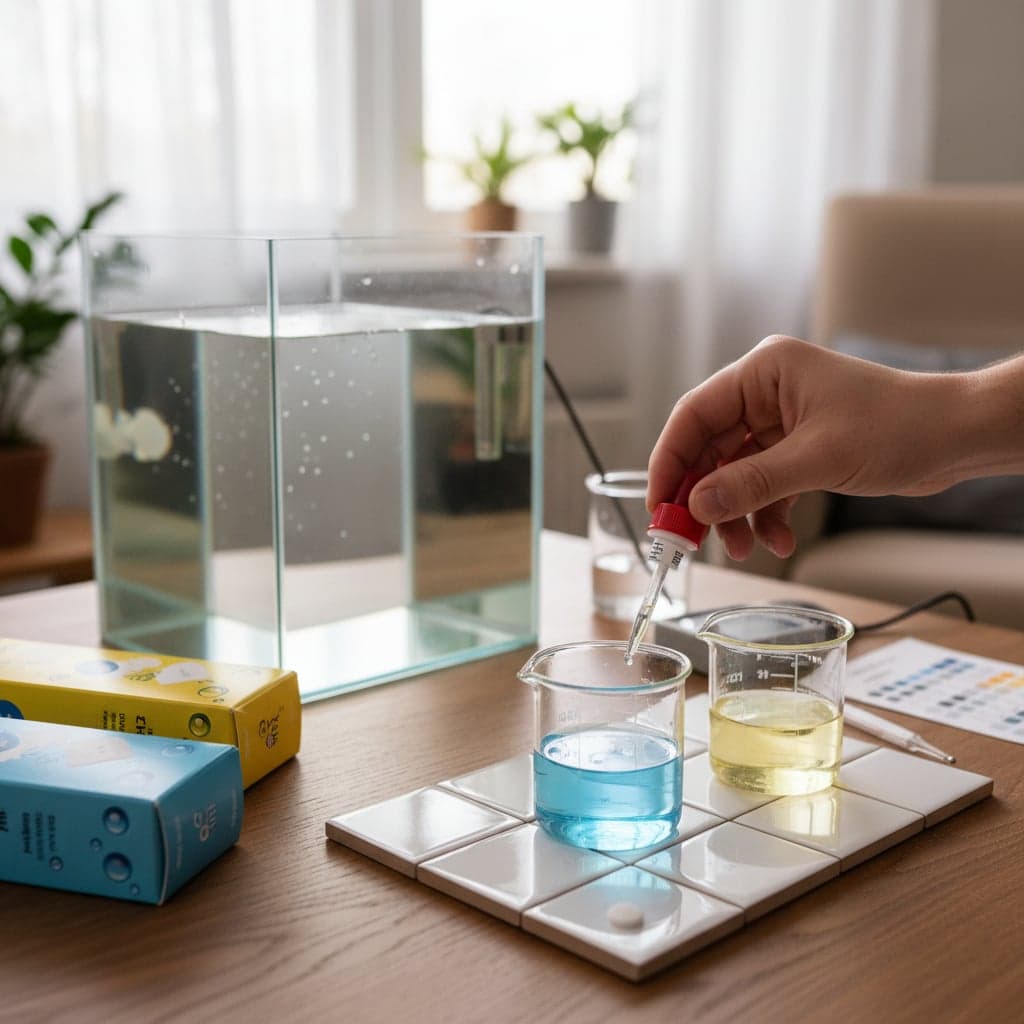
Kit de teste para aquário
Não dá para controlar o que não se mede. Um kit de teste confiável é a ferramenta mais importante do aquarismo — mais valiosa que qualquer gadget. Os parâmetros desviam em silêncio; os peixes só mostram estresse depois que o dano está feito.
O que testar
Água doce (todo aquário)
| Parâmetro | Por quê | Alvo (comunitário típico) |
|---|---|---|
| Amônia | Tóxica; indica falha do ciclo ou superlotação | 0 ppm |
| Nitrito | Tóxico; mesma coisa | 0 ppm |
| Nitrato | Fim do ciclo do nitrogênio; alimenta algas | < 20 ppm (menos para camarões) |
| pH | Afeta a saúde dos peixes e a dosagem de CO₂ | Depende da espécie |
Água doce plantada / avançada
| Parâmetro | Por quê |
|---|---|
| GH / KH | Dureza e estabilidade de pH — veja GH e KH |
| Fosfato | Impulsiona algas em aquários high-tech |
| TDS | Camarões e mistura de água de osmose — veja TDS |
Marinho / recife
| Parâmetro | Por quê |
|---|---|
| Salinidade | Base crítica |
| Alcalinidade, cálcio, magnésio | Saúde dos corais — veja química de recife |
| Fosfato / nitrato | Algas e estresse dos corais |
Líquido versus tiras de teste
| Líquido (estilo API) | Tiras | |
|---|---|---|
| Precisão | Maior para amônia, nitrito e nitrato | Suficiente para conferências rápidas |
| Custo por teste | Menor em volume | Maior |
| Rapidez | 5–10 minutos | Segundos |
| Melhor para | Ciclagem, problemas, recife | Monitoramento rápido diário |
Para ciclar um aquário novo ou investigar a morte de peixes, use sempre testes líquidos de amônia e nitrito.
Kits master versus frascos individuais
- Kit master de água doce — amônia, nitrito, nitrato, pH (faixa alta); cobre 90% das necessidades
- Kit GH/KH — essencial para camarões, acarás-disco e aquários plantados
- Kit de recife — alcalinidade, cálcio, magnésio; acrescente aos kits de água doce para o marinho
- Frascos de parâmetro único — reponha o que você mais usa sem recomprar o kit inteiro
Rotina de testes
| Situação | Frequência |
|---|---|
| Aquário novo / ciclando | Amônia + nitrito diariamente até ambos zerarem |
| Comunitário estabelecido | Nitrato semanal; pH e GH/KH mensais |
| Aquário com problema (algas, mortes) | Painel completo na hora; repita depois das mudanças |
| Recife com corais | Alcalinidade 2–3× por semana; Ca semanal; Mg mensal |
| Após medicação | Amônia e nitrito diariamente — alguns remédios prejudicam as bactérias |
Registre os resultados no Rastreador de Aquário para identificar tendências antes das crises.
Como ler os resultados com precisão
- Compare com a cartela sob luz do dia — luz artificial distorce as cores
- Espere o tempo todo — agitar o frasco nº 2 do nitrato por 30 segundos faz diferença
- Enxágue os tubos com água do aquário — água da torneira contamina as amostras
- Kits vencidos mentem — troque frascos com mais de 3 anos ou após uso intenso
- Confira resultados estranhos — repita o teste antes de grandes intervenções
Erros comuns
- Testar só nitrato — picos de amônia matam da noite para o dia
- Ignorar o KH em aquários plantados — o pH despenca após adições de CO₂
- Usar tiras durante a ciclagem — falsos negativos atrasam a reação
- Testar logo após a troca de água — espere 30–60 minutos para homogeneizar
Perguntas frequentes
Com que frequência devo testar?
Semanalmente em um aquário estabelecido, e diariamente durante a ciclagem ou depois de qualquer problema. O valor está na tendência, e não na leitura isolada — um nitrato de 20 ppm significa algo bem diferente se na semana passada era 5 ou se era 40.
As tiras de teste são precisas o bastante?
Elas servem para uma conferência rápida sobre se algo mudou, e são realmente ruins justamente nas leituras que mais importam. Amônia e nitrito exigem testes líquidos, já que uma tira não distingue de forma confiável o zero das leituras baixas — porém letais — que matam peixes.
Por que minhas leituras diferem do teste da loja?
Normalmente é idade do reagente ou técnica, e não um dos resultados estar errado. Kits vencem — confira a data no frasco — e os testes de nitrato em especial exigem que o segundo reagente seja agitado com força pelo tempo indicado, ou leem baixo. Teste a mesma amostra duas vezes antes de acreditar em um resultado surpreendente.