Filtro interno
Filtros internos para acuarios pequeños, cuarentena y alevines: modelos de esponja y de compartimentos, ajuste de caudal, mantenimiento y cuándo pasar a canister o mochila.
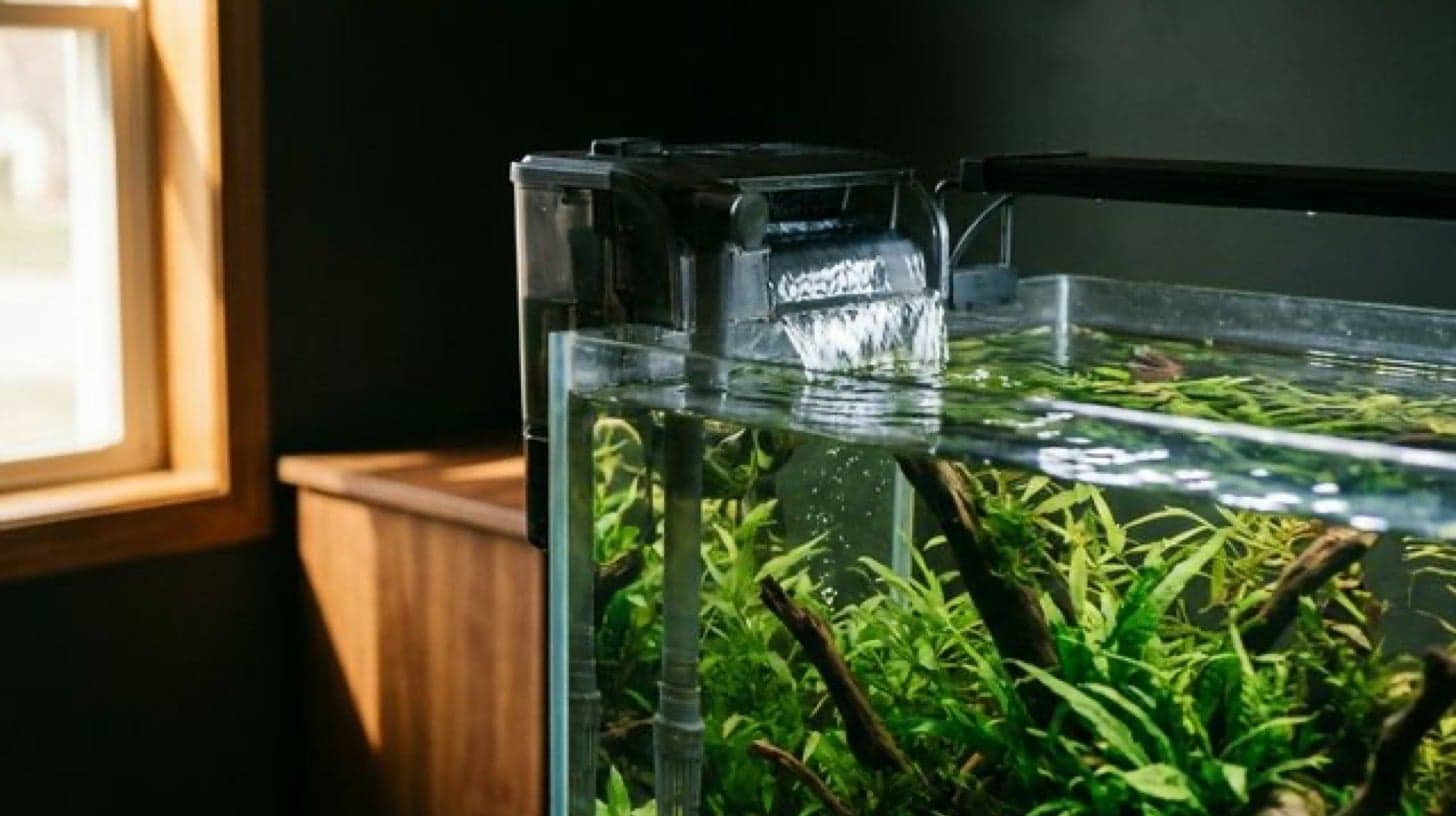
Filtro interno
Un filtro interno va dentro del acuario, movido por un motor sumergido. Es la opción por defecto para acuarios pequeños, cuarentena, acuarios hospital y montajes de cría, donde la fontanería externa resulta poco práctica.
Cómo funciona
Una bomba aspira el agua a través de una esponja mecánica (y a veces carbón o material cerámico) y la devuelve por una boquilla de salida. La mayoría de modelos incluye un venturi de aire que añade agitación superficial para oxigenar.
Aspiración por esponja ──► bomba ──► boquilla de salida ──► acuario
       │
       └── cámara opcional de carbón / cerámica
Tipos
| Estilo | Características | Mejor para |
|---|---|---|
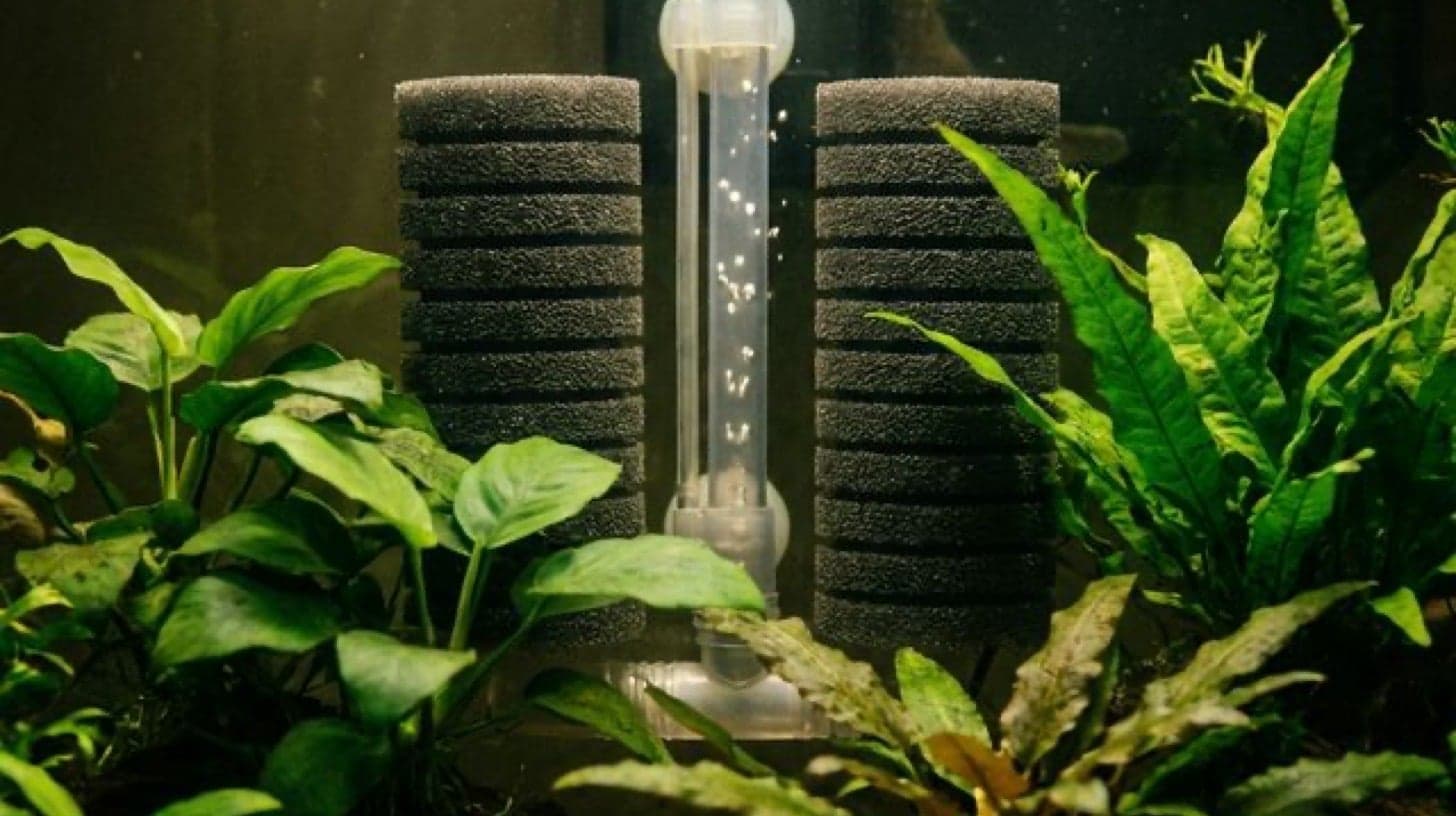
| Filtro de esponja + cabezal | Suave, seguro para alevines | Cría, gambas |
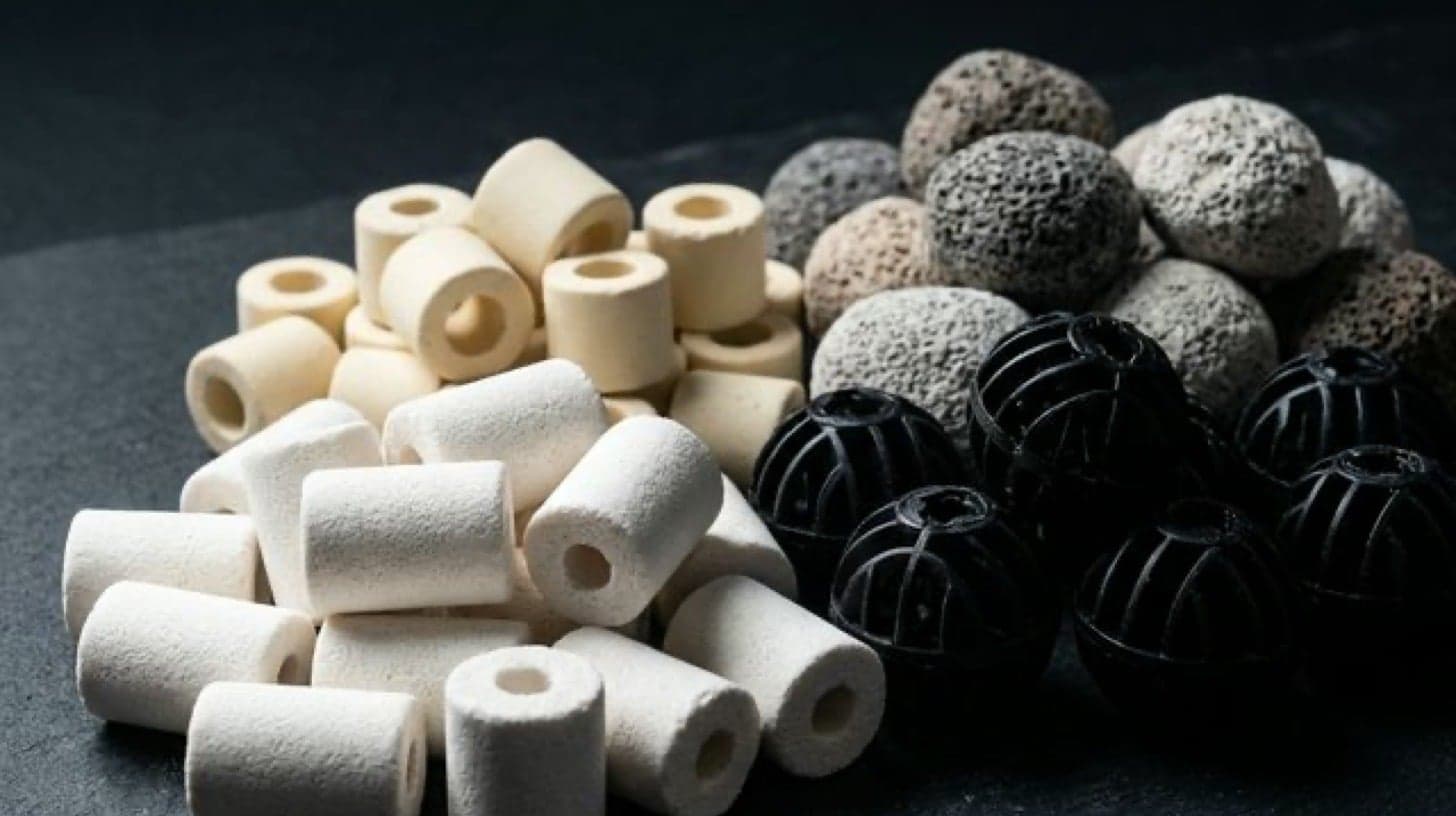
| Interno de compartimentos | Esponja + carbón + cerámica | Acuarios nano en general |
| Interno tipo canister | Mayor volumen de material | Acuarios de 60–150 L sin hueco en el mueble |
| Filtro de esquina | Colocación discreta | Montajes nano con cuidado estético |
Dimensionado
Apunta a 4–6× el volumen del acuario por hora para especies delicadas; hasta 8× para carpas doradas o carga biológica alta.
| Volumen del acuario | Caudal interno típico |
|---|---|
| 10–20 L | 100–200 L/h |
| 30–60 L | 300–500 L/h |
| 80–120 L | 600–800 L/h (o pasa a mochila/canister) |
Por encima de ~120 L, un filtro de mochila o un filtro canister suele ofrecer más capacidad de material y un mantenimiento más cómodo.
Ventajas en montajes concretos
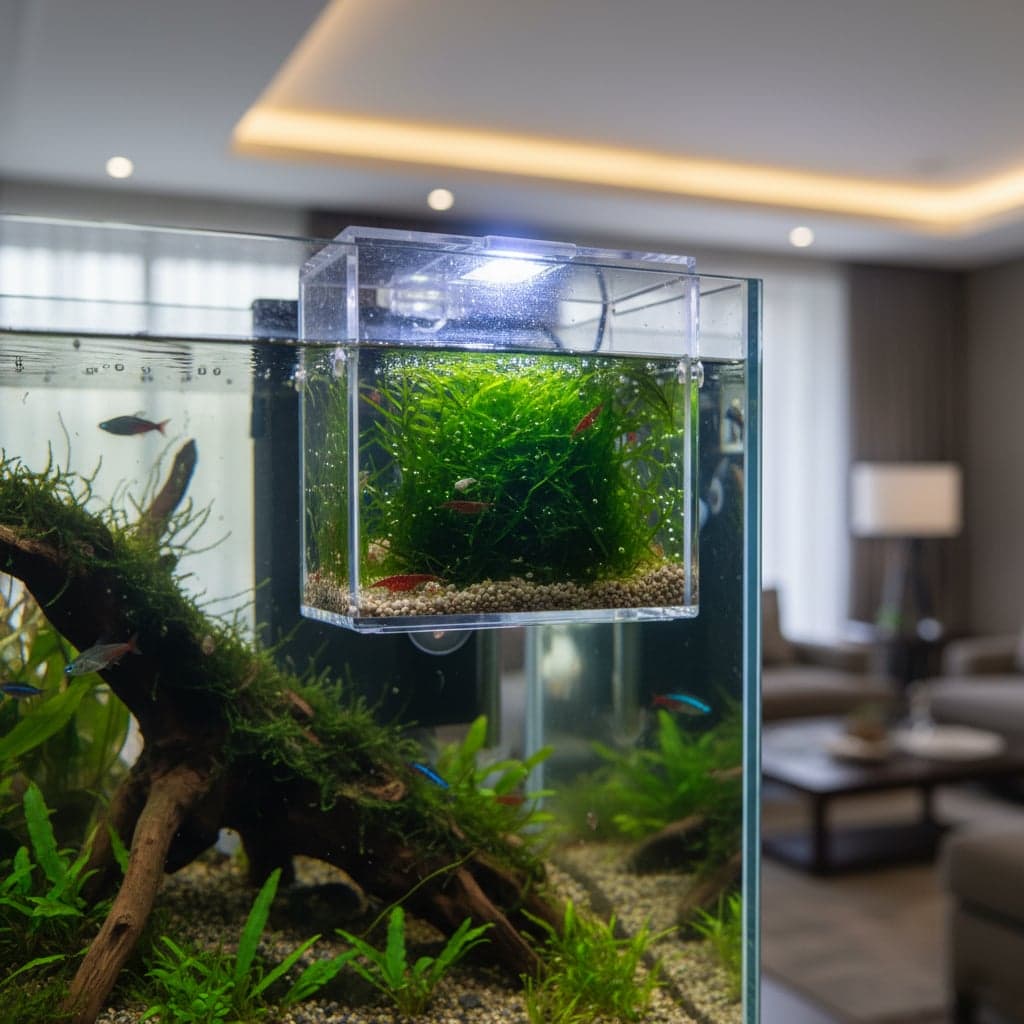
- Cuarentena / hospital — filtro dedicado sembrado con biomaterial del acuario principal; retira el carbón durante la medicación
- Alevines y gambas — los prefiltros de esponja evitan que la aspiración se lleve a las crías
- Filtración de reserva — ten un interno de repuesto listo por si falla el filtro principal
- Sin riesgo de desbordamiento — a diferencia de los sumps; sencillo para principiantes
Caudal y colocación
- Orienta la salida — dirígela a lo largo del cristal para reducir la corriente con bettas y guramis
- Sube la salida — el rizado superficial mejora el intercambio gaseoso
- Nunca lo entierres en el sustrato — la aspiración debe quedar libre
- Varios filtros pequeños — a veces mejor que uno sobredimensionado en acuarios largos
Mantenimiento
- Aclara la esponja semanalmente con agua del propio acuario, nunca del grifo
- Cambia el carbón cada mes si lo usas (retíralo durante medicación y abonado de plantas)
- Limpia el rotor cada 2–3 meses: una caída de caudal suele ser suciedad en el rotor
- Resiembra tras los antibióticos — las bacterias beneficiosas pueden haberse dañado; consulta la visión general de enfermedades
Interno frente a otros filtros
| Característica | Interno | Mochila | Canister |
|---|---|---|---|
| Capacidad de material | Baja–media | Media | Alta |
| Facilidad de instalación | La mayor | Fácil | Media |
| Visible en el acuario | Sí | Mínima | Oculto |
| Coste | El menor | Bajo–medio | Mayor |
| Mejor tamaño de acuario | < 120 L | < 200 L | Cualquiera |
Ventajas e inconvenientes
Ventajas
- Barato y listo para usar
- Ideal para cuarentena, hospital y acuarios nano
- Sin fontanería externa ni desbordamientos
- Opciones suaves para alevines y gambas
A tener en cuenta
- Ocupa espacio a la vista
- Material limitado frente a los filtros externos
- Requiere limpieza frecuente en volúmenes pequeños
- Los modelos grandes abultan en un aquascape
Preguntas frecuentes
¿Filtro interno o externo?
Los internos encajan en acuarios pequeños, cuarentenas y acuarios hospital, y allí donde un externo resulta poco práctico. Los externos albergan más material, son más cómodos de mantener y liberan espacio a la vista. Por debajo de unos 60 litros la diferencia importa poco; por encima, la filtración externa suele ser la mejor inversión.
¿Cada cuánto debo limpiar el material filtrante?
Cuando el caudal baje de forma perceptible, no según un calendario fijo. Aclara el material mecánico con agua del acuario; nunca bajo el grifo, ya que el cloro mata la colonia bacteriana. El material biológico debe moverse lo menos posible.
¿Por qué se cayó el ciclo tras limpiar el filtro?
Casi con seguridad se aclaró el material con agua del grifo, o se sustituyó demasiado de una vez. Las bacterias nitrificantes viven en ese material y el cloro las mata al contacto. Renueva el material por partes, con semanas de diferencia, para que la colonia restante repueble el material nuevo.