Weiße, watteartige Beläge: Erkennen & Behandeln
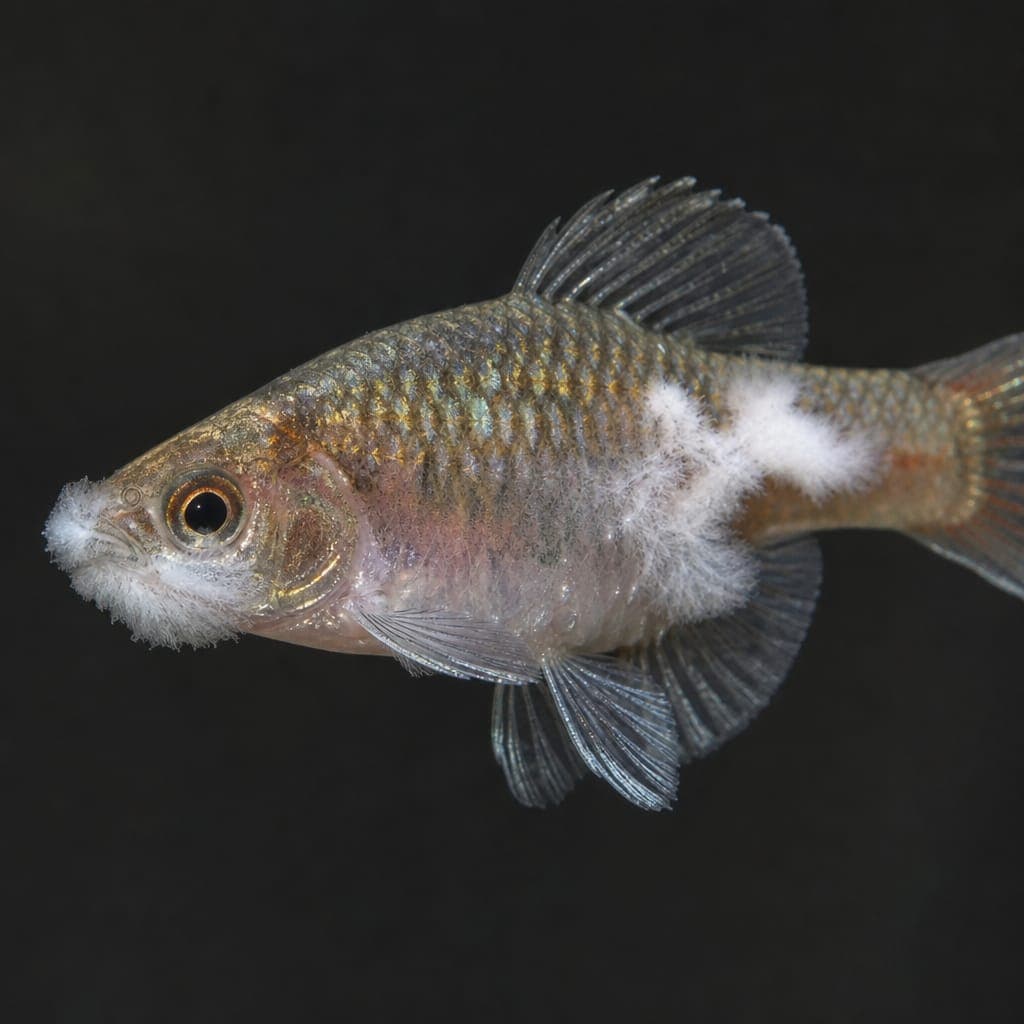
Watteartiger weißer Bewuchs an Maul, Flossen oder Körper — häufig eine Pilzinfektion oder Columnaris.
Weiße, watteartige Beläge
Watteartiger weißer Bewuchs an Maul, Flossen oder Körper — häufig eine Pilzinfektion oder Columnaris. Vergleiche deinen Fisch mit dem Referenzfoto oben und prüfe deine protokollierten Wasserwerte im Aquarium-Tracker, bevor du behandelst.
Was verursacht weiße, watteartige beläge?
- Pilzinfektion auf bestehenden Wunden
- Columnaris (bakteriell), die als weiße Flecken erscheint — schreitet schnell voran
- Schlechte Wasserqualität nach Verletzung oder Transport
- Zu niedrige Temperatur für tropische Arten, die die Genesung bremst
Was du vor der Behandlung prüfen solltest
| Was messen | Üblicher Zielwert | Worauf ein abweichender Wert hindeutet |
|---|---|---|
| Ammoniak (NH₃/NH₄⁺) | 0 ppm | Jeder Wert über null bedeutet, dass der Biofilter nicht hinterherkommt. Für Fische ist es längst giftig, bevor es hoch genug wäre, um Algen zu nähren. |
| Nitrit (NO₂⁻) | 0 ppm | Ein Wert über null deutet auf einen unreifen oder gestörten Filter hin — typisch nach Medienwechsel, Medikamenteneinsatz oder einer großen Reinigung. |
| Temperatur | im Artbereich, gleichmäßig | Wärmeres Wasser hält weniger Sauerstoff und beschleunigt sowohl Stoffwechsel als auch Krankheitserreger. Plötzliche Schwankungen belasten stärker als ein stabiler Wert an einem der Ränder. |
| Jüngste Änderungen | notiere alles aus den letzten 2–3 Wochen | Neue Tiere, Pflanzen, Filtermedien, Beleuchtung oder Düngung sind der übliche Auslöser. Die Ursache liegt oft rund zwei Wochen vor dem Symptom. |
| Besatz und Beifische | verträgliche Arten, passende Gruppengrößen | Zu kleine Schwärme, zu viele Männchen oder aggressive Nachbarn erzeugen Dauerstress, und der geht vielen Krankheiten voraus. |
Nimm diese Werte zuerst. Ein großer Teil dessen, was wie Krankheit aussieht, ist ein Problem der Wasserqualität — und ein Becken mit steigendem Ammoniak zu behandeln kuriert das Symptom, während die Ursache weiterwirkt.
Behandlungsschritte
- Betroffenen Fisch nach Möglichkeit isolieren
- Wasserqualität mit häufigen Teilwechseln verbessern
- Scharfkantige Dekoration entfernen und Stressfaktoren reduzieren
- Antipilz- und antibakterielle Mittel unterscheiden sich — eine Fehlbestimmung kostet Zeit
- Columnaris breitet sich schnell aus; eine fachliche Bestimmung ist empfehlenswert
Vorbeugung
- Halte Ammoniak und Nitrit bei null — die meisten bakteriellen und Pilzprobleme folgen einem Einbruch der Wasserqualität, statt von außen zu kommen
- Entferne scharfkantige Dekoration und geh gegen Mobbing vor; diese Erkrankungen setzen sich an geschädigtem Gewebe fest
- Vermeide Überbesatz; Enge erhöht Abfall und Stress zugleich
- Füttere nur, was in wenigen Minuten gefressen wird, und entferne den Rest
Häufige Fragen
Weiße, watteartige Beläge: Ist das für meine anderen Fische ansteckend?
Direkt nur selten. Pilze besiedeln fast immer bereits geschädigtes Gewebe — die eigentliche Frage ist also, was die ursprüngliche Verletzung verursacht hat.
Wie schnell muss ich handeln?
Handle innerhalb von ein bis zwei Tagen. Die meisten Zustände lassen sich früh weit leichter umkehren, und ein Fisch, der nicht mehr frisst, ist meist schon länger krank, als er krank aussieht.
Im Hauptbecken oder im Krankenbecken behandeln?
Ein separates Krankenbecken ist vorzuziehen, wenn der Fisch fit genug für den Umzug ist: Dosierungen lassen sich leichter steuern, und viele Medikamente schaden Wirbellosen, Pflanzen oder dem Biofilter. Behandle nur dann im Hauptbecken, wenn das gesamte Becken betroffen ist oder der Umzug mehr Stress verursacht, als die Behandlung nimmt.
Verwandte Ratgeber
- Flossenfäule — wird leicht damit verwechselt
- Offene Wunden und Geschwüre — wird leicht damit verwechselt
- Alle Symptome im Vergleich — wenn du dir nicht sicher bist, was du siehst
- Quarantäne-Protokoll — worauf sich die meisten Ausbrüche zurückführen lassen
- Das richtige Testset — für die Werte oben