Kit de análisis para acuario
Kits de reactivo líquido frente a tiras, qué parámetros analizar y con qué frecuencia, kit máster frente a kits de arrecife, y cómo leer los resultados con precisión en agua dulce y marina.
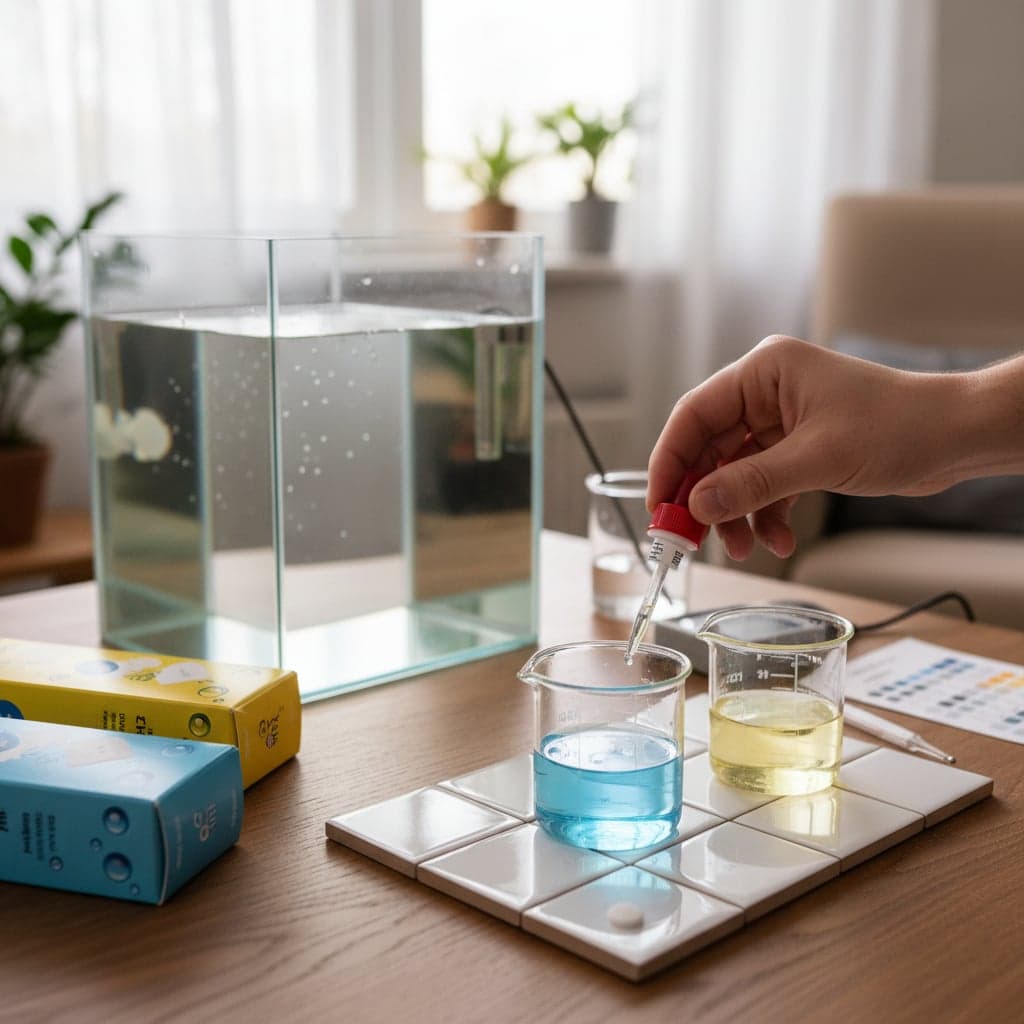
Kit de análisis para acuario
No se puede gestionar lo que no se mide. Un kit de análisis fiable es la herramienta más importante de la afición, más valiosa que cualquier aparato. Los parámetros se desvían en silencio; los peces muestran estrés solo cuando el daño ya está hecho.
Qué analizar
Agua dulce (todos los acuarios)
| Parámetro | Por qué | Objetivo (comunitario típico) |
|---|---|---|
| Amoníaco | Tóxico; indica fallo del ciclado o sobrepoblación | 0 ppm |
| Nitrito | Tóxico; igual que el anterior | 0 ppm |
| Nitrato | Final del ciclo del nitrógeno; alimenta las algas | < 20 ppm (menos con gambas) |
| pH | Afecta a la salud de los peces y a la dosificación de CO₂ | Según la especie |
Agua dulce plantada / avanzada
| Parámetro | Por qué |
|---|---|
| GH / KH | Dureza y estabilidad del pH — consulta GH y KH |
| Fosfato | Motor de algas en acuarios high-tech |
| TDS | Gambas y mezclas con agua de ósmosis — consulta TDS |
Marino / arrecife
| Parámetro | Por qué |
|---|---|
| Salinidad | Referencia crítica |
| Alcalinidad, calcio, magnesio | Salud de los corales — consulta química de arrecife |
| Fosfato / nitrato | Algas y estrés en corales |
Líquido frente a tiras
| Líquido (tipo API) | Tiras | |
|---|---|---|
| Precisión | Mayor en amoníaco, nitrito y nitrato | Suficiente para comprobaciones rápidas |
| Coste por análisis | Menor a volumen | Mayor |
| Rapidez | 5–10 minutos | Segundos |
| Mejor para | Ciclado, problemas, arrecife | Control rápido diario |
Para ciclar un acuario nuevo o investigar la muerte de peces, usa siempre análisis líquidos de amoníaco y nitrito.
Kits máster frente a botes sueltos
- Kit máster de agua dulce — amoníaco, nitrito, nitrato, pH (rango alto); cubre el 90% de las necesidades
- Kit GH/KH — imprescindible para gambas, discos y acuarios plantados
- Kit de arrecife — alcalinidad, calcio, magnesio; añádelo aparte a los kits de agua dulce para el marino
- Botes de un solo parámetro — repón el que más gastas sin recomprar el kit entero
Rutina de análisis
| Situación | Frecuencia |
|---|---|
| Acuario nuevo / ciclando | Amoníaco + nitrito a diario hasta que ambos den cero |
| Comunitario establecido | Nitrato semanal; pH y GH/KH mensuales |
| Acuario con problemas (algas, muertes) | Panel completo de inmediato; repite tras los cambios |
| Arrecife con corales | Alcalinidad 2–3× por semana; Ca semanal; Mg mensual |
| Tras medicar | Amoníaco y nitrito a diario: algunos fármacos dañan las bacterias |
Registra los resultados en el Rastreador de Acuarios para detectar tendencias antes de que haya crisis.
Cómo leer los resultados con precisión
- Compara con la carta a la luz del día: la luz artificial altera los colores
- Espera el tiempo completo: agitar el bote nº 2 del nitrato durante 30 segundos importa
- Aclara los viales con agua del acuario: la del grifo contamina la muestra
- Los kits caducados mienten: cambia los botes de más de 3 años o muy usados
- Contrasta los resultados raros: repite antes de intervenir a lo grande
Errores habituales
- Analizar solo nitrato: un pico de amoníaco mata de un día para otro
- Ignorar el KH en acuarios plantados: el pH se desploma tras añadir CO₂
- Usar tiras durante el ciclado: los falsos negativos retrasan la reacción
- Analizar justo tras un cambio de agua: espera 30–60 minutos a que se mezcle
Preguntas frecuentes
¿Cada cuánto debo analizar?
Semanalmente en un acuario establecido, y a diario durante el ciclado o después de cualquier problema. El valor está en la tendencia más que en la lectura suelta: un nitrato de 20 ppm significa algo muy distinto si la semana pasada era 5 que si era 40.
¿Son las tiras lo bastante precisas?
Sirven para comprobar deprisa si algo se ha movido, y son francamente malas justo en las lecturas que más importan. El amoníaco y el nitrito necesitan análisis líquidos, porque una tira no distingue de forma fiable el cero de las lecturas bajas pero letales que matan peces.
¿Por qué mis lecturas difieren de las de la tienda?
Normalmente por la edad del reactivo o por la técnica, más que porque un resultado esté mal. Los kits caducan —mira la fecha del bote— y los análisis de nitrato en concreto exigen agitar con fuerza el segundo reactivo durante todo el tiempo indicado, o leen bajo. Analiza la misma muestra dos veces antes de creerte un resultado sorprendente.