Scheuern: Erkennen & Behandeln
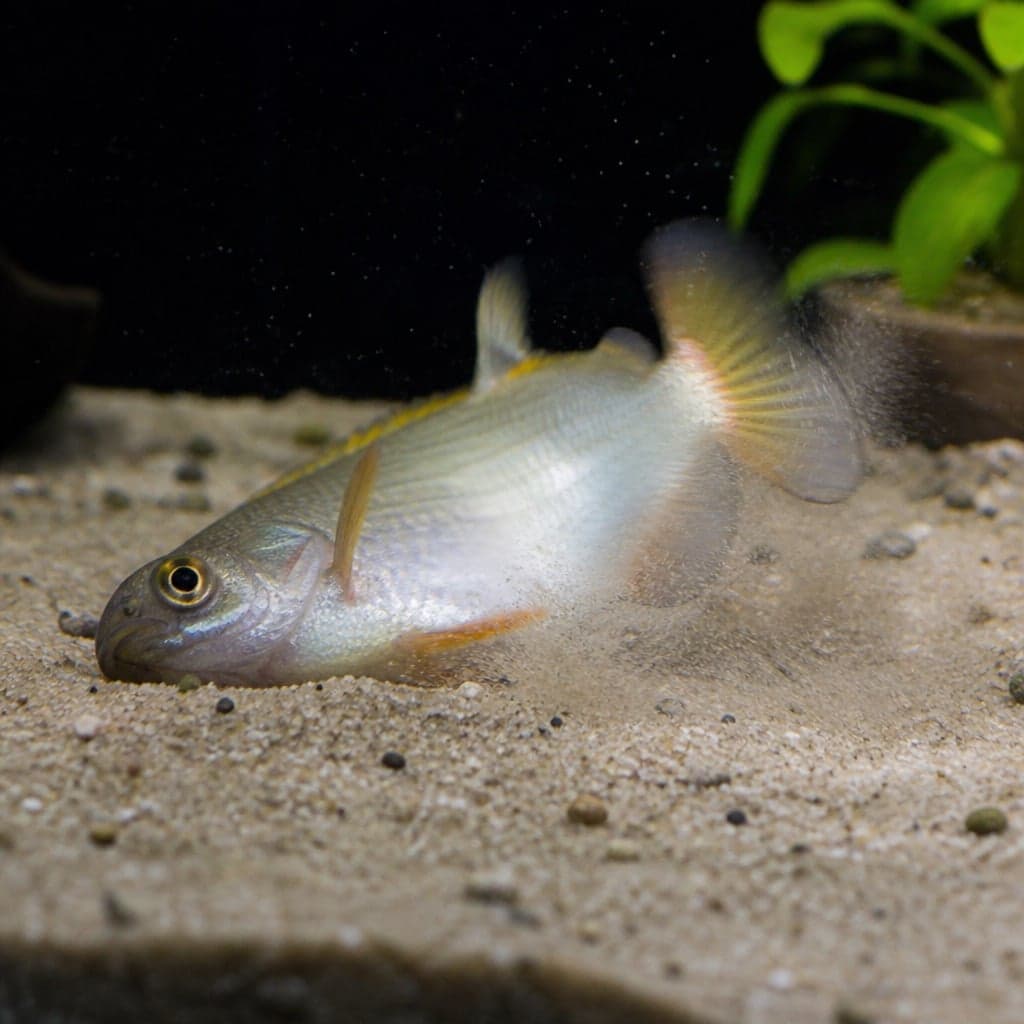
Der Fisch schießt los und scheuert die Flanken an Bodengrund oder Dekoration, oft mit schneller Kiemenbewegung — Reizung, häufig durch Kiemenwürmer oder beginnende Parasiten.
Scheuern
Der Fisch schießt los und scheuert die Flanken an Bodengrund oder Dekoration, oft mit schneller Kiemenbewegung — Reizung, häufig durch Kiemenwürmer oder beginnende Parasiten. Vergleiche deinen Fisch mit dem Referenzfoto oben und prüfe deine protokollierten Wasserwerte im Aquarium-Tracker, bevor du behandelst.
Was verursacht scheuern?
- Äußere oder Kiemenparasiten, die Haut und Kiemengewebe reizen
- Ammoniak, Nitrit oder Chlor reizen die Kiemen — prüfe das, bevor du Parasiten annimmst
- pH weit außerhalb des Artbereichs oder ein plötzlicher Sprung
- Neuzugänge ohne Quarantäne eingesetzt
Was du vor der Behandlung prüfen solltest
| Was messen | Üblicher Zielwert | Worauf ein abweichender Wert hindeutet |
|---|---|---|
| Ammoniak (NH₃/NH₄⁺) | 0 ppm | Jeder Wert über null bedeutet, dass der Biofilter nicht hinterherkommt. Für Fische ist es längst giftig, bevor es hoch genug wäre, um Algen zu nähren. |
| Nitrit (NO₂⁻) | 0 ppm | Ein Wert über null deutet auf einen unreifen oder gestörten Filter hin — typisch nach Medienwechsel, Medikamenteneinsatz oder einer großen Reinigung. |
| pH-Wert | stabil, im Bereich deiner Arten | Stabilität zählt mehr als die Zahl. Ein driftender pH bedeutet meist erschöpfte KH oder eine CO₂-Schwankung, nicht ein pH-Problem an sich. |
| Temperatur | im Artbereich, gleichmäßig | Wärmeres Wasser hält weniger Sauerstoff und beschleunigt sowohl Stoffwechsel als auch Krankheitserreger. Plötzliche Schwankungen belasten stärker als ein stabiler Wert an einem der Ränder. |
| Jüngste Änderungen | notiere alles aus den letzten 2–3 Wochen | Neue Tiere, Pflanzen, Filtermedien, Beleuchtung oder Düngung sind der übliche Auslöser. Die Ursache liegt oft rund zwei Wochen vor dem Symptom. |
| Besatz und Beifische | verträgliche Arten, passende Gruppengrößen | Zu kleine Schwärme, zu viele Männchen oder aggressive Nachbarn erzeugen Dauerstress, und der geht vielen Krankheiten voraus. |
| Filterung und Strömung | keine toten Zonen; Medien nach Plan gereinigt | Bereiche mit wenig Strömung sammeln Mulm, und genau dort fangen viele Probleme an. Zugesetzte Filtermedien senken die reale Förderleistung lange bevor sie schmutzig aussehen. |
Nimm diese Werte zuerst. Ein großer Teil dessen, was wie Krankheit aussieht, ist ein Problem der Wasserqualität — und ein Becken mit steigendem Ammoniak zu behandeln kuriert das Symptom, während die Ursache weiterwirkt.
Behandlungsschritte
- Zuerst die Wasserchemie ausschließen — eine Reizung durch Ammoniak oder Chlor sieht genauso aus wie Parasiten
- Auf schnelle oder angestrengte Kiemenbewegung achten, die auf eine Kiemenbeteiligung hindeutet
- Neue oder betroffene Fische in Quarantäne setzen, bevor du das Hauptbecken behandelst
- Scheuern ohne sichtbare Pünktchen bedeutet oft Würmer, die eine gezielte statt einer allgemeinen Behandlung brauchen
- Vor dem Medikamentieren eine Diagnose einholen — das falsche Mittel kostet Zeit und erzeugt zusätzlichen Stress
Vorbeugung
- Setze jeden neuen Fisch 4 Wochen in Quarantäne — die eine Maßnahme, die die meisten Parasitenausbrüche verhindert, und die am häufigsten übersprungen wird
- Setze auch neue Pflanzen, Schnecken und alles Nasse aus fremden Systemen in Quarantäne; Parasiten reisen im Wasser, nicht nur auf Fischen
- Vermeide Überbesatz; Enge erhöht Abfall und Stress zugleich
- Füttere nur, was in wenigen Minuten gefressen wird, und entferne den Rest
Häufige Fragen
Scheuern: Ist das für meine anderen Fische ansteckend?
Häufig, da die üblichen Ursachen äußere Parasiten oder ein Reizstoff im Wasser sind. Beides betrifft alle Fische im Becken.
Wie schnell muss ich handeln?
Handle innerhalb von ein bis zwei Tagen. Die meisten Zustände lassen sich früh weit leichter umkehren, und ein Fisch, der nicht mehr frisst, ist meist schon länger krank, als er krank aussieht.
Im Hauptbecken oder im Krankenbecken behandeln?
Ein separates Krankenbecken ist vorzuziehen, wenn der Fisch fit genug für den Umzug ist: Dosierungen lassen sich leichter steuern, und viele Medikamente schaden Wirbellosen, Pflanzen oder dem Biofilter. Behandle nur dann im Hauptbecken, wenn das gesamte Becken betroffen ist oder der Umzug mehr Stress verursacht, als die Behandlung nimmt.
Verwandte Ratgeber
- Weiße Pünktchen (Ich) — wird leicht damit verwechselt
- Goldstaub / Samtkrankheit — wird leicht damit verwechselt
- Alle Symptome im Vergleich — wenn du dir nicht sicher bist, was du siehst
- Quarantäne-Protokoll — worauf sich die meisten Ausbrüche zurückführen lassen
- Das richtige Testset — für die Werte oben