Fungal Infections: Cotton Wool Disease
Cotton Wool Disease: Mastering fungal infection diagnosis and treatment. Learn to distinguish true Saprolegnia fungus from deceptive bacterial \"mouth rot\".
Fungal Infections in Aquarium Fish
Fungal infections are common secondary issues in aquariums. Unlike Ich, true fungal infections rarely attack healthy, uninjured fish. They typically take hold when a fish's slime coat is damaged due to injury, poor water quality, or a parasitic infection. The most common culprit is the genus Saprolegnia.
Causes
Fungus spores are omnipresent in aquarium water but are generally harmless to healthy fish. Infection occurs when:
- Physical Injury: Nips from other fish, handling damage, or scraping against sharp decor.
- Poor Water Quality: High levels of ammonia or nitrite weaken the fish's slime coat.
- Low Water Temperature: Many fungal strains thrive in cooler water where the fish's immune system might be slower.
- Existing Disease: Bacterial or parasitic infections can leave open wounds vulnerable to fungus.
Symptoms
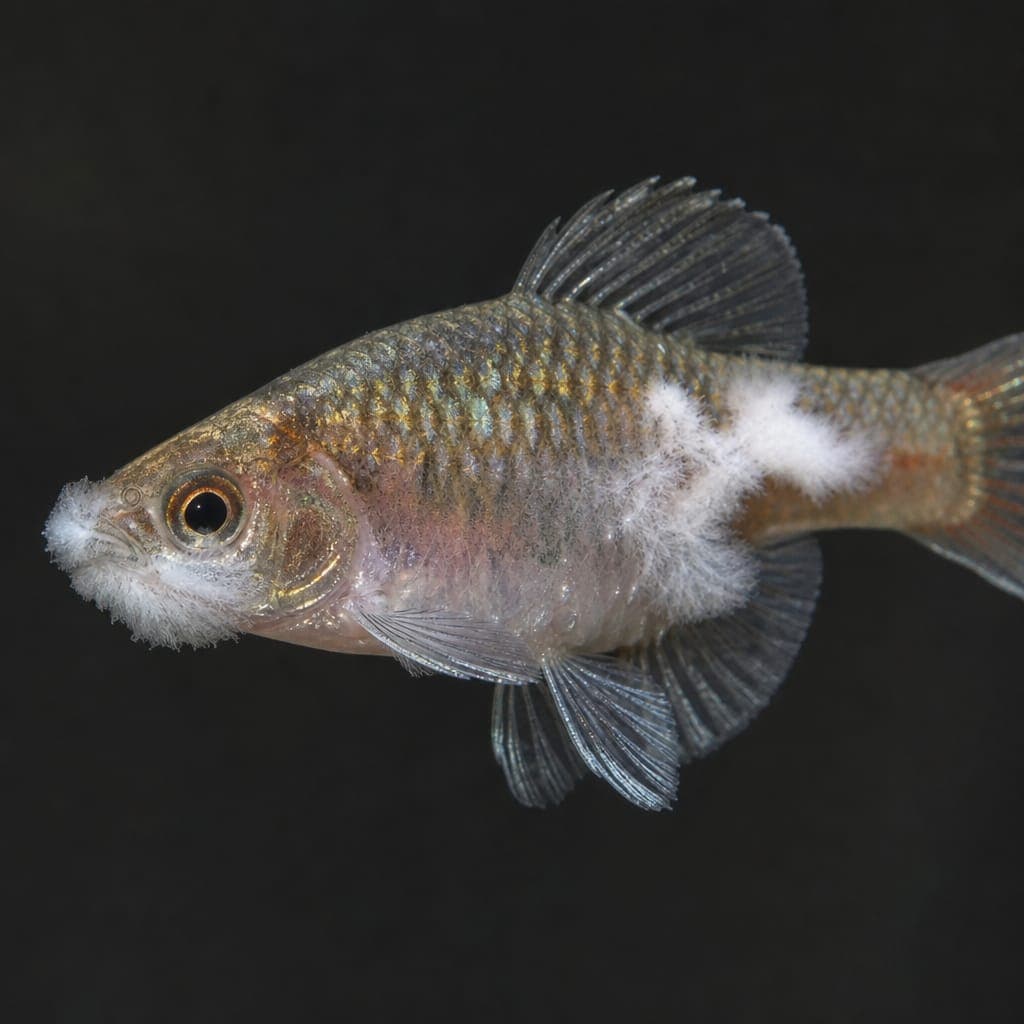
- Cotton-like Growths: The most distinct sign is white or greyish, fluffy, cotton-wool-like growths on the skin, fins, or mouth.
- Discoloration: The affected area may look pale or white before the fuzz appears.
- Loss of Appetite: Fish may stop eating.
- Lethargy: Fish may hover near the bottom or surface.
Fungal vs. Bacterial (Columnaris)
It is crucial to distinguish true fungus from Columnaris (Cotton Mouth), which is a bacterial infection.
- Fungus: Looks like fluffy cotton wool; usually grows on dead tissue or wounds; grows relatively slowly.
- Columnaris: often looks flatter, like moldy bread or a white saddle on the back; can erode the mouth quickly; spreads very rapidly.
Treatment
1. Correct the Underlying Cause
Since fungus is often secondary, check your water parameters immediately. Perform a water change to improve water quality. If the fish is being bullied, separate it.
2. Anti-Fungal Medication
Treatments specifically designed for fungus are widely available.
- Methylene Blue: Highly effective for fungal infections and safe for most fish. Ideally used in a quarantine tank / bath as it can damage biological filtration and stain silicone.
- Malachite Green: Often found in ''Ich'' cures but is also effective against fungus.
- Pimafix: A natural remedy containing Bay West Indies oil, suitable for mild infections.
3. Salt Bath
For mild cases, a salt bath can help strip away the fungus and promote slime coat regeneration.
- Mix aquarium salt in a separate bucket of tank water (approx. 1 tablespoon per gallon).
- Bathe the fish for 15-30 minutes, watching closely for signs of distress.
Prevention
- Keep water clean: Regular water changes and filter maintenance are your best defense.
- Avoid aggression: Choose compatible tank mates to prevent injuries.
- Handle with care: If you must catch a fish, use a soft net and avoid touching their slime coat.