Fish Disease

Peeling mucus on a marine fish: Identification & Treatment
Thick pale mucus sloughing away in patches with laboured breathing, classically in newly imported clownfish — Brooklynella, often called clownfish disease.
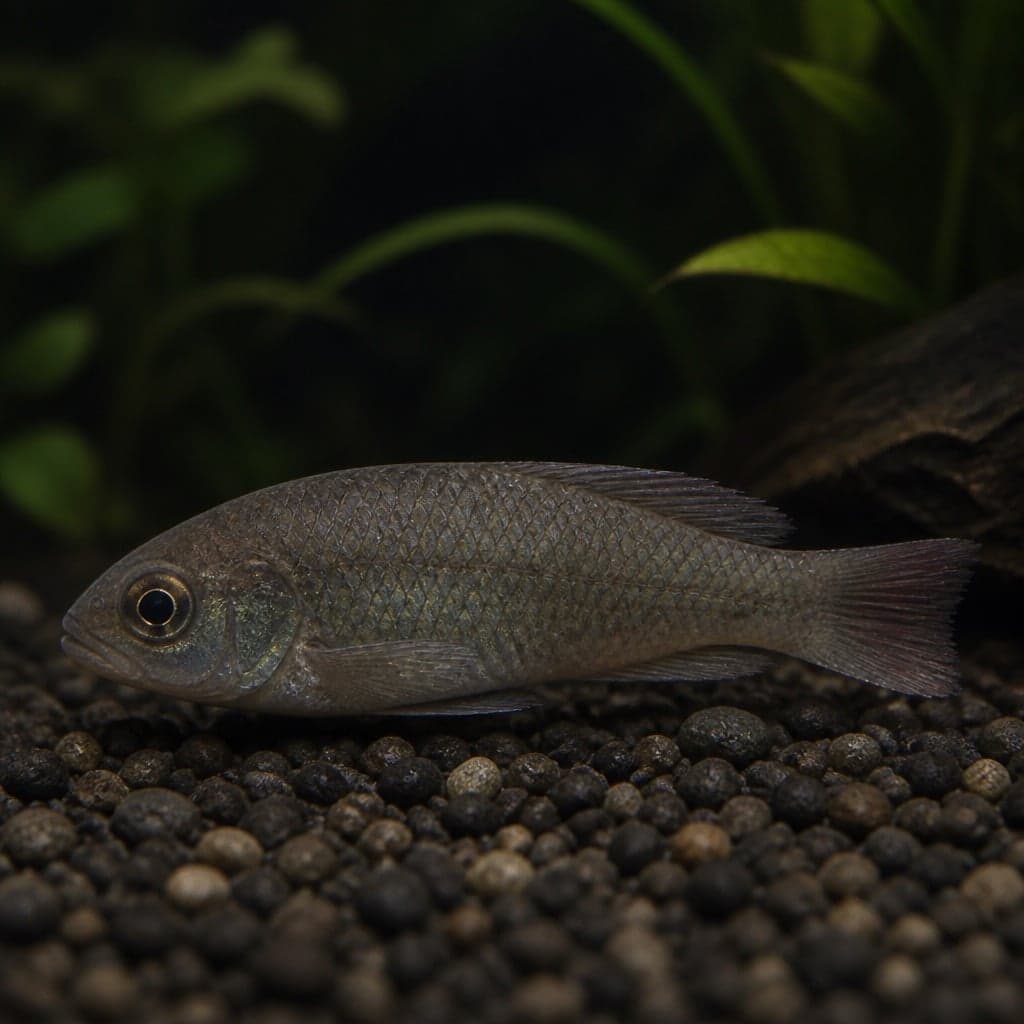
Clamped fins: Identification & Treatment
Fins held tight against the body, reduced activity or hiding — a general stress signal.
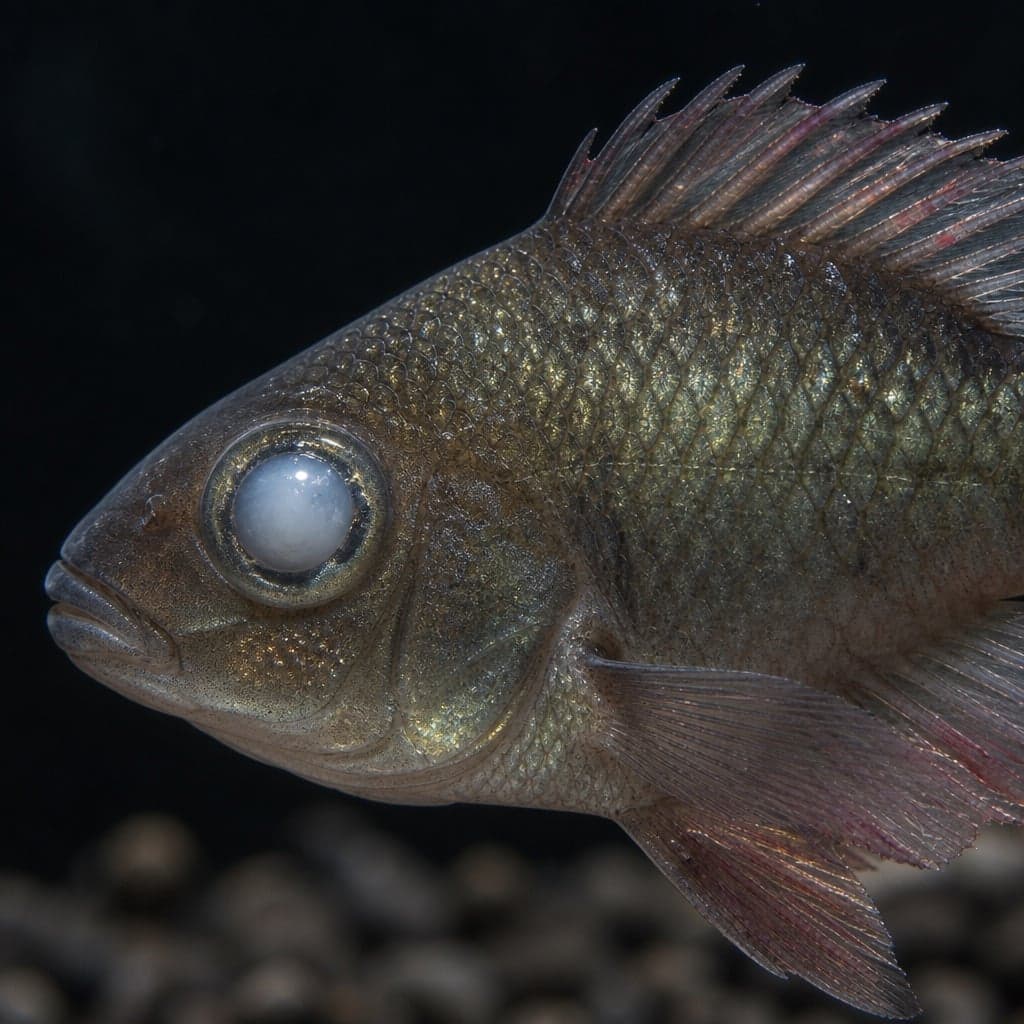
Cloudy eyes: Identification & Treatment
One or both eyes appear hazy or white — can indicate infection, poor water quality or injury.

Bloating: Identification & Treatment
Swollen abdomen or scales standing out (pinecone appearance) — may indicate dropsy or organ failure; act quickly.

Fin rot: Identification & Treatment
Fins appear shredded, milky at the edges or shortening over time — bacterial infection often follows injury or stress.

Fish Disease Symptoms: Complete Identification Guide
Identify common fish disease symptoms — ich, fin rot, dropsy, velvet, marine ich and more — with causes, treatment steps, and prevention.
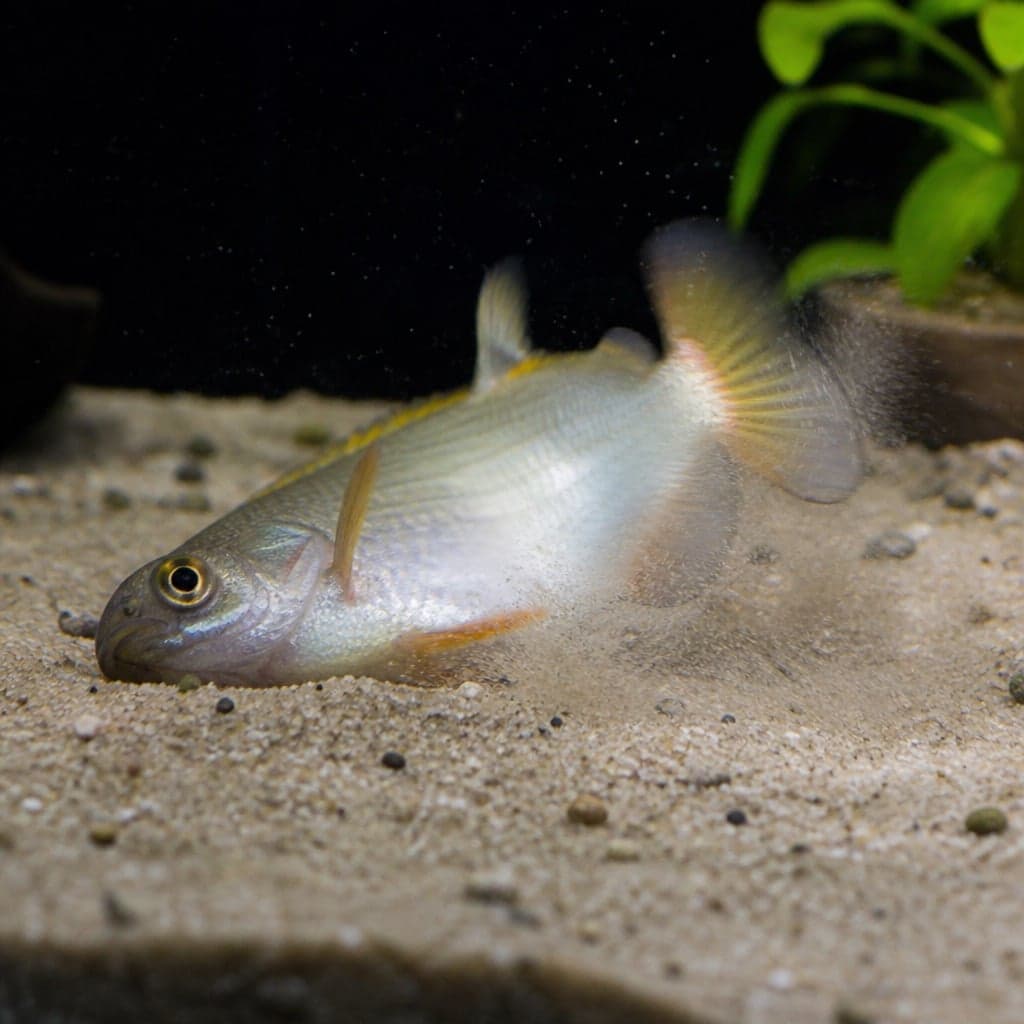
Flashing: Identification & Treatment
Fish dart and scrape their flanks against substrate or décor, often with rapid gill movement — irritation, commonly from gill flukes or early parasites.

Gasping at the surface: Identification & Treatment
Fish repeatedly gulp air at the surface — usually low dissolved oxygen or gill irritation.
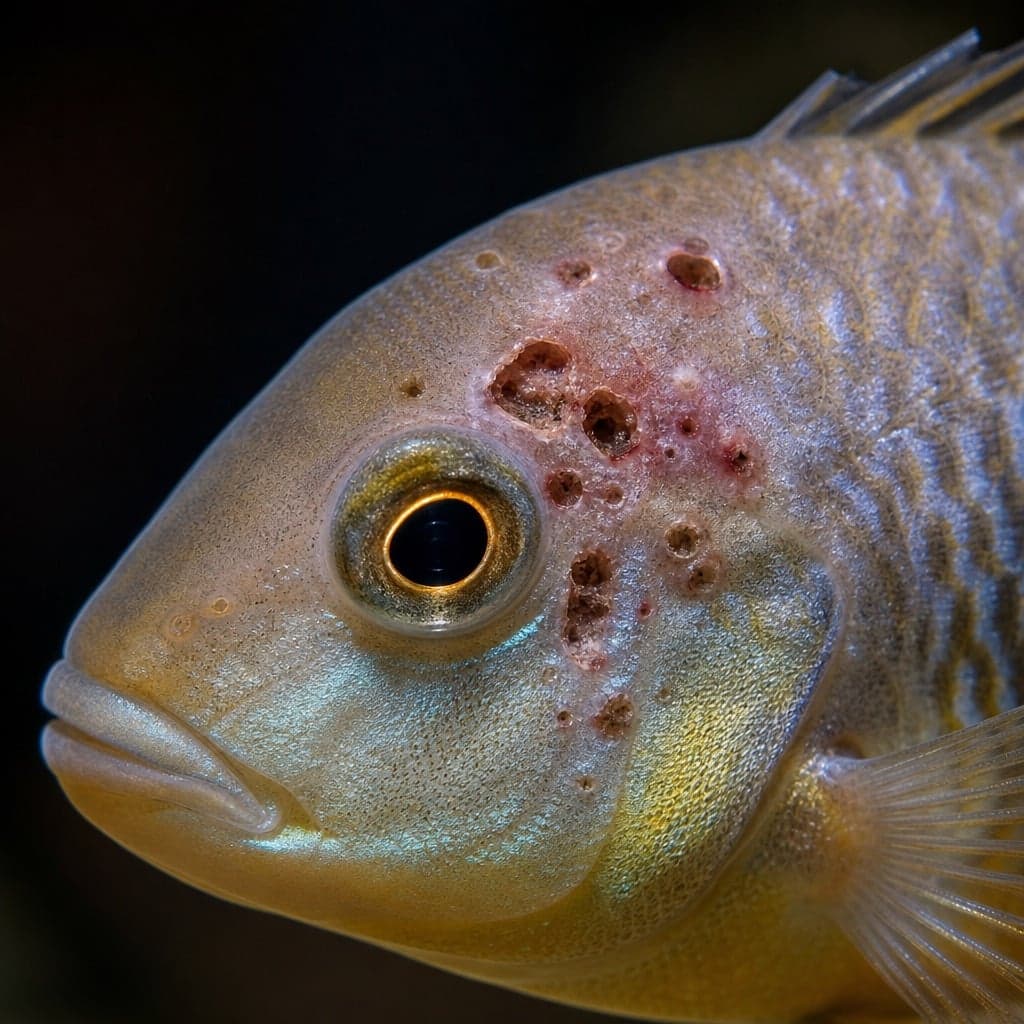
Pits or lesions on the head: Identification & Treatment
Small pitted craters in the flesh above or behind the eye, often in cichlids and discus — hole-in-the-head, linked to Hexamita and long-term stress.
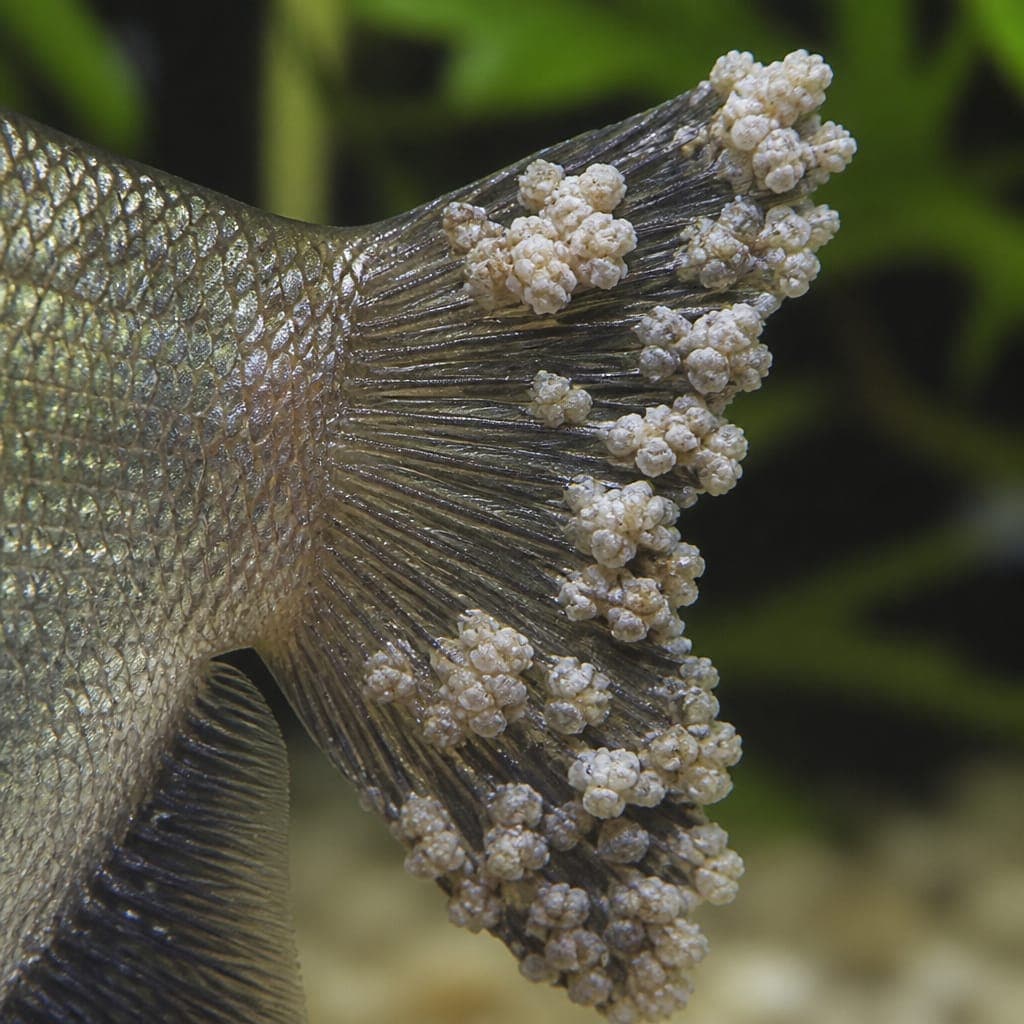
Cauliflower-like growths: Identification & Treatment
Clustered white or grey nodules on fins or body resembling a cauliflower floret — typically lymphocystis, a slow viral condition.
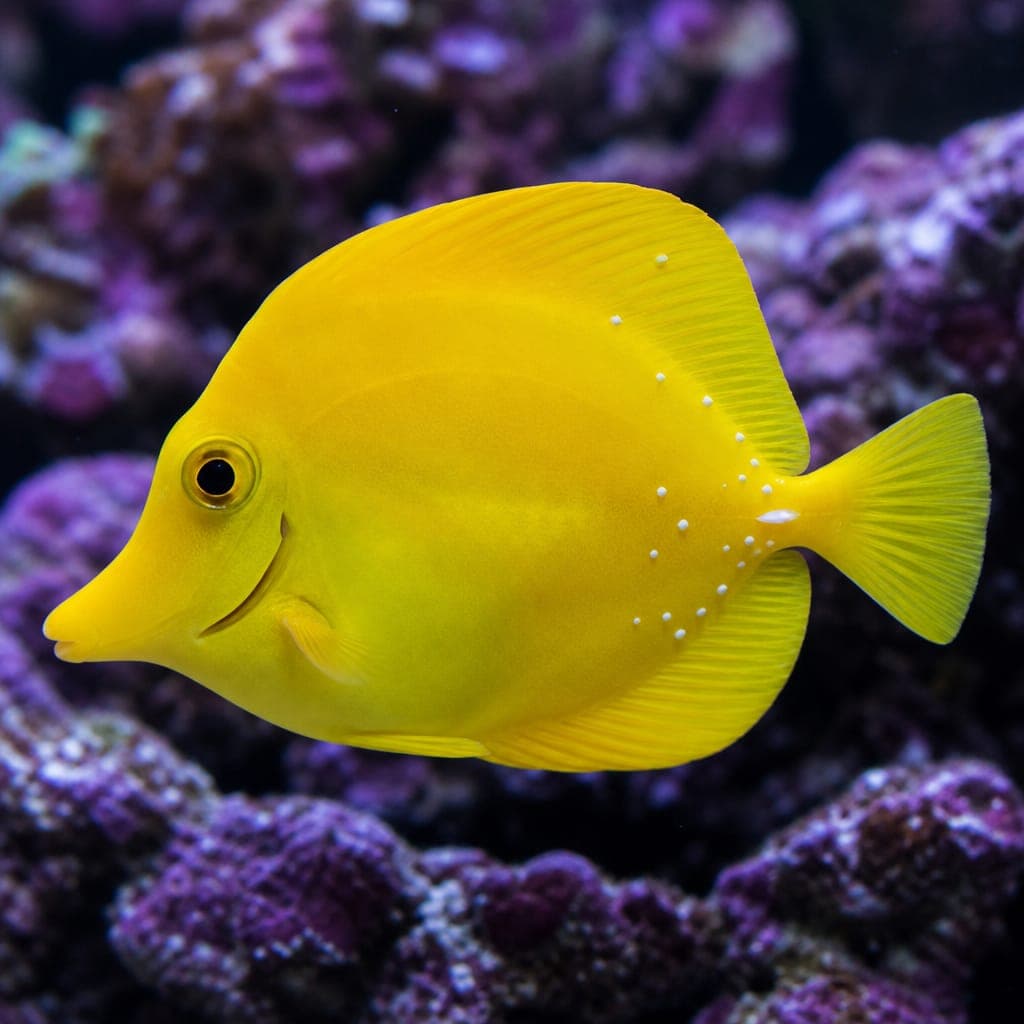
White spots on a marine fish: Identification & Treatment
Fine white spots on a marine fish, often with flashing and rapid breathing — likely Cryptocaryon, which is more aggressive than freshwater ich.
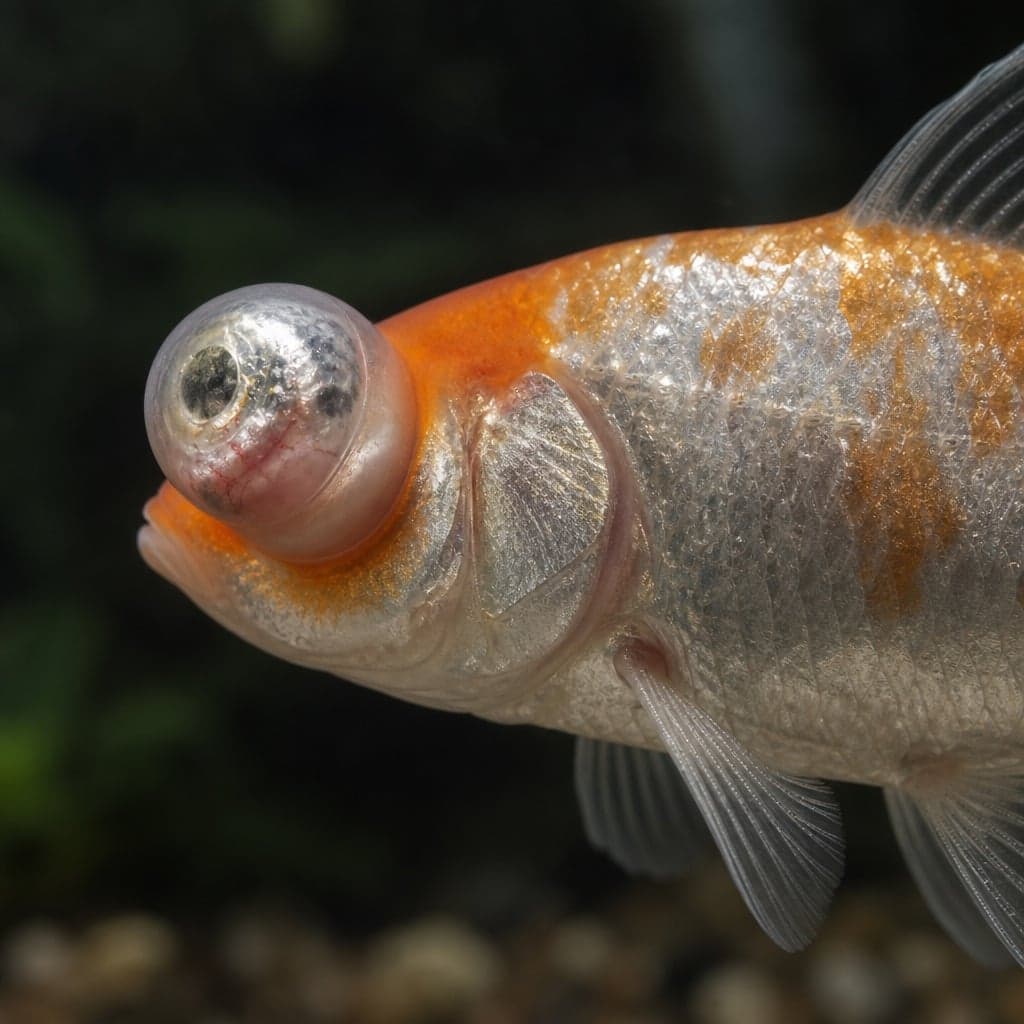
Bulging eye (popeye): Identification & Treatment
One or both eyes protrude from the socket — fluid behind the eye, usually from injury or infection rather than a disease in its own right.
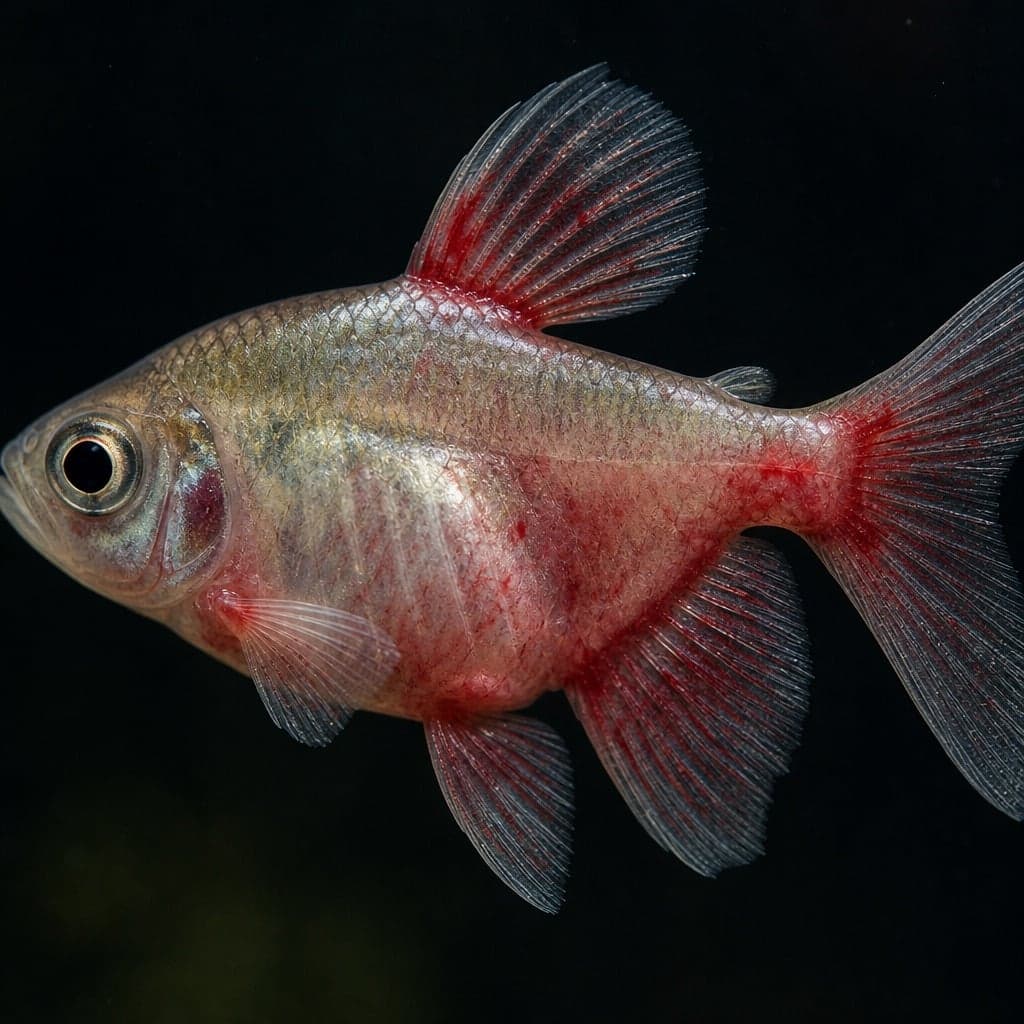
Red streaks in fins or body: Identification & Treatment
Fine blood-red streaks through the fins or reddened patches on the body — often septicaemia, a bacterial infection in the bloodstream. Treat as urgent.
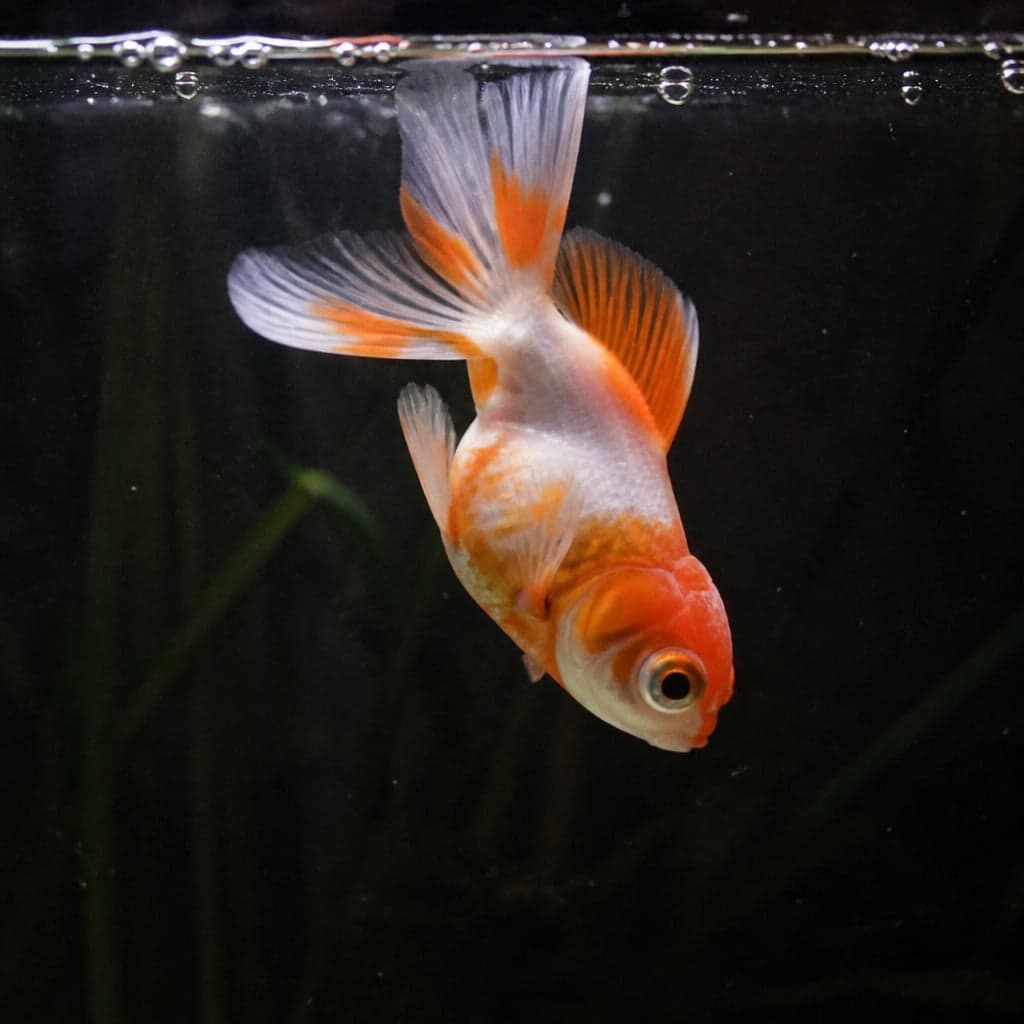
Floating, sinking or swimming upside down: Identification & Treatment
The fish cannot hold its position — floating tail-up, sinking to the bottom or rolling over. A buoyancy problem, not necessarily an infection.

Open sores: Identification & Treatment
A reddened open wound with a pale eroded rim and missing scales — an ulcerative bacterial infection that needs prompt attention.
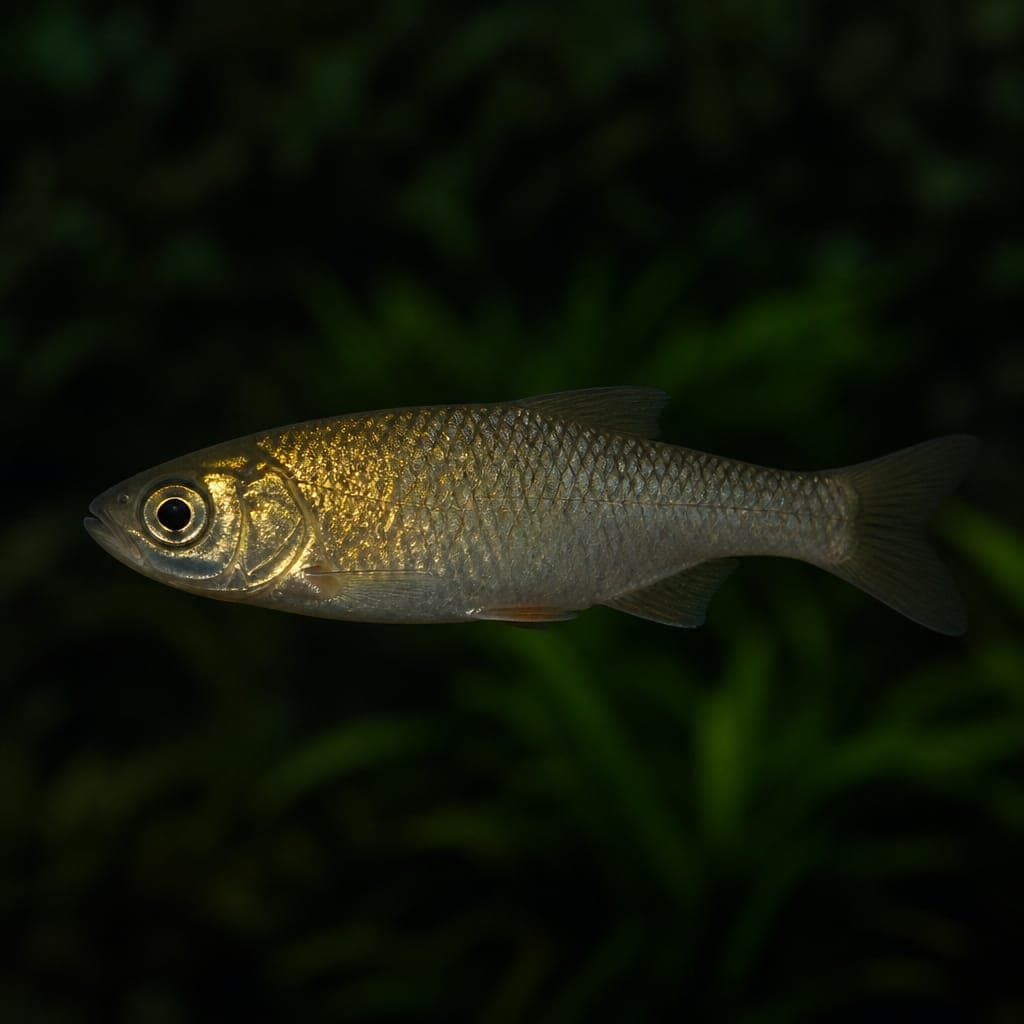
Gold dust: Identification & Treatment
Fine gold or rust-coloured dust on the body — may indicate Velvet (Oodinium), visible under side light.

Thin or wasting away: Identification & Treatment
Progressive weight loss with a sunken belly and visible spine despite the fish eating — chronic wasting, which has several possible causes.
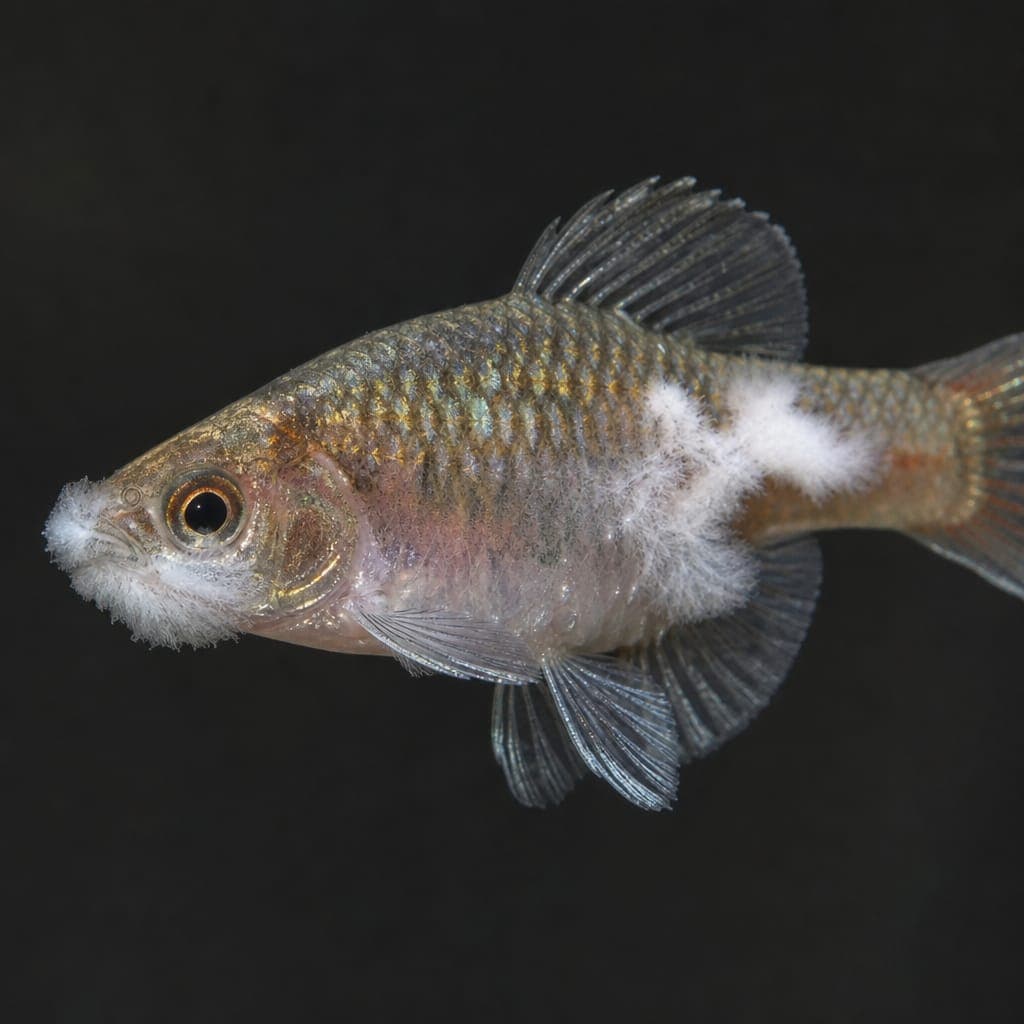
White fuzzy patches: Identification & Treatment
Cotton-like white growth on mouth, fins or body — often fungal or columnaris infection.
Marine Parasites & Health: Diagnosis and Treatment
The \"Big Three\" marine parasites: A guide to Marine Ich, Velvet, and Brooklynella. Master quarantine protocols and the 76-day fallow period for reef safety.
Common Parasitic Infections (Beyond Ich)
Beyond White Spot: Identifying and treating Velvet, Flukes, and Internal Parasites. Learn the flashlight test for Velvet and the effectiveness of Praziquantel.

Prevention: The Best Cure
Biosecurity and prevention: Strengthening your aquarium's first line of defense. Learn how environmental stability and stress management prevent 90% of diseases.

The Quarantine Protocol: Setting Up a Safety Net
Setting up a safety net: The ultimate guide to aquarium quarantine protocols. Learn how to manage a bare-bottom QT tank and the essential 4-week observation period.
White Spot (Ich): Identification & Treatment
The Ich nemesis: A master guide to White Spot Disease. Understanding the three-stage parasite life cycle and mastering heat, salt, and medical treatment options.
Fungal Infections: Cotton Wool Disease
Cotton Wool Disease: Mastering fungal infection diagnosis and treatment. Learn to distinguish true Saprolegnia fungus from deceptive bacterial \"mouth rot\".
Bacterial Infections: Fin Rot, Dropsy & Pop-Eye
Identifying and treating bacterial infections: A detailed guide to Fin Rot, Dropsy, and Pop-Eye. Learn the critical difference between Gram-positive and Gram-negative treatments.
Viral Diseases: Lymphocystis & Others
Managing viral diseases in aquariums: Understanding Lymphocystis, DGIV, and Neon Tetra Disease. Learn why immunity and nutrition are the only defenses against viruses.










