Viral Diseases: Lymphocystis & Others
Managing viral diseases in aquariums: Understanding Lymphocystis, DGIV, and Neon Tetra Disease. Learn why immunity and nutrition are the only defenses against viruses.
Viral Diseases in the Aquarium
Viral diseases are challenging because, unlike bacterial or parasitic infections, they cannot be cured with medication. Once a fish has a virus, it usually carries it for life. However, many viruses are not fatal, and fish can live long, healthy lives with proper care.
Common Viral Diseases
1. Lymphocystis
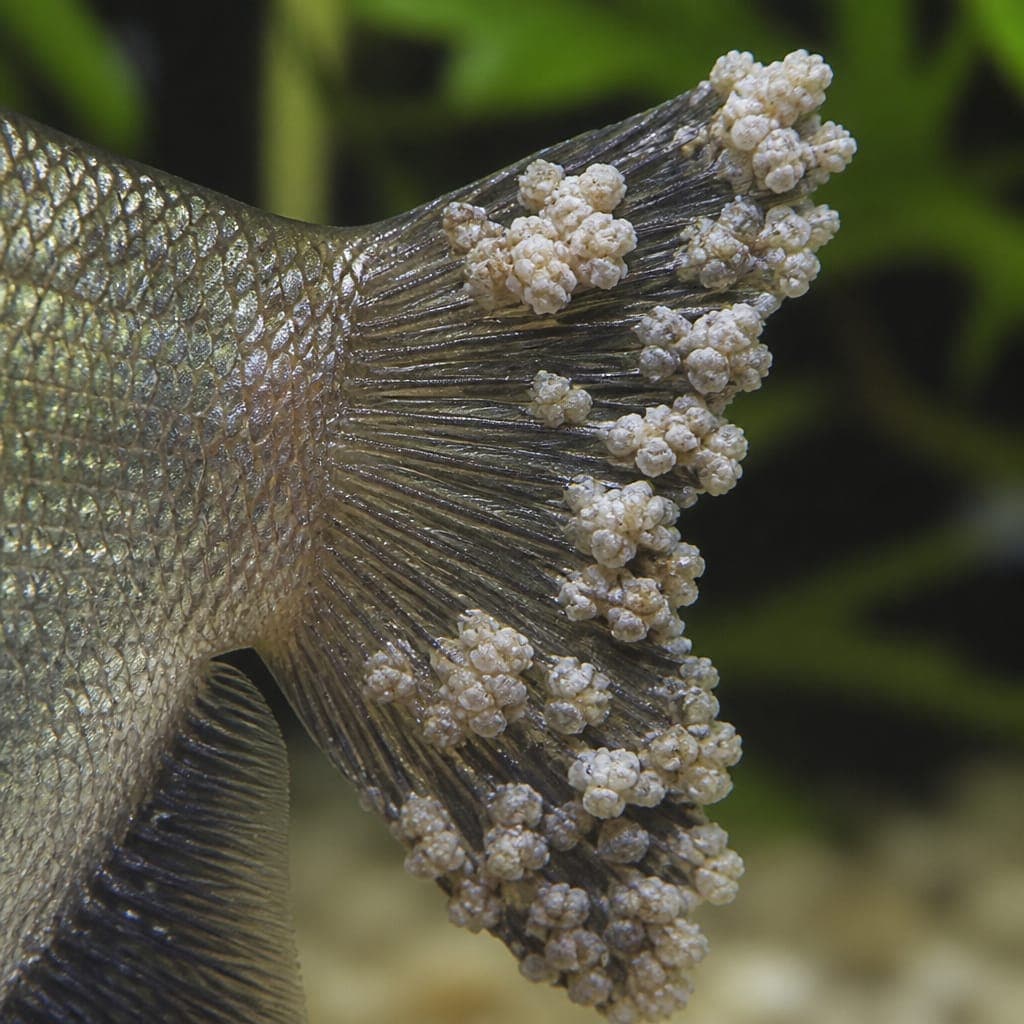
Sometimes mistaken for Ich or fungus, Lymphocystis is a common iridovirus affecting both freshwater and saltwater fish.
- Symptoms: Clusters of white or pinkish cauliflower-like growths on the fins or body. These are actually enlarged cells infected by the virus. They are much larger and more irregular than Ich spots.
- Course: The virus is rarely fatal. The growths usually appear when the fish is stressed and may disappear on their own after a few weeks or months.
- Treatment: There is no cure. Do not try to scrape the growths off, as this releases millions of virus particles into the water and opens the fish to secondary bacterial infections.
- Management: Provide optimal water quality, high-quality food, and a stress-free environment to help the fish's immune system suppress the virus.
2. Dwarf Gourami Iridovirus (DGIV)
A severe and often fatal virus affecting Dwarf Gouramis (Trichogaster lalius).
- Symptoms: Loss of color, lethargy, refusal to eat, and eventually abdominal swelling and death.
- Treatment: None. The mortality rate is very high.
- Prevention: Source fish from reputable breeders.
3. Neon Tetra Disease (NTD)
While often caused by a microsporidian parasite (Pleistophora hyphessobryconis), it is often categorized similarly due to its incurability.
- Symptoms: Restlessness, loss of coloration (especially the red stripe), spinal curvature, and cysts in the muscle tissue.
- Treatment: None. It is highly contagious. Infected fish should be removed and euthanized humanely to protect the rest of the school.
- False NTD: Similar symptoms can be caused by bacterial infections, which are treatable. If in doubt, isolate and attempt antibiotic treatment first.
Managing Viral Outbreaks
Since you cannot ''kill'' the virus with medicine, management is all about immunity.
- Quarantine: Essential for preventing the introduction of viruses. Watch new fish for 4 weeks.
- Stress Reduction: Viruses lurk in the system and flare up when the immune system drops. Keep water parameters stable.
- Nutrition: Feed live or frozen foods enriched with vitamins (like garlic guard or vitamin C soaking) to boost immune response.
- UV Sterilization: A UV sterilizer can kill free-floating virus particles in the water, helping to prevent the spread to other fish, even if it cures the infected individual.
Summary
Viral diagnoses can be disheartening, but they aren't always a death sentence. In the case of Lymphocystis, it's merely a cosmetic blemish that fades with good care. For more severe viruses, strict quarantine and swift removal of infected fish are the only ways to safeguard your tank.