Fish Disease Symptoms: Complete Identification Guide
Identify common fish disease symptoms — ich, fin rot, dropsy, velvet, marine ich and more — with causes, treatment steps, and prevention.
Fish disease symptoms
Fish illness rarely appears without warning. Most outbreaks follow stress — poor water quality, temperature swings, overcrowding, or new arrivals skipping quarantine.
This section covers every fish symptom in our diagnosis catalogue. Match your fish below for photos, causes, and step-by-step treatment.
When something looks wrong, start with water chemistry before you open a medication bottle. Test ammonia and nitrite first — anything above zero is an emergency for the whole tank, not a single-fish problem. Then note temperature stability, recent additions, and whether one fish or many are affected. A lone fish with clamped fins after bullying often needs isolation and rest; a whole community flashing and gasping usually means water, oxygen, or a contagious parasite.
Medicate the display only when the condition is tank-wide or moving the fish would add more stress than the treatment removes. A hospital tank keeps invertebrates, plants, and the biofilter safer, and lets you dose accurately. Log symptoms and parameters in Aquarium Tracker so you can tell whether a change helped or whether the same pattern returns after every water change.
All symptom guides
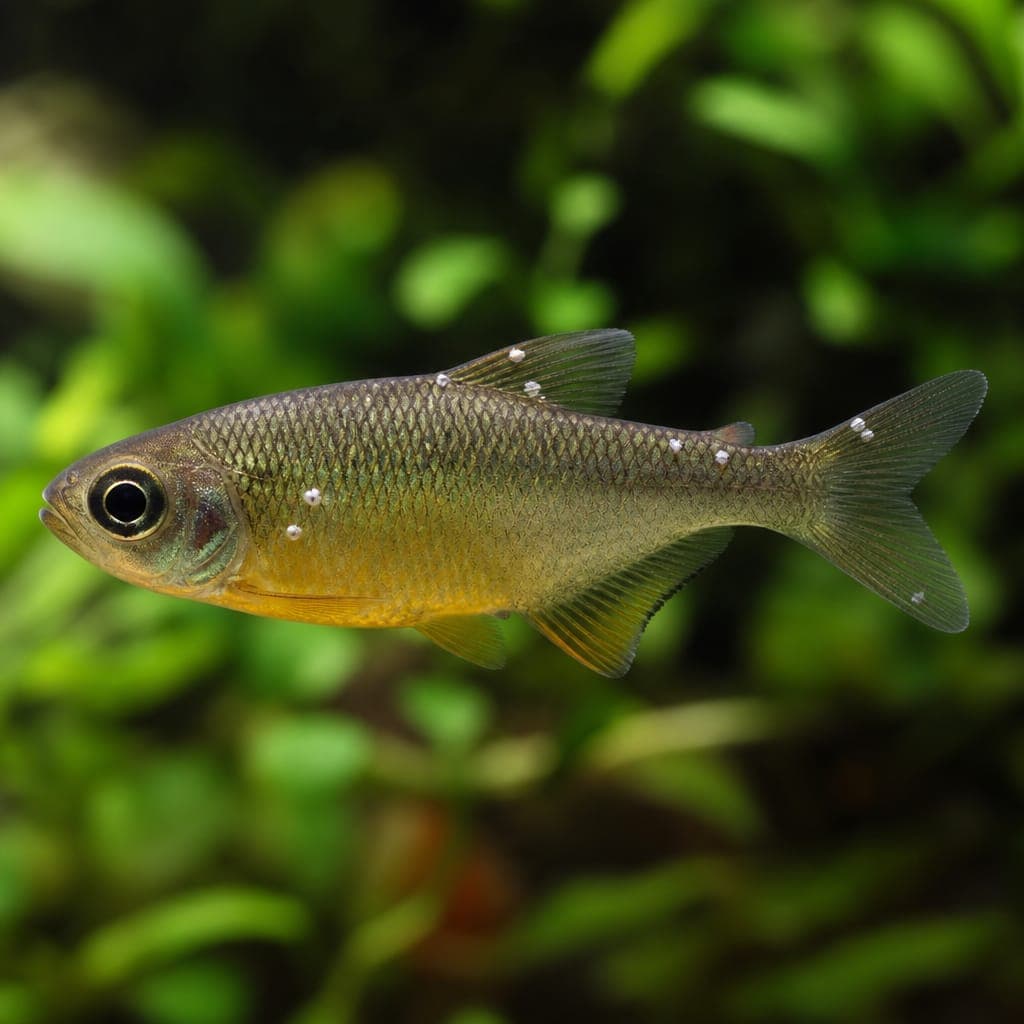
- White spots (possible ich) — Salt-grain sized white spots on fins and body
- Clamped fins / lethargy — Fins held tight against the body, reduced activity or hiding
- Fin rot / fraying fins — Fins appear shredded, milky at the edges or shortening over time
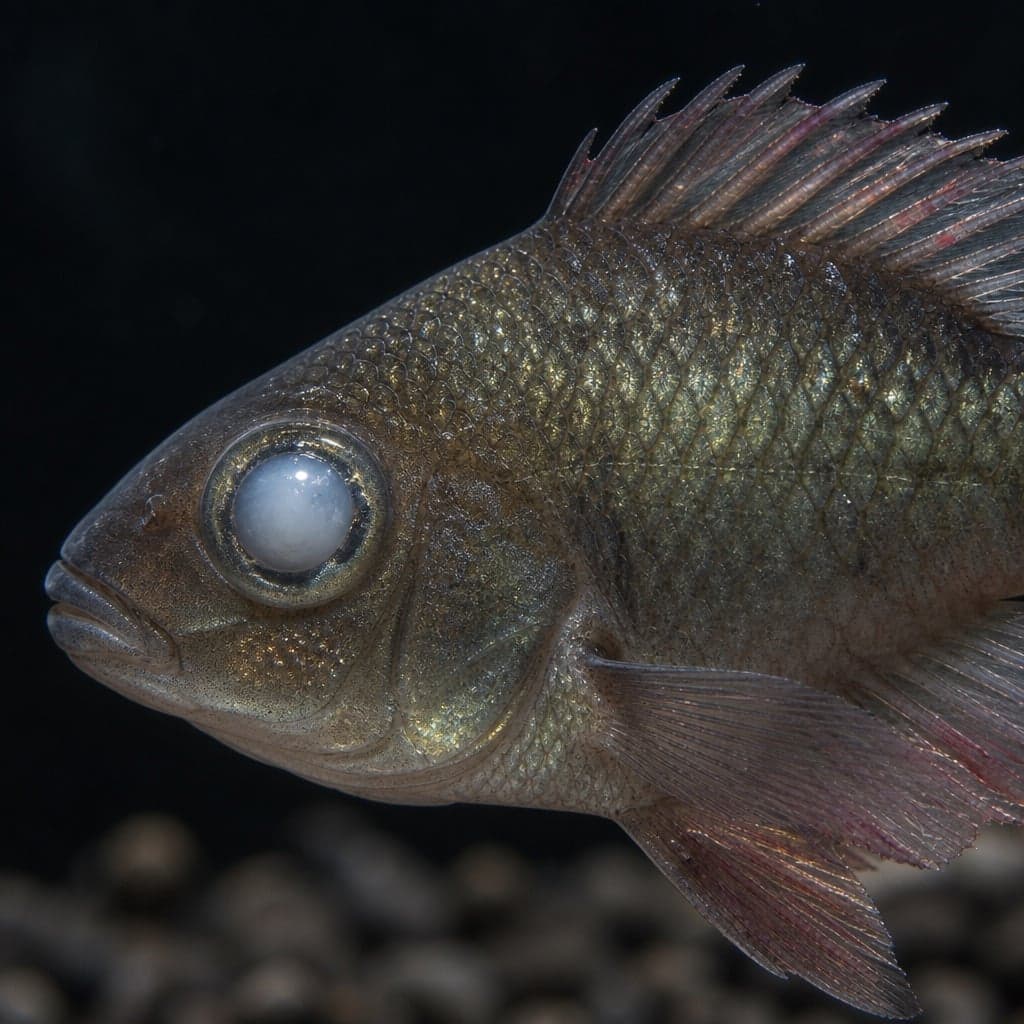
- Cloudy eyes — One or both eyes appear hazy or white
- Bloating / pineconing — Swollen abdomen or scales standing out (pinecone appearance)
- Gasping at the surface — Fish repeatedly gulp air at the surface
- White fuzzy patches — Cotton-like white growth on mouth, fins or body
- Gold dust / velvet — Fine gold or rust-coloured dust on the body
- Bulging eye (popeye) — One or both eyes protrude from the socket
- Floating, sinking or swimming upside down — The fish cannot hold its position
- Open sores / ulcers — A reddened open wound with a pale eroded rim and missing scales
- Red streaks in fins or body — Fine blood-red streaks through the fins or reddened patches on the body
- Flashing / rubbing against surfaces — Fish dart and scrape their flanks against substrate or décor, often with rapid gill movement
- Pits or lesions on the head — Small pitted craters in the flesh above or behind the eye, often in cichlids and discus
- Thin or wasting away — Progressive weight loss with a sunken belly and visible spine despite the fish eating
- Cauliflower-like growths — Clustered white or grey nodules on fins or body resembling a cauliflower floret
- White spots on a marine fish — Fine white spots on a marine fish, often with flashing and rapid breathing
- Peeling mucus on a marine fish — Thick pale mucus sloughing away in patches with laboured breathing, classically in newly imported clownfish
General disease categories
Quick rules
- Test water before medicating — ammonia and nitrite must be zero.
- Quarantine new fish — the cheapest insurance in the hobby.
- Log symptoms and parameters — patterns reveal root causes faster than guessing.
Two weeks of quarantine for new arrivals prevents most imported parasites from ever reaching the display. If you must skip quarantine, at least observe new fish in a bare temporary setup and avoid sharing nets or water between tanks until you are sure they are clean.
Related
- Water science — parameters that prevent disease
- Test kit — essential monitoring equipment
- Algae types — water quality issues often show as algae too