Aquarium Algae Types: Complete Identification Guide
Identify every common freshwater and marine algae type — green water, BBA, diatoms, cyanobacteria, dinoflagellates and more — with causes and targeted fixes.
Aquarium algae types
Algae is not one organism — it covers green algae, diatoms, red algae (BBA, staghorn), and cyanobacteria (blue-green slime). In planted tanks, algae usually signals imbalance between light, CO₂, nutrients, and maintenance.
This section covers every algae type in our diagnosis catalogue. Select your match below for identification photos, causes, and step-by-step fixes.
Start by matching appearance, not by dosing a generic “algae cure.” Soft brown dust on a new tank is usually diatoms and often self-limits; stiff black tufts on leaf edges are black beard algae and respond to CO₂ stability more than scrubbing alone; slimy sheets that peel and smell earthy are cyanobacteria, which need flow and organics work before a blackout. Treating the wrong type wastes weeks and can harm shrimp, plants, or the cycle.
Once you have a match, measure light duration, CO₂ consistency (if injected), nitrate and phosphate, and how dirty the filter media is. Mechanical removal buys time; lasting control comes from plants outcompeting algae under stable conditions. Grazers help hold a corrected tank clean — they rarely fix an uncorrected one.
Freshwater and marine patterns diverge quickly after that first visual match. Planted freshwater tanks are usually about light, injected CO₂ stability, and whether plants have enough nitrogen and phosphate to outgrow opportunistic algae. Reef and marine systems more often track nutrient export, flow dead spots, and lighting photoperiod for photosynthetic pests such as dinoflagellates and Bryopsis — advice aimed at CO₂ injection will not translate. Some names appear in both worlds (hair-like filaments, cyanobacteria sheets), but the levers you turn next should follow the salinity and system type you actually keep.
A light film on glass or a few spots on older leaves is ordinary background growth in a mature tank. Treat it as a crisis when coverage expands day by day, when slime peels in sheets, when green water erases visibility, or when livestock gasp at night because mats are rotting and consuming oxygen. In those cases, remove biomass, correct the cause, and only then use blackouts, UV, or targeted chemistry — never as a substitute for naming the organism and fixing the imbalance.
All algae types
- Green water — The water turns cloudy green
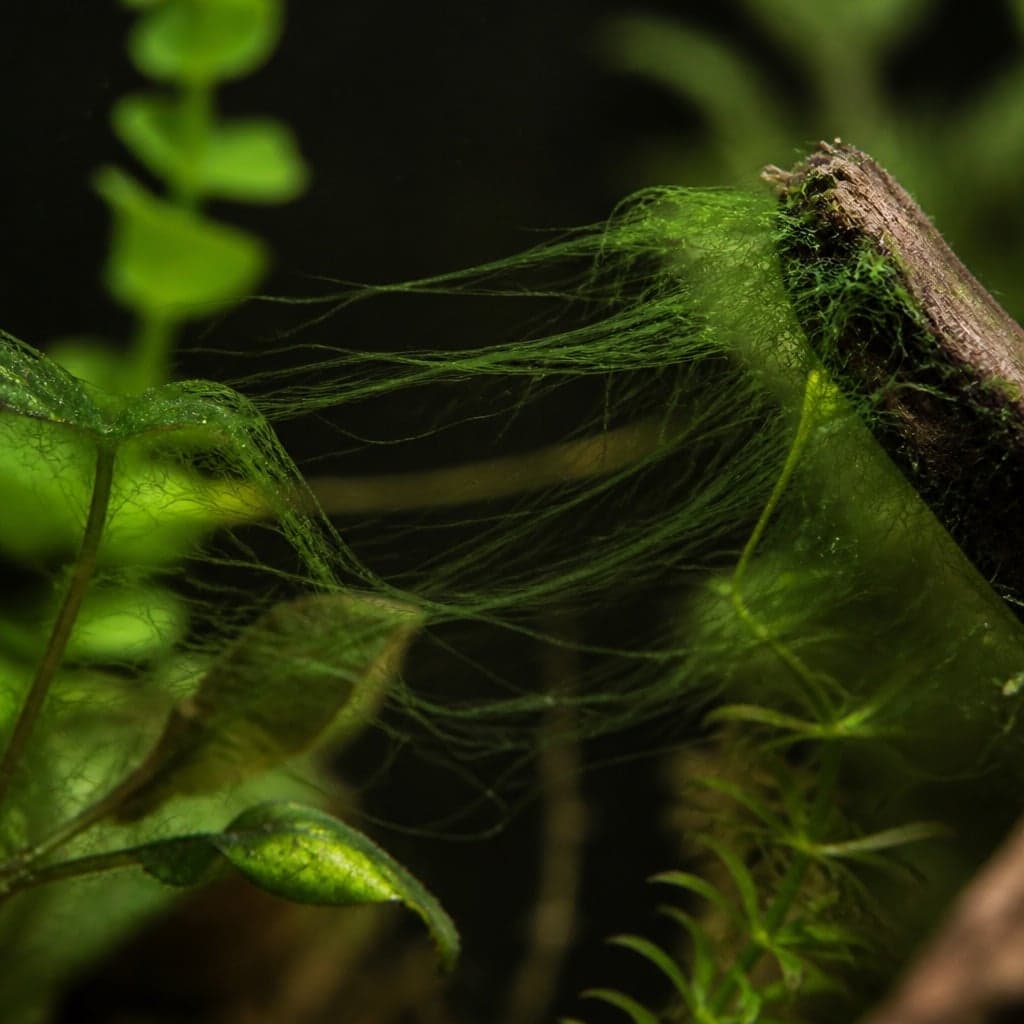
- Hair / thread algae — Long strands of green, black or red algae on plants, hardscape and equipment.
- Brown dust / diatoms — Soft brown coating on glass, substrate and leaves
- Green spot algae — Hard green spots on glass, slow-growing plants and décor
- Blue-green slime (cyanobacteria) — Sheet-like blue-green or reddish slime with a distinct earthy smell
- Fuzzy green on plants — Short fuzzy green growth on leaf edges
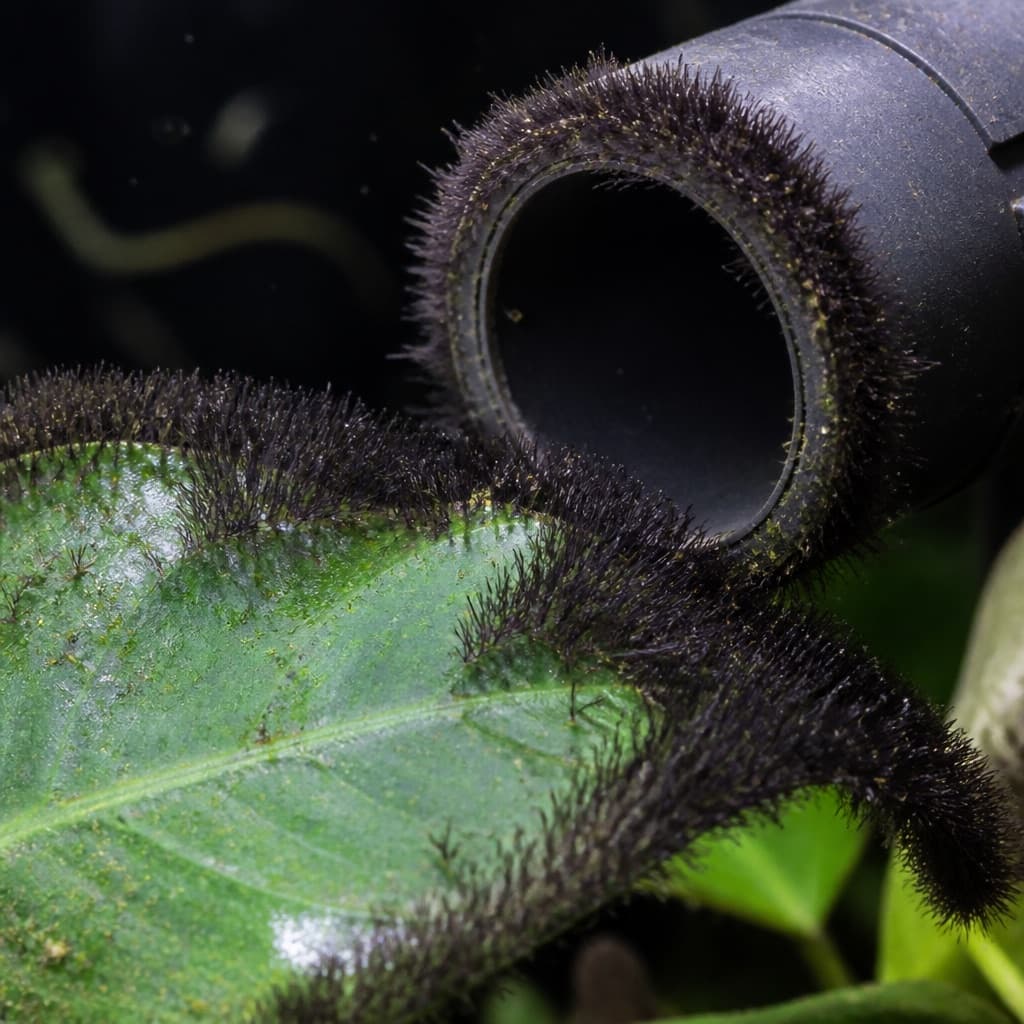
- Black beard / brush algae — Stiff dark purple-black tufts on leaf edges, hardscape and equipment
- Staghorn algae — Sparse grey-green filaments that fork like tiny antlers, usually on leaf edges and hardscape
- Green dust on glass — A fine, even green powdery film coating the glass that wipes away easily but returns within days
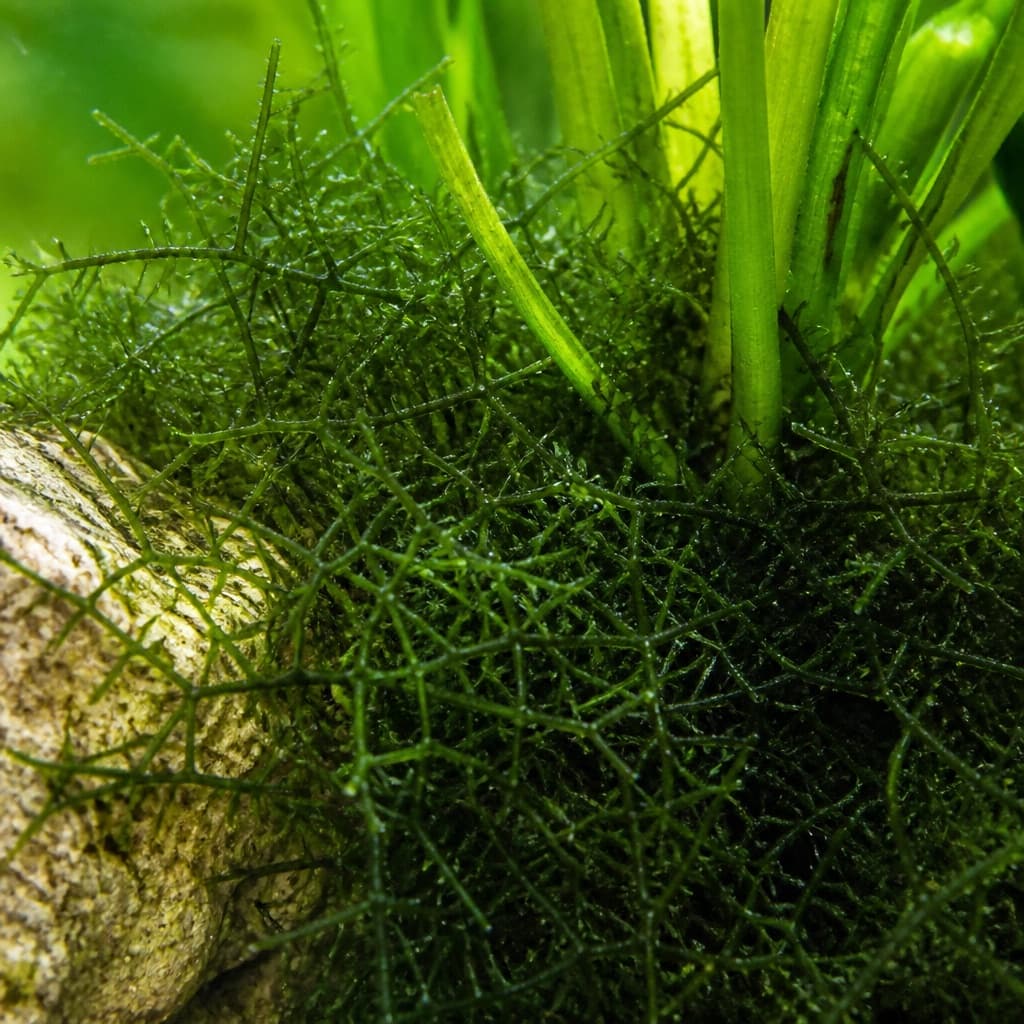
- Cladophora (wiry green mesh) — A tough, dark green tangled mesh of coarse branching strands with a musty smell
- Slimy stringy filaments — Limp, slimy pale green-brown strings clumping over substrate and plant bases
- Brown snotty strings with bubbles — Brown-gold mucus strands trapping small oxygen bubbles, draped over sand and rock
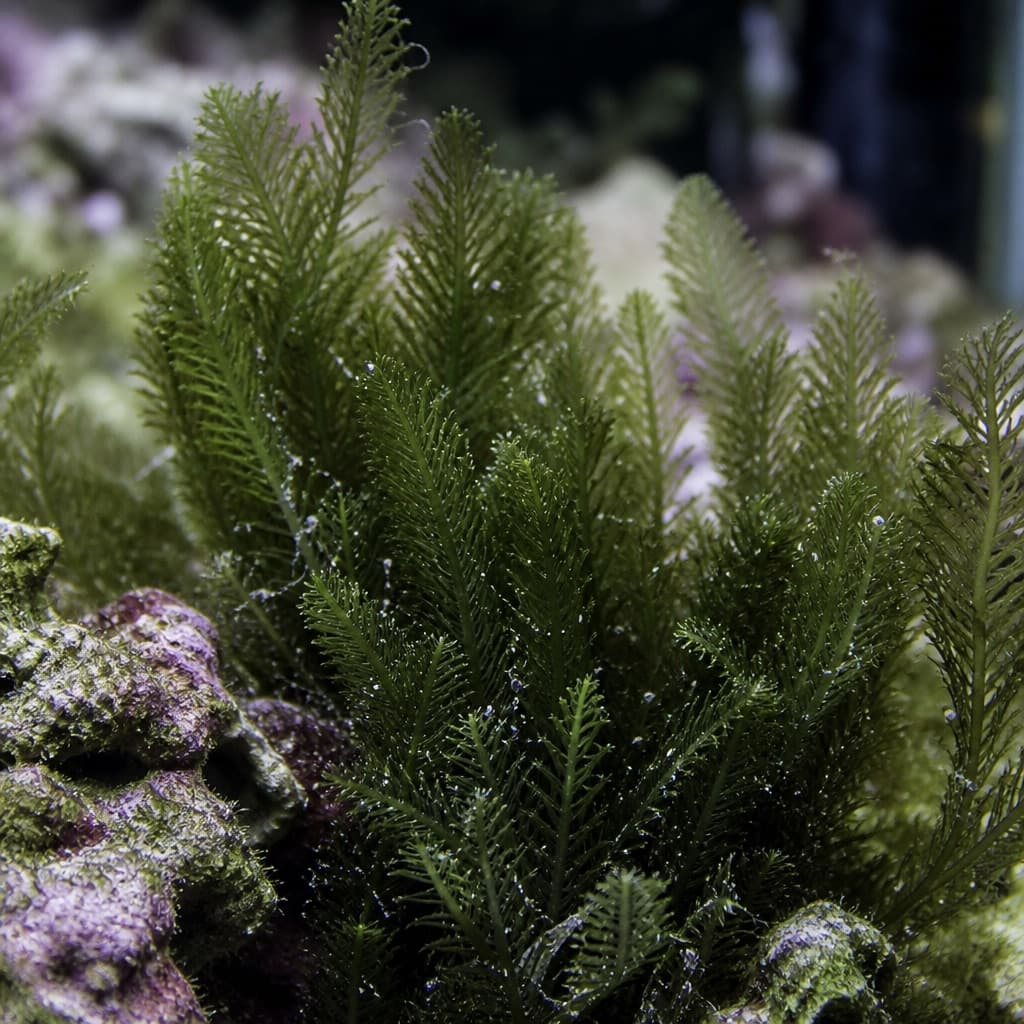
- Bryopsis (feather-like fronds) — Dark green fronds with a distinctly flat, fern-like shape growing from live rock
Quick identification map
Hard green dots that scrape off glass slowly point to green spot algae and often low phosphate relative to other inputs. A smearable green film on glass is green dust — many aquascapers let a new-tank bloom run its course rather than wiping daily. Long filaments on wood and stems usually mean light outrunning stable carbon and flow. Free-floating green water often responds to UV sterilisation plus nutrient and light correction; attached growth does not. Marine tanks add dinoflagellates and Bryopsis, which need reef-specific nutrient and flow diagnosis rather than freshwater CO₂ advice.
Quick rules
- Algae is a symptom — stabilise parameters before relying on chemicals or grazers alone.
- Identify first — hair algae, BBA, GSA, and cyanobacteria need different fixes.
- Log your tank — use Aquarium Tracker to connect symptoms with your nitrate, phosphate, and light settings.
Expect two to four weeks after the cause is corrected before new growth clearly slows. Existing mats rarely dissolve on their own — remove what you can by hand and judge success by whether fresh growth appears, not by whether yesterday’s tufts vanish overnight.
Related
- Water science — chemistry, CO₂, and filtration
- Fish disease — when livestock show stress alongside algae blooms
- Algae science — the imbalance model behind outbreaks