Aquarium Algae Types, Causes, and Control (Freshwater)
Identify common freshwater algae by appearance, match causes to lighting, CO2, and nutrients, and use targeted fixes instead of chasing symptoms alone.
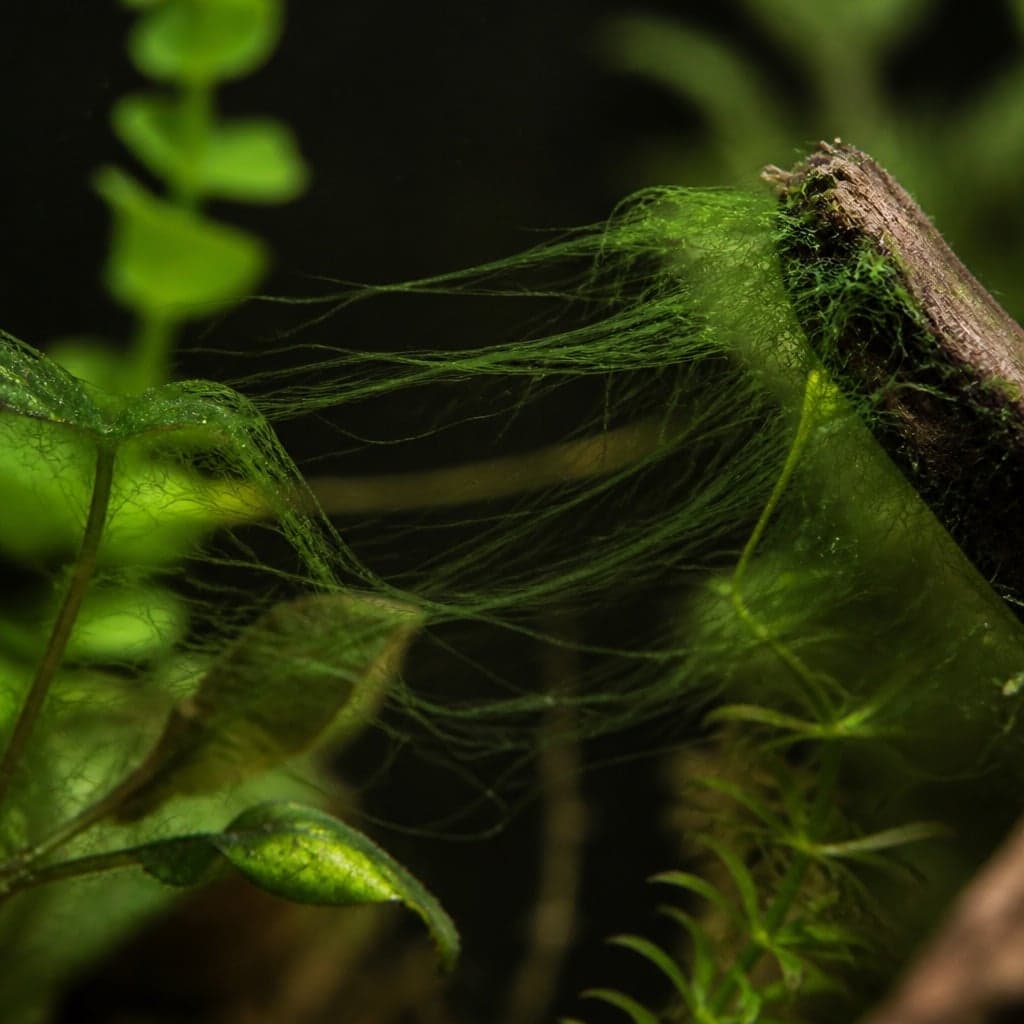
Algae: The Uninvited Guest
Algae is not one organism—it is a category of photosynthetic life, from green algae to cyanobacteria (“blue-green algae”). In planted tanks, algae usually signals imbalance: light too high for CO₂ and nutrients, dirty organic load, or new-tank dynamics. Treat causes, not only symptoms.
New: Browse every algae type with reference photos and targeted fixes in our dedicated Algae knowledge base section.
Quick answer: What is the “golden rule” of algae?
Algae is a symptom. Stabilize CO₂ (if injected), align photoperiod with [PAR], export organics, and verify N/P availability for plants—then mechanical removal and biocontrol work.
Identification and typical drivers
Green spot algae (GSA)
- Look — Hard dots on glass and slow leaves (Anubias).
- Common driver — Low phosphate relative to other inputs.
- Fix — Adjust fertilization; manual scrape; patience—plants must outcompete.
Green dust algae (GDA)
- Look — Film on glass that smears.
- Common driver — New-tank ecology; sometimes imbalance during cycling.
- Fix — Many let it run ~3 weeks, then clean—avoid constant glass wiping that resets succession.
Hair / thread algae
- Look — Filaments on wood and stems.
- Common driver — High light with insufficient/unstable CO₂.
- Fix — Stabilize CO₂, reduce PAR or duration, improve flow.
Black beard algae (BBA)
- Look — Black tufts on edges, driftwood, slow growers.
- Common driver — CO₂ instability or poor distribution.
- Fix — Stabilize injection, clean diffuser, spot-treat cautiously with peroxide/liquid carbon protocols—research dose for your volume and livestock.
Staghorn algae
- Look — Antler-like tufts.
- Common driver — Low CO₂ + high organics (dirty filter, overfeeding).
- Fix — Service filtration, reduce feeding, improve CO₂.
Cyanobacteria (BGA)
- Look — Slimy sheets, earthy smell, peels in layers.
- Common driver — Stagnant flow, organic buildup, sometimes low nitrate relative to other inputs.
- Fix — Increase circulation, manual siphon, blackout protocols; antibiotics are a last resort—understand risks to cycle.
Diatoms (brown algae)
- Look — Dusty brown coating—common in new tanks.
- Common driver — Silicates in tap or new sand.
- Fix — Often self-limits as silicates deplete—OTO snails help clean.
Nutrient balance (big picture)
| Factor | If too high | If too low |
|---|---|---|
| Light | Hair algae, GDA pressure | Slow plant growth |
| CO₂ | Fish stress | BBA, hair algae |
| Nitrate | Green water (sometimes) | BGA pressure in some systems |
| Phosphate | Rarely alone the issue | GSA on leaves |
Diagnosis workflow (before you dose)
Identify the growth, then measure the levers that feed it: photoperiod and intensity, CO₂ stability through the lights-on window (if injected), nitrate and phosphate availability for plants, and how much detritus sits in the filter and substrate. Correct the limiting mismatch first — high light with unstable carbon is a different problem from low phosphate with green spot dots — and only then rely on scrapers, spot treatments, or grazers. For type-by-type photos and fixes, use the dedicated algae catalogue.
A healthy planted tank almost always carries some algae on glass, hardscape edges, or older leaves. That background film is normal competition, not a crisis. Escalation looks different: sheets that smother plants overnight, free-floating green water that kills visibility, or mats that trap mulm and swing overnight oxygen. Those cases justify blackouts, UV for green water, or careful spot treatments — but only after you have named the growth and fixed the mismatch that fed it. Chasing every speck with peroxide while light and CO₂ still fight each other simply resets the same outbreak.
Biocontrol helpers
Amano shrimp, nerites, and some fish graze certain algae—none replace parameter discipline. Grazers hold a corrected tank cleaner; they rarely reverse an uncorrected imbalance on their own.
Common mistakes
- Blackout without fixing CO₂/flow — BGA returns.
- Dosing “algae cures” while ammonia is unstable—fix cycle health first.
- Wiping green dust daily in a new tank — constant glass cleaning can reset succession instead of letting the bloom burn out.
Frequently asked questions
Is algae bad for fish?
Moderate growth is normal; thick mats can trap detritus and swing O₂ at night in extreme cases.
Should I starve nutrients to stop algae?
Usually backfires—plants starve first; fix light/CO₂ balance instead.
Does UV fix algae?
Green water (free-floating algae) often responds; attached types need cause-level fixes plus removal.