Aquarium Medications and Water Chemistry: Risks to Biofilters and Inverts
How copper, antibiotics, and salt affect nitrifying bacteria, plants, and shrimp; when to use a hospital tank; and post-treatment water changes and carbon.
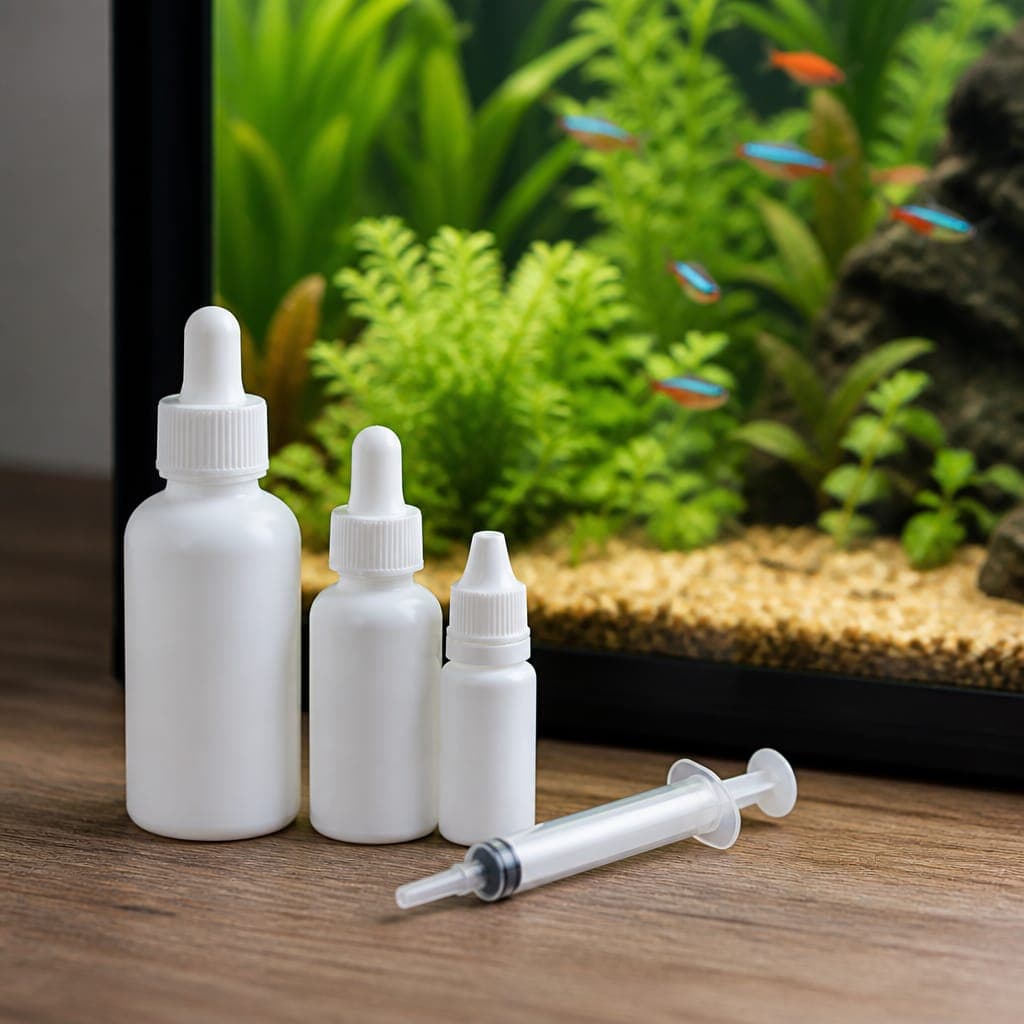
Medications & Chemical Treatments
When disease appears, adding chemicals to the display tank affects every inhabitant—not only the sick fish. Copper wipes shrimp and snails; antibiotics can suppress nitrifiers; salt stresses many plants and scaleless fish at therapeutic doses. Plan treatment with water tests and, when possible, a hospital/quarantine setup.
Quick answer: Should I treat the main tank?
If you can isolate the sick fish, prefer a quarantine or hospital aquarium with simple sponge filtration, no copper-sensitive invertebrates, and easy water changes. Treat the display only when catching fish is impractical or the outbreak is tank-wide—then accept ecosystem trade-offs and test ammonia and nitrite through recovery.
Effects on beneficial bacteria
- Antibiotics (e.g., erythromycin, kanamycin) can crash or suppress nitrification—test ammonia and nitrite daily during and after treatment.
- Copper — Often less harsh to nitrifiers than broad-spectrum antibiotics at labeled doses, but lethal to invertebrates at therapeutic fish doses.
- Methylene blue — Generally easier on bacteria; stains silicone and equipment.
Effects on plants
- Copper — Risk to delicate species at higher doses.
- Salt — Many aquatic plants tolerate only low salinity.
- Glutaraldehyde “liquid carbon” — Can damage mosses and some Vallisneria when overdosed—never treat it as harmless plant fertilizer.
Common additives (beyond classic meds)
Dechlorinators (Prime, Safe, etc.)
Bind chlorine/chloramine and often temporarily detoxify ammonia/nitrite—useful during mini-cycles, not a substitute for fixing biology. See chlorine and chloramines.
Liquid carbon (Excel-style glutaraldehyde)
Algicide at spot doses; overdose risks livestock. Not equivalent to pressurized CO₂ for plant carbon demand.
pH buffers
Many are phosphate-based—can shift algae dynamics if used casually. See pH.
Aquarium salt (NaCl)
Blocks some nitrite uptake in freshwater at modest doses; does not evaporate—remove with water changes. Risky for scaleless fish and many plants at therapeutic levels.
Hospital / quarantine checklist
- Bare or inert bottom for easy cleaning
- Sponge filter (cheap to replace if medications ruin media)
- Heater with safety awareness—see temperature
- No shrimp, snails, or copper-vulnerable stock
- Test kits on hand
After treatment
- Water changes to dilute residuals
- Activated carbon (timed removal) per manufacturer guidance
- Retest ammonia and nitrite before declaring the system “normal”
Frequently asked questions
Can I use half doses to protect bacteria?
Subtherapeutic antibiotics can select for resistance without curing fish. Follow label or veterinary guidance; support with testing and isolation when possible.
Is copper ever safe in planted display tanks?
Risk to plants and long-term invert contamination—isolate copper treatments when feasible.
Do “natural” herbal cures hurt filters?
Treat unknown blends as biologically active; test ammonia if anything seems off after dosing.