Aquarium Heater
Tropical stability guide: Choosing the best aquarium heater. Compare glass, titanium, and inline options for 100% reliable temperature management.
Aquarium Heater
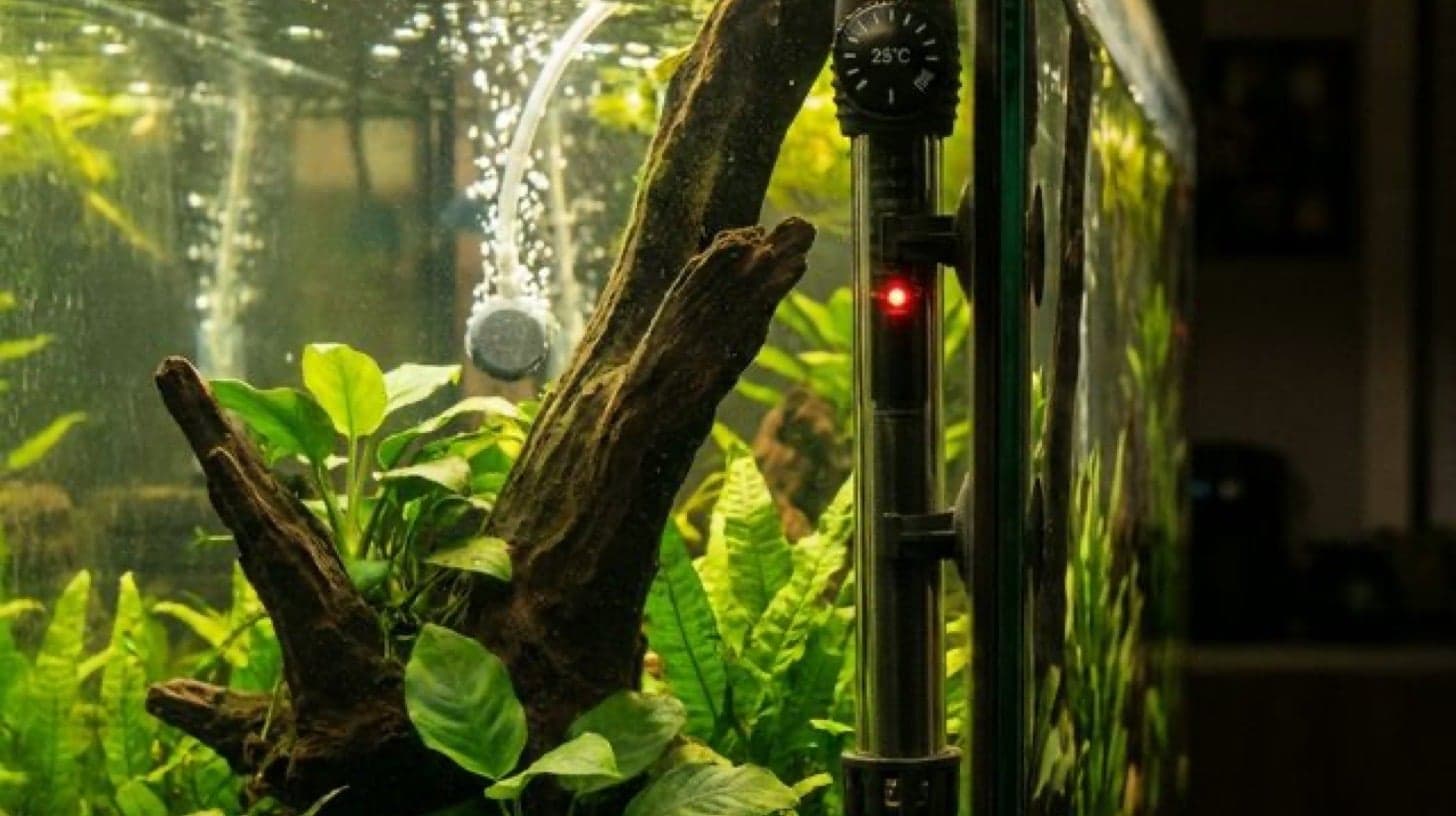
An aquarium heater is essential for maintaining the stable tropical temperatures that most planted tank inhabitants require. Tropical fish and plants thrive in water between 24–28°C (75–82°F), and even small temperature fluctuations can cause stress, disease, and inhibited growth. A reliable, accurately calibrated heater is one of the most important pieces of equipment in your setup.
Types of Aquarium Heaters
Submersible Glass Heater
The most common and affordable type. A glass tube containing a heating element with an adjustable thermostat, fully submerged in the tank.
- Pros: Cheap, widely available, works well for most setups.
- Cons: Visible, fragile glass, can be inaccurate.
Inline Heater
Installed in the canister filter's return hose, outside the tank. Water is heated as it flows through.
- Pros: Invisible, no equipment in the tank, even heat distribution.
- Cons: More expensive, requires compatible hosing, slightly larger footprint.
Titanium Heater
A metal heating element with an external digital controller. Extremely durable and precise.
- Pros: Unbreakable, highly accurate, adjustable controller.
- Cons: Expensive, controller requires positioning outside the tank.
Sump Heater
Any submersible heater placed inside the sump rather than the display tank.
- Pros: Hidden from view, doesn't affect display aesthetics.
- Cons: Requires a sump setup.
Sizing Guide
| Tank Volume | Recommended Wattage |
|---|---|
| Up to 30L | 25–50W |
| 30–60L | 50–100W |
| 60–120L | 100–150W |
| 120–250L | 150–250W |
| 250L+ | 250–300W or dual heaters |
Rule of Thumb: 1 watt per litre for rooms at normal ambient temperature. In cold rooms, increase to 1.5–2 watts per litre.
Placement & Safety
- Position near the filter intake or outflow to ensure heated water circulates evenly.
- Angle the heater slightly (at ~45°) for efficient heat convection.
- Never operate a heater outside of water — it will overheat and crack.
- Use a controller: An external temperature controller adds a safety layer, cutting power if the heater malfunctions.
- Dual heaters: For large tanks, use two smaller heaters instead of one large one — if one fails, the other provides backup.
Trusted Brands
- Eheim Jäger: The industry standard for reliable glass heaters.
- Hydor ETH: Inline heater — invisible and precise.
- Cobalt Aquatics Neo-Therm: Flat, modern design with accurate digital thermostat.
- Oase HeatUp: Integrated with Oase filtration systems.
- Finnex: Titanium heaters with external digital controllers.
Pros & Cons
Advantages
- Temperature Stability: Prevents dangerous fluctuations.
- Essential for Tropicals: Most popular fish and plants require heated water.
- Adjustable: Dial in precise target temperatures.
Considerations
- Aesthetics: Glass heaters are visible and can be unsightly.
- Failure Risk: Stuck-on heaters can overheat and cook the tank — use a controller.
- Glass Fragility: Standard heaters can crack if bumped.
- Electricity Cost: Continuous power consumption.