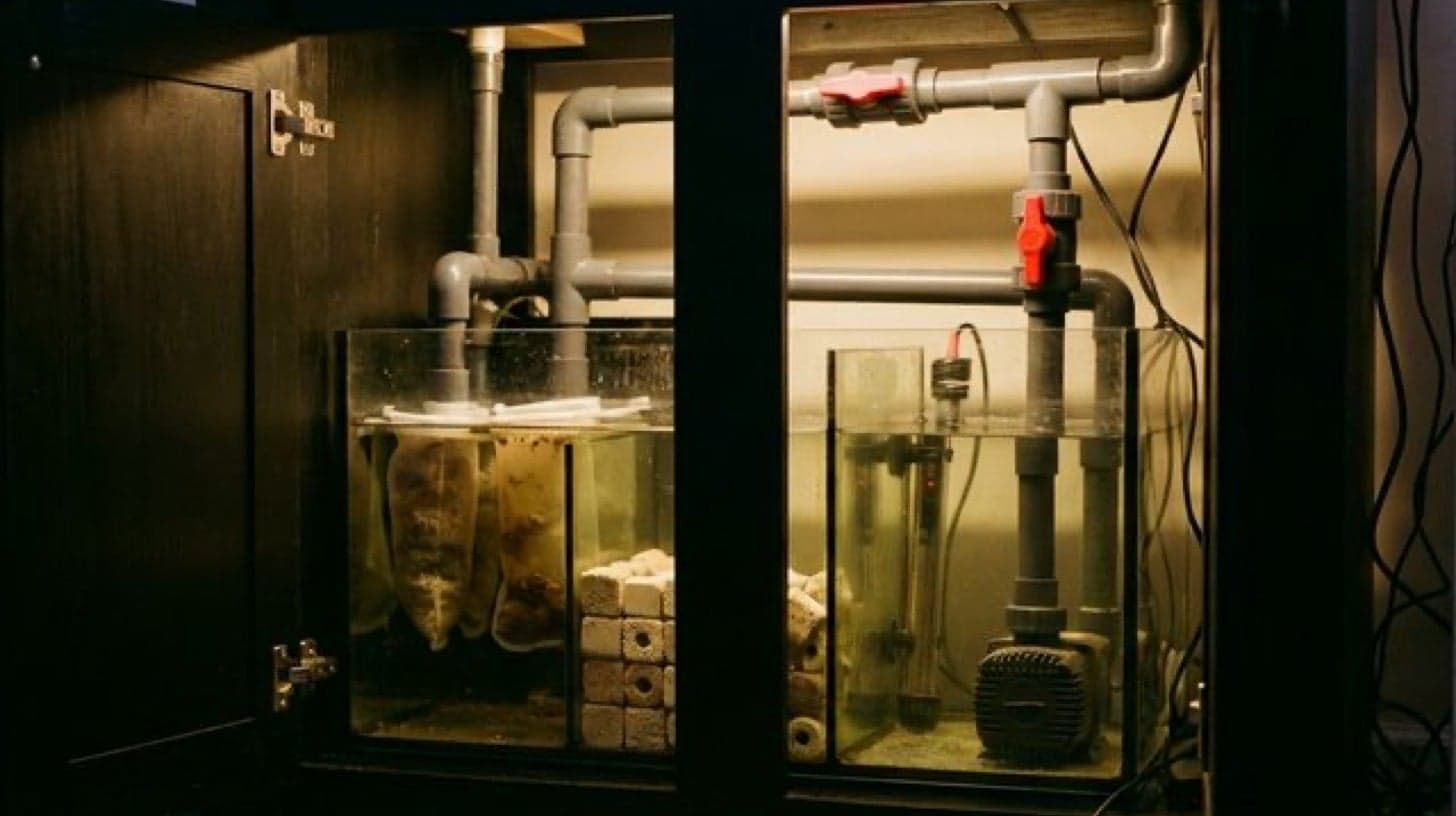
Canister Filter
The workhorse of filtration: A comprehensive guide to canister filters. Learn about multi-stage media, choosing the right flow rate, and maintenance for crystal clarity.

Canister Filter
The canister filter is the gold standard for planted aquarium filtration. Housed externally beneath or beside your tank, it draws water through dedicated intake and output hoses, passing it through multiple stages of mechanical, biological, and chemical media before returning it purified.
How a Canister Filter Works
Water is drawn from the tank through an intake pipe, pulled down into the sealed canister body by an electric impeller pump. Inside, the water passes through stacked media trays or baskets — typically arranged from coarse mechanical filtration at the bottom to fine biological media at the top. The cleaned water is then pushed back into the tank via the output pipe.
Filtration Stages
- Mechanical: Coarse sponge pads trap large debris and detritus.
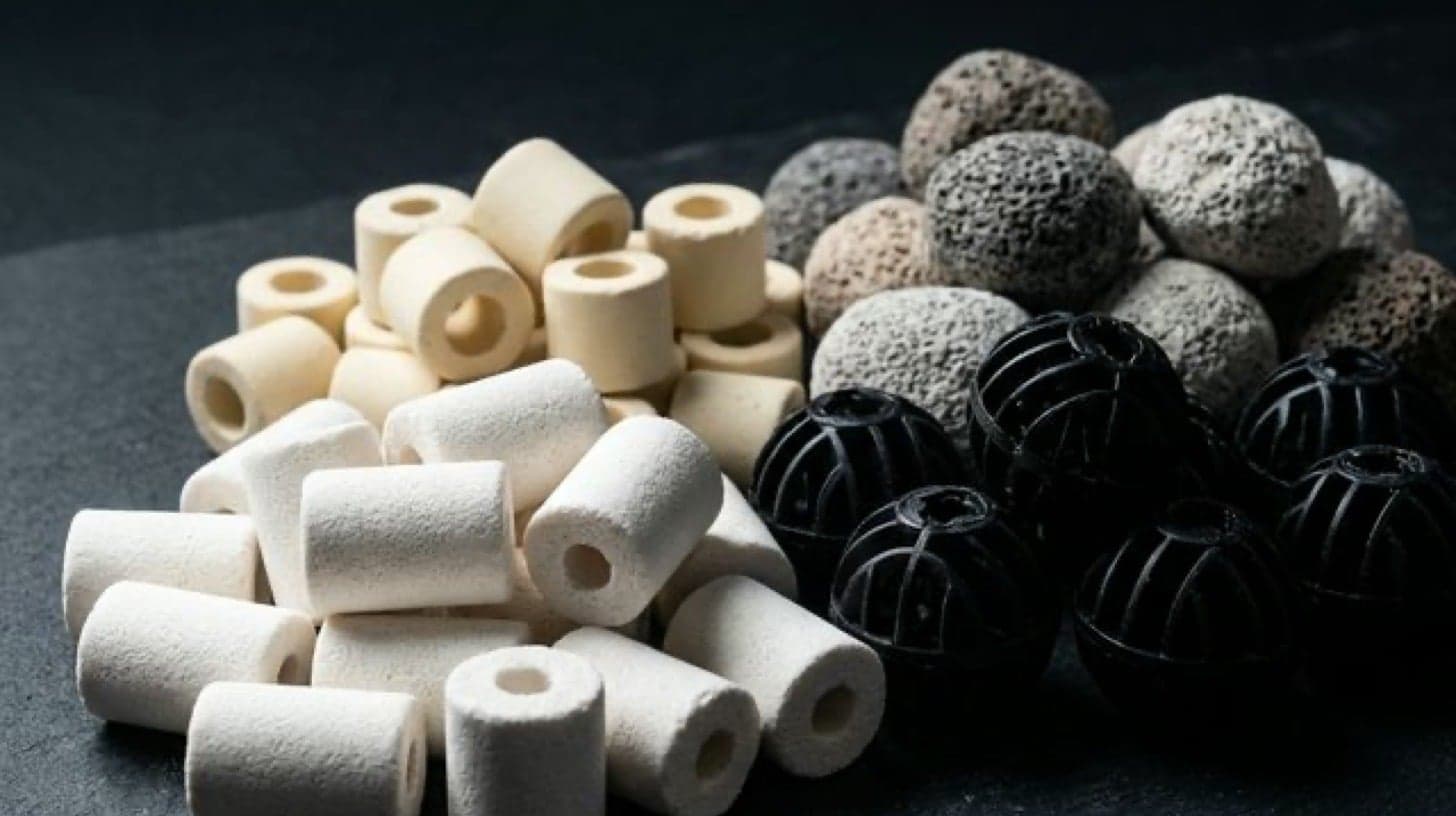
- Biological: Porous media (ceramic rings, sintered glass, bio-balls) house beneficial nitrifying bacteria that convert ammonia to nitrite, then nitrate.
- Chemical (Optional): Activated carbon or Purigen removes dissolved organics, tannins, and odours.
- Fine Polish: Fine filter floss or pads polish the water to crystal clarity before return.
Why Aquascapers Prefer Canisters
- High Media Volume: More media means more biological filtration capacity, which is critical in heavily planted, high-bioload tanks.
- Customisable: You choose the exact media configuration for your needs.
- Hidden: The canister sits in the cabinet, keeping the display tank clean and uncluttered.
- Quiet: Modern canisters are near-silent in operation.
- Compatible with Lily Pipes: The hose connections pair seamlessly with glass or stainless steel lily pipes for an aesthetic in-tank setup.
Choosing the Right Size
| Tank Volume | Recommended Flow Rate | Example Models |
|---|---|---|
| Up to 60L | 300–600 L/hr | Oase BioMaster 250, Eheim Classic 250 |
| 60–200L | 600–1000 L/hr | Oase BioMaster 600, Fluval 307 |
| 200–400L | 1000–1500 L/hr | Oase BioMaster Thermo 850, Eheim Pro 4+ 600 |
Rule of Thumb: Aim for a turnover rate of 6–10x your tank volume per hour. For a 100L tank, a filter rated at 600–1000 L/hr is ideal.
Maintenance
- Frequency: Clean mechanical media every 2–4 weeks. Rinse biological media in old tank water only when flow noticeably decreases (every 3–6 months).
- Never: Rinse biomedia in tap water — chlorine will kill beneficial bacteria.
- Impeller: Check and clean the impeller every 6 months to maintain flow.
- Hoses: Clean hoses with a long brush quarterly to prevent biofilm buildup.
Trusted Brands
- Oase: BioMaster series, excellent build quality and self-priming.
- Eheim: The original canister filter brand, legendary reliability.
- Fluval: Popular and widely available with integrated features.
- ADA: Super Jet series, premium performance for serious aquascapers.
Pros & Cons
Advantages
- Filtration Power: Unmatched biological and mechanical capacity.
- Quiet: Near-silent operation.
- Customisable: Full control over media selection.
- Clean Look: Hidden from view.
Considerations
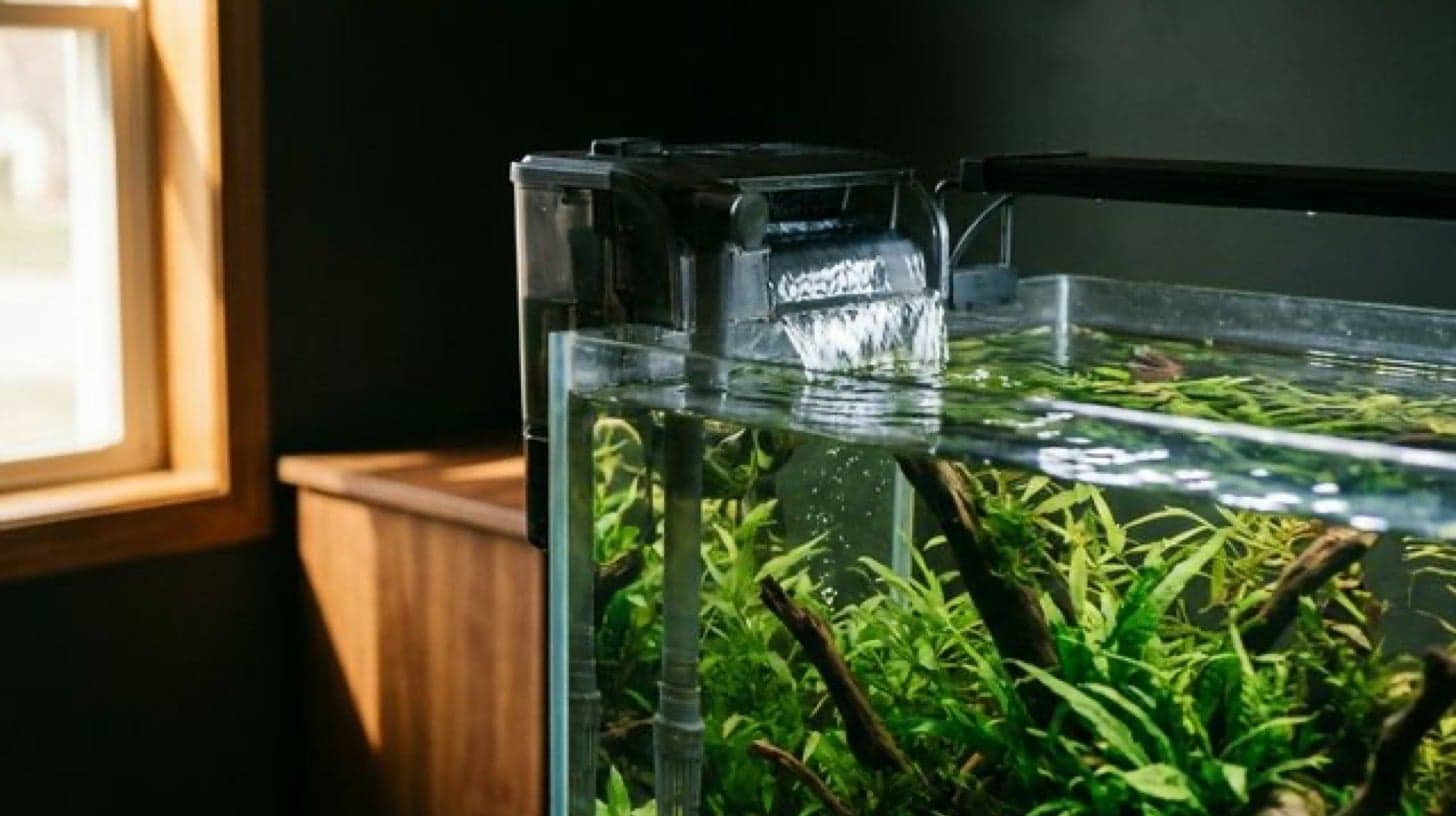
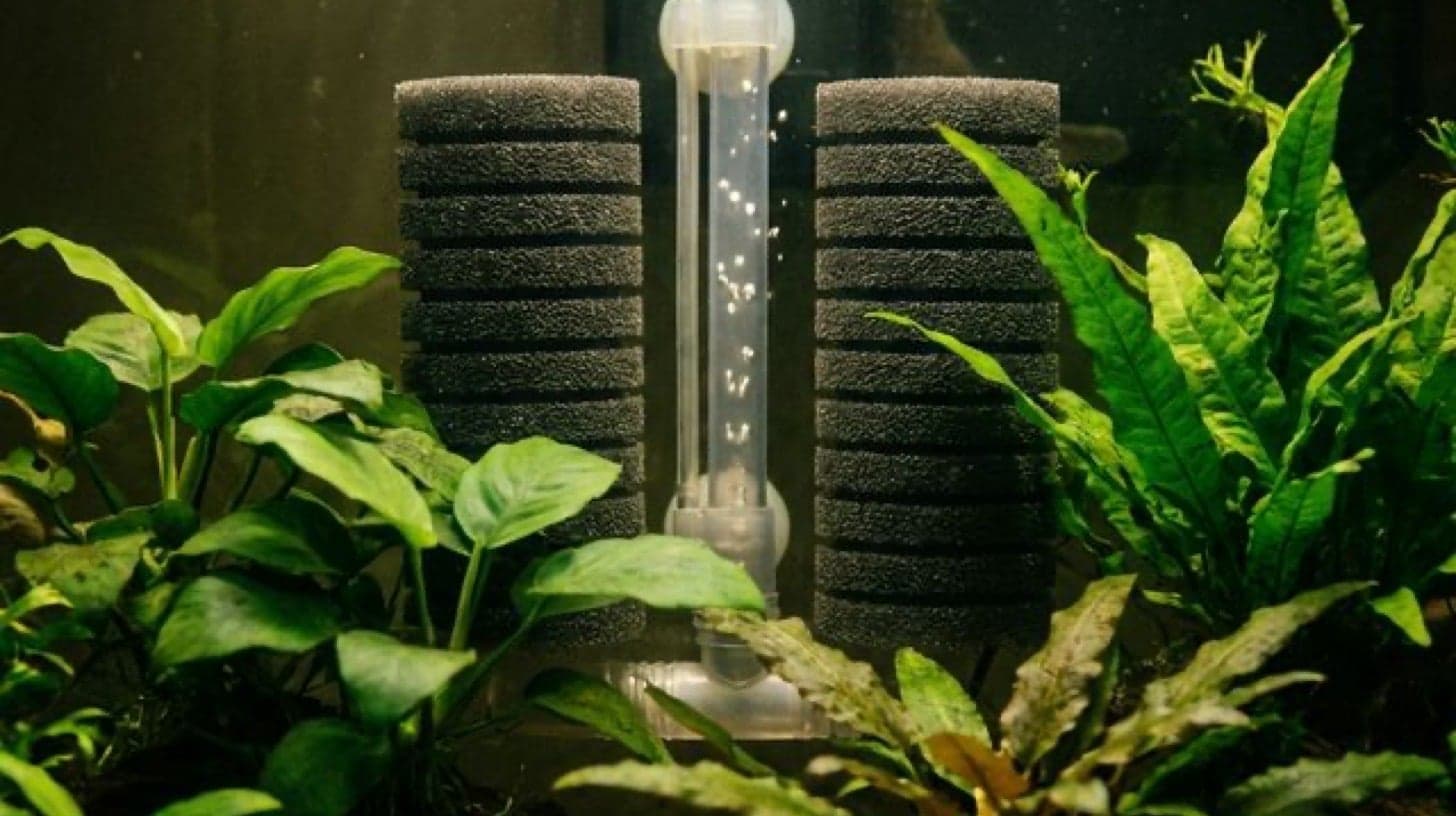
- Cost: More expensive than HOB or sponge filters.
- Maintenance: Requires disconnecting hoses for cleaning.
- Space: Needs cabinet or stand space below the tank.
- Leak Risk: Hose connections must be secure; always double-check after maintenance.