Biomedia
Building the nitrogen cycle: A master guide to biological filter media. Compare sintered glass, ceramic rings, and K1 media for maximum bacterial capacity.
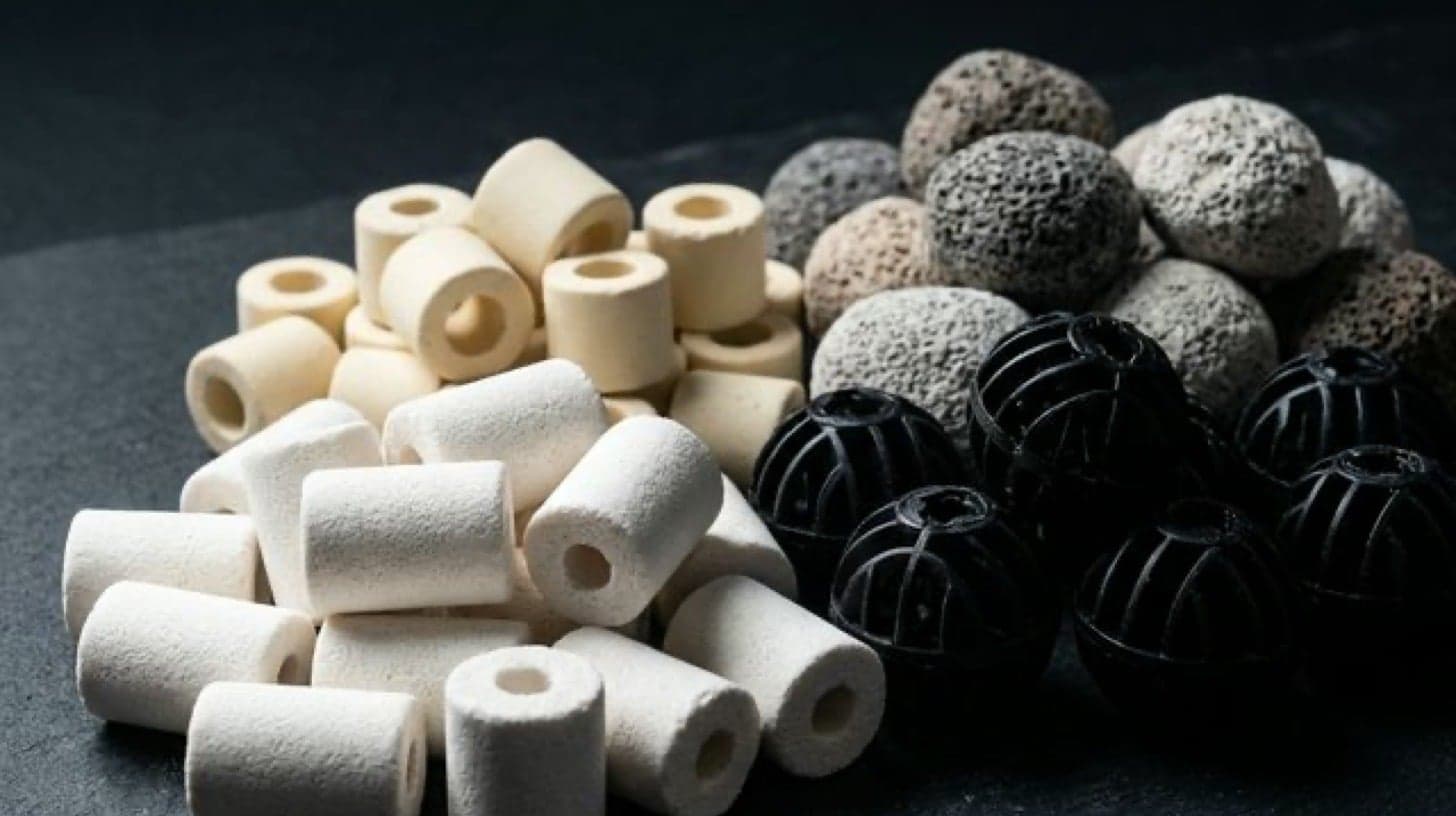
Biomedia
Biological filter media, or biomedia, is the most critical component of any aquarium filtration system. It provides the surface area on which beneficial nitrifying bacteria colonise, driving the nitrogen cycle that converts toxic ammonia into harmless nitrate. The quality and quantity of your biomedia directly determines your tank's biological carrying capacity.
How Biomedia Works
Beneficial bacteria — primarily Nitrosomonas and Nitrospira — colonise the porous surfaces of biomedia. As water flows over these surfaces:
- Ammonia → Nitrite: Nitrosomonas bacteria oxidise ammonia (NH₃) into nitrite (NO₂⁻).
- Nitrite → Nitrate: Nitrospira bacteria convert nitrite into nitrate (NO₃⁻).
- Nitrate Removal: In anaerobic zones deep within highly porous media, denitrifying bacteria can convert nitrate into nitrogen gas.
Key Metric: Surface Area
The more surface area per volume, the more bacteria can colonise, and the more bioload your system can handle. Premium biomedia is engineered to maximise this with intricate internal pore structures.
Types of Biomedia
| Media Type | Surface Area | Best For | Examples |
|---|---|---|---|
| Ceramic Rings | Moderate | General use, canisters | Eheim Substrat Pro, Fluval BioMax |
| Sintered Glass | Very High | High-bioload planted tanks | Siporax, Seachem Matrix |
| Plastic Bio-Balls | Low | Wet/dry trickle filters, sumps | Generic bio-balls |
| Lava Rock | Moderate | Budget option, sumps | Natural lava rock |
| K1 / Moving Bed | Moderate | Sumps, moving bed reactors | Kaldnes K1, K3 |
| Pumice | Moderate-High | Sumps, budget alternative | Natural pumice stone |
Top Biomedia Products
- Siporax by Sera: Sintered glass with extremely high surface area and denitrification capability. The go-to for serious aquascapers.
- Seachem Matrix: Porous pumice-like stone with internal macro-pores for both nitrification and denitrification.
- Eheim Substrat Pro: Spherical sintered glass balls, excellent flow-through and bacterial colonisation.
- Fluval BioMax: Ceramic rings with internal channels, affordable and effective.
- MarinePure: Ceramic blocks with the highest surface area per unit, ideal for sumps and reactors.
Placement & Flow
- Place biomedia after mechanical filtration (sponge/filter floss) so it doesn't clog with debris.
- Ensure a moderate, consistent flow through the media — too fast and bacteria can't process effectively; too slow and dead zones form.
- In canisters, biomedia typically occupies the middle and upper trays.
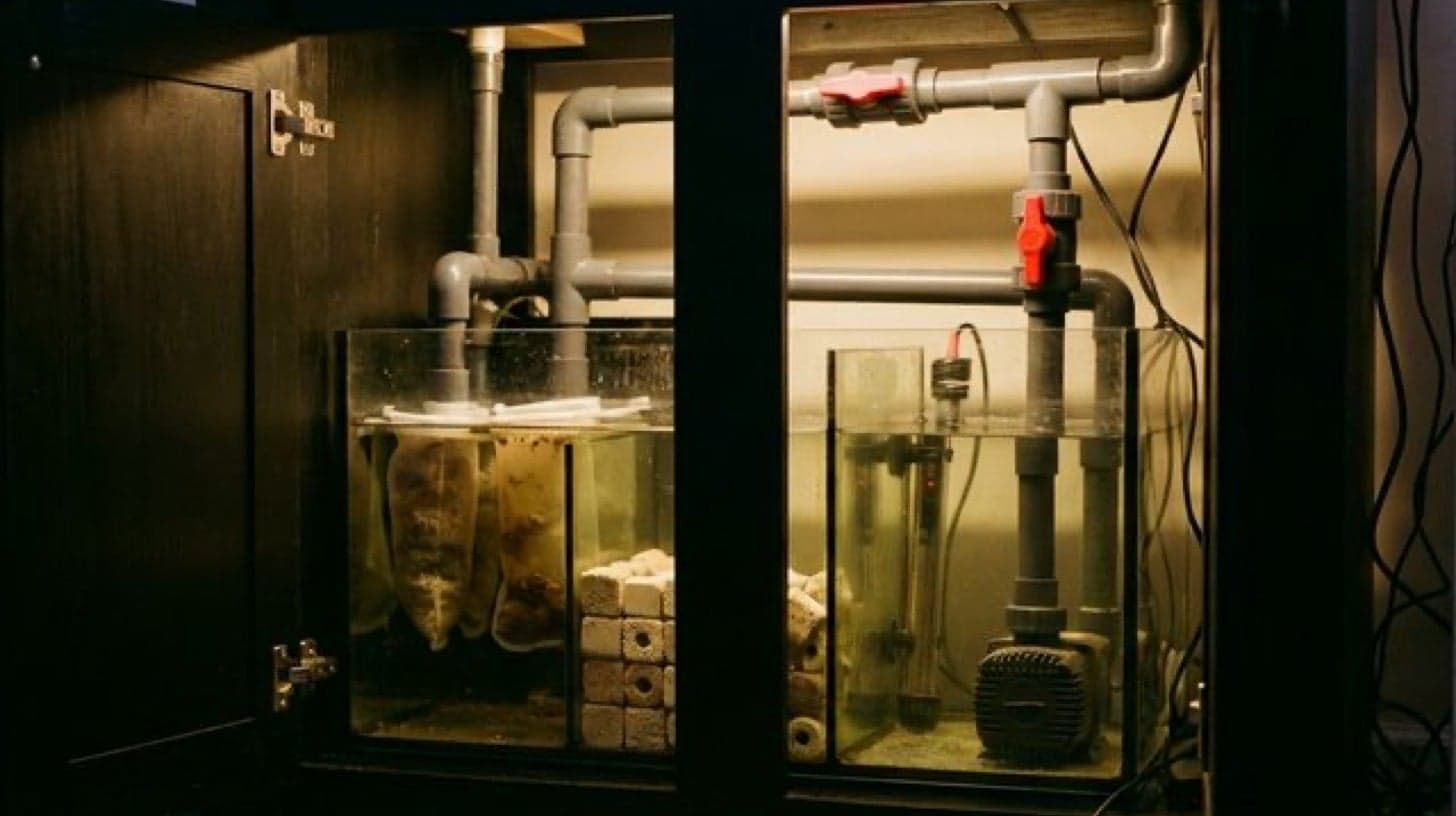
- In sumps, dedicate an entire chamber to biomedia.
Maintenance
- Never rinse biomedia in tap water (chlorine kills bacteria).
- Gently rinse in old tank water only when flow is noticeably reduced.
- Replace only 25–50% of biomedia at a time to preserve bacterial colonies.
- Most quality biomedia lasts 2–5 years before it begins to break down.
Pros & Cons
Advantages
- Critical Function: Drives the nitrogen cycle — without it, your tank cannot process waste.
- Long-Lasting: Quality media lasts years.
- Low Maintenance: Rarely needs attention.
- Scaleable: Add more media for higher bioload.
Considerations
- Cost: Premium media (Siporax, MarinePure) can be expensive.
- Flow Sensitivity: Poor placement can create dead zones.
- Patience: Needs 4–6 weeks to fully colonise during cycling.