CO2 Injection for Planted Aquariums: Drop Checkers, pH, and Safety
Why injected CO2 boosts plant growth, how drop checkers relate to pH and KH, photoperiod timing with solenoids, and fish-safe limits versus algae control.
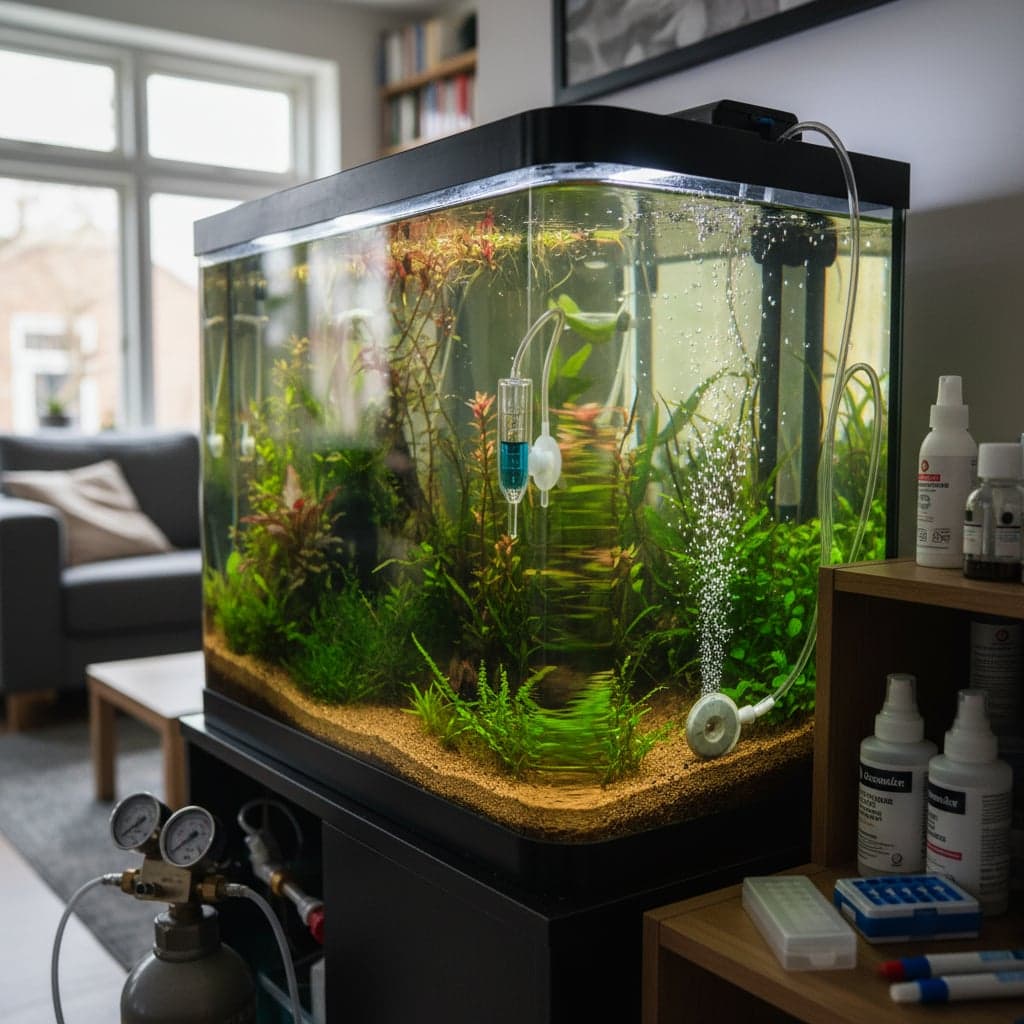
CO2: The Plant Carbon Lever
In most planted tanks, carbon—not only light or nitrate—is the growth bottleneck. Algae tolerates low CO₂ better than many higher-order plants, which is why high-light setups without CO₂ often skew toward algae. Injected CO₂ raises dissolved carbon availability so plants can outcompete algae when nutrition and flow are balanced.
Quick answer: Do I need CO₂?
No for low-light crypts, ferns, and Anubias. Yes for dense carpets, red stems, and high PAR layouts where carbon becomes limiting—pair with stable nutrients and disciplined photoperiod.
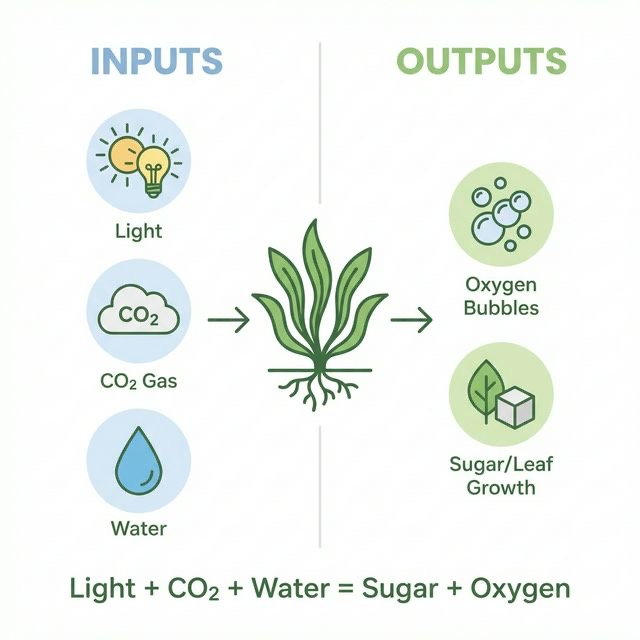
The photosynthesis equation (why carbon matters)
$$ 6CO_2 + 6H_2O + Light \rightarrow C_6H_O_6 + 6O_2 $$
Plants assemble sugars from CO₂ and water under light. More light without more CO₂ shifts advantage to species (including algae) that tolerate low carbon conditions.
Measuring CO₂ with a drop checker
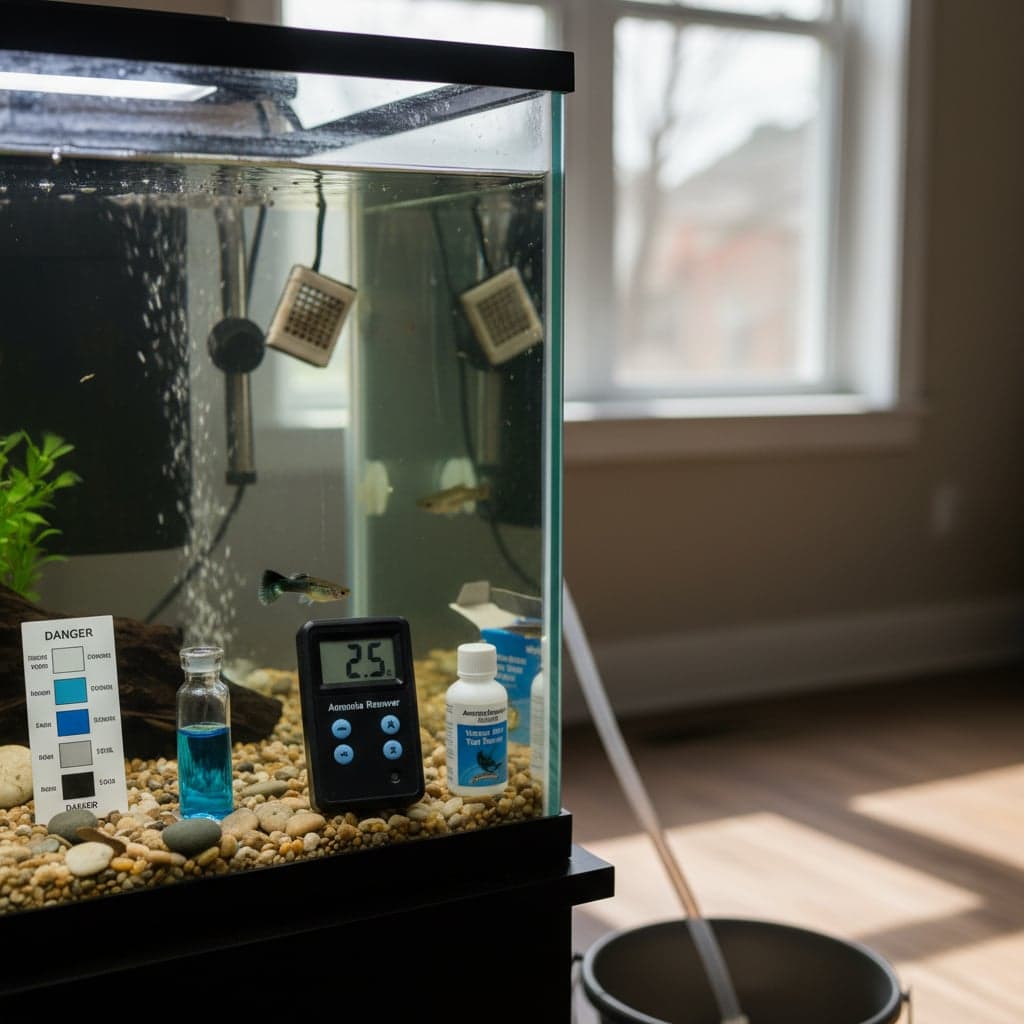
Liquid CO₂ tests are uncommon; hobbyists use a drop checker with 4 dKH indicator fluid:
- Blue — Often low CO₂ for high-light goals (plants carbon-limited).
- Lime green — Common target band for high-tech (verify against fish behavior).
- Yellow — Risk of CO₂ toxicity and low O₂ combination—raise surface agitation, reduce bubble rate, verify oxygen.
pH, KH, and CO₂ (conceptual)
Dissolved CO₂ forms carbonic acid, lowering pH. Charts relate pH + KH to CO₂ only when carbonates dominate buffering—tannins, phosphate buffers, and other acids distort “chart ppm” readings. Treat charts as guides, not gospel—fish posture and drop checker color are safety checks.
Safety workflow
- Solenoid timer — CO₂ on ~1 hour before lights, off ~1 hour before lights to avoid nighttime CO₂ loading when plants respire.
- Surface ripple in one zone — Trade some CO₂ for O₂ exchange—especially in warm, dense stocks.
- Tune slowly — 10–20% daily adjustments beat doubling bubble counts before observing fish.
Common mistakes
- Chasing yellow drop checkers for “maximum growth” while fish pipe at the surface—that is O₂/CO₂ stress, not healthy vigor.
- **Ignoring dirty diffusers—Inconsistent dissolution creates BBA-friendly CO₂ swings.
Frequently asked questions
Can I use liquid carbon instead?
Excel-type products are not a 1:1 substitute for gas CO₂ for high-demand layouts—they help some tanks and spot-treat algae cautiously.
Does CO₂ lower KH?
Not directly like acid buffers—but pH shifts can affect perception of stability—test on a schedule.
Is CO₂ safe for shrimp?
Often yes at moderate levels with good O₂—watch molting issues and TDS stability alongside GH.