GH and KH Explained: General Hardness vs Carbonate Hardness
What aquarium GH and KH measure, how they affect fish, plants, and pH stability, typical ranges by biotope, and how to test and maintain hardness safely.

GH & KH: The Backbone of Water Chemistry
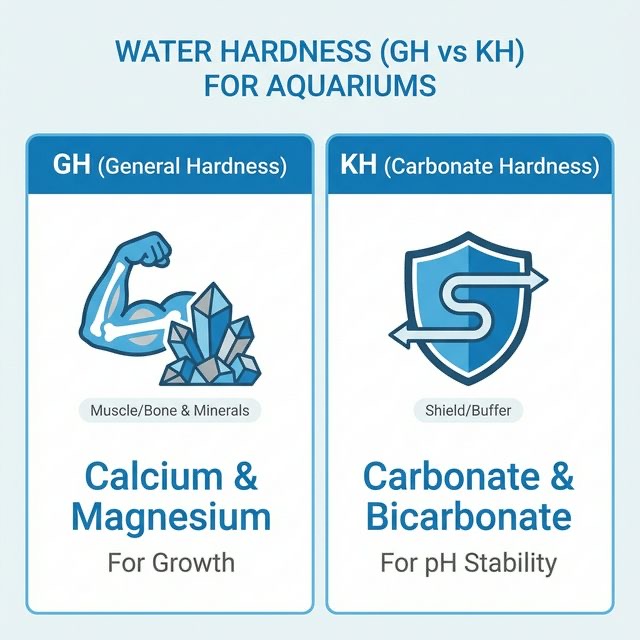
When aquarists say hard or soft water, they usually mean GH (general hardness) and KH (carbonate hardness / alkalinity)—two different measurements that get lumped together. GH is about calcium and magnesium for fish and plants. KH is about buffering and pH stability. Confusing them leads to wrong remineralizers, unstable pH, and unhappy shrimp.
Quick answer: What should I test first?
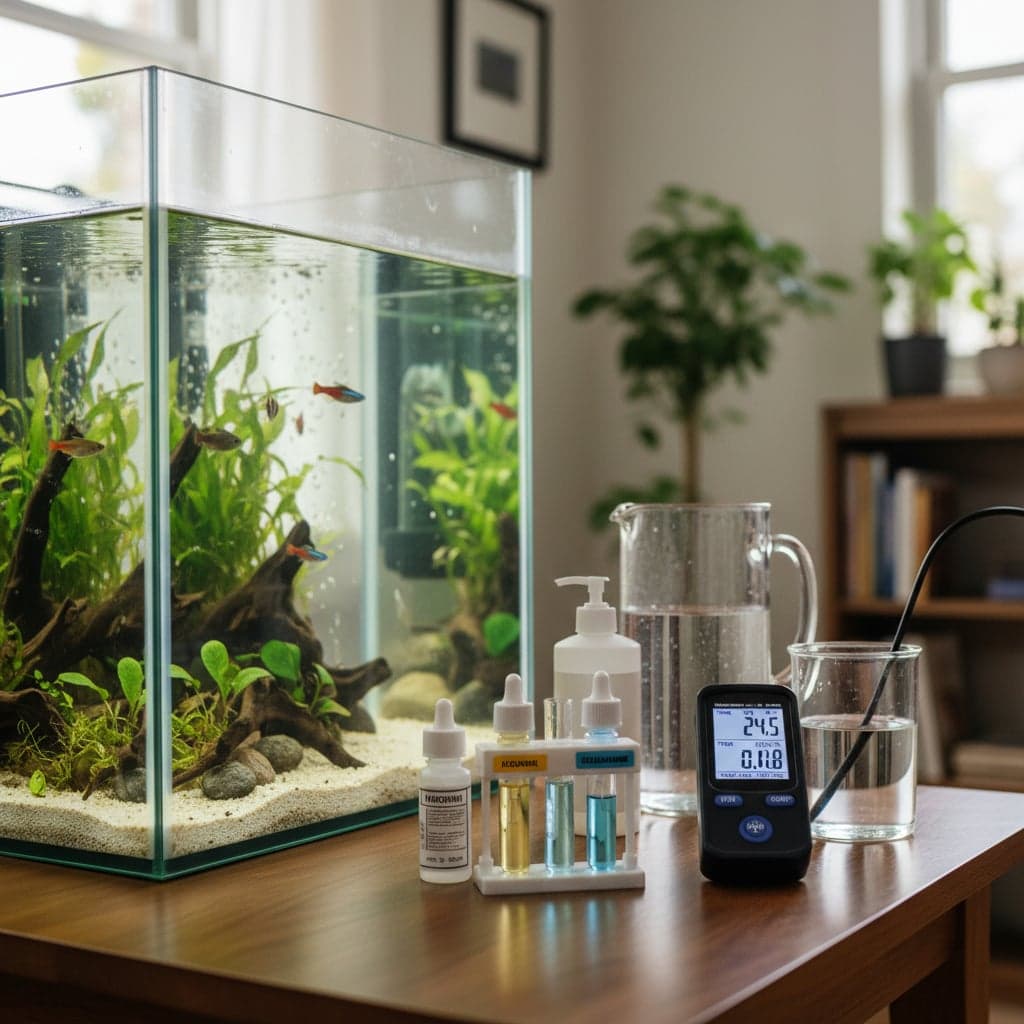
Test GH, KH, and pH together when you set up a tank or change water source. KH tells you how aggressively pH will swing; GH tells you whether livebearers, Rift cichlids, or Caridina shrimp get the minerals they need.
GH (general hardness)
GH measures divalent cations, mainly calcium (Ca²⁺) and magnesium (Mg²⁺).
Why it matters
- Fish and invertebrates — Osmoregulation, bone and shell development; shrimp molting depends on adequate GH.
- Plants — Magnesium sits at the heart of chlorophyll; calcium supports cell walls. Very soft water can stunt growth even when nitrate looks fine.
- Remineralizing RO — Products like Equilibrium-style mixes target GH (and sometimes TDS) after RO/DI.
KH (carbonate hardness / alkalinity)
KH measures bicarbonate/carbonate—the water’s ability to buffer acids.
Why it matters
- pH stability — High KH resists pH crashes; low KH swings faster with CO₂, tannins, or organic acids.
- Nitrification — Beneficial bacteria consume carbonate over time—old tank syndrome appears when KH hits zero in neglected tanks.
Measuring and converting
Hobby tests report degrees (dGH / dKH) or ppm. A common rule of thumb:
- 1 dGH ≈ 17.9 ppm CaCO₃-equivalent scales (brands vary—read kit docs).
| GH (dGH) | Label | Typical inhabitants (broad) |
|---|---|---|
| 0–3 | Very soft | Soft-water biotopes, some shrimp |
| 3–6 | Soft | Many tetras, rasboras |
| 6–12 | Moderate | General community fish |
| 12–18 | Hard | Livebearers, goldfish |
| 18+ | Very hard | Some African cichlid setups |
Old tank syndrome
KH drops as nitrification consumes buffering capacity. If you skip water changes for months, KH can reach zero, pH loses its safety rail, and a crash can kill fish overnight. Regular changes replenish carbonates from most tap sources—another reason maintenance is chemistry, not just “cleanliness.”
Common mistakes
- Chasing GH without KH — You can have soft GH but unstable pH if KH is ignored.
- Using random buffers — Many products add phosphates that fuel algae—know the ingredients.
Frequently asked questions
Does crushed coral raise GH or KH?
Primarily KH (and pH trajectory) via carbonate dissolution; GH may rise slowly depending on composition—test weekly when dosing hardscape buffers.
Can I use baking soda to fix KH?
Possible in controlled recipes, but easy to overshoot—prefer predictable water change routines or purpose-designed buffers for your target biotope.
How does GH relate to TDS?
TDS sums all dissolved ions—GH is only part of the story. Use both when remineralizing RO water for shrimp.