TDS Meter
Monitoring water purity: A guide to TDS meters. Learn how to use Total Dissolved Solids readings for accurate remineralization and shrimp health.
TDS Meter
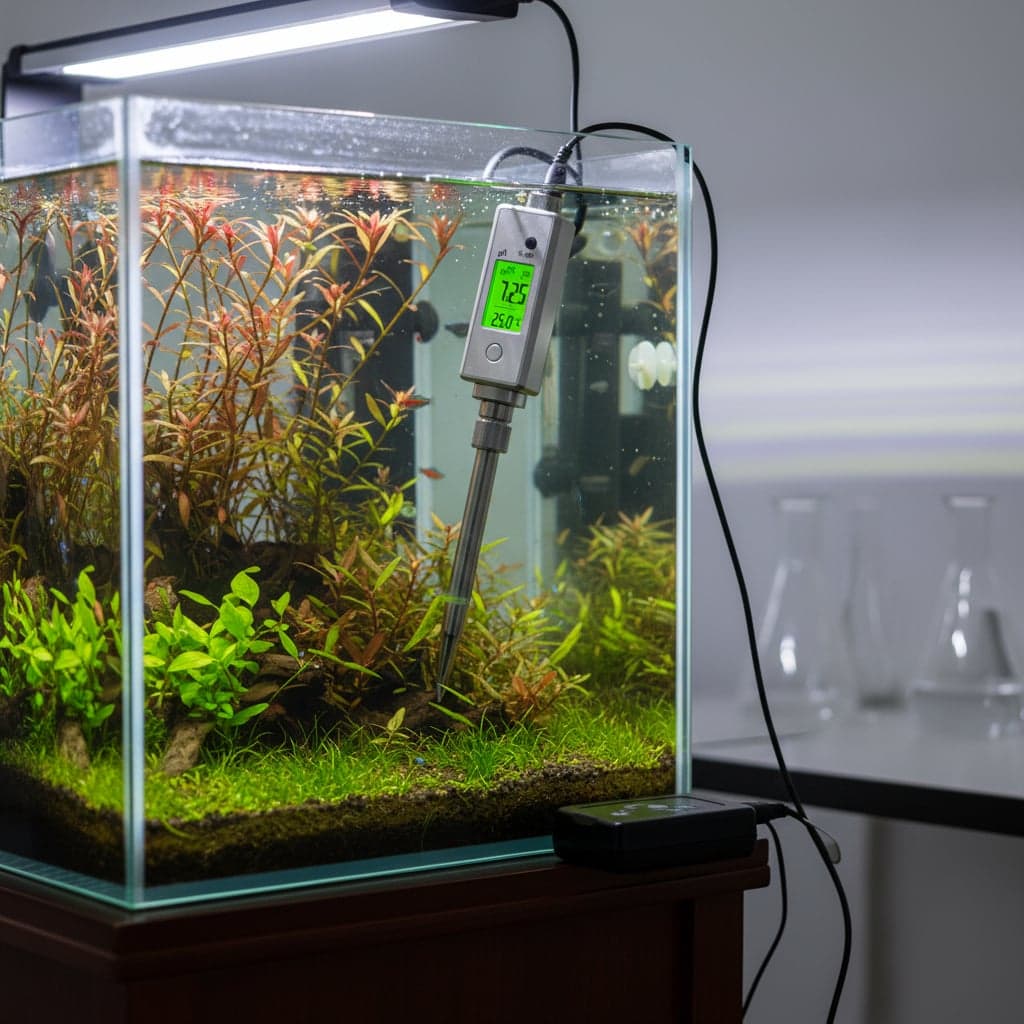
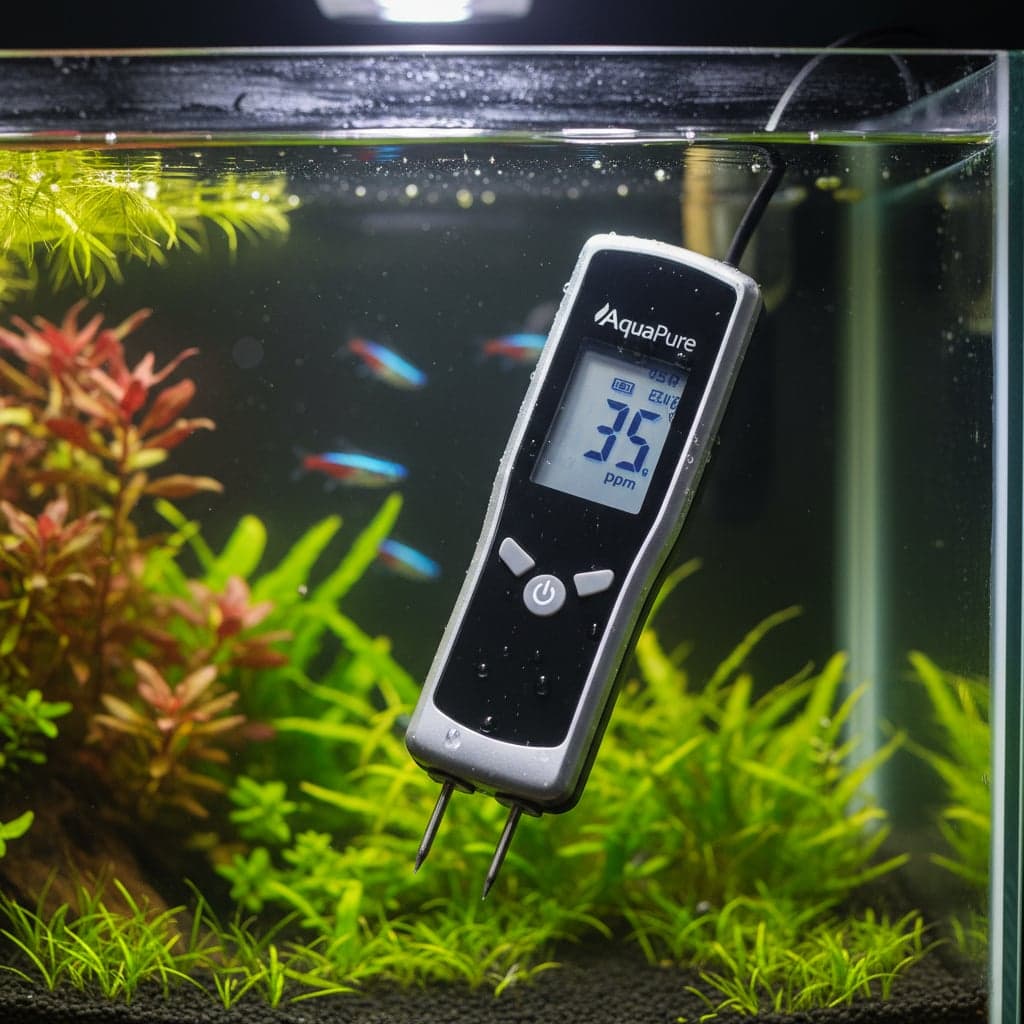
A TDS (Total Dissolved Solids) meter is a compact, pen-style digital instrument that measures the total concentration of dissolved substances in water. For aquascapers — particularly those keeping sensitive shrimp species — a TDS meter is an indispensable tool for monitoring water quality and remineralisation accuracy.
What Does TDS Measure?
TDS represents the combined total of all inorganic and organic substances dissolved in water, including minerals, salts, metals, and other compounds. The reading is expressed in parts per million (ppm) or milligrams per litre (mg/L) — these units are interchangeable.
A TDS meter works by measuring the electrical conductivity of the water. Pure water conducts almost no electricity, so the more dissolved solids present, the higher the conductivity and the higher the TDS reading.
TDS vs. GH/KH
- TDS: A broad, non-specific measure of everything dissolved in the water. It cannot tell you what is dissolved — only how much.
- GH (General Hardness): Specifically measures calcium and magnesium ions.
- KH (Carbonate Hardness): Specifically measures carbonate and bicarbonate ions.
TDS is best used as a quick reference tool alongside more specific tests like GH and KH.
Ideal TDS Ranges
| Application | TDS Range (ppm) | Notes |
|---|---|---|
| RO/DI Water | 0–10 | Baseline for remineralising |
| Caridina Shrimp | 100–150 | Crystal Red, Taiwan Bee, etc. |
| Neocaridina Shrimp | 150–250 | Cherry Shrimp, Blue Dream, etc. |
| General Planted Tank | 150–300 | Most tropical fish and plants |
| Discus | 50–150 | Soft, acidic water preferred |
How to Use a TDS Meter
- Calibrate: Use a calibration solution (usually 342 ppm NaCl) before first use and periodically thereafter.
- Submerge: Dip the probe end into the water sample up to the marked line.
- Wait: Allow the reading to stabilise for 5–10 seconds.
- Read: Note the ppm value on the LCD screen.
- Rinse: Rinse the probe with distilled or RO water after each use.
When to Test TDS
- Water changes: Before and after, to ensure consistency.
- Remineralisation: When adding minerals to RO water, to hit your target range.
- Troubleshooting: Sudden TDS spikes can indicate overfeeding, decomposition, or contamination.
- New setups: Active substrates like aquasoil leach ammonia initially, raising TDS.
Trusted Brands
- HM Digital: Industry standard with the COM-100 and TDS-EZ models.
- Xiaomi / Mi: Budget-friendly, surprisingly accurate for the price.
- API: Simple and reliable for hobbyist use.
- Milwaukee Instruments: Professional-grade accuracy.
Pros & Cons
Advantages
- Instant readings: Results in seconds, no reagents needed.
- Affordable: Quality meters available for under $15.
- Portable: Pen-sized, battery-powered, test anywhere.
- Essential for shrimp: Critical for maintaining stable parameters.
Considerations
- Non-specific: Cannot identify what is dissolved, only the total amount.
- Calibration needed: Must be calibrated periodically for accuracy.
- Temperature sensitive: Some cheaper models lack automatic temperature compensation.
- Not a standalone test: Should be used alongside GH, KH, and pH tests for a full picture.