Beneficial Bacteria, Biofilm, and Aquarium Biofilters
How nitrifying bacteria power the nitrogen cycle, what biofilm is, how anaerobic zones remove nitrate, and common mistakes that crash aquarium biofilters.

Beneficial Bacteria & Biofilm
Your filter is best understood as a bioreactor: oxygenated surfaces with steady flow host nitrifiers, heterotrophs, and—in specialized media—anaerobic denitrifiers. Dissolved water carries far fewer of these organisms than filter media, hardscape, and mature substrate. That is why “bacteria in a bottle” cannot replace surface area, time, and stable maintenance.
Quick answer: Where do nitrifying bacteria live?
They colonize wet, oxygenated surfaces: sponges, ceramic rings, porous rock, and quality biomedia. They are not a plankton cloud in the water column—seed material and mature media matter more than water alone.
Nitrifying bacteria (aerobic)
- Ammonia → nitrite — Ammonia-oxidizing guilds (often discussed as Nitrosomonas-type communities).
- Nitrite → nitrate — Nitrite-oxidizing guilds; Nitrospira is common in modern freshwater systems.
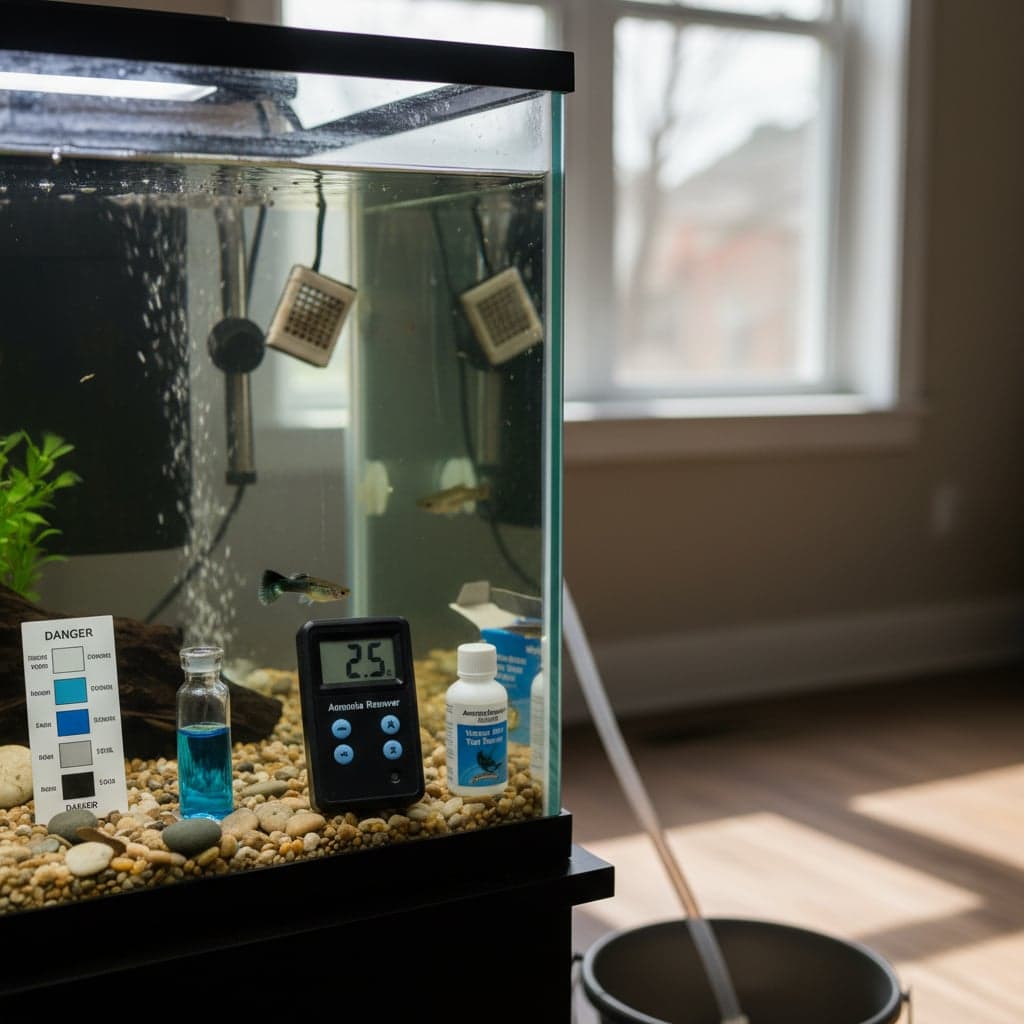
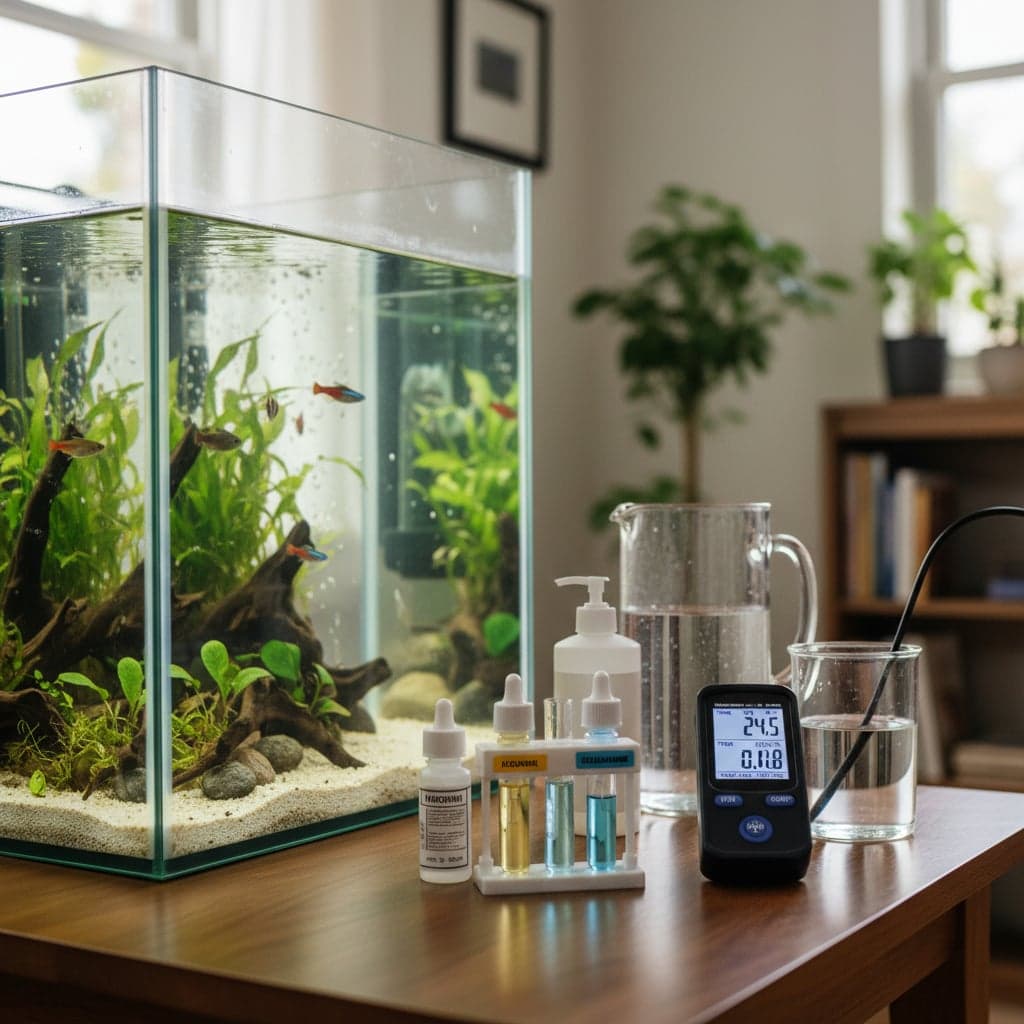
Practical note: During cycling, test ammonia and nitrite together—nitrite can remain elevated after ammonia falls.
Heterotrophic bacteria
These organisms break down particulate waste (mulm, detritus, uneaten food) into dissolved organics and ammonia, which nitrifiers then process. Heavy overfeeding without mechanical export increases oxygen demand and organic load—another reason clogged filters cause trouble.
Anaerobic denitrification (advanced)
Deep, porous media can host low-oxygen zones where nitrate may convert to nitrogen gas. Commercial “matrix”-style media aims to create micro-anaerobic pockets; results depend on flow, porosity, and maintenance. This is not required for basic fishkeeping—water changes remain the default nitrate export.
Biofilm — the living skin
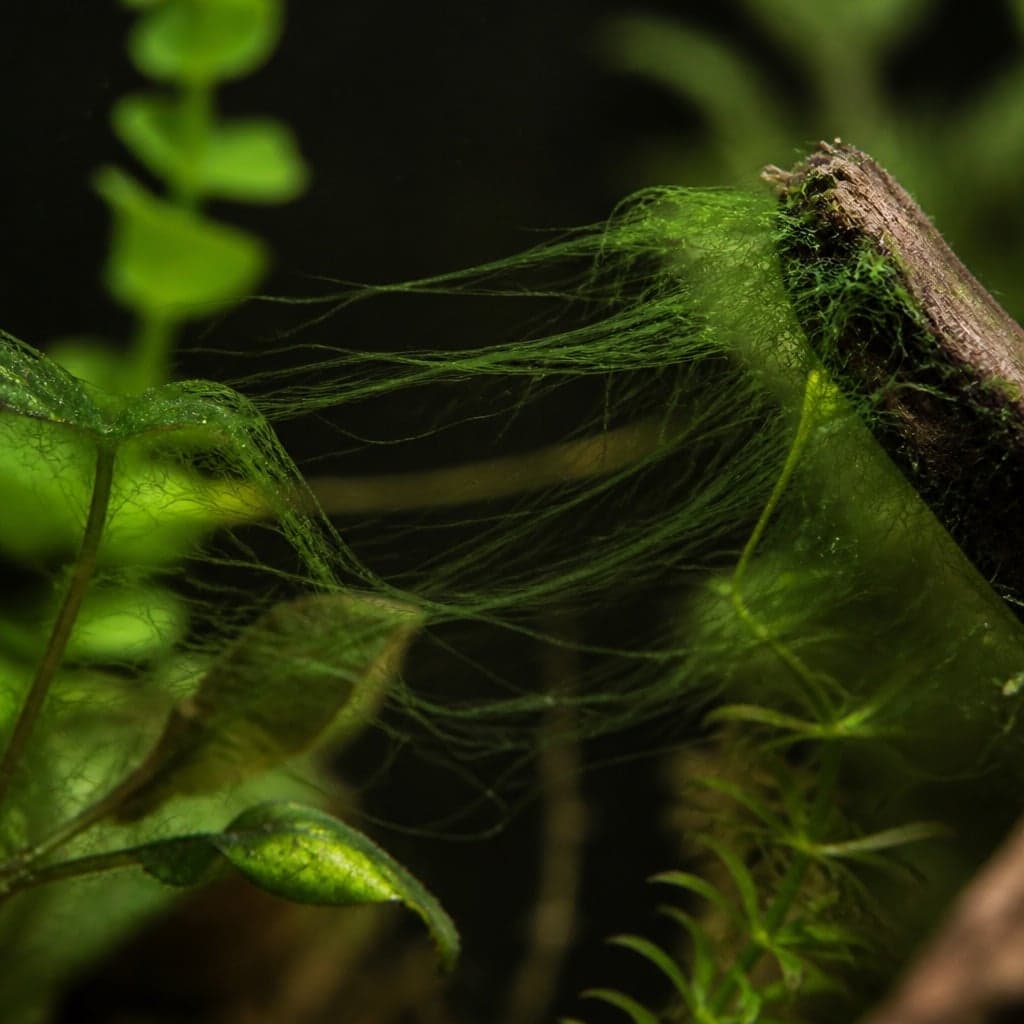
Biofilm is the slimy coating on glass, wood, and leaves: microbes embedded in a protective matrix. The white fuzz on new driftwood is typically harmless colonization. Shrimp and fry often graze it; removing it obsessively can slow establishment unless aesthetics demand it.
What kills or damages biofilters
| Threat | Why it hurts |
|---|---|
| Chlorine / chloramine | Oxidizes cells—dechlorinate all tap water |
| Antibiotics | Can suppress nitrifiers—test ammonia/nitrite during and after medications |
| Rinsing media in raw tap | Same chlorine problem as above |
| Drying | Aerobic biofilms die quickly if media dries out |
| Starvation | Empty tanks lose bacterial biomass over weeks to months |
Speeding establishment
- Seed sponge or ceramic media from a healthy, disease-free tank.
- Fishless cycling with controlled ammonia—see nitrogen cycle.
- Commercial cultures — quality varies; let test results judge success.
Common mistakes
- Replacing all biomedia at once — stagger changes to preserve biomass.
- Assuming cloudy water equals a bacterial bloom in the water — often dust, tannins, or heterotrophic blooms; use tests and context.
Frequently asked questions
Should I dose bottled bacteria every week?
Usually no once the tank is cycled—routine feeding and maintenance sustain colonies.
Does UV sterilization kill the biofilter?
UV affects organisms passing through the lamp; mature attached biofilms are not the same as water-column plankton. Avoid oversized UV on tiny quarantine systems with minimal biomedia.
Can plants replace a filter?
Plants assist with nutrient uptake but rarely replace mechanical and biological filtration for typical community stocking.