Sponge Filter
The biological powerhouse: A complete guide to sponge filters. Learn why these simple, air-driven filters are the safest choice for breeding and shrimp tanks.
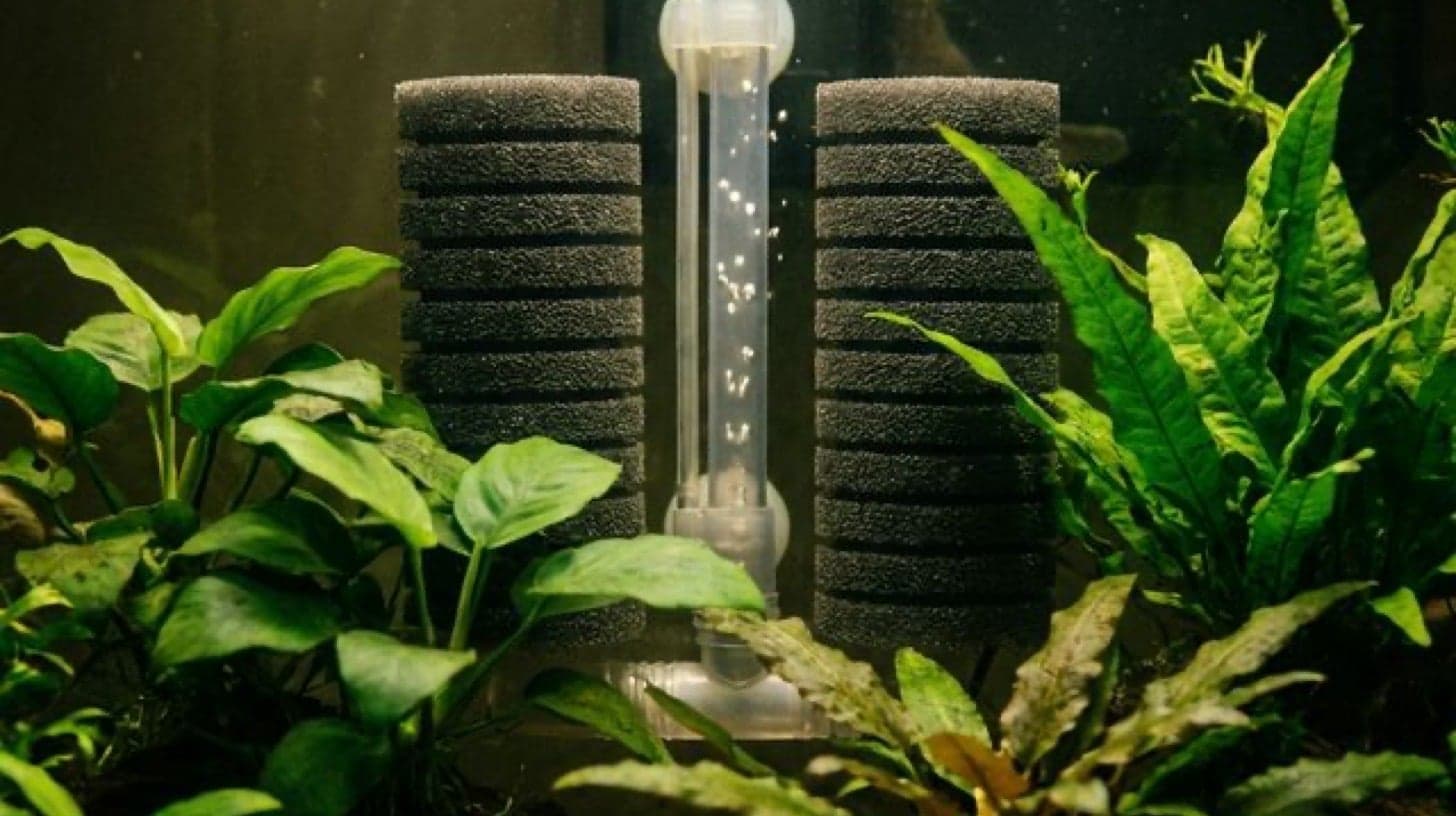
Sponge Filter
The sponge filter is the most fundamental and reliable form of aquarium filtration. Powered by an air pump, it draws water through a porous sponge, providing excellent biological filtration and gentle water movement. Its simplicity, safety for fry and shrimp, and near-zero failure rate have made it a staple in every fishroom.
How It Works
An air pump pushes air through a tube connected to the sponge filter's uplift pipe. As air bubbles rise inside the pipe, they create a siphon effect that draws water through the sponge. Beneficial bacteria colonise the sponge surface, converting ammonia and nitrite into less harmful nitrate.
Key Principle
The sponge's large surface area acts as a biological powerhouse. When mature (after 4–6 weeks of cycling), a single sponge filter can handle the bioload of a moderately stocked tank with ease.
Ideal Use Cases
- Breeding Tanks: Safe for eggs and fry — no intake to suck up tiny fish.
- Shrimp Tanks: Baby shrimp graze on the biofilm that forms on the sponge.
- Hospital / Quarantine Tanks: Quick to deploy, reliable, and inexpensive.
- Supplementary Filtration: Run alongside a canister for extra biological capacity.
- Power Outages: Can be paired with a battery-powered air pump for emergency filtration.
Types of Sponge Filters
- Single Sponge: Basic unit for nano tanks.
- Double Sponge: Two sponge cylinders for increased surface area; allows alternating cleaning.
- Corner / Box Sponge: Triangular design that fits neatly in a corner.
- Matten Filter: A large sponge wall that spans the entire back or side of a tank — the ultimate biological filter.
Maintenance
- Remove the sponge from the tank.
- Squeeze and rinse it in a bucket of old tank water (never tap water).
- Replace when the sponge starts to lose its structure (typically every 6–12 months).
- With a double sponge filter, clean only one sponge at a time to preserve bacterial colonies.
Pros & Cons
Advantages
- Safe: No risk to fry, shrimp, or small fish.
- Cheap: Both the filter and the air pump are extremely affordable.
- Reliable: No motors, no electronics, almost nothing to fail.
- Easy Maintenance: Rinse and squeeze — that's it.
- Biological Powerhouse: Massive surface area for bacteria.
Considerations
- Aesthetics: Visible inside the tank; not the prettiest equipment.
- Noise: Air pump can be audible; use a quality one to minimise buzz.
- Mechanical Filtration: Limited — doesn't polish water like a canister.
- Flow: Low water movement; may need a powerhead for planted tanks requiring flow.