Guppy
The Guppy (Poecilia reticulata), also known as the Million Fish, is the quintessential aquarium species, famous for its incredible diversity of colors, ease of breeding, and lively personality.
Also known as: million fish · Poecilia reticulata

Guppy
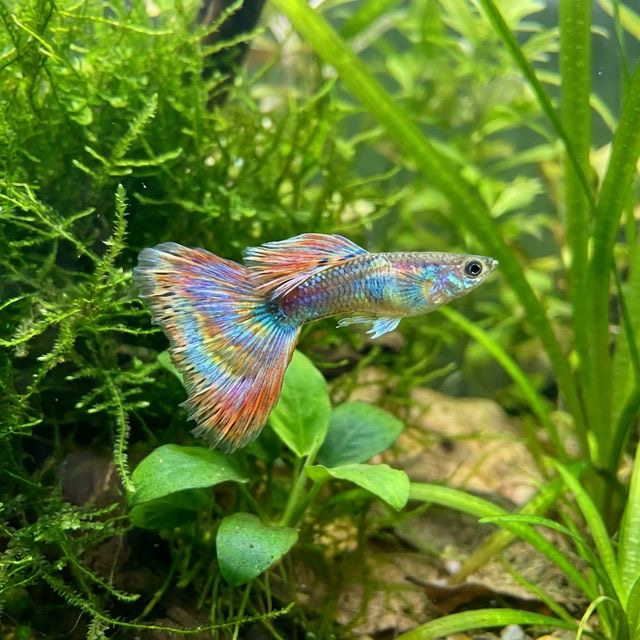
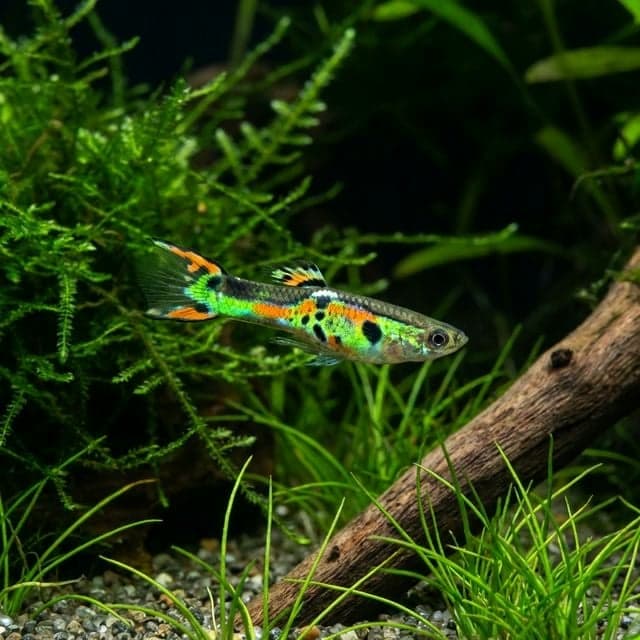
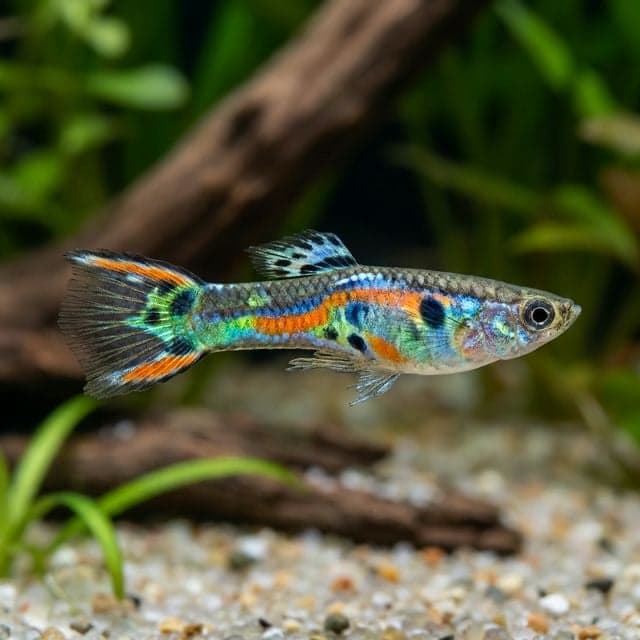
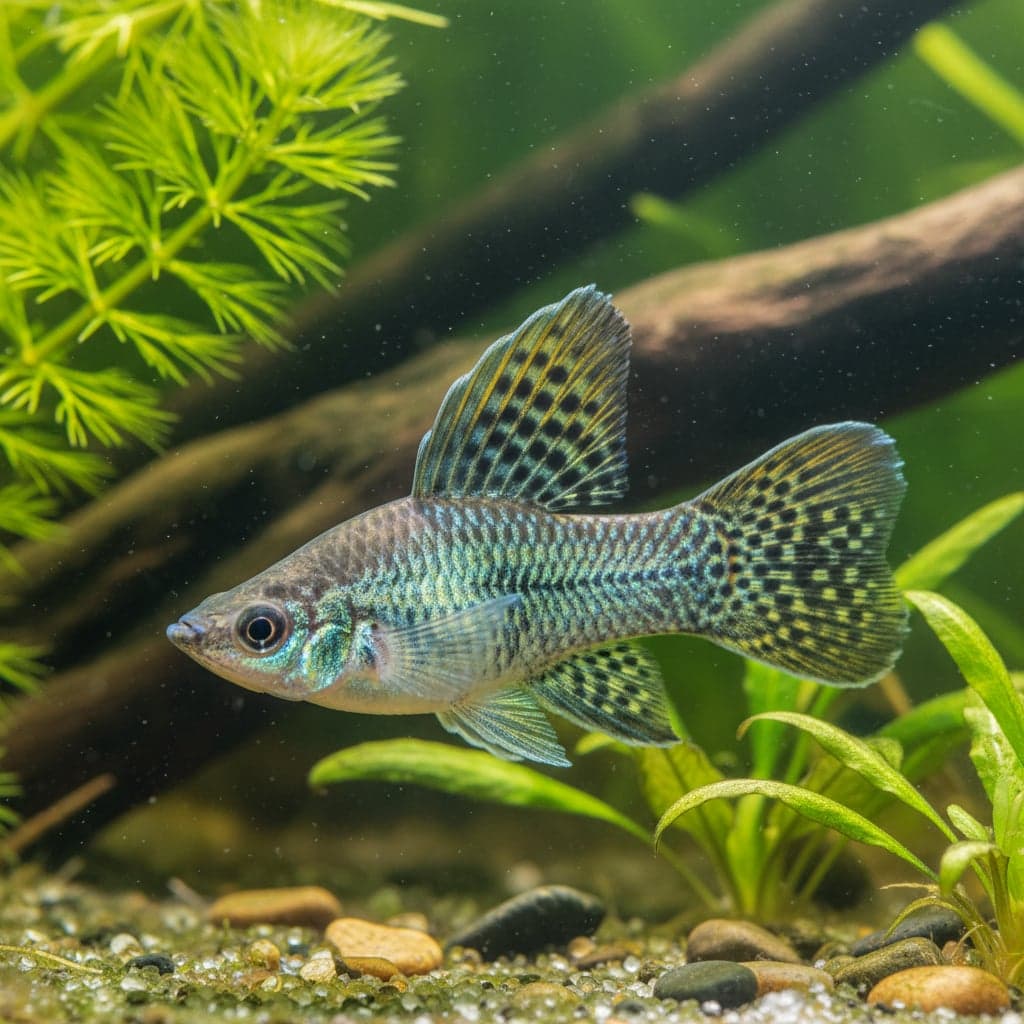
The Guppy (Poecilia reticulata) is arguably the most famous and widely kept fish in the history of the aquarium hobby. Originally a modest, wild-type fish with subtle coloration, decades of selective breeding have transformed them into a spectacular array of colors and fin shapes.
They are known as "Livebearers," meaning they give birth to fully formed, free-swimming fry rather than laying eggs. This, combined with their extreme hardiness and fast reproductive cycle, earned them the nickname "The Million Fish."
Tail Types & Strain Diversity
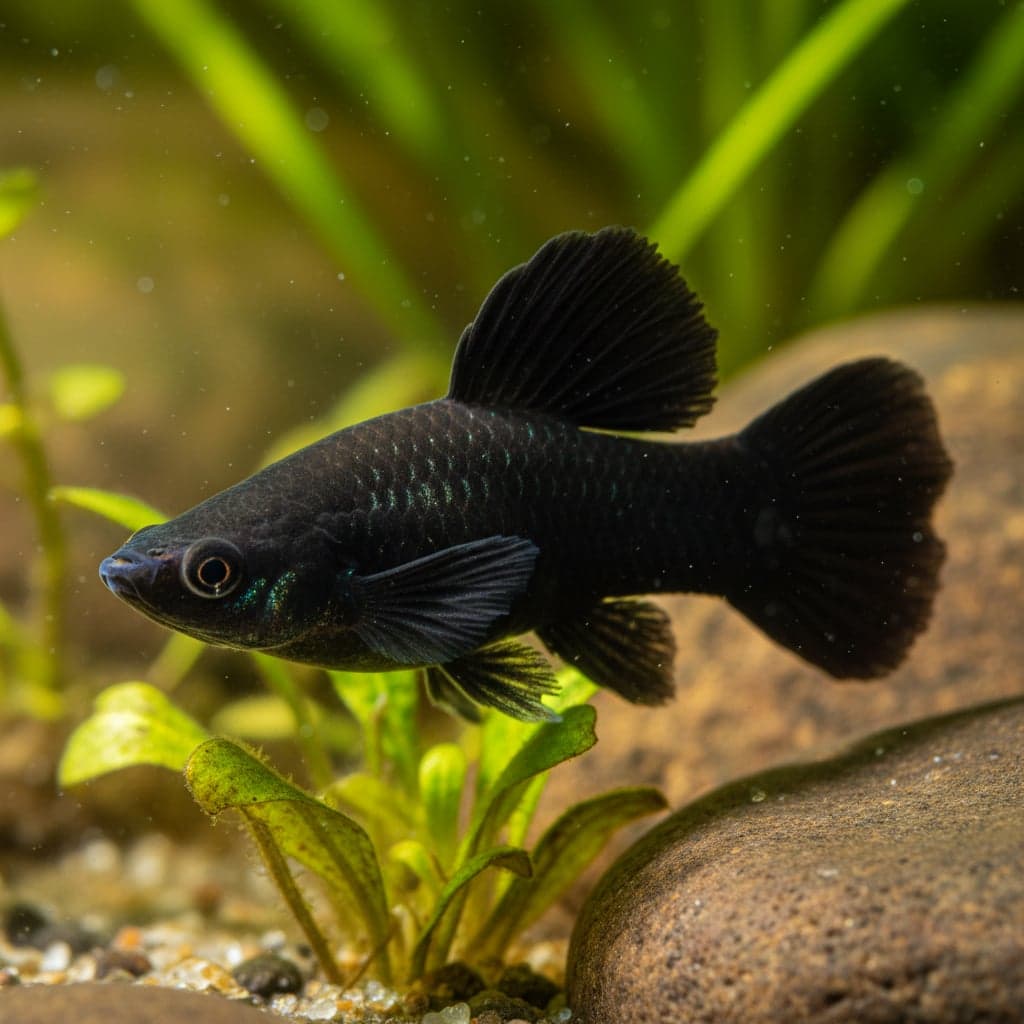
Modern guppies are categorised by tail shape — delta, veil, lyretail, the various swordtails, and the shorter round and spade tails — and separately by colour strain, such as cobra, tuxedo, mosaic, moscow and koi. Fin length is not only cosmetic: long-finned males swim less well, are more prone to fin rot, and are far more likely to be nipped.
Full breakdown of every shape and pattern, and what each means for care, in tail types and colour strains.
Natural Habitat & Origin
Guppies are native to northeastern South America and several Caribbean islands, including Venezuela, Barbados, Trinidad and Tobago, and Brazil. They are highly adaptable and found in almost every type of freshwater habitat, from high-altitude streams to lowland swamps and even brackish estuaries. They have been introduced globally to help control mosquito populations, as they are voracious consumers of insect larvae.
Care Requirements
While Guppies are often called "bulletproof," they have one specific requirement for long-term health: hard, alkaline water. They require minerals like calcium and magnesium to thrive. Keeping modern, fancy guppies in soft, acidic water often leads to a "clamped fin" look, spinal deformities, and a weakened immune system. Target GH 8–20, KH 4–15 and pH 7.0–8.5 — see water hardness for testing and how to raise it.
A minimum tank size of 10 gallons (40L) is sufficient for a small group. The aquarium should be well-planted (especially with fine-leaved plants like Java Moss for fry protection) and have a moderate water flow. They are social fish and should be kept in groups. Crucially, if keeping both sexes, maintain a ratio of 2-3 females for every 1 male to prevent the females from being harassed to exhaustion — or keep males only. Sizes and group compositions are worked through in tank size and stocking.
They are frequently kept at 26–28°C on the grounds that they are tropical. They tolerate it, but live considerably longer at 22–24°C.
Diet & Feeding
Guppies are opportunistic omnivores. In the wild, they consume algae, detritus, and small insects.
In the aquarium, they will eat almost anything. A high-quality tropical flake or micro-pellet should be the staple. They benefit greatly from "green" foods containing spirulina or algae, as well as protein-rich treats like frozen bloodworms, brine shrimp, and daphnia. Because they have small stomachs, they should be fed small amounts 1-2 times daily.
Behavior & Temperament
They are exceptionally peaceful, active, and curious fish. They spend most of their time in the upper and middle layers of the aquarium, constantly interacting with each other and exploring their environment. While peaceful, they are active swimmers and their constant movement can sometimes annoy slow-moving, nervous fish.
Tank Mates
Guppies suit many community tanks; control breeding and avoid fin-nippers. Compatibility hub and pair guides:
| Resource | Link |
|---|---|
| Guppy tank mate hub | /fish/guppy/tank-mates |
| Guppy + Betta | /fish/betta-guppy |
| Guppy + Neon tetra | /fish/neon-tetra-guppy |
| Guppy + Adolfos cory | /fish/guppy-adolfos-cory |
| Guppy + Angelfish | /fish/guppy-angelfish |
Avoid tiger barbs, serpae tetras, and fish large enough to swallow guppies or eat fry.
Breeding
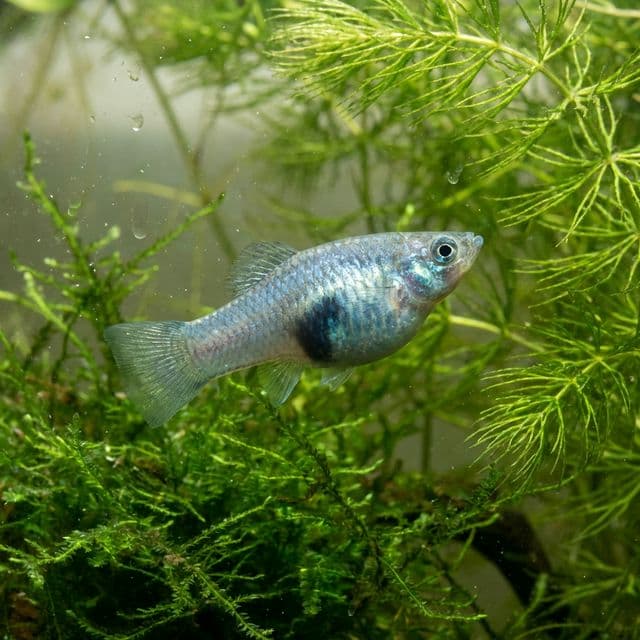
Breeding guppies is almost inevitable if both sexes are present. Males are easily identified by their more vibrant colors and their modified anal fin, called a gonopodium, used for internal fertilization. Gestation runs 21–30 days and broods are 20–60 fry. Critically, a female stores sperm for months after a single mating — which is why a female bought from a mixed shop tank is almost always already pregnant.
Fry are free-swimming and feeding immediately, and adults will eat them, so survival depends on dense cover. The full picture — reading a gravid female, raising fry, and separating the sexes before they breed in turn — is in breeding and raising fry.
Common Health Issues
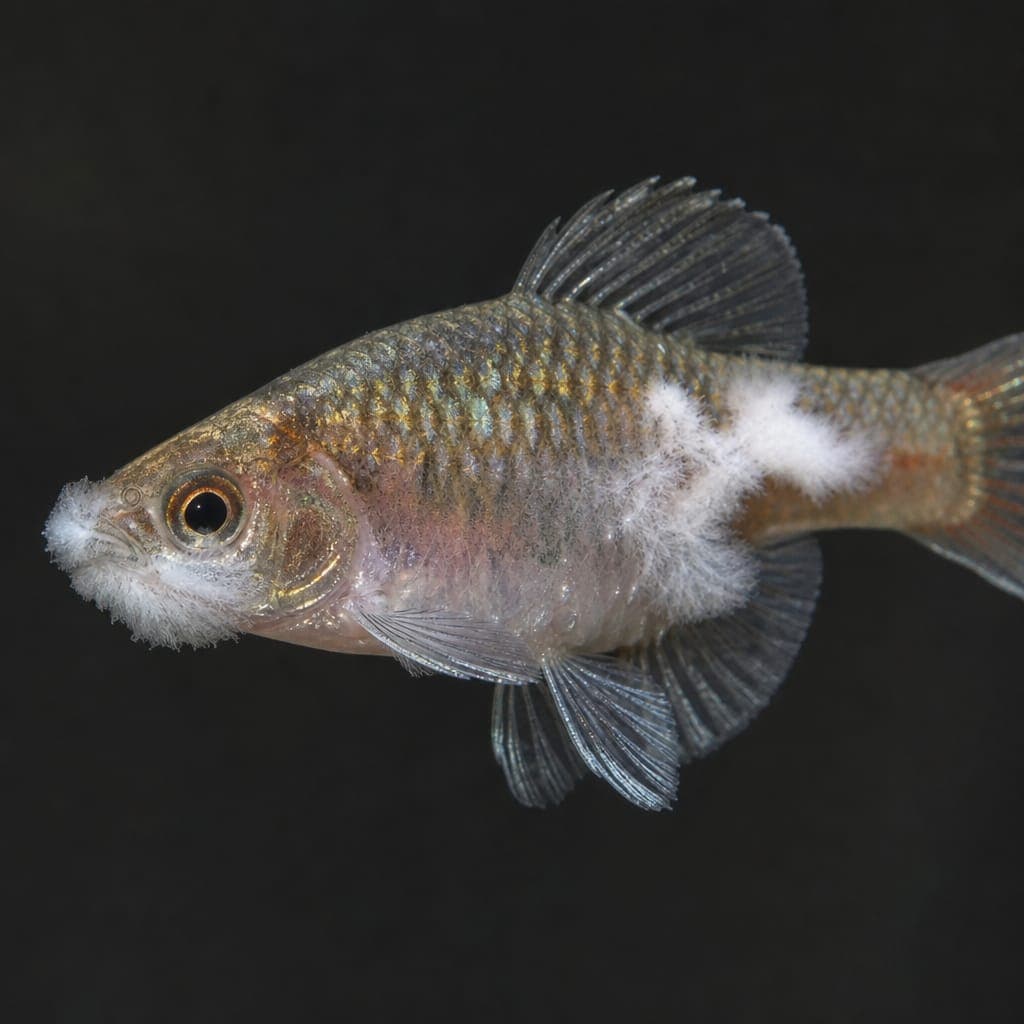
The most significant health threat to modern guppies is Guppy Disease (Tetrahymena corlissi), a protozoan that causes a diffuse whitish haze under the skin, heavy breathing, rapid wasting and often death. They are also prone to Camallanus worms, columnaris, and bacterial and fungal infections that take hold when the water is too soft.
Modern fancy guppies are also simply less robust than their reputation suggests — intensively line-bred and farmed at scale, so losses in the first month after purchase are common regardless of your husbandry. Quarantine new stock for two to four weeks. Symptom-by-symptom identification and treatment in diseases and health problems.