Aquarium pH: Stability, KH, and Safe Adjustment
How pH works on a logarithmic scale, why stability beats chasing 7.0, relationships with KH and CO2, and safe ways to raise or lower pH in freshwater.
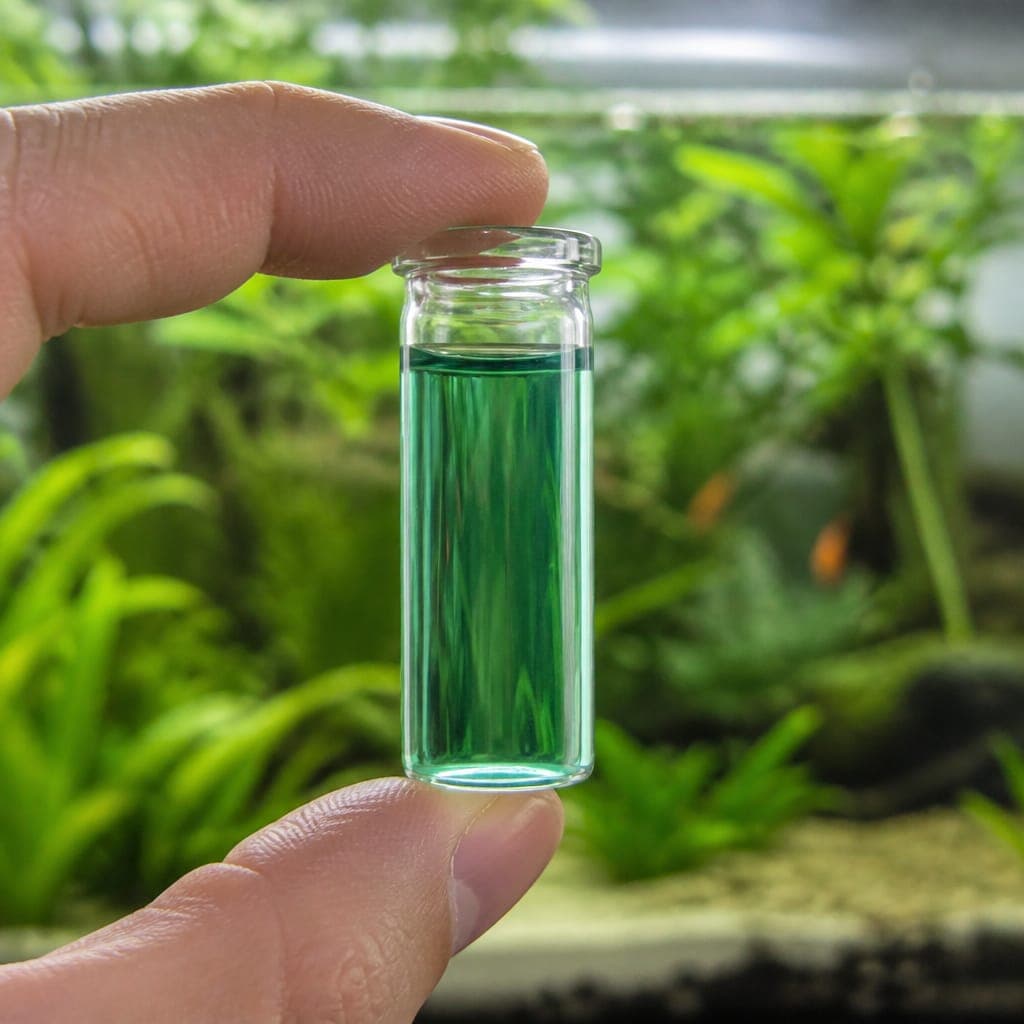
Understanding pH: The Acid-Alkaline Balance
pH measures how acidic or alkaline your water is. It matters for fish osmoregulation, ammonia toxicity (NH₃ vs NH₄⁺), and how plants and tannins behave. Most beginners over-focus on hitting a “perfect” number; experienced keepers prioritize stability and buffering (KH) first.
Quick answer: What pH should I aim for?
Aim for stability within the range your livestock prefers. Many captive-bred community fish tolerate mid-7s pH if KH is adequate and swings are small. Wild Amazon-type species often prefer soft, acidic water; Rift Lake cichlids and many livebearers prefer harder, alkaline conditions—match species to water or be prepared for long-term mineral and buffering work.
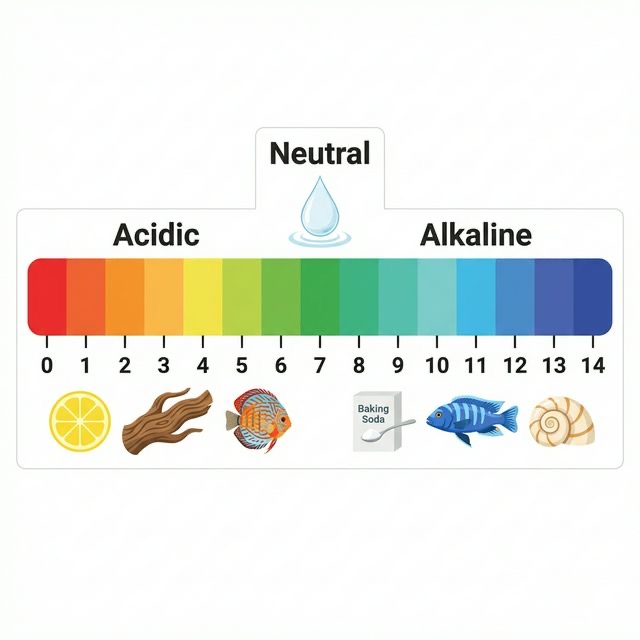
The logarithmic scale (why small numbers swing hard)
pH is logarithmic: each full step (e.g. 7.0 → 6.0) means 10× more acidic. That is why a “small” drift can stress fish if it happens quickly—osmotic shock and breathing stress compound.
Stability beats chasing perfection
Unless you breed sensitive wild fish, daily stability usually matters more than whether the digit reads 7.2 or 7.6. Problems come from:
- Large water changes with mismatched GH/KH/TDS
- CO₂ instability in planted tanks (see CO₂ and drop checker)
- Over-cleaning that strips buffers
How to lower pH (safely)
- Driftwood and leaf litter — Release tannins; mild, gradual acidification in soft water.
- Active soils — Aquasoils buffer toward acidic ranges in planted tanks.
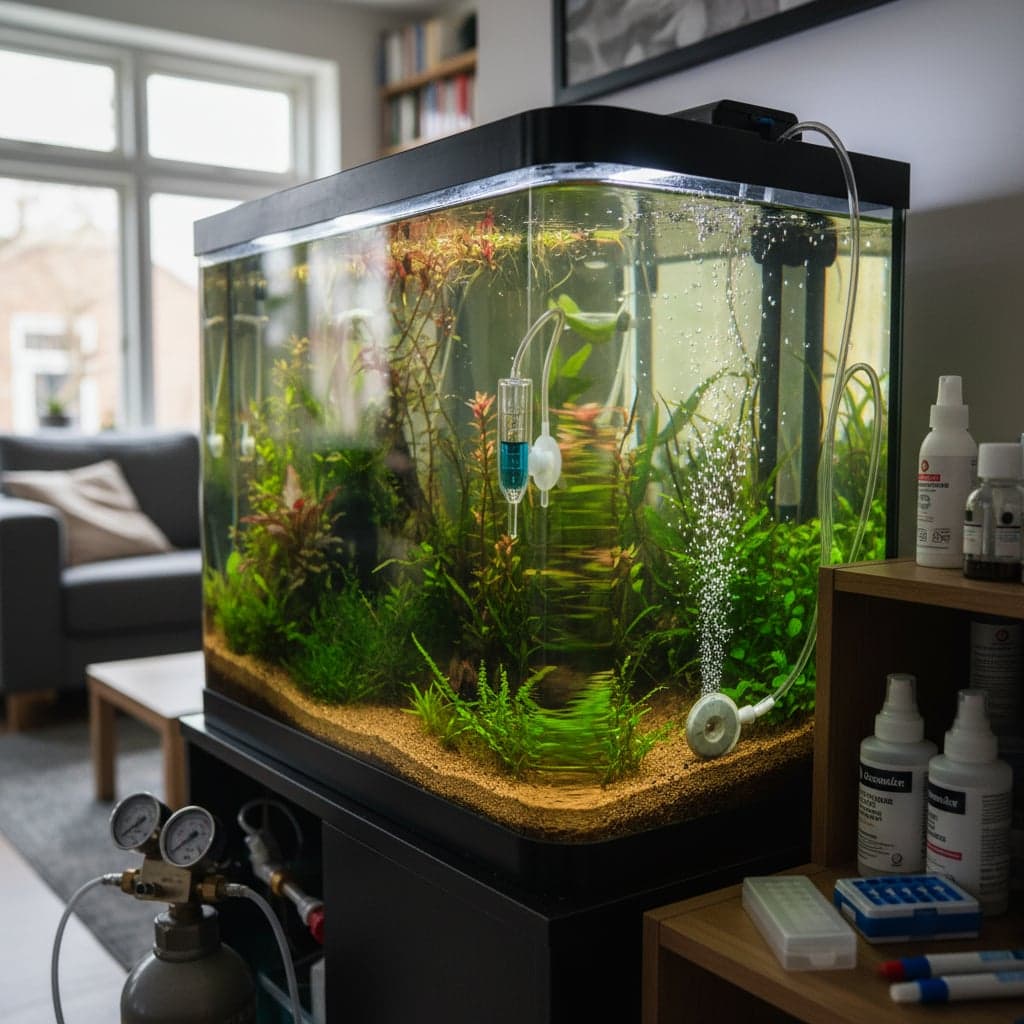
- CO₂ injection — Lowers pH via carbonic acid; requires KH awareness and fish safety limits.
- RO/DI blending — Reduces carbonate hardness; remineralize for fish that need GH.
How to raise pH (safely)
- Crushed coral / limestone — Slow, steady release of carbonates—common in African cichlid setups.
- Commercial buffers — Read labels; many are phosphate-based and can fuel algae if misused.
The pH / KH relationship
You rarely move pH in a vacuum. KH (carbonate hardness) resists pH change:
- High KH — pH tends to stay stable but is harder to adjust.
- Low KH — pH can swing with CO₂, acids, or tannins—great for controlled soft-water biotopes, risky if neglected.
Always test KH before aggressive pH chasing. Old tank syndrome (KH depletion) can end in sudden crashes—prevented with regular water changes.
Common mistakes
- Adjusting pH every week — Chasing readings stresses livestock; change methods slowly.
- Ignoring tap water chemistry — Chloramine and regional hardness define your baseline.
Frequently asked questions
Will peat or tannins crash my pH overnight?
They usually act gradually, but low-KH water can move faster—test KH alongside pH.
Does aeration change pH?
Surface agitation drives CO₂ offgas in planted tanks, which can raise pH slightly during the photoperiod—another reason to log tests at consistent times.
Is pH 8.0 bad for tetras?
Many farm-raised tetras tolerate it if acclimated; wild or blackwater species may not thrive long term—match species to water.