Dissolved Oxygen in Aquariums: Surface Agitation, Plants, and CO2
How dissolved oxygen enters aquarium water, why temperature and salinity matter, signs of low oxygen, and how plant respiration and CO2 affect gas exchange.
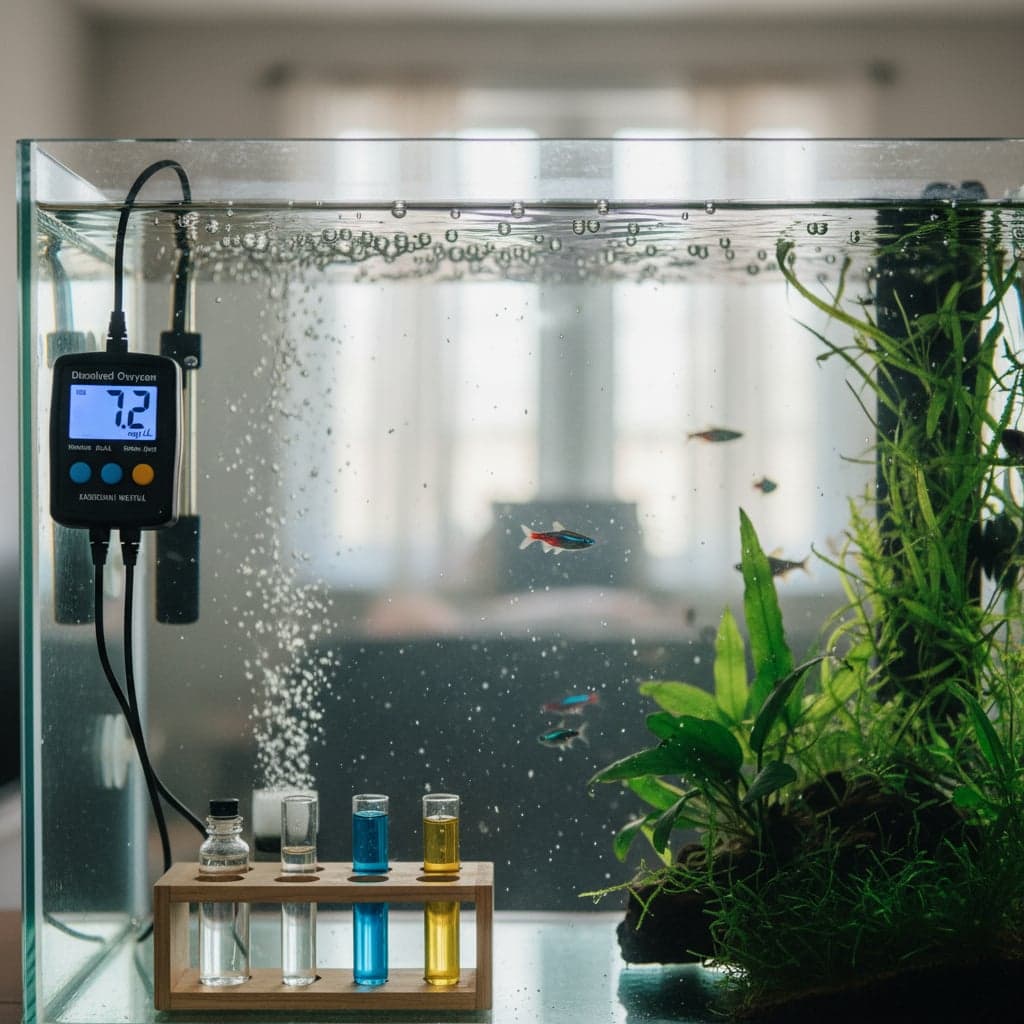
Dissolved Oxygen (DO)
Fish breathe dissolved oxygen (DO)—a tiny fraction of what air contains, which is why flow and surface agitation matter so much. DO ties directly to temperature, salinity, stocking, biofilter load, and— in planted tanks—CO₂ injection versus O₂ from photosynthesis.
Quick answer: How do I keep oxygen high enough?
Maintain healthy surface ripple, avoid stagnant corners, match stocking to filtration, and watch morning behavior in dense planted tanks—DO is often lowest right before lights-on when plants respire overnight.
How oxygen enters water
- Gas exchange at the surface — Oxygen diffuses in; CO₂ diffuses out faster when water is agitated.
- Photosynthesis — Plants release O₂ under light; this can raise DO during the photoperiod.
- Air stones — Bubbles mainly improve surface turnover; the bubbles themselves add comparatively little O₂ compared to rippling.
Factors that lower DO
Temperature
Cold water holds more oxygen than warm water. A heated discus tank at 30°C holds less baseline O₂ than a goldfish tub at 18°C—compensate with flow and reasonable stocking.
Salinity
Saltwater holds less oxygen than freshwater at the same temperature—marine systems often run more turnover for equivalent biomass.
Bio-load and filtration
Nitrifying bacteria and heterotrophs consume oxygen. A clogged, stagnant filter is both a mechanical and biological choke point—clean mechanically without nuking biofilm in chlorinated tap water.
Signs of low oxygen
- Piping at the surface — Fish prioritize the air–water interface where O₂ is highest.
- Fast gill beats — Before obvious gasping in mild cases.
- Lethargy — Especially after lights-off in overcrowded planted setups.
The planted-tank morning dip
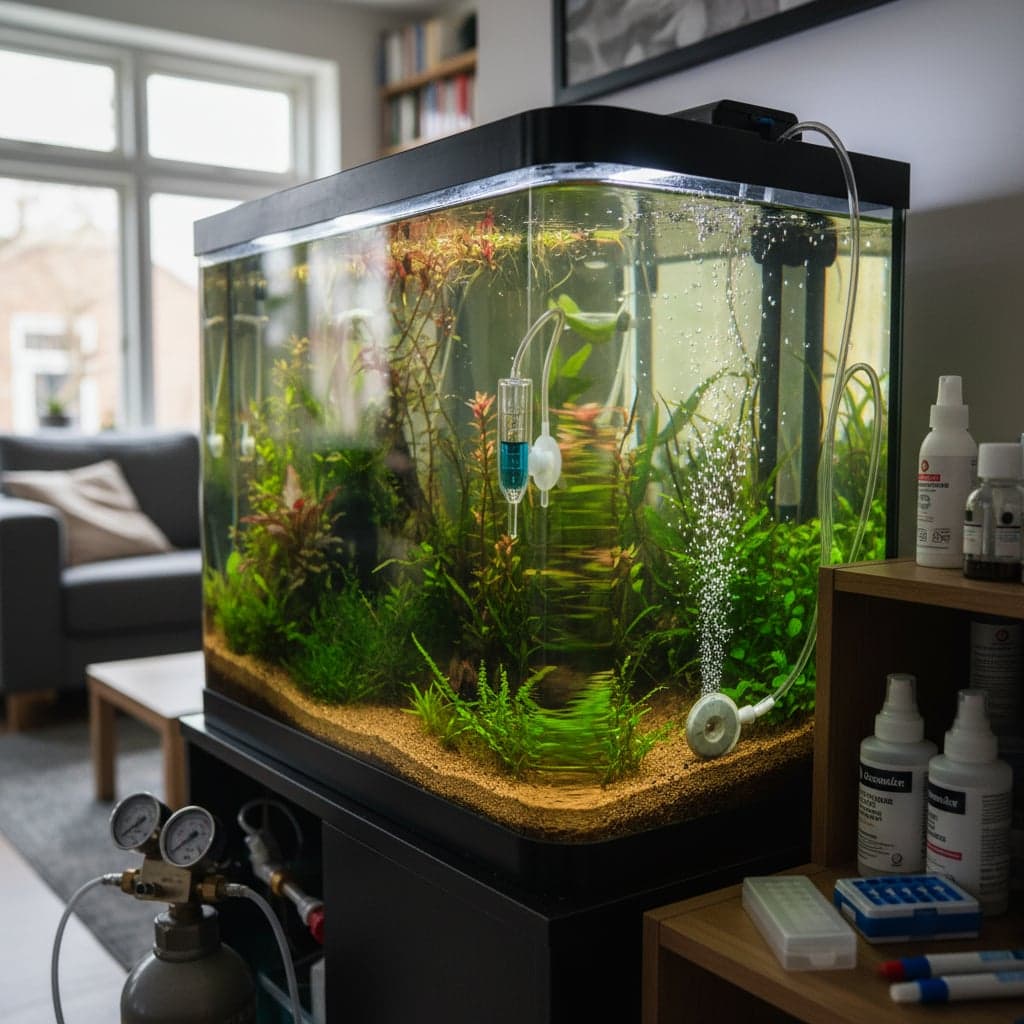
Plants produce O₂ under light but consume O₂ in the dark. In very dense plantings with weak surface agitation, DO can be lowest just before photoperiod. If fish only gasp at dawn, add nighttime surface ripple (airline, lily pipe positioning) rather than only chasing CO₂.
CO₂ and oxygen: do not trade one for the other
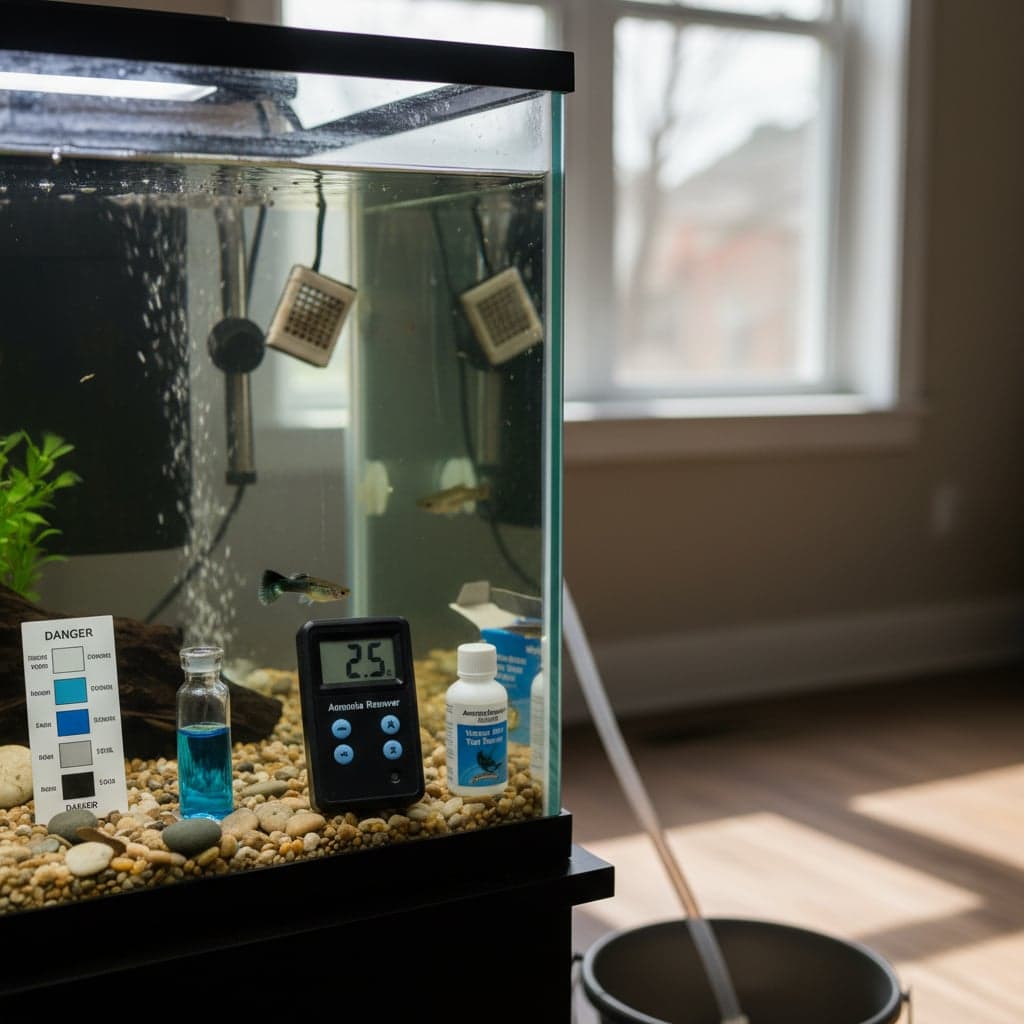
High CO₂ can stress fish before drop checker reads “danger”—watch behavior, keep surface movement in at least one zone, and never run CO₂ 24/7 without understanding nighttime gas dynamics.
Common mistakes
- Sealed lids + stagnant sump — Trapped humid air slows exchange; still keep gentle ripples.
- Confusing nitrite poisoning with low O₂ — Nitrite can cause gasping with high DO—test water when in doubt.
Frequently asked questions
Will an air pump fix high ammonia?
No—aeration helps gas exchange but does not remove ammonia. Dilute and fix the cycle.
Is surface agitation bad for CO₂?
It speeds CO₂ off-gassing, which is why high-tech layouts balance diffusion efficiency with one rippled zone for fish safety.
Do sponge filters oxygenate well?
They move water and host bacteria—pair with surface agitation in hot, dense tanks.