Drop Checker
Visual CO2 monitoring: Master the aquarium drop checker. Learn how to interpret 4dKH reagent colors for 100% safe gas injection levels.
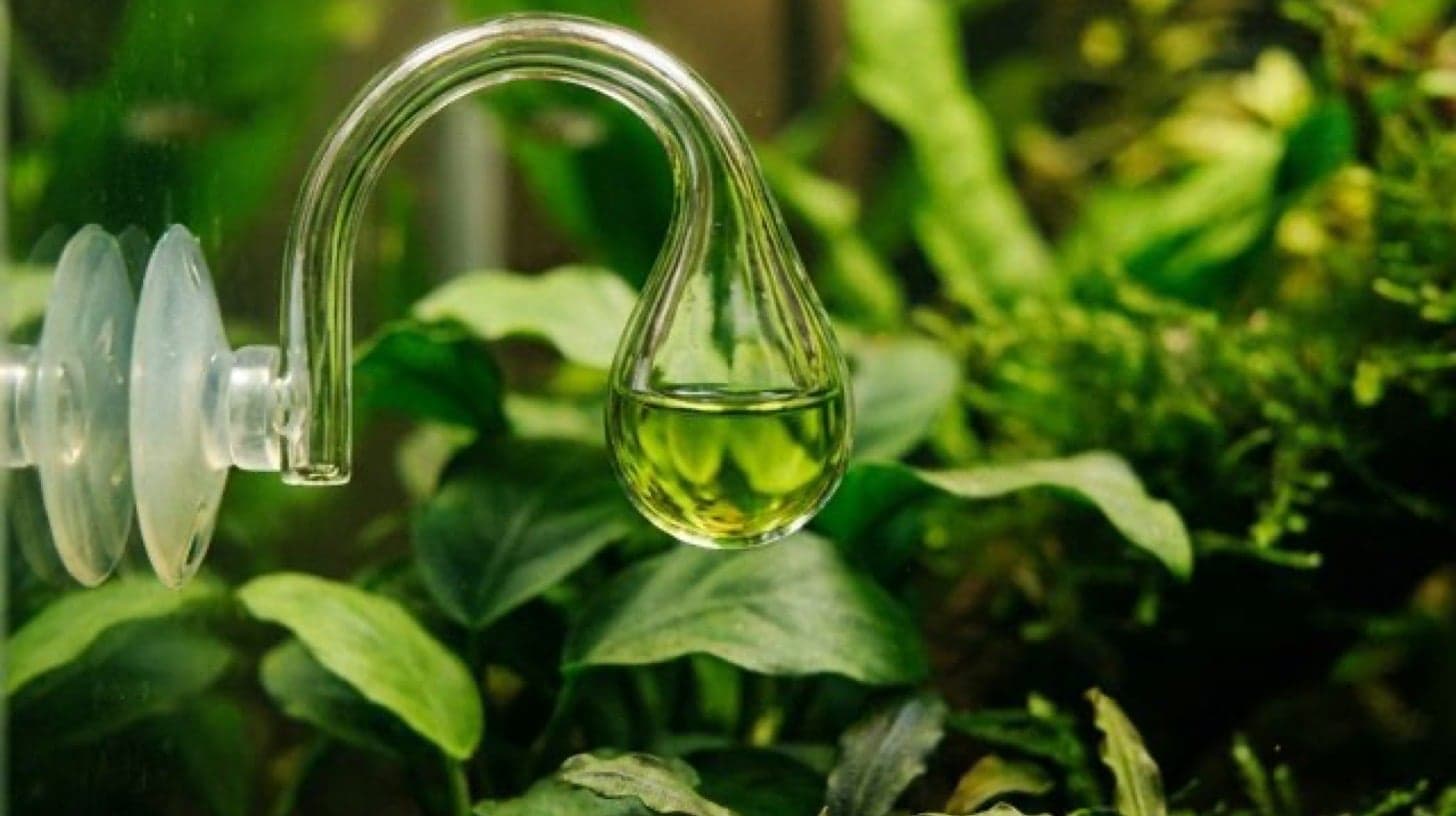
Drop Checker
A drop checker is a simple, passive CO2 monitoring device used inside CO2-injected aquariums. It provides a continuous visual indication of the dissolved CO2 concentration in your water through a colour-changing reagent solution. It is the most reliable and affordable way to ensure your CO2 levels are safe for livestock and optimal for plant growth.
How It Works
The drop checker is a small glass vessel (usually a bulb or teardrop shape) attached to the inside of the tank wall via a suction cup. It contains a few drops of a 4dKH reference solution mixed with bromothymol blue pH indicator.
CO2 from the tank water diffuses across an air gap into the reagent solution. As CO2 dissolves, it forms carbonic acid, lowering the pH. The bromothymol blue changes colour in response:
| Colour | CO2 Level | Interpretation |
|---|---|---|
| Blue | < 15 ppm | Too low — increase injection rate |
| Green | ~20–30 ppm | Optimal — plants thriving, fish safe |
| Yellow | > 40 ppm | Too high — reduce immediately, risk to livestock |
Critical: Use 4dKH Solution
The reagent must be a standardised 4dKH solution, not tank water. Using tank water gives inaccurate readings because it introduces other buffers (KH, organics) that affect the pH independently of CO2.
- 4dKH Solution: Water with a precisely calibrated KH of 4 degrees. This isolates the CO2 variable.
- pH Indicator: Bromothymol blue changes colour predictably in this standardised environment.
How to Use
- Fill the drop checker's bulb with 4dKH solution (about 5–10 drops).
- Add 2–3 drops of bromothymol blue pH indicator.
- Invert and attach to the inside of the tank glass using the suction cup.
- Wait 1–2 hours for the gas exchange to equilibrate. The colour will stabilise.
- Read: Check the colour against the guide — green is the target.
Placement
- Place the drop checker on the opposite side of the tank from the CO2 diffuser.
- Position it at mid-tank depth, away from the filter outflow (which may give artificially high readings near the diffuser).
- This placement gives the most accurate representation of CO2 levels across the entire tank.
Maintenance
- Replace the 4dKH solution every 3–4 weeks (it degrades over time).
- Clean the glass vessel periodically with dilute bleach, then rinse thoroughly.
- Ensure the suction cup is secure to prevent the checker from falling.
Trusted Brands
- ADA: Drop Checker — premium glass design, classic teardrop shape.
- CO2Art: Affordable, functional checkers with included reagent.
- Cal Aqua Labs: Unique designs with integrated aesthetics.
- Generic / Budget: Many unbranded options work well — the key is using proper 4dKH solution.
Pros & Cons
Advantages
- Continuous Monitoring: Always-on, passive visual indicator.
- Simple: No electronics, no calibration.
- Affordable: Very low cost.
- Reliable: Proven chemistry for accurate CO2 estimation.
Considerations
- Lag: Takes 1–2 hours to reflect current CO2 levels (not real-time).
- Subjective: Colour interpretation can vary between individuals.
- Reagent Maintenance: 4dKH solution must be replaced regularly.
- Not Precise: Gives an approximation, not an exact ppm reading.