CO2 Diffuser
Maximizing CO2 dissolution: Finding the best aquarium diffuser. Compare in-tank ceramic, inline, and reactor options for ultra-fine mist absorption.
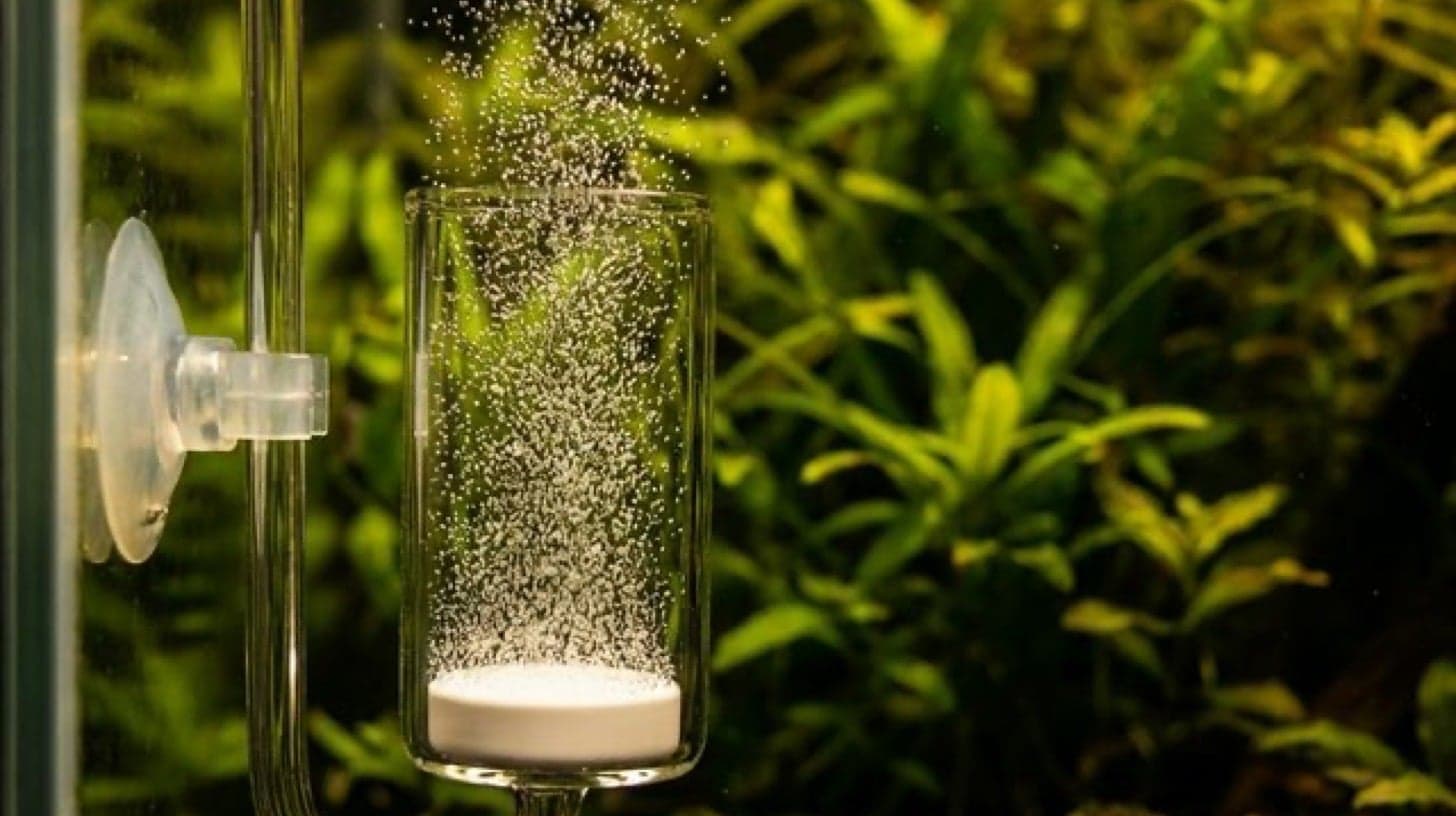
CO2 Diffuser
The CO2 diffuser is the final link in the chain between your pressurised CO2 system and your aquatic plants. Its job is to break down CO2 gas into a fine mist of micro-bubbles that dissolve efficiently into the water column. The quality of your diffuser directly impacts how effectively your plants can utilise the CO2 you're injecting.
How It Works
CO2 gas is forced through a porous ceramic or acrylic disc under pressure. The disc's microscopic pores break the gas into thousands of tiny bubbles. These micro-bubbles have a much greater surface-area-to-volume ratio than large bubbles, allowing them to dissolve into the water before reaching the surface.
Dissolution Efficiency
- Fine mist diffuser: 80–95% dissolution rate.
- Large bubble airstone: 10–30% dissolution rate.
- Inline diffuser: 95–100% dissolution rate (dissolved before entering the tank).
Types of Diffusers
Ceramic Disc Diffuser (In-Tank)
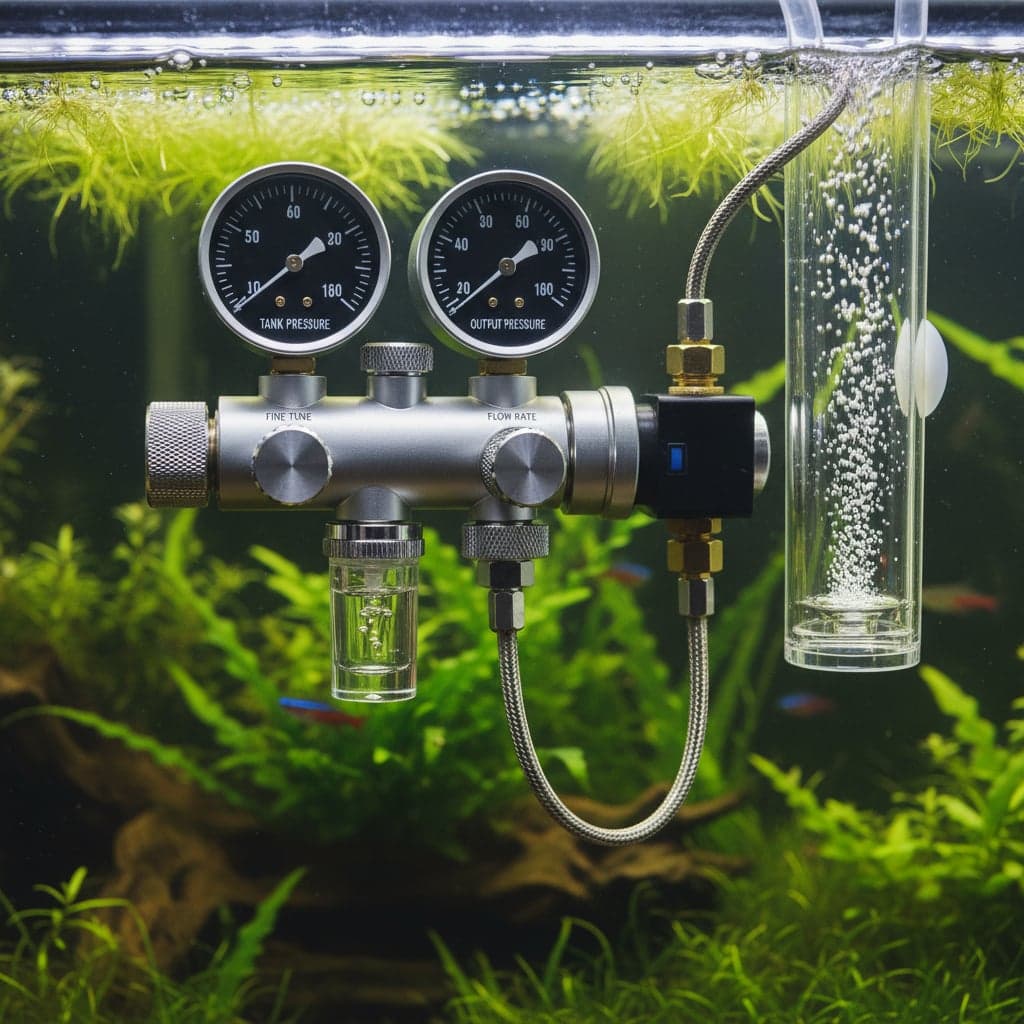
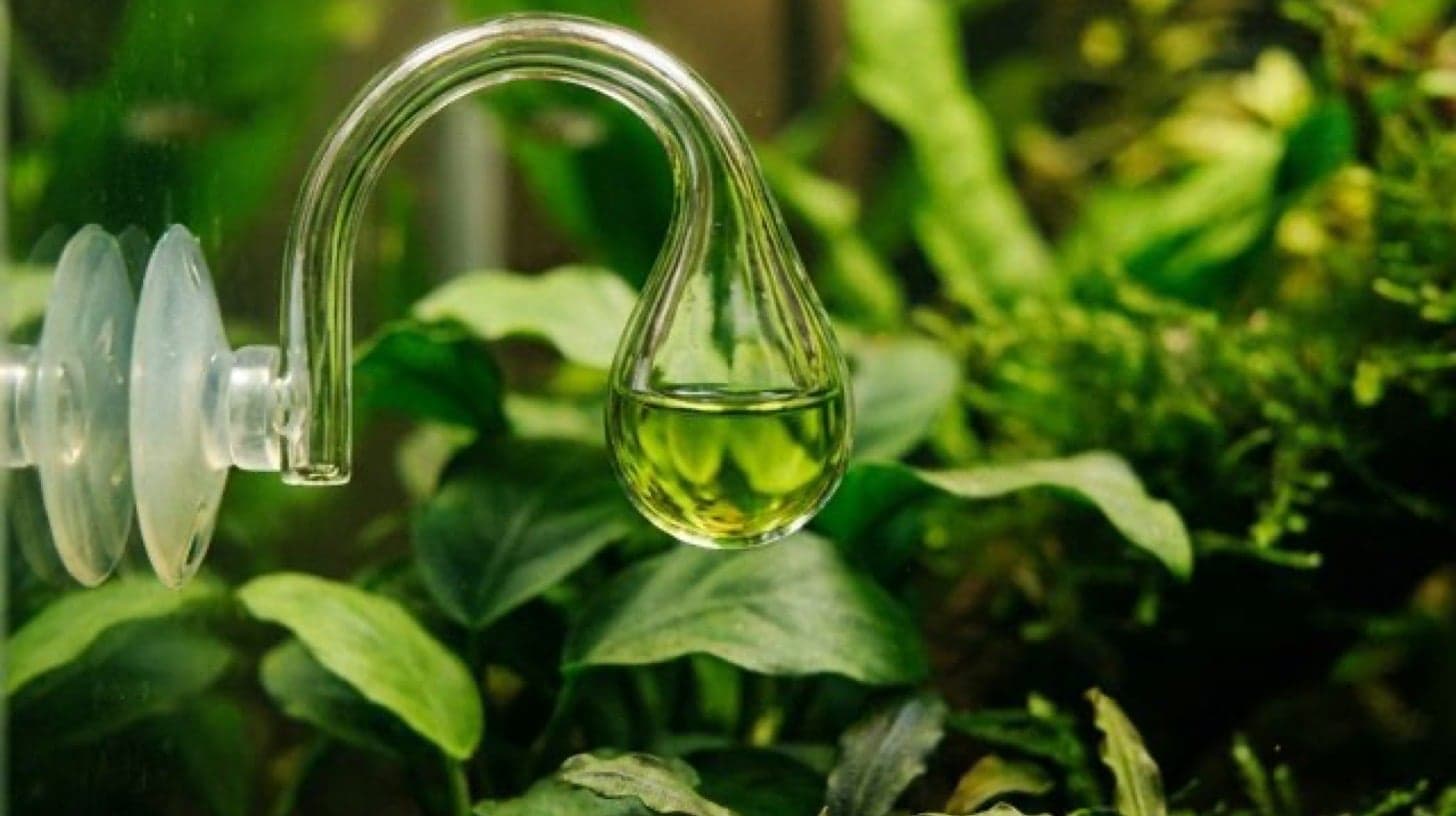
The most common type. A glass body with a porous ceramic disc that produces a fine mist of bubbles inside the tank.
- Pros: Affordable, easy to install, visually shows CO2 is running.
- Cons: Visible in the tank, disc clogs over time and needs cleaning/replacing.
Inline Diffuser
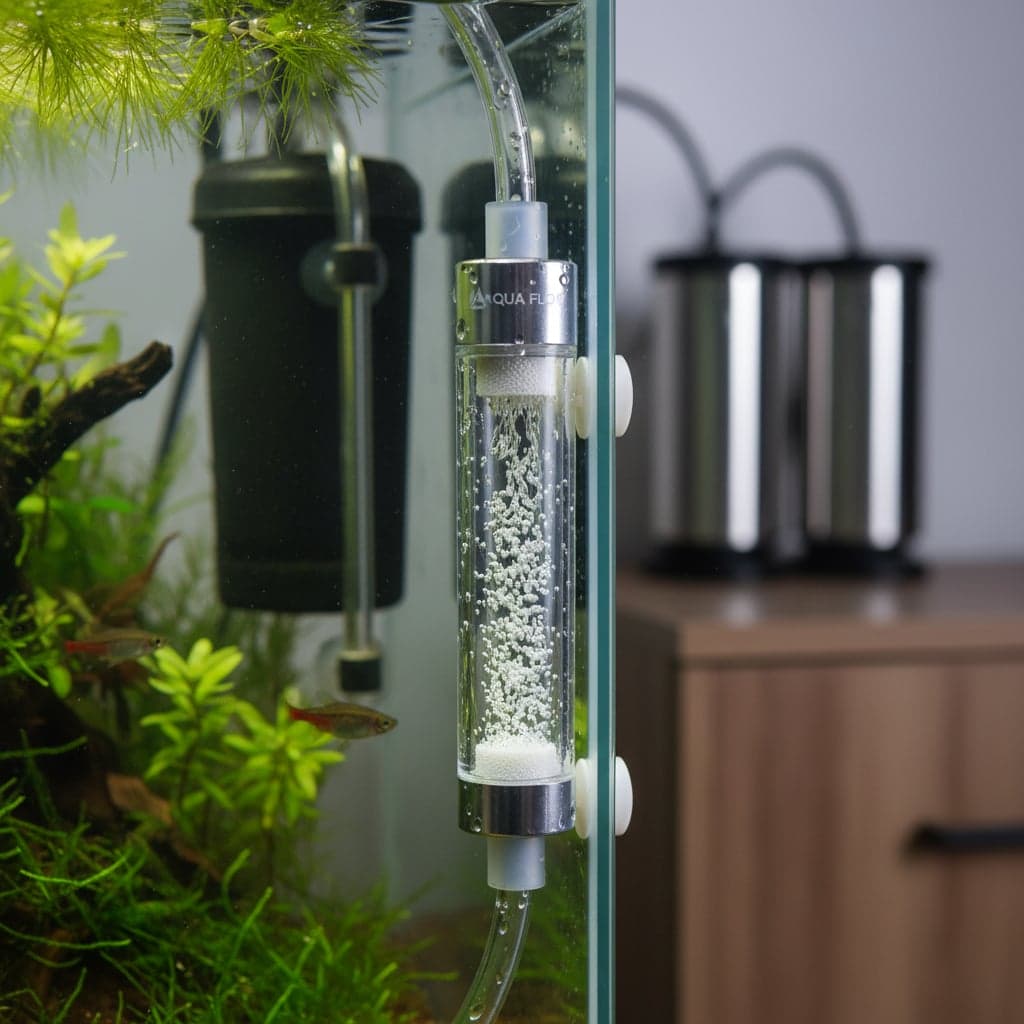
Installed in the canister filter's return hose, outside the tank. CO2 is dissolved into the water flow before it re-enters the tank.
- Pros: Invisible, near-100% dissolution, no equipment in the tank.
- Cons: Can cause micro-bubbles in the tank initially; slightly reduces flow.
Reactor
A cylindrical chamber where CO2 and water mix in a counter-current flow. The gas is fully dissolved before exiting.
- Pros: Maximum efficiency, no bubbles in the tank.
- Cons: Bulky, complex setup, expensive.
Bazooka / Stainless Steel Diffuser
A stainless steel body with a fine porous stone or mesh.
- Pros: Durable, modern look, easy to clean.
- Cons: Heavier, more expensive than ceramic.
Placement Tips
- In-Tank Diffusers: Place opposite the filter outflow so the current carries the mist across the entire tank.
- Below Outflow: Position the diffuser beneath the lily pipe so the returning water pushes bubbles downward, increasing contact time.
- Avoid: Placing near the surface or in dead zones where bubbles escape quickly.
Cleaning & Maintenance
- Soak weekly in a diluted bleach solution (1:20) or hydrogen peroxide for 20–30 minutes to dissolve algae and biofilm that clogs the pores.
- Rinse thoroughly after soaking.
- Replace ceramic discs every 6–12 months when mist quality degrades despite cleaning.
- Inline diffusers: Disassemble and soak the internal disc periodically.
Trusted Brands
- ADA: Pollen Glass series — the benchmark for glass diffusers, producing an incredibly fine mist.
- CO2Art: Bazooka diffusers and inline models with excellent value.
- Cal Aqua Labs: Unique designs like the "Flux" diffuser with integrated bubble counter.
- UP Aqua: Affordable inline diffusers that work well with most canister setups.
Pros & Cons
Advantages
- Efficiency: Maximises CO2 utilisation per gram of gas.
- Plant Health: Ensures even CO2 distribution for uniform growth.
- Variety: Multiple form factors to suit any setup.
Considerations
- Clogging: Ceramic discs need regular cleaning.
- Pressure Requirement: Needs sufficient working pressure (~30+ psi) to push gas through the pores.
- Aesthetics: In-tank models are visible (consider inline alternatives).