Inline CO2 Diffuser
Invisible CO2 injection: The power of inline diffusers. Achieve 100% gas dissolution with zero in-tank equipment for a cleaner, high-tech aquascape.
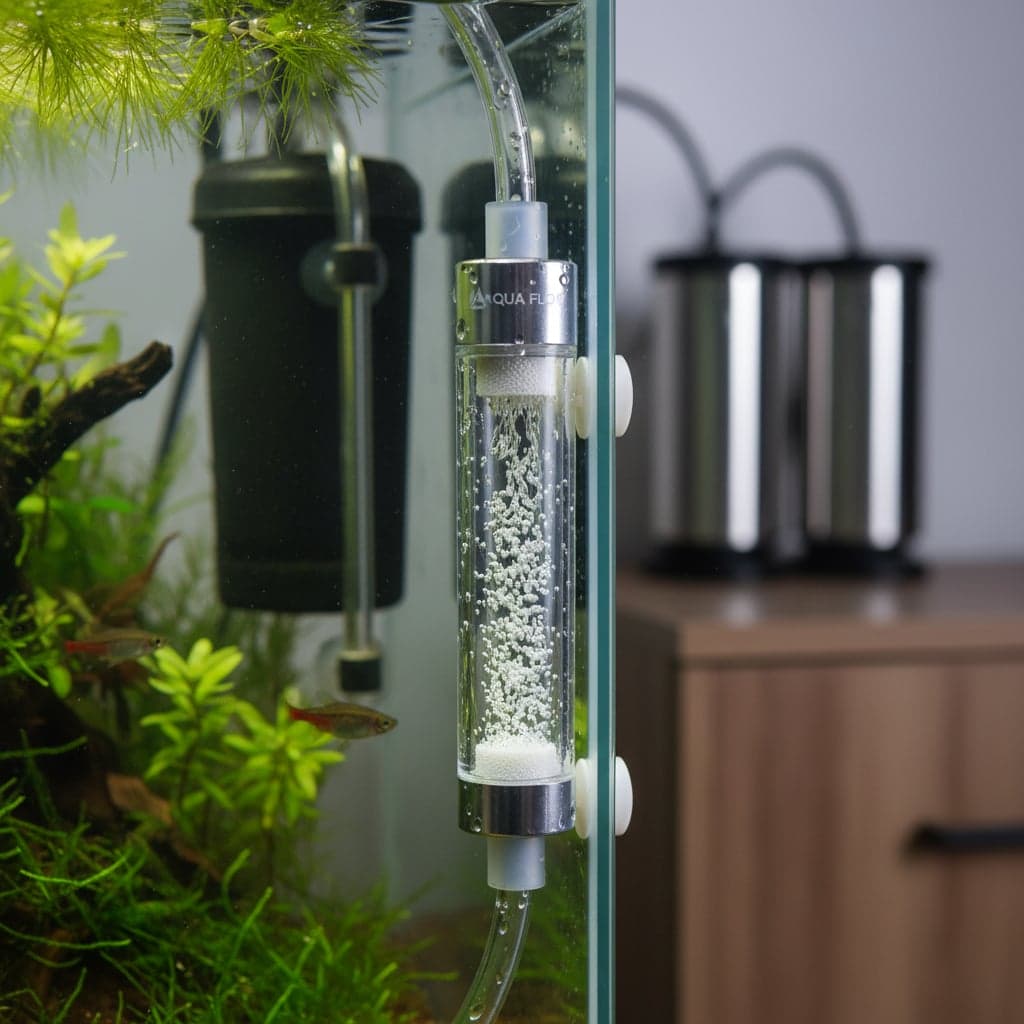
Inline CO2 Diffuser
An inline CO2 diffuser is a device installed externally on the return line of a canister filter. Instead of placing a glass or ceramic diffuser inside the tank, the inline diffuser dissolves CO2 directly into the water flowing through your filter's output tubing. The result is near-100% CO2 dissolution with zero in-tank equipment.
How It Works
- CO2 tubing from your regulator connects to a barb fitting on the diffuser body.
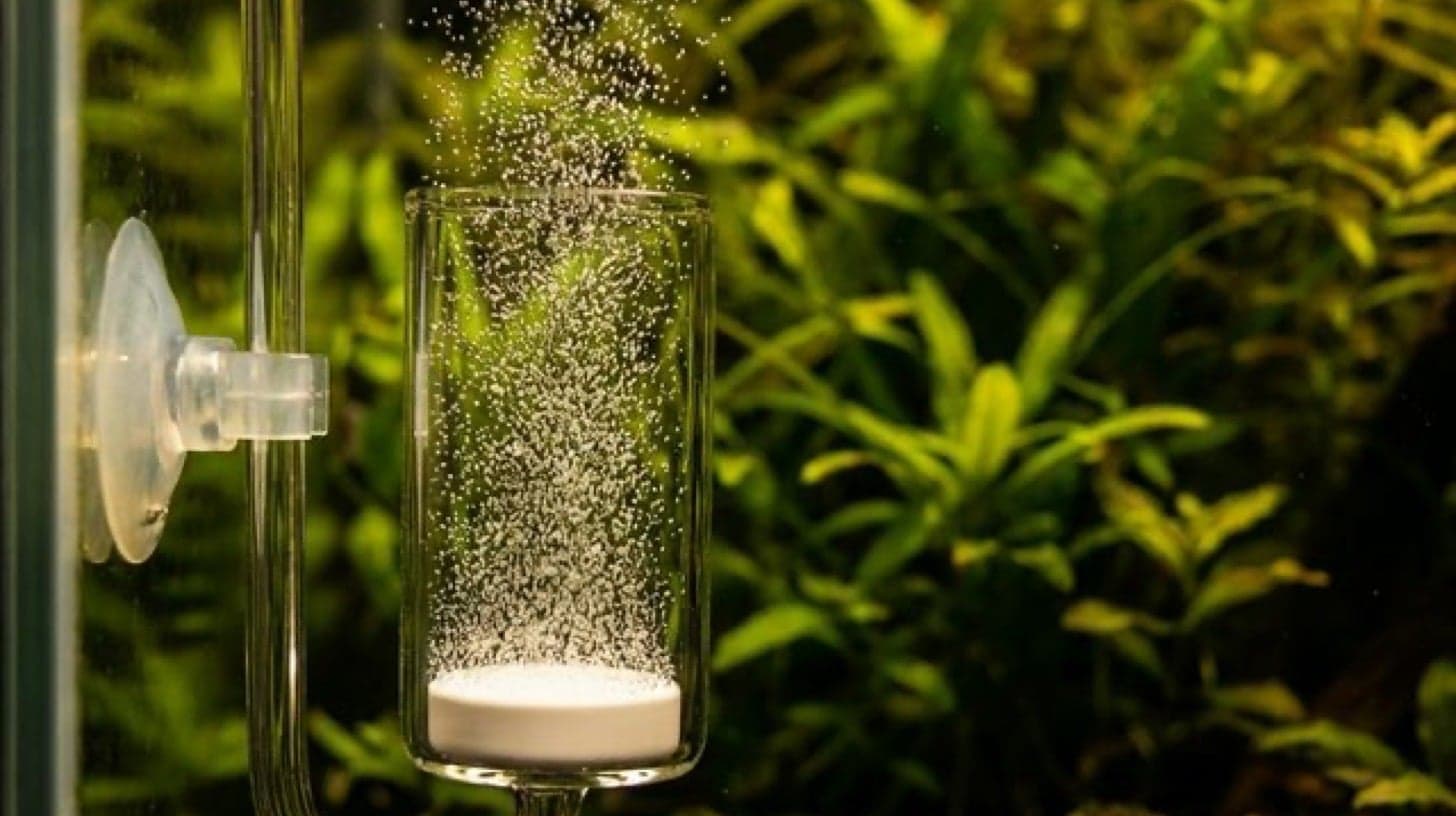
- The diffuser contains an internal ceramic disc that breaks the CO2 into micro-bubbles.
- These micro-bubbles are injected into the high-flow water stream returning from the canister filter.
- The turbulence and pressure inside the tubing fully dissolve the CO2 before it reaches the tank.
Because the CO2 is dissolved before entering the aquarium, you see no bubbles in the tank — only fully dissolved, plant-available carbon.
Inline vs. In-Tank Diffusers
| Feature | Inline Diffuser | In-Tank Diffuser |
|---|---|---|
| Visibility | Hidden outside tank | Visible inside tank |
| Dissolution Rate | ~100% | 60–80% |
| Cleaning | Requires disconnecting tubing | Easy to remove and soak |
| Compatibility | Canister filters only | Any CO2 setup |
| Aesthetics | Clean, no equipment in tank | Glass can be attractive |
| CO2 Waste | Minimal | Some bubbles reach surface and off-gas |
Installation
- Cut the return line: Cut the output tubing from your canister filter at a convenient point below the tank.
- Insert the diffuser: Connect both ends of the cut tubing to the diffuser's barb fittings. Ensure the flow direction arrow points toward the tank.
- Connect CO2: Attach your CO2 tubing to the diffuser's gas inlet barb.
- Prime and check: Turn on the canister filter and CO2. Check for leaks at all connections.
- Secure: Use hose clamps on all barb connections to prevent leaks under pressure.
Sizing
Match the diffuser's tubing diameter to your canister filter's hose size:
- 12/16mm: Standard for smaller canister filters (e.g., Eheim Classic 250, Oase Biomaster 250)
- 16/22mm: Standard for larger canister filters (e.g., Eheim Classic 600, Oase Biomaster 600)
Maintenance
The internal ceramic disc will clog over time with biofilm and mineral deposits, reducing diffusion efficiency. Clean every 4–6 weeks by:
- Disconnecting the diffuser from the tubing.
- Soaking the ceramic disc in a 1:3 bleach-to-water solution for 30 minutes.
- Rinsing thoroughly with dechlorinated water.
- Reinstalling.
Trusted Brands
- CO2Art: High-quality acrylic inline diffusers with excellent ceramic discs.
- JARDLI: Stainless steel body, premium build quality.
- Rhinox: Affordable and effective.
- UP Aqua: Reliable, widely available in different sizes.
Pros & Cons
Advantages
- Maximum efficiency: Near-100% CO2 dissolution means less CO2 wasted.
- Clean tank: No visible equipment inside the aquarium.
- Even distribution: CO2 is carried throughout the tank by the filter's return flow.
- Reduced algae risk: No mist cloud settling on leaves.
Considerations
- Canister filter required: Only works with external canister filters.
- Installation complexity: Requires cutting tubing and managing connections.
- Cleaning access: Must be disconnected for maintenance.
- Restriction: Slightly reduces filter flow rate.