Achilles Tang
The Achilles Tang (Acanthurus achilles) is a prized Pacific surgeonfish with a vivid orange teardrop — a beautiful but oxygen-hungry, ich-prone fish for experienced reef keepers.
Also known as: Achilles tang · Acanthurus achilles
Achilles Tang
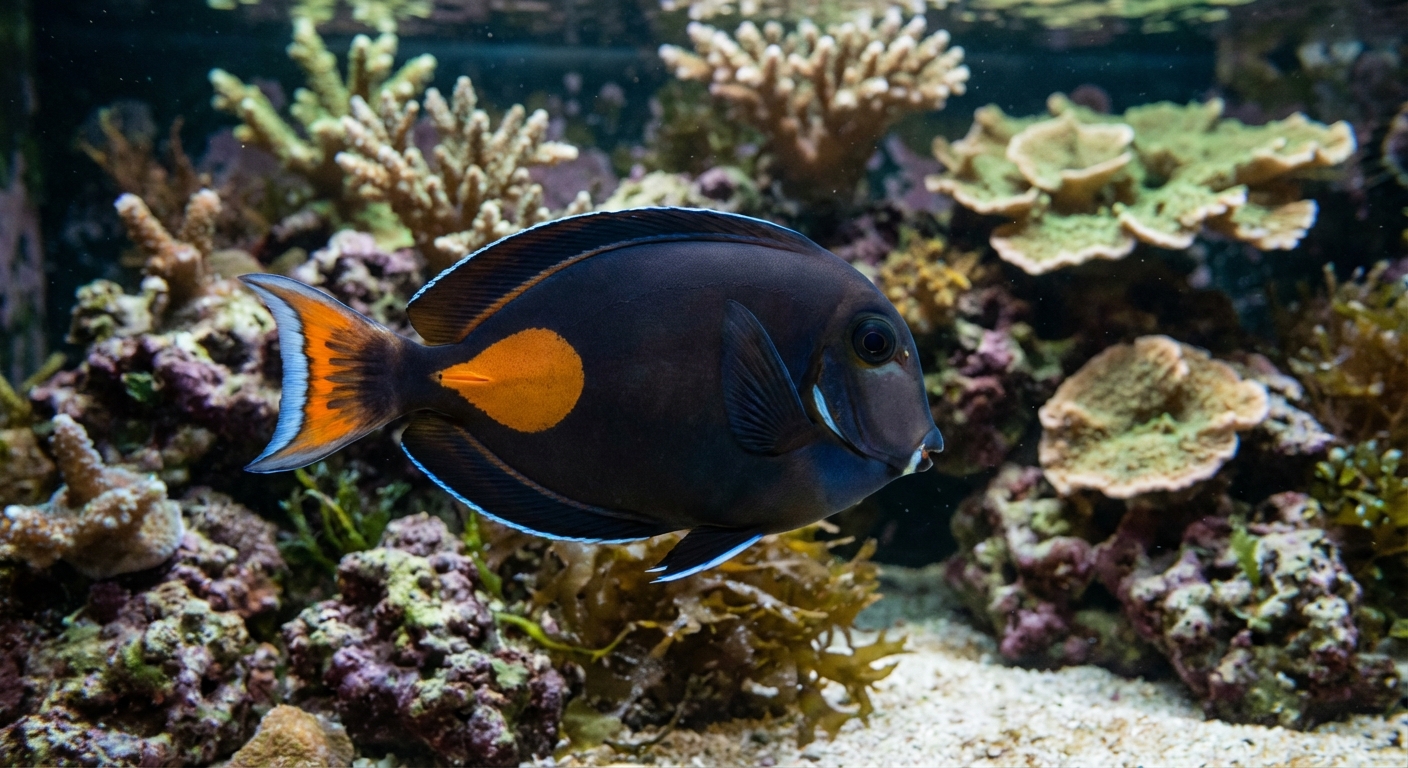
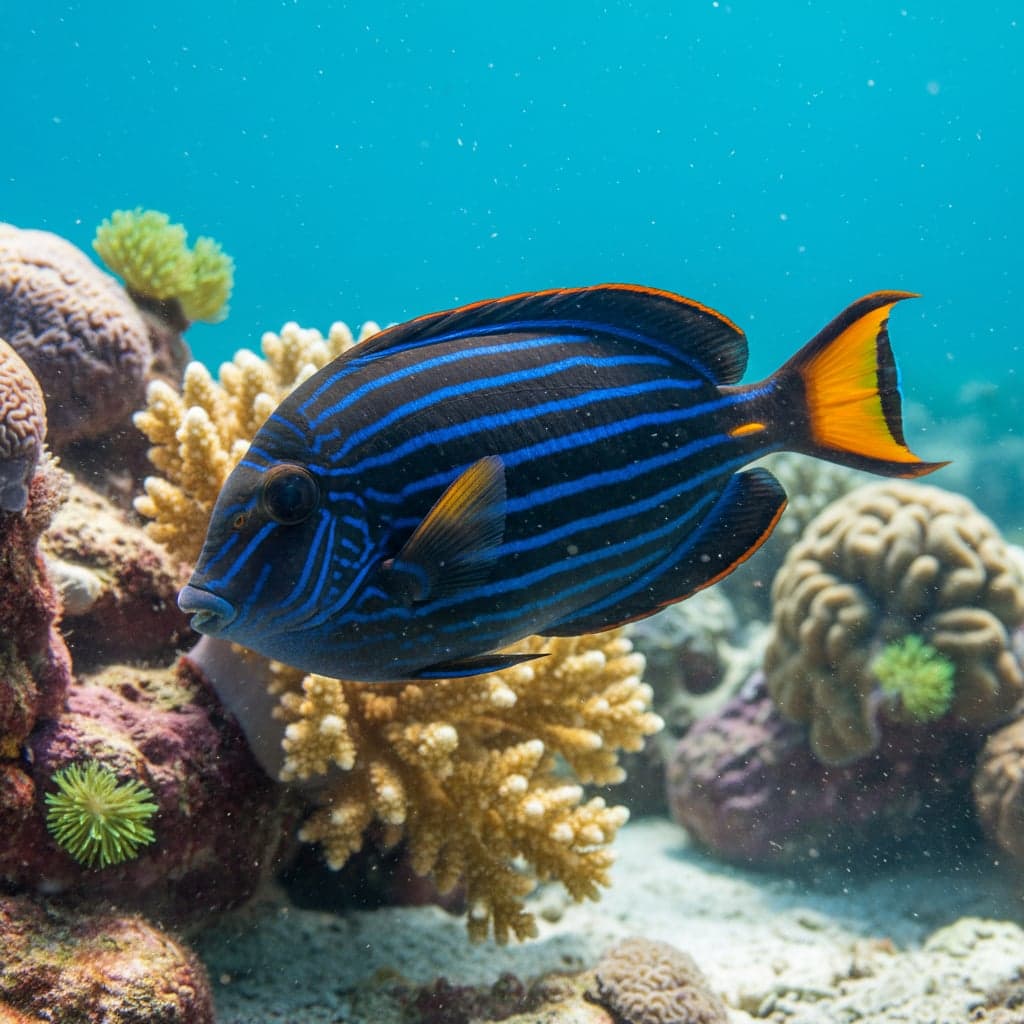
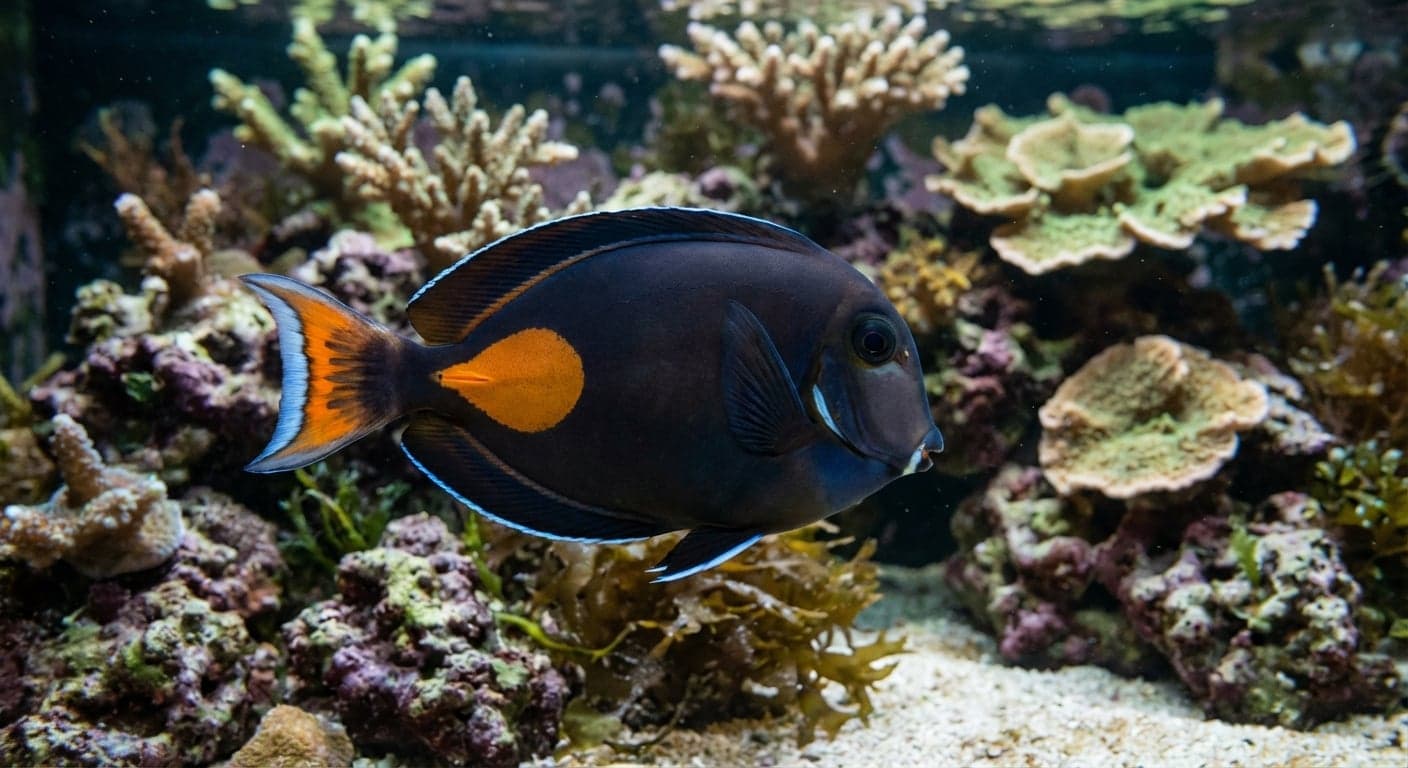
The Achilles Tang (Acanthurus achilles) is one of the most coveted surgeonfish in the marine hobby, instantly recognised by the bold orange teardrop marking on its rear flank — a striking accent against its deep, velvety black body, set off by orange and white highlights on the fins and gill. It is a fast, powerful swimmer from high-energy Pacific reefs, and a true showpiece for a large reef system.
It is also a demanding fish. The Achilles Tang needs pristine, oxygen-rich water and a great deal of swimming room, and it is notoriously susceptible to marine ich. For those reasons it is best regarded as a fish for experienced keepers with a mature, well-run system.
Natural Habitat & Origin
Acanthurus achilles is found across Oceania, including Hawaii and as far as the Pitcairn Islands. It is a benthopelagic species that lives in the clear, turbulent waters on the seaward side of reefs, where strong surge keeps the water highly oxygenated. Reaching up to about 24 cm (9.4 inches), it is an active grazer that ranges widely over the reef.
Recreating that environment is central to keeping it well: vigorous water movement, excellent oxygenation, and plenty of open swimming space over live rock.
Care Requirements
Maintain stable marine conditions: salinity around 1.024–1.026, pH 8.1–8.4, and a temperature of about 24–26°C (75–79°F), with low nitrate and phosphate. Because of its size, activity and oxygen demands, provide a large tank — on the order of 450 litres (around 120 US gallons) as a practical minimum, with strong flow and surface agitation for gas exchange.
A mature aquarium with abundant live rock for grazing, combined with high water quality and powerful circulation, gives this sensitive tang the best chance to thrive.
Diet & Feeding
The Achilles Tang is a herbivore that grazes largely on benthic algae in the wild. In captivity it should be offered a primarily plant-based diet: dried marine algae (nori) on a clip, herbivore and spirulina preparations, and algae-based frozen foods, supplemented with occasional meaty marine items. Frequent small feedings throughout the day suit its constant-grazing nature and help keep it in condition.
Good natural algae growth on mature live rock is a real asset, providing continuous grazing between feedings.
Behavior & Temperament
Acanthurus achilles is territorial and can be aggressive, particularly toward other surgeonfish and especially other Achilles or similarly shaped tangs. It is best kept as the only tang in all but very large systems, and introduced thoughtfully. Toward unrelated fish it is generally manageable. Its caudal spine ("scalpel") is a defensive weapon, so handle with care.
Tank Mates
House it with robust marine fish that occupy different niches — wrasses, angelfish, larger gobies, anthias and similar — in a tank large enough to dilute aggression. Avoid other tangs unless the system is very large, and avoid timid fish likely to be bullied. It is reef-safe, grazing algae rather than corals or invertebrates, making it a good choice for a large reef.
Breeding
The Achilles Tang is a pelagic spawner that releases planktonic eggs, and it is not bred in the home aquarium. Its demanding larval requirements keep captive breeding within the domain of specialist facilities, so trade specimens are wild-collected.
Common Health Issues
This species is famously prone to marine ich (Cryptocaryon irritans) and marine velvet (Amyloodinium ocellatum), especially when stressed by capture, shipping or poor water quality. A careful quarantine and a stable, oxygen-rich, low-stress environment are essential. Because it is sensitive to deteriorating conditions, pristine water and strong flow are not optional luxuries but core requirements. Buy a feeding, alert specimen, provide a large mature tank, and the Achilles Tang can be a spectacular long-term centrepiece for an experienced reefkeeper.