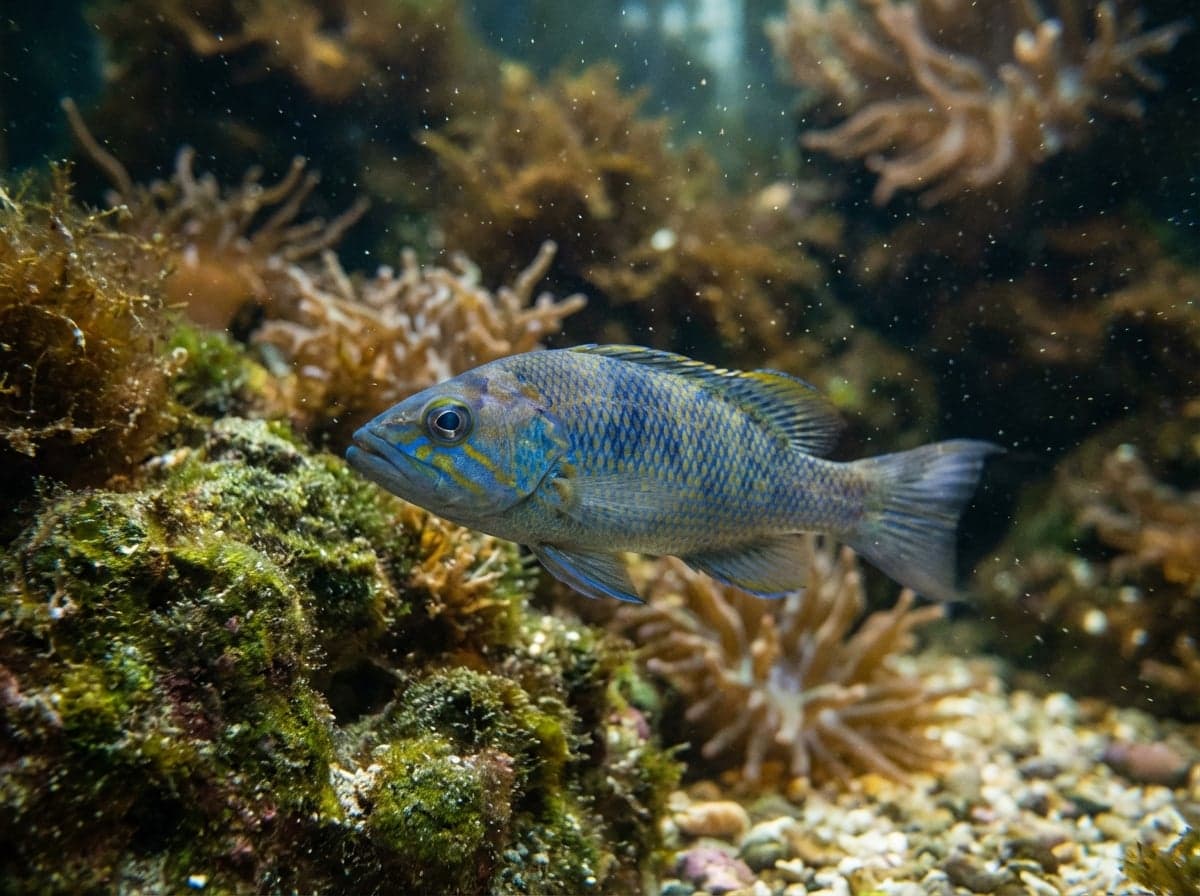
Barrier Reef Chromis
The Barrier Reef Chromis (Chromis nitida) is a small, hardy Australian shoaling damselfish — peaceful, reef-safe and an easy beginner marine fish.

Barrier Reef Chromis
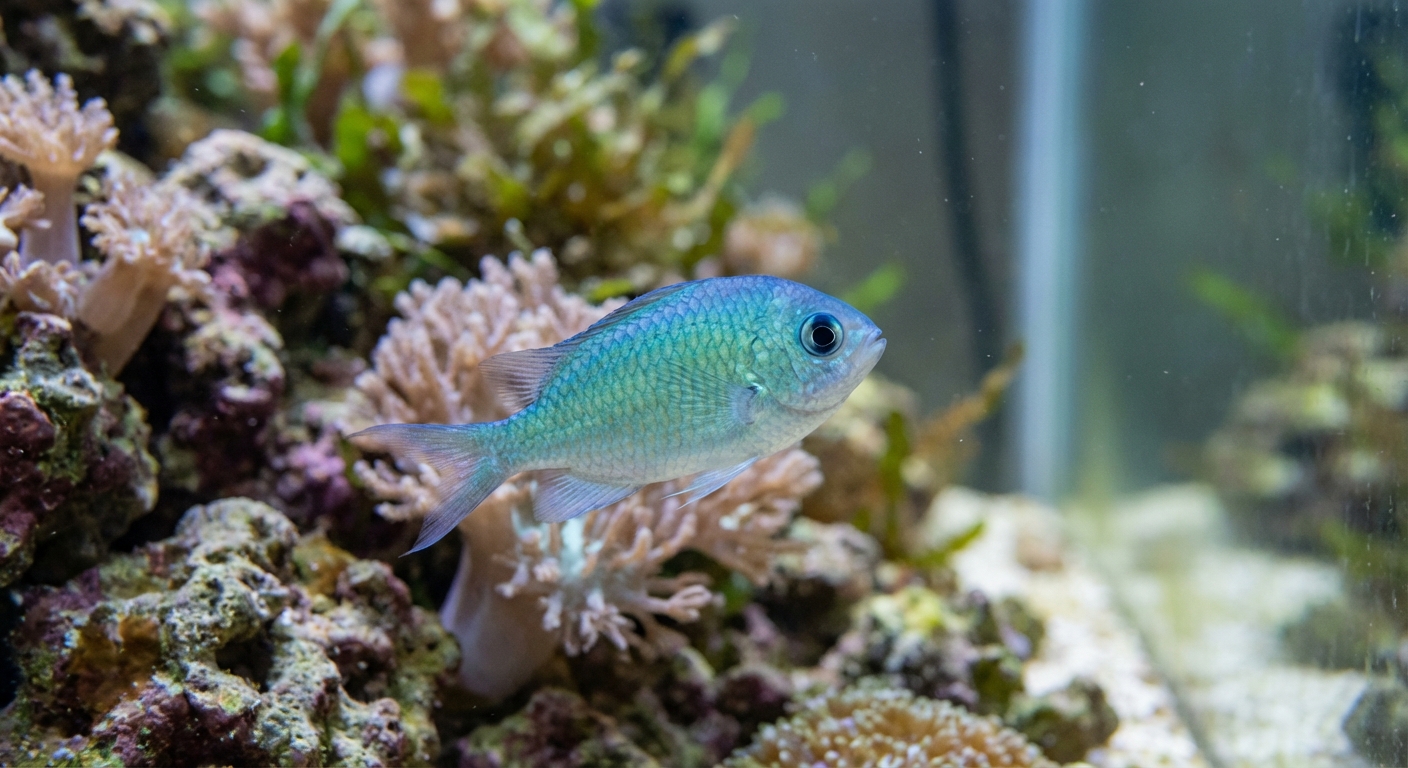
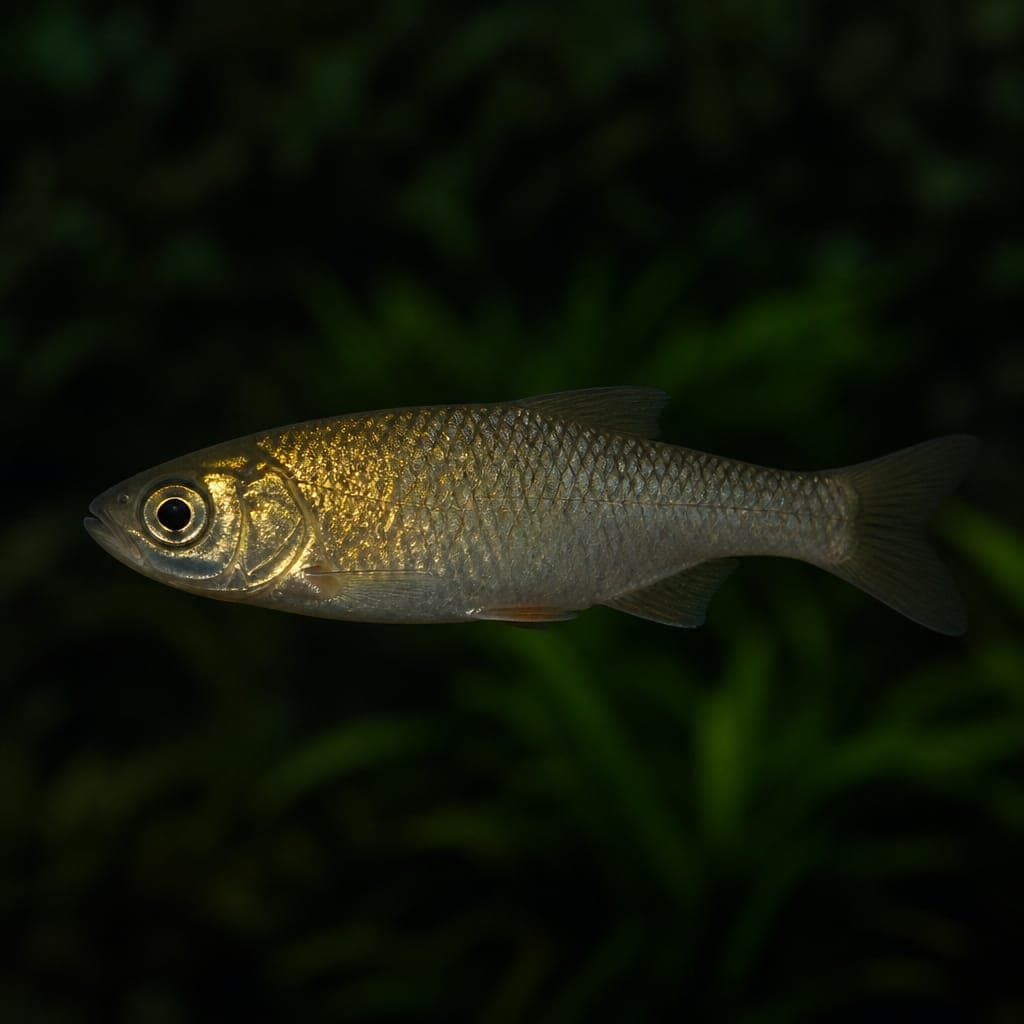
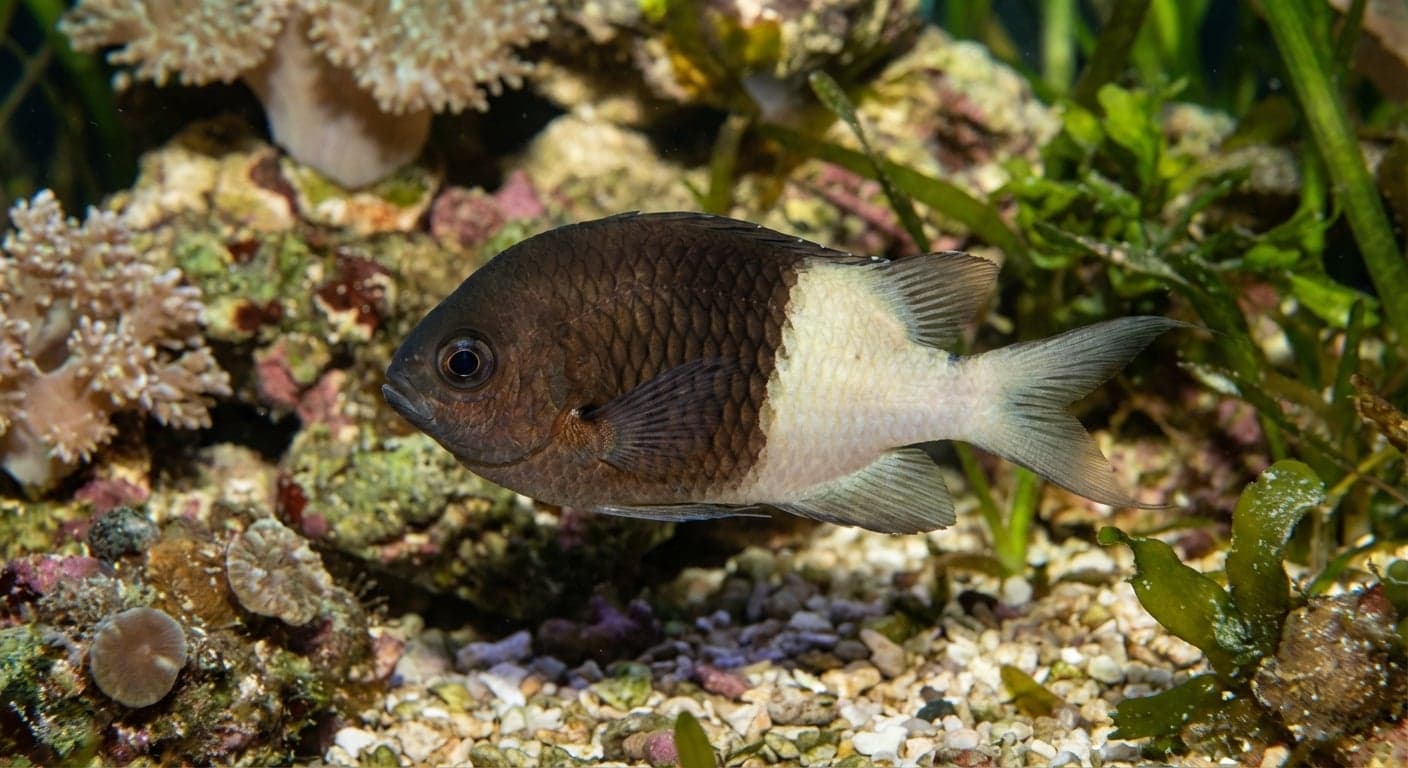
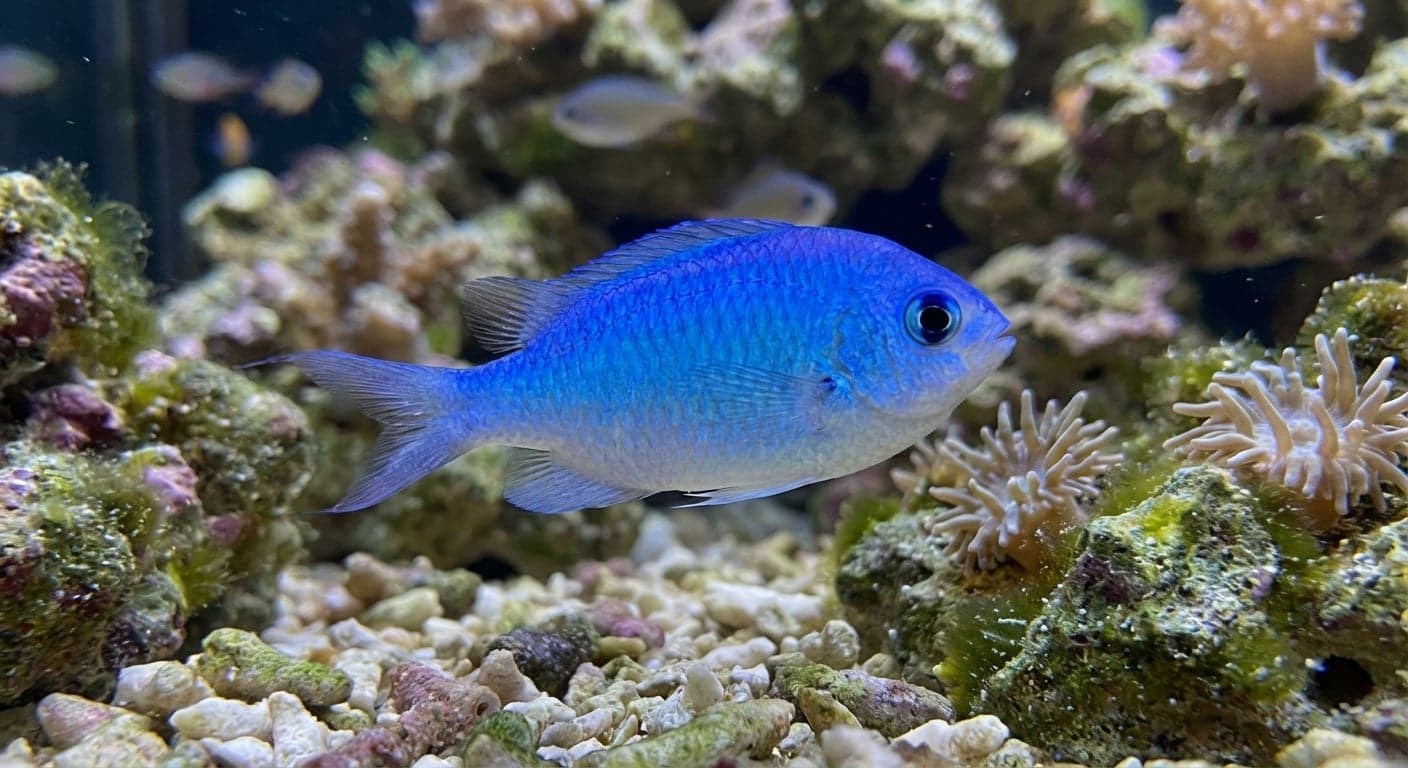
The Barrier Reef Chromis (Chromis nitida), still sold as the yellowback puller in Australian shops, is a small silver damsel with a warm yellow wash along the back. Alone it is pleasant. In a group of five or more it becomes what people actually want from chromis: a shimmering, constantly moving band in the open water above the rock, diving into cover as one when something startles them.
It is one of the calmer damsels in the trade — closer to green chromis than to the territorial Chrysiptera and Dascyllus species that earn damsels their bad reputation. That calm is conditional. It depends on numbers, food and space. Strip those away and you get the same slow attrition that empties every underfed chromis shoal in the hobby.
Natural Habitat & Origin
C. nitida is an Australian fish. Its range runs the subtropical east coast from northern Queensland through New South Wales and out to Lord Howe Island. It lives on the outer faces of coral-rich rocky reefs and in some estuarine settings, typically between about 5 and 25 metres, shoaling in open water and retreating toward the reef structure when threatened.
That geography matters for temperature expectations. This is not a Red Sea stenotherm living at a constant 28°C. East Australian waters swing cooler at the southern end of the range, which is why a steady 24–26°C (75–79°F) band suits it in captivity without chasing tropical maximums. What it still needs from the reef is the same architecture: open water to feed in, and branching or creviced rock to vanish into.
In the aquarium, rock stacked as a solid wall with no midwater column fights the fish. Give it a clear swimming lane above the scape.
Care Requirements
Hold marine parameters steady: salinity around 1.024–1.026, pH 8.1–8.4, temperature about 24–26°C. Adults reach roughly 9 cm (3.5 inches). The listed minimum of 115 litres (30 US gallons) is a floor for a small shoal, not a licence to jam eight fish into a nano. Length and open water decide whether the shoal mills or mills each other.
Chromis earn a beginner label because they accept standard reef chemistry and do not need specialist diets or lighting. The label fails when people use them as disposable cycle-helpers or stock one or two "to see how it goes." A cycled, stable system and a proper group are the actual beginner path. Log salinity and temperature in the Aquarium Tracker if you want early warning of the drifts that precede disease.
Moderate to strong flow keeps food suspended and oxygen high. They face into current in the wild; stagnant corners under rock are where a bullied fish hides and where waste sits.
Diet & Feeding
Wild diet is zooplankton, small invertebrates and some algae — omnivory built around frequent plankton picking in current. Captive fish take frozen mysis and brine, marine flakes, small pellets and algae-bearing foods without much persuasion. That ease is dangerous: because they eat anything, people feed once a day and assume the job is done.
It is not. High metabolism and a shoaling hierarchy mean the dominant fish eats first and the subordinates get leftovers. Two or three small feedings spread through the day keep more mouths fed and blunt the pecking that otherwise removes fish one by one. If your "school of six" is three pale fish after four months, look at feeding frequency and tank footprint before you blame mystery disease.
They will not solve a nuisance algae problem. Any grazing is opportunistic. Plan algae control separately.
Behavior & Temperament
Peaceful toward unrelated tankmates is accurate. Peaceful toward each other is negotiated. A group of five or more lets the hierarchy spread; a trio in a short tank often ends as a pair, then a singleton. Kept alone, the fish withdraws and stops showing the shoaling behaviour that justifies buying the species.
They live in midwater and the upper rock zone, feeding in the column and shooting into holes when startled. They do not dig substrate, move rock or pick at coral tissue. Night sees them tucked into cover — a tank that offers no tight refuge keeps them jumpy after lights-out.
Tank Mates
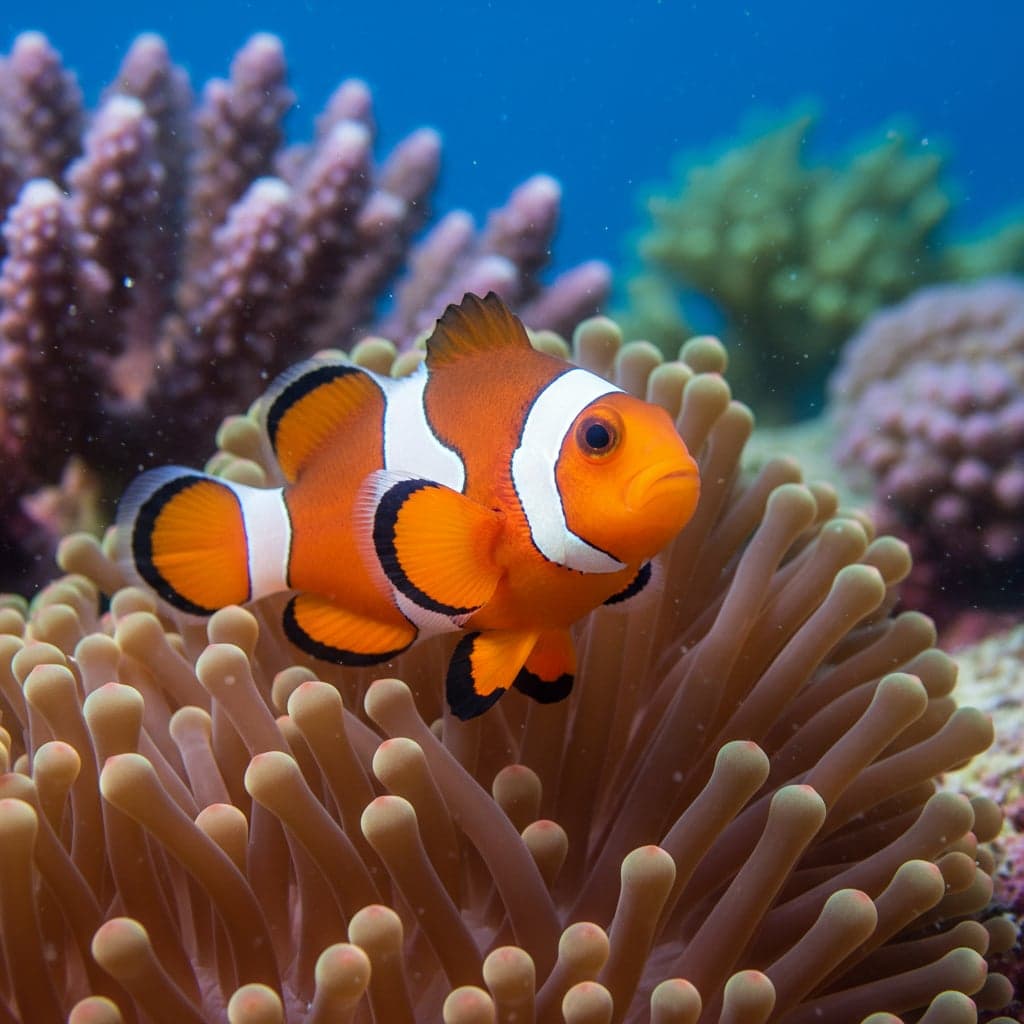
Match them with other peaceful reef fish: clownfish, other chromis, gobies, smaller wrasses, cardinalfish and anthias. Large aggressive damsels, triggers and predators that eat 9 cm fish are bad company.
Reef-safe is mechanical, not marketing. The mouthparts and diet target plankton and tiny prey in the water column, not polyp flesh or clam mantles. SPS, LPS, soft corals and ornamental shrimp are left alone, which is why this species belongs in reef communities where a butterfly or large angel would be a gamble.
Avoid stocking them with anything that needs the same small rock hole as a territory and will defend it to the death — some dottybacks and damsels turn a shared cave into a war.
Breeding
Chromis deposit adhesive eggs on rock or substrate; the male guards and fans them until hatch. Spawning in display tanks is not rare. Raising the pelagic larvae through their planktonic phase in a home system almost never works without dedicated culture of suitable live foods.
Specimens in the trade are wild-collected. Do not assume tank-bred hardiness. Every new fish is an import until proven otherwise.
Common Health Issues
Established Barrier Reef Chromis are durable. Fresh arrivals are not automatically so. Marine ich (Cryptocaryon irritans) and marine velvet (Amyloodinium ocellatum) remain the headline risks under shipping and acclimation stress, and chromis as a group also show up in Uronema and bacterial lesion cases when holding water is foul.
Quarantine before the display tank. Treat parasites in a hospital system — not in a reef full of inverts with copper. Keep water quality stable, feed the shoal often enough that subordinates eat, and give them cover. Those three habits prevent more losses than any bottle of "chromis tonic."
Early signs: flashing, white spots, rapid gill movement, refusal to join the group at feed time, or a fish that stays buried in rock for days. Act while there is still something to save.