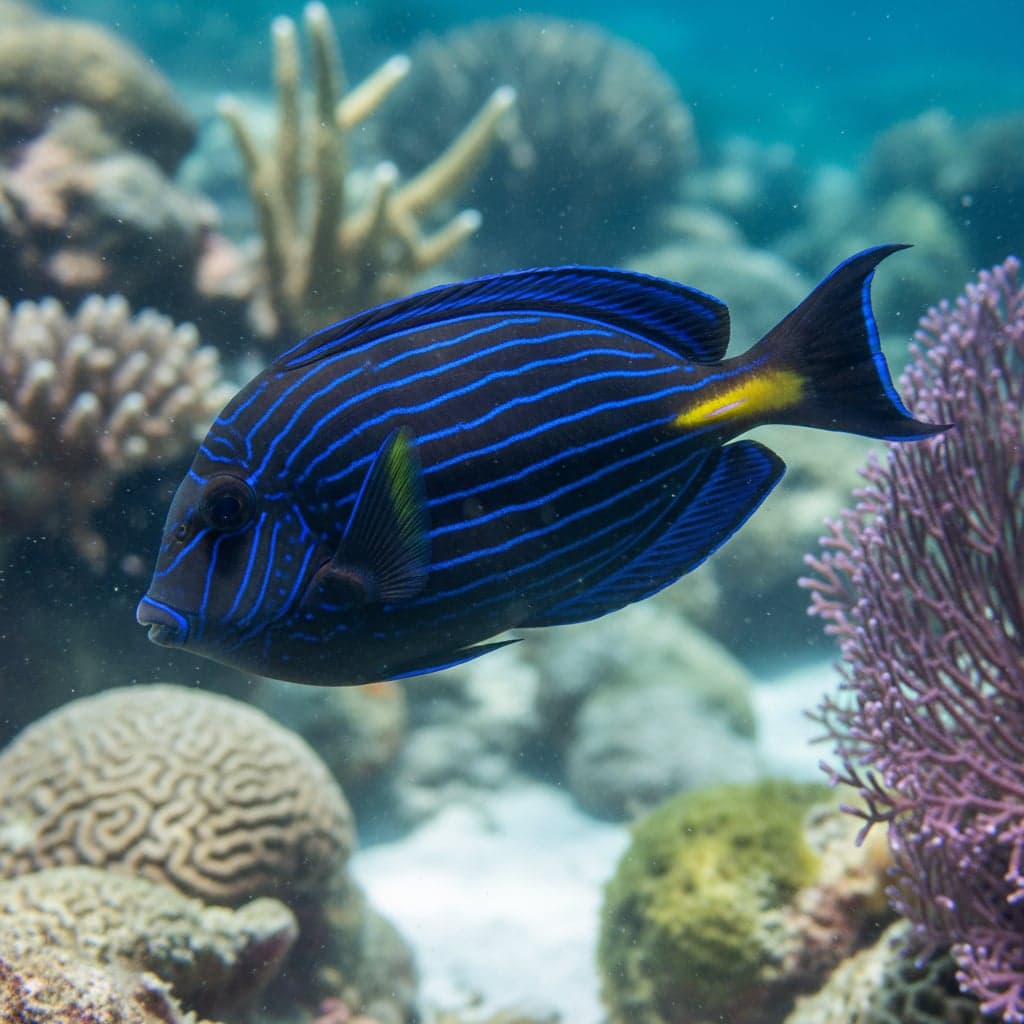
Black-barred Tang
The Black-barred Tang (Acanthurus polyzona) is a rare, boldly striped surgeonfish from the western Indian Ocean — a reef-safe algae grazer seldom seen in the hobby.
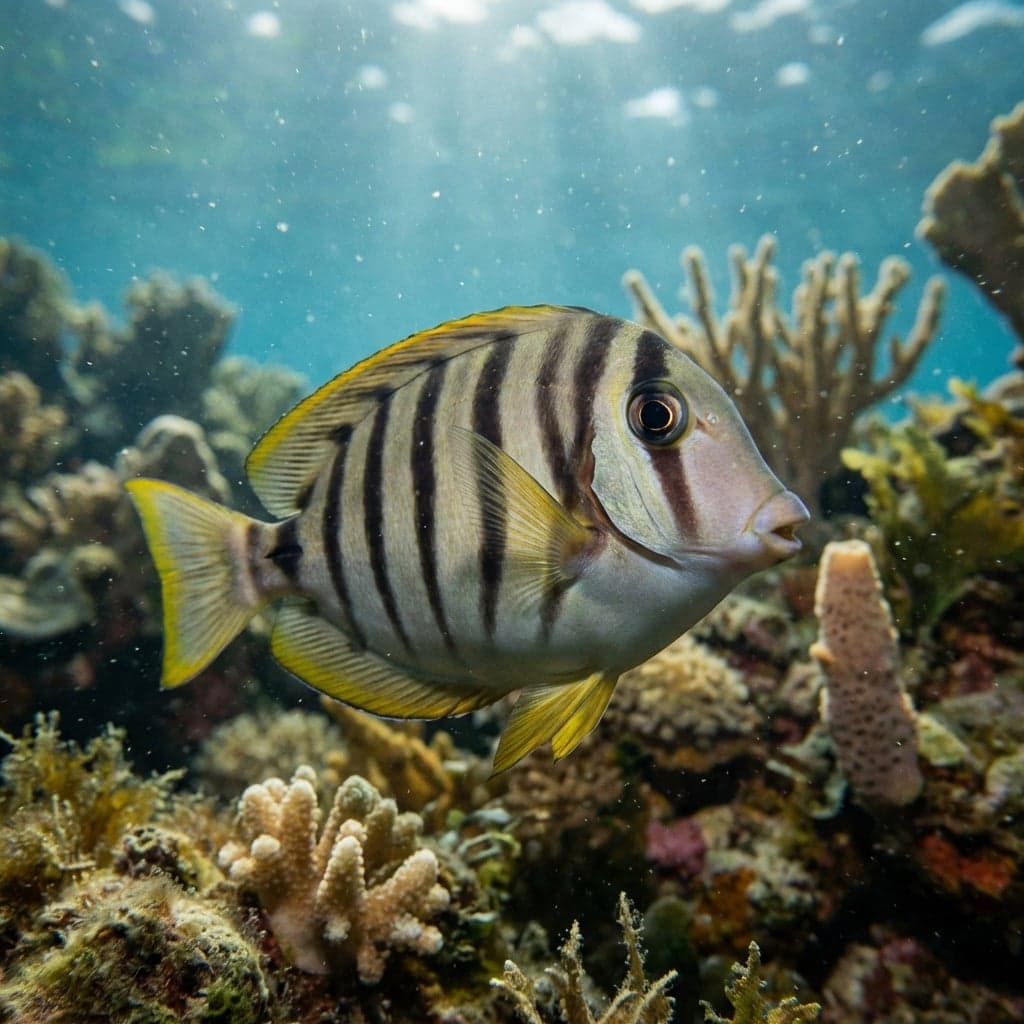
Black-barred Tang
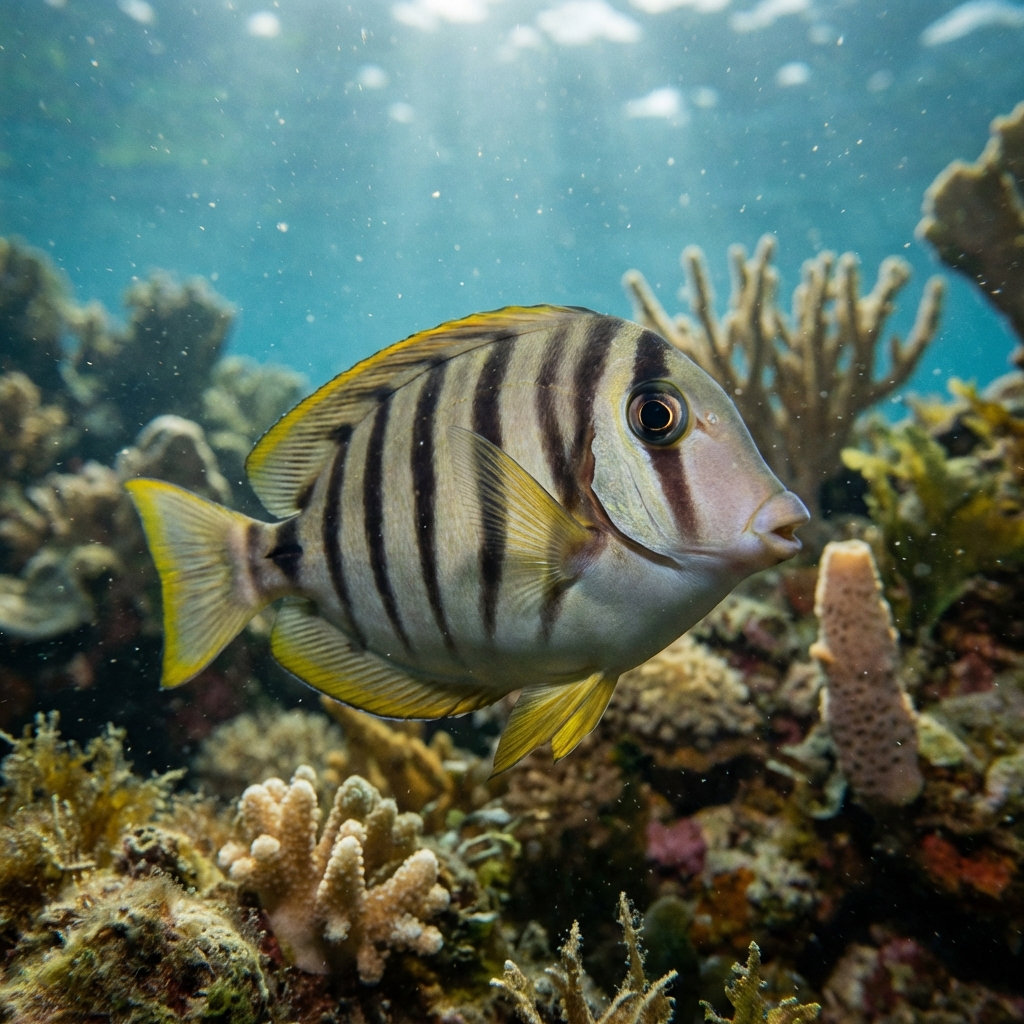
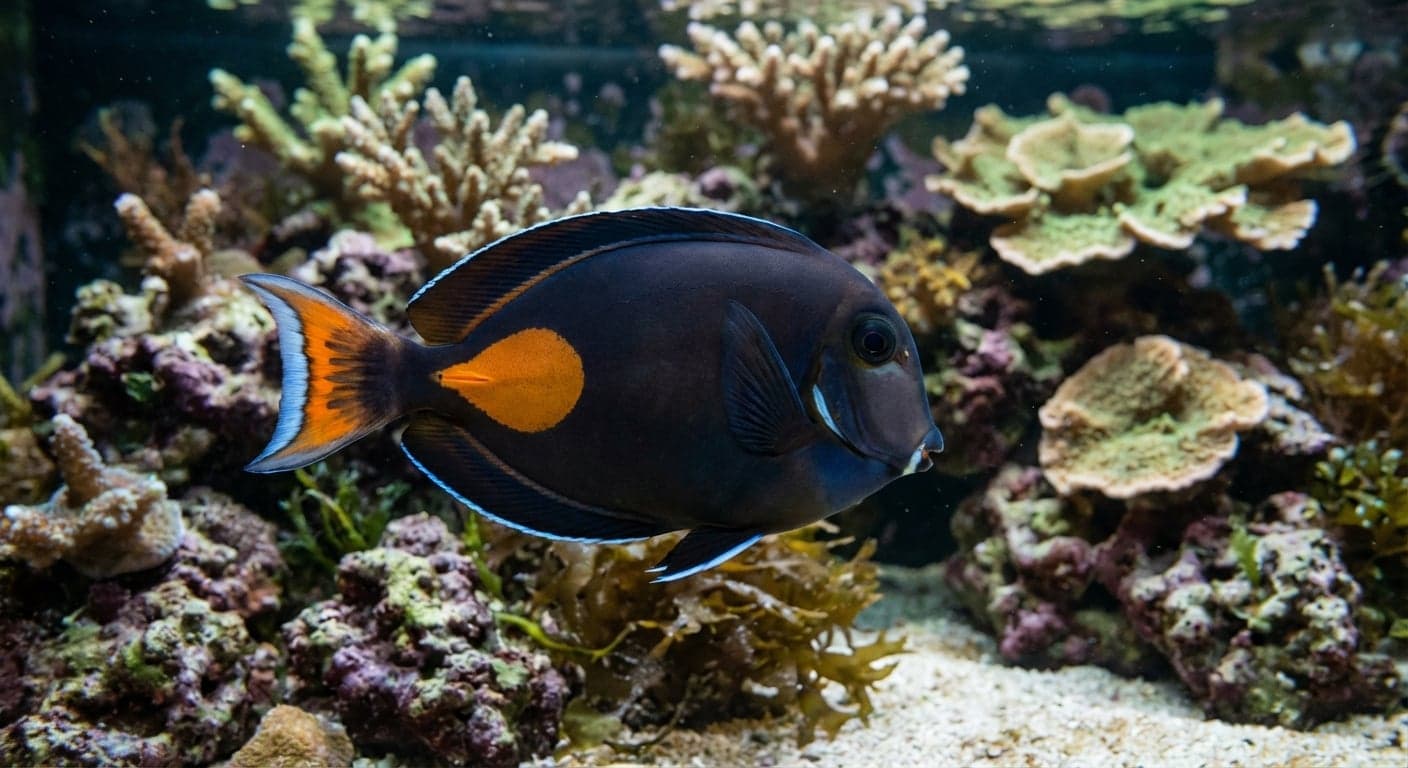
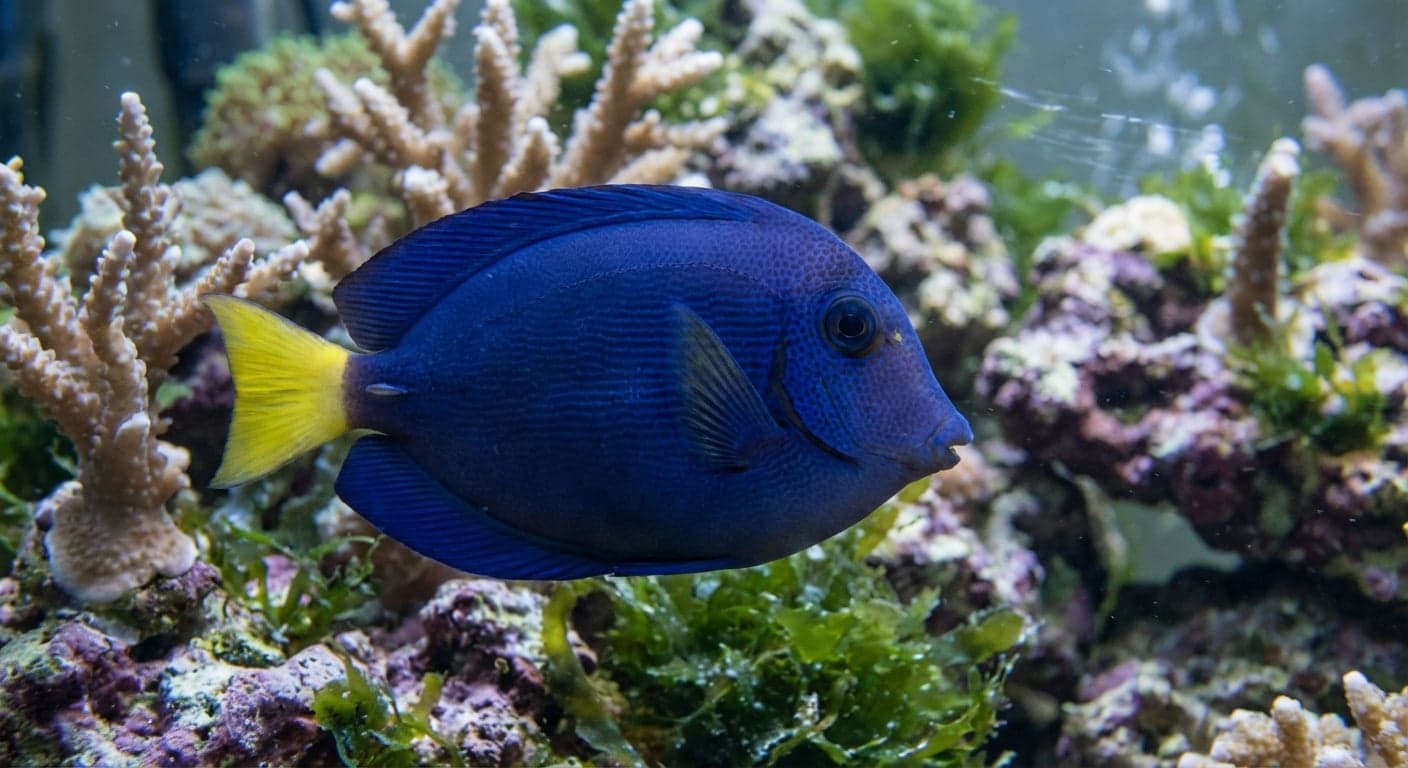
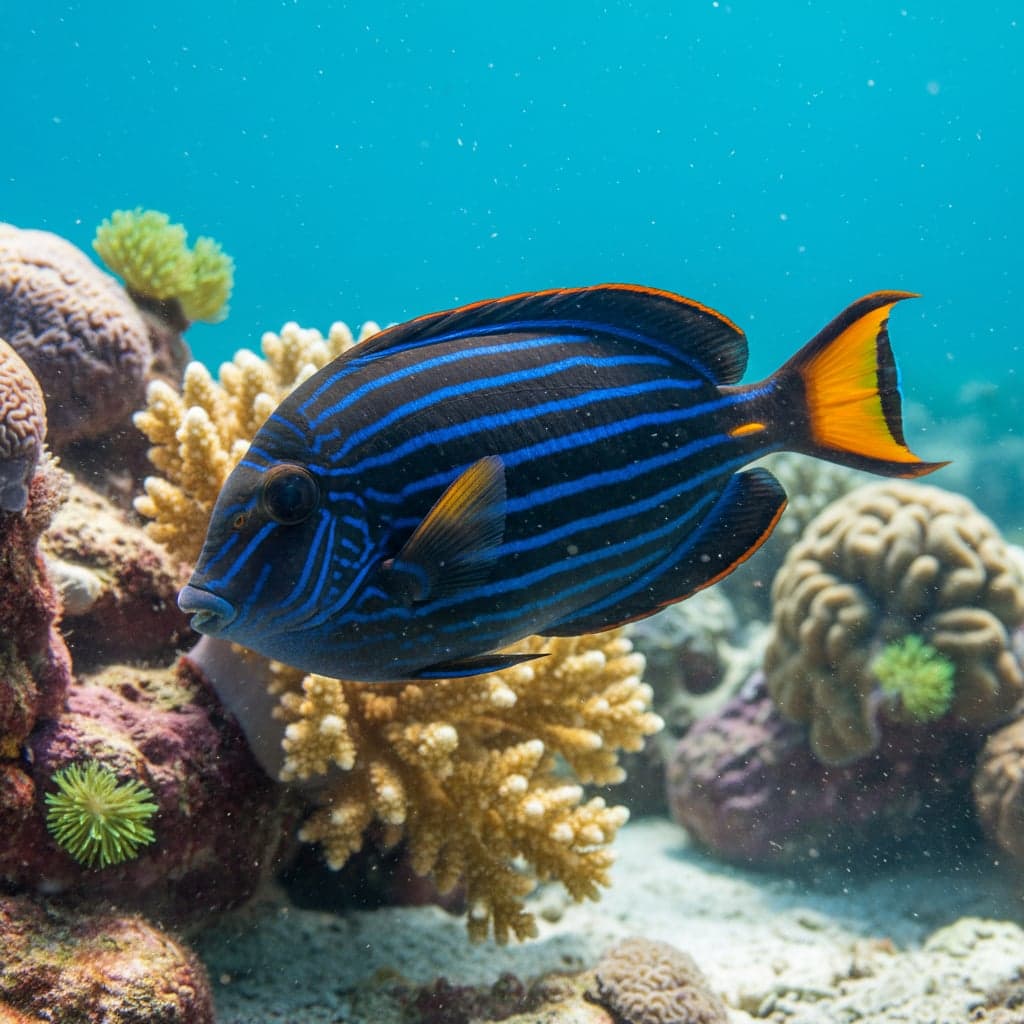
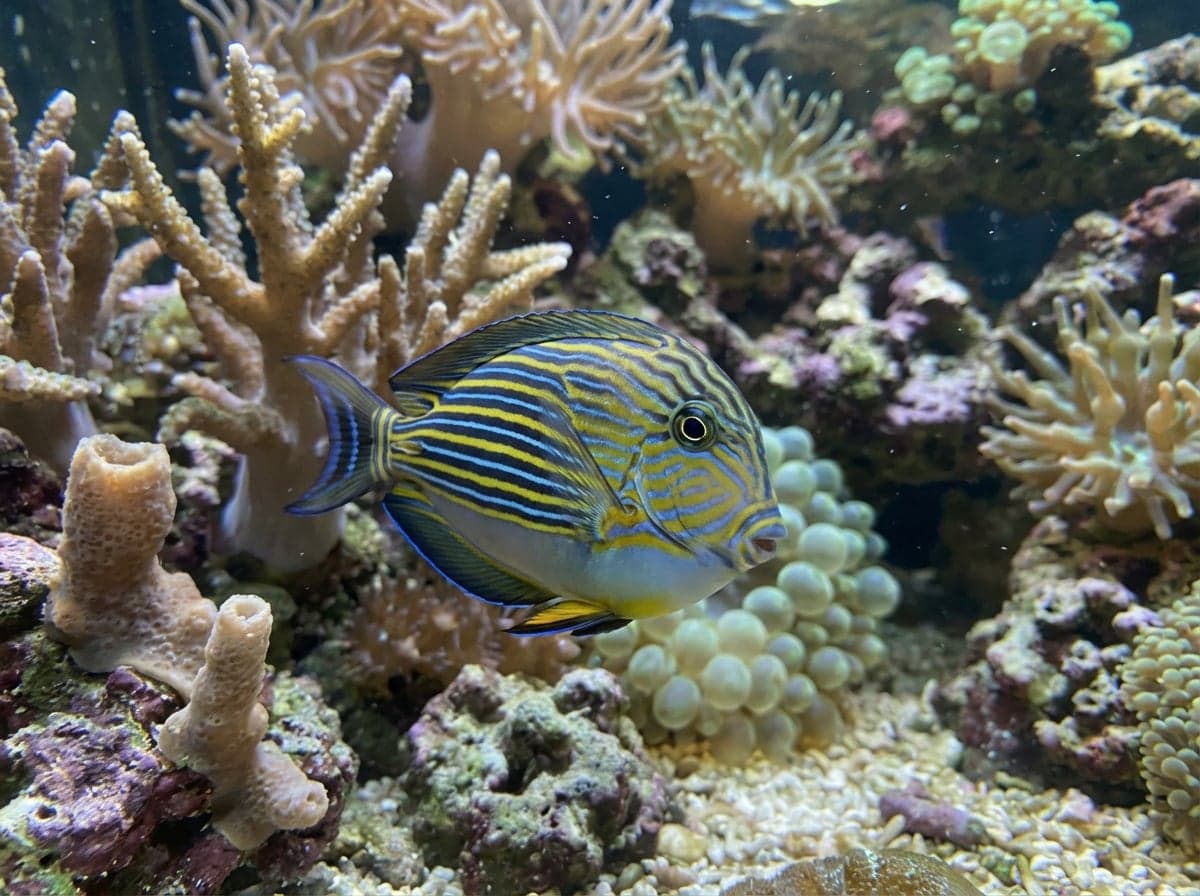
The Black-barred Tang (Acanthurus polyzona), also called the black-barred or zebra surgeonfish, is one of the rarest surgeonfish in the aquarium trade. Marked with bold dark bars across a pale body, it has a striking, zebra-like appearance unlike most members of its genus. Restricted to a small western Indian Ocean range and only occasionally exported, it is a prized, high-value fish for advanced collectors.
Despite its rarity it is, at heart, a fairly typical algae-grazing tang — its scarcity and price, rather than exotic care needs, are what make it a fish for experienced keepers.
Natural Habitat & Origin
Acanthurus polyzona is endemic to the tropical western Indian Ocean, recorded only from Madagascar, Mauritius, Réunion and the Comoro Islands. It inhabits shallow reef habitats — lagoons and outer reef slopes over sandy, rocky or coral seabeds — at depths down to about 15 metres (49 feet). It is diurnal and gregarious, often associating with shoals of convict tangs for the safety of numbers.
A captive setup should echo this: open swimming space, abundant live rock for grazing, and strong, well-oxygenated water movement.
Care Requirements
Maintain stable marine conditions: salinity around 1.024–1.026, pH 8.1–8.4, and a temperature of about 24–26°C (75–79°F), with strong flow and good oxygenation. Reaching about 20 cm (8 inches) — relatively small for a surgeonfish — it still needs a roomy tank of around 340 litres (about 90 US gallons) or more for swimming and grazing.
Given its rarity and cost, a careful quarantine and a mature, stable system are well worth the effort to protect the investment.
Diet & Feeding
The Black-barred Tang is a herbivore that grazes primarily on filamentous algae in the wild. Offer a plant-based diet of dried marine algae (nori) on a clip, herbivore and spirulina preparations, and algae-based frozen foods, with occasional meaty items. Frequent small feedings suit its constant-grazing habit, and natural algae on mature live rock provides valuable grazing between meals.
Behavior & Temperament
Like most tangs, A. polyzona is semi-aggressive and territorial, particularly toward other surgeonfish. It is best kept as the only tang in all but very large systems. It carries the sharp caudal spine characteristic of the family, so handle with care. In the wild it shoals with convict tangs, but in captivity its temperament toward similar fish must be managed with space.
Tank Mates
House it with robust marine fish in different niches — wrasses, angelfish, larger gobies and anthias — in a tank large enough to dilute aggression. Avoid other tangs unless the system is very large. It is reef-safe, grazing algae rather than corals or invertebrates, making it suitable for a large reef.
Breeding
Acanthurus polyzona is a pelagic spawner with planktonic larvae and is not bred in the home aquarium. Combined with its restricted range, this means all trade specimens are wild-collected — and scarce.
Common Health Issues
Like other surgeonfish, the Black-barred Tang is susceptible to marine ich (Cryptocaryon irritans) and marine velvet (Amyloodinium ocellatum), especially when stressed by capture and shipping. A thorough quarantine and a stable, oxygen-rich, low-stress environment are essential — all the more so given the fish's rarity and value. Provide pristine water, strong flow and a varied herbivorous diet, and this uncommon tang can be a remarkable centrepiece for an experienced reefkeeper.