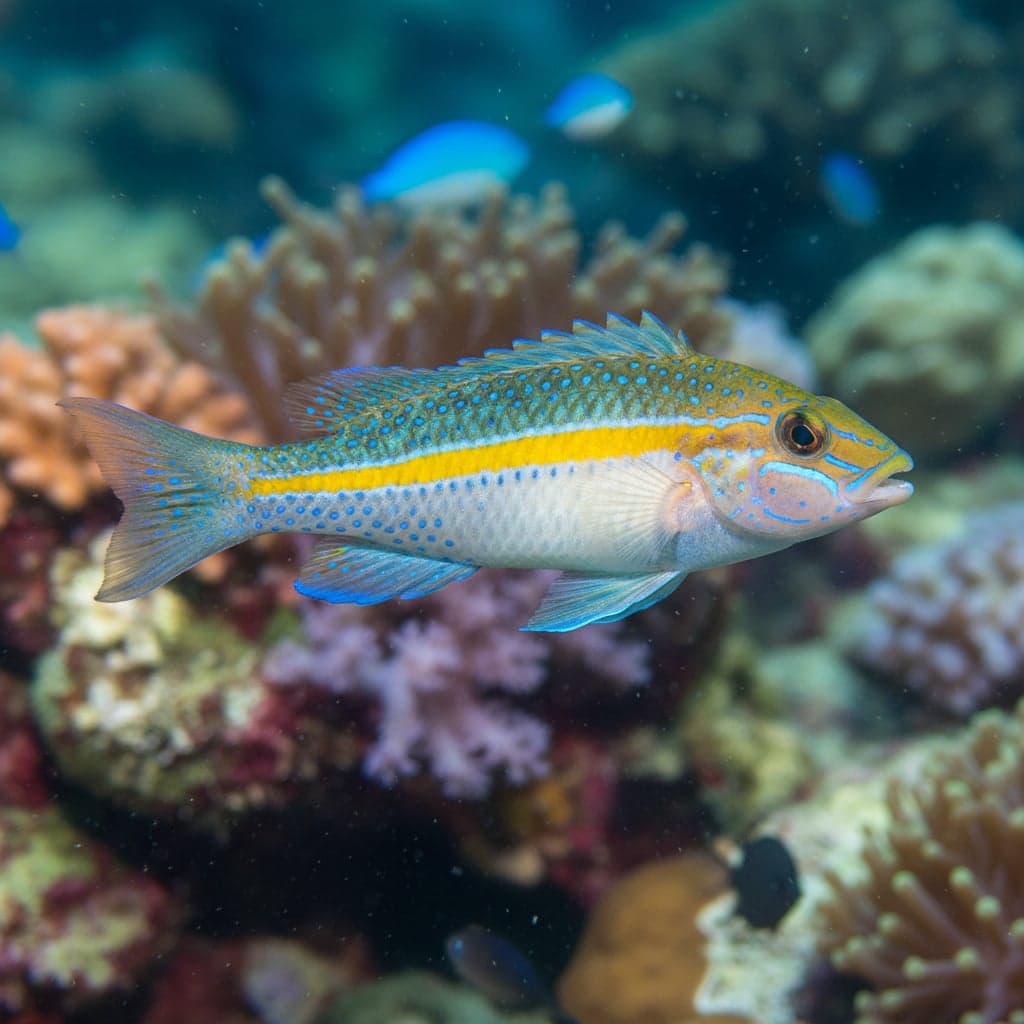
Blue Reef Chromis
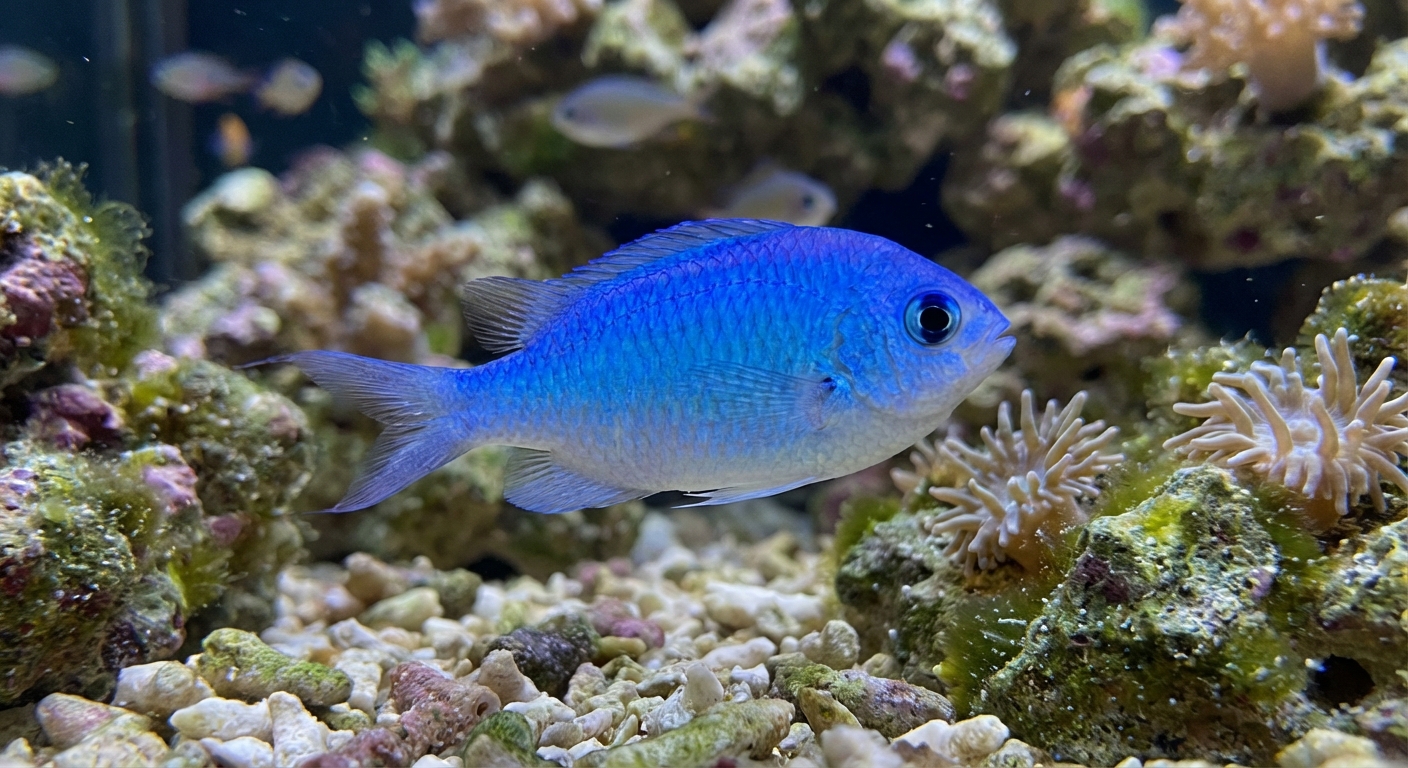
The Blue Reef Chromis (Azurina cyanea) is a brilliant electric-blue Caribbean damselfish — a hardy, reef-safe planktivore that brings colour to the open water.
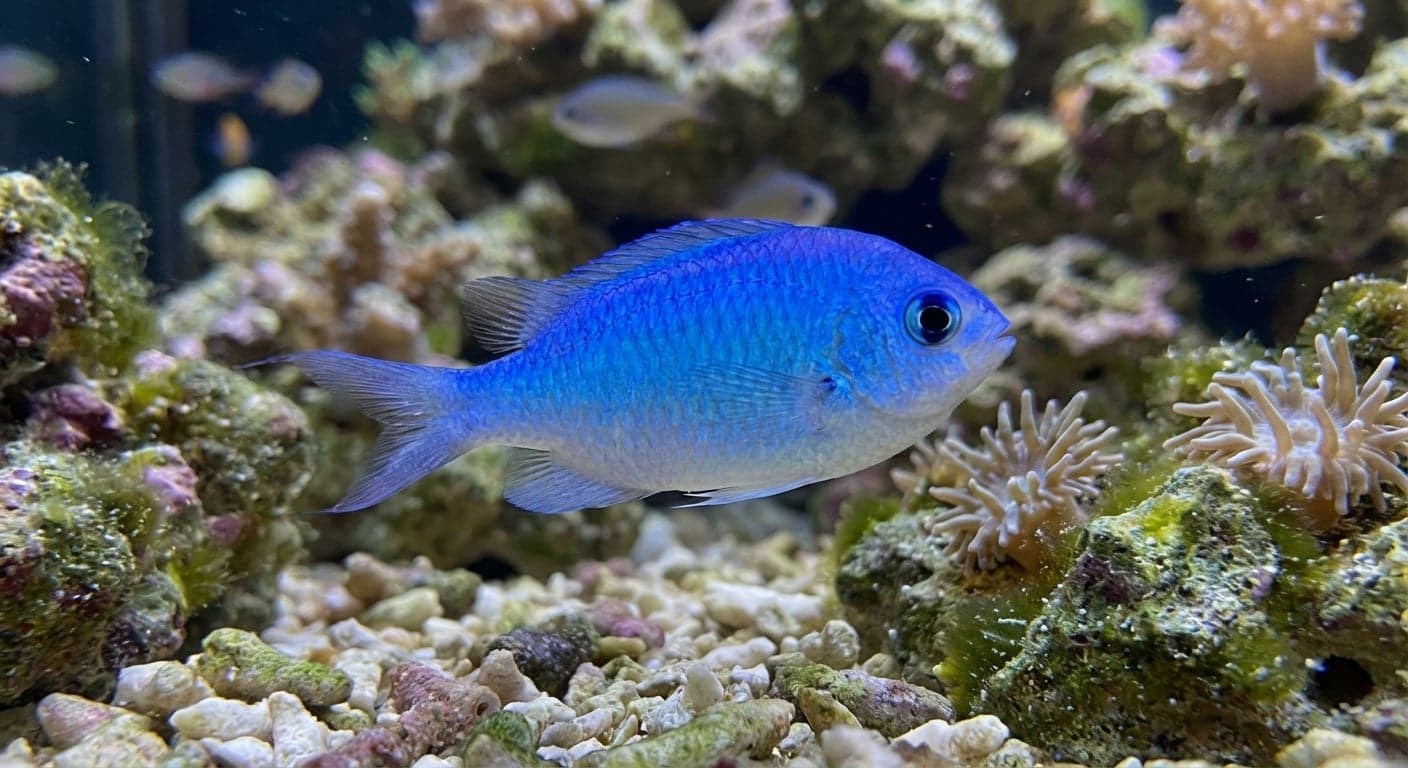
Blue Reef Chromis
The Blue Reef Chromis (Azurina cyanea, long sold as Chromis cyanea) is the Caribbean’s electric-blue open-water damsel — a luminous body often edged in black along the back and caudal margins, hanging above the reef rather than owning a single coral head the way many Pacific damsels do. It is hardy, reef-safe with corals, and one of the better Atlantic colour fish for a peaceful community. It is also larger and less of a dense baitball than the familiar Green Chromis, so “just keep a shoal like viridis” is the wrong mental model.
Buy it for open swimming colour in a Caribbean or mixed reef, not as a disposable damsels-for-cycling shortcut. Chromis used as cycle fodder die for boring ammonia reasons; that is not a species flaw.
Natural Habitat & Origin
Azurina cyanea lives in the western Atlantic — Bermuda, southern Florida, the Bahamas and throughout the Caribbean — on clear reefs, lagoon edges and fore-reef slopes. Depths run from a few metres into tens of metres; fish hover in the water column over coral heads and rubble, picking zooplankton, and shoot into branching structure when threatened. Wild groups are often loose rather than the tight synchronized balls some Pacific chromis form.
That hovering habit is what you are buying: mid-to-upper water movement and a flash of blue when the light catches a flank. In the aquarium provide open water above the rockwork, plus caves and branches to dive into. A solid rock wall with no swimming lane wastes the fish. Taxonomy note for labels: older books and many shop tags still say Chromis cyanea; recent revisions place this species in Azurina. Same fish either way.
Care Requirements
Standard reef chemistry: salinity about 1.024–1.026, pH 8.1–8.4, temperature 24–26°C (75–79°F), clean nitrogen cycle. Blue Reef Chromis tolerate typical reef conditions well and are genuinely beginner-friendly on water parameters. They are less forgiving of being crushed into a nano with no escape routes once intraspecific bickering starts.
Frontmatter size is about 13 cm (around 5 inches) — noticeably bigger than green chromis — with a minimum system near 115 litres (about 30 US gallons). A single fish can live in that volume; a group needs more length and more broken sightlines. Behaviour is listed as Shoaling: small groups look right and can spread minor squabbles, but undersized “groups of three” in a short tank often produce one dominant fish and two hiding losers. If you want a real group, step up volume and add them together, not as drip-fed singles months apart.
Moderate flow keeps oxygen up and food suspended; savage wave boxes that pin fish to overflow teeth do not. Quarantine new Atlantic damsels the same as Pacific livestock — marine ich and velvet do not respect ocean basins. Use a quarantine protocol before the show tank. Track salinity and temperature in the Aquarium Tracker if you like drift caught early.
Diet & Feeding
Omnivore weighted hard toward zooplankton in the wild — copepods, larval crustaceans, fish eggs — with some algae. In captivity it is an easy feeder: frozen mysis and brine, small pellets, quality marine flakes, and preparations with marine algae. Feed small amounts two or more times a day so mid-water fish actually receive food before it hits the sand and the cleaner crew.
Colour holds better on varied, frequent feeds than on a single evening flake blizzard. In ultra-clean new tanks with no pods, do not assume “they will graze”; put food in the water column. Target-feeding with a turkey baster helps when anthias or wrasses are faster.
Behavior & Temperament
Peaceful toward unrelated tank mates in the usual reef sense — it will not farm an anemone or wage damsel wars over a cave the way Stegastes or some Dascyllus do. Toward its own kind it is more complicated. Loose social structure means pairs or small groups can work, but pecking orders appear, especially as fish mature. Frontmatter temperament Peaceful describes the community risk, not a promise of perfect intraspecific manners.
Spends time feeding in open water and sheltering near structure when startled. Night finds them closer to the rock. They pose no threat to corals or most ornamental invertebrates. Aggression problems almost always mean too little space, too few individuals for a planned group, or a bully damsel of another species already in residence.
Tank Mates
Excellent with clownfish, gobies, firefish, peaceful wrasses, cardinalfish, anthias, and other chromis in systems sized for the set. Avoid large aggressive predators and hyper-territorial damsels that claim the entire rockscape. Fully reef-safe with corals and ornamental shrimp under normal feeding — this is a planktivore, not a polyp browser.
If you already keep green chromis, remember blue reef fish grow larger and need more water per fish; do not stock them at viridis densities. Mixed chromis groups can work in large tanks and turn into harassment in small ones.
Breeding
Like other damselfishes, A. cyanea lays demersal eggs that the male guards on a chosen site. Spawning in home aquaria happens; rearing the pelagic larvae to settlement almost never does for hobbyists. Trade fish remain wild-collected. Egg-guarding males may get temporarily snappy around the nest — temporary territoriality, not a personality rewrite.
Common Health Issues
Hardy, still susceptible to ich and velvet when freshly imported or held in poor water. Brooklynella and other damsel shipping diseases show up in stressed lots; quarantine catches them before a reef overdose. Jumping is less famous than in wrasses but lids still help in open-top rooms with skittish fish.
Thin fish after months in a polished tank usually mean mid-water feeding lost out to faster mouths — increase broadcast feeds, not medications. Given open water, stable reef parameters, and either a single specimen or a thoughtfully sized group, the Blue Reef Chromis is a brilliant, beginner-sensible flash of Caribbean blue that earns its peaceful reputation with every species except, sometimes, other blue reef chromis in a box that is too small.