Blue Star Damselfish
The Blue Star Damselfish (Pomacentrus alleni) is a small, neon-blue and yellow Indian Ocean damsel — hardy and reef-safe, but feisty for its size.
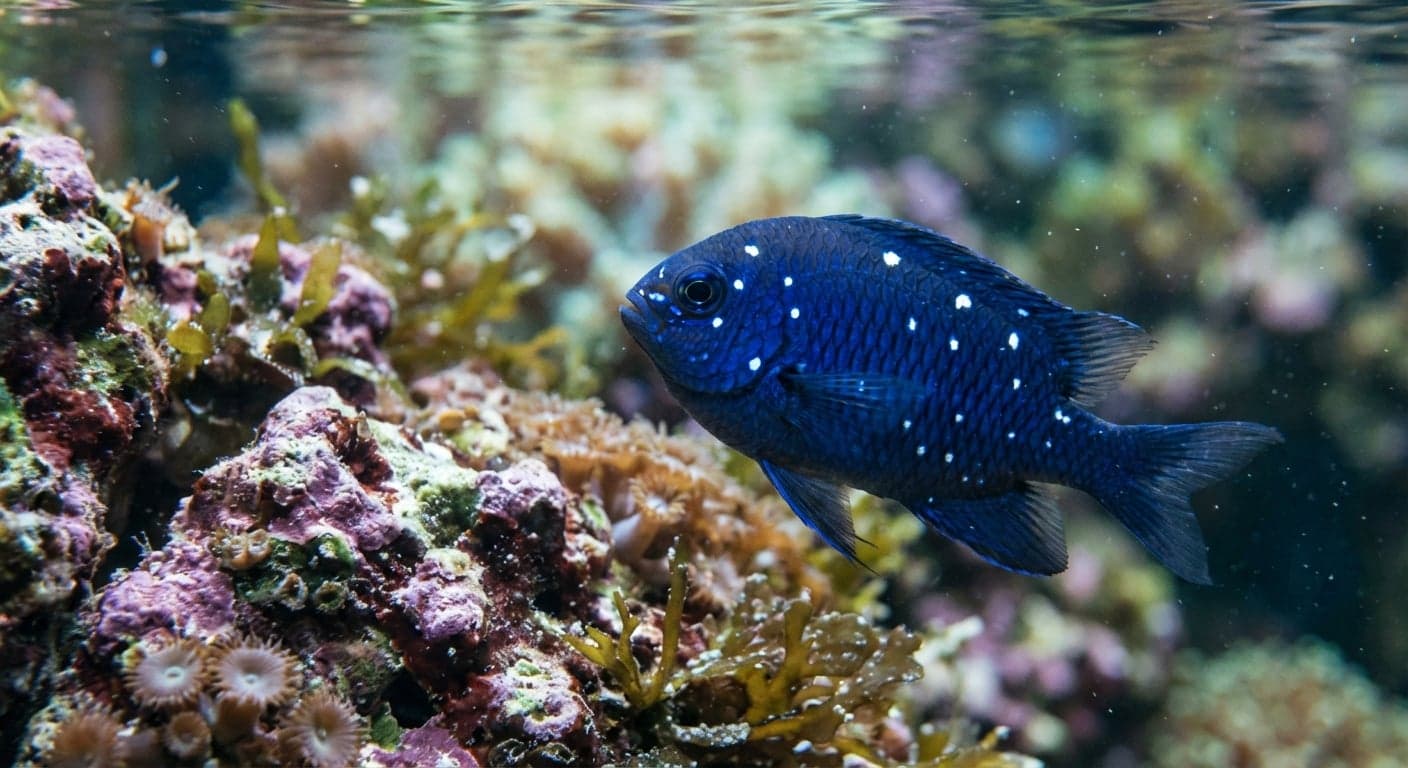
Blue Star Damselfish
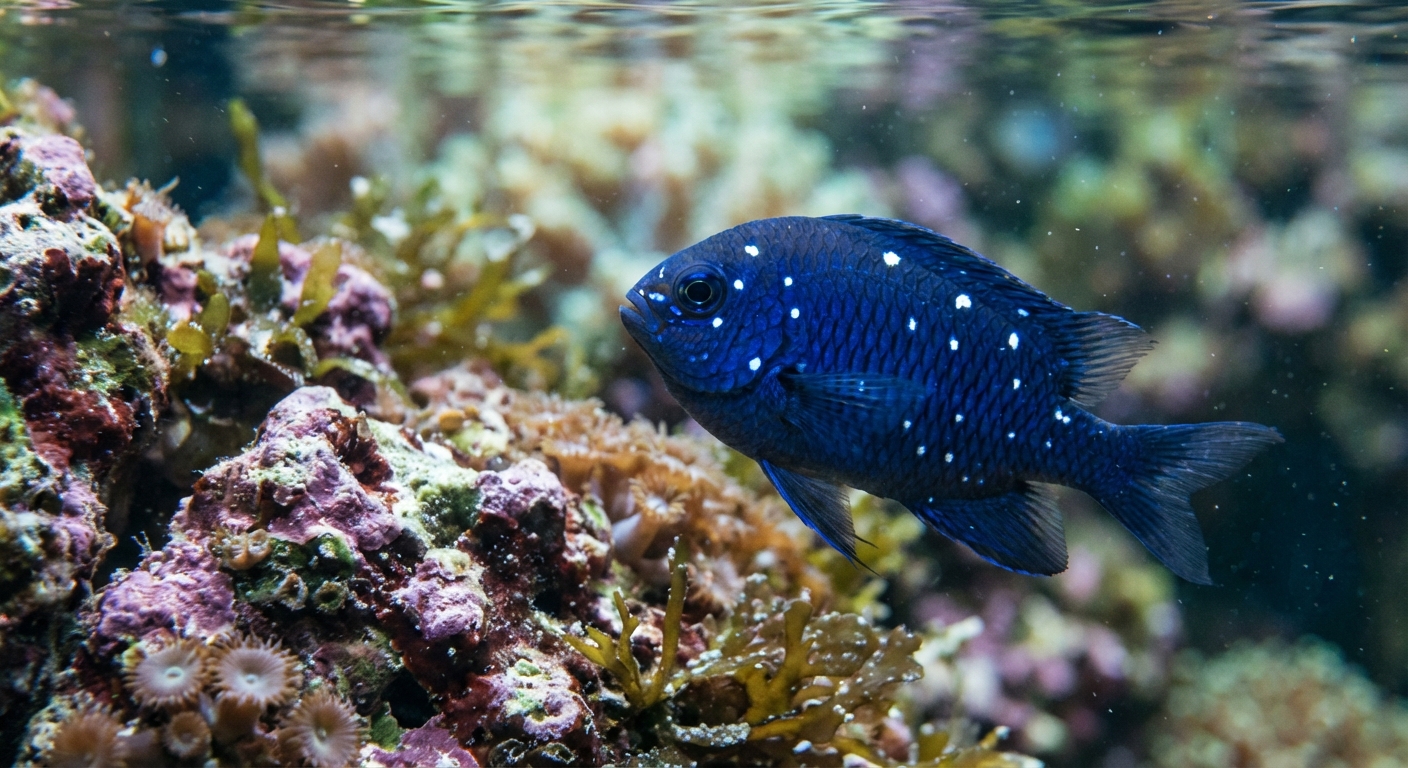
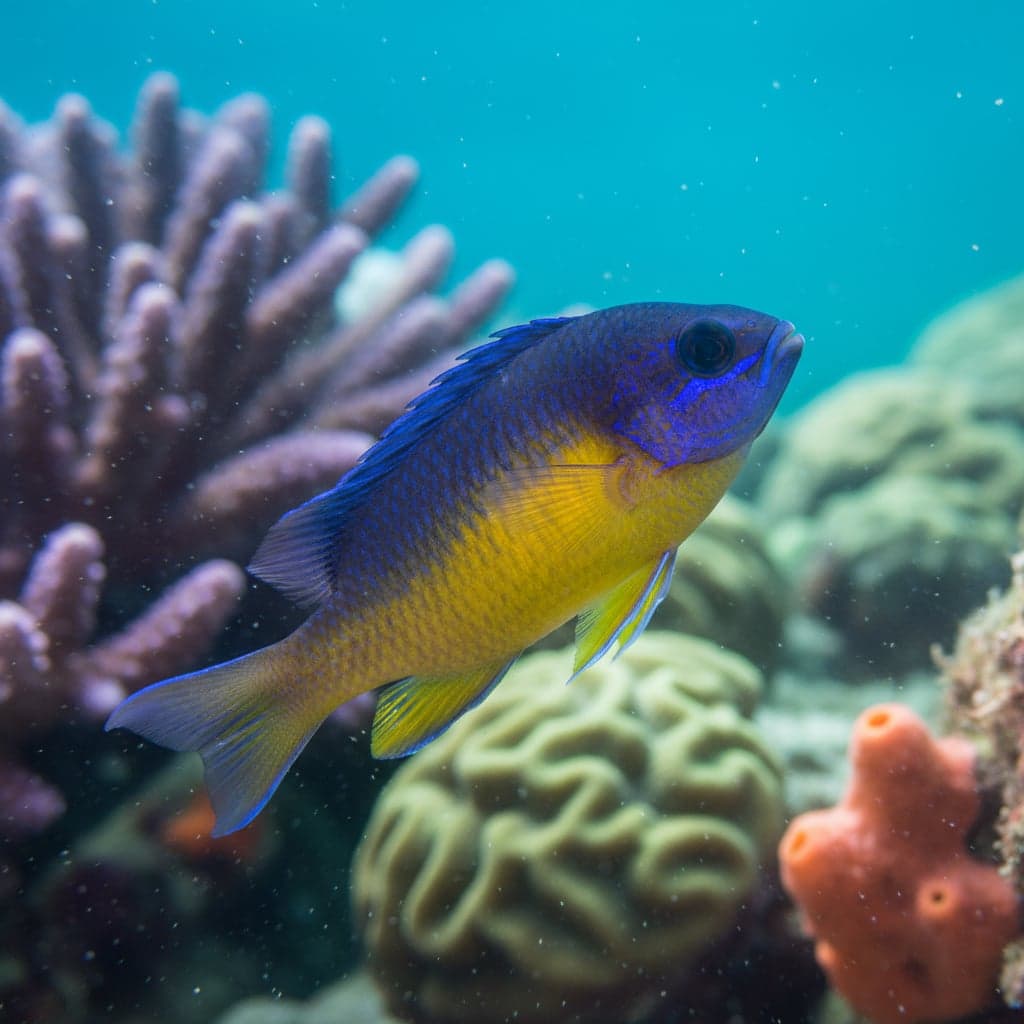
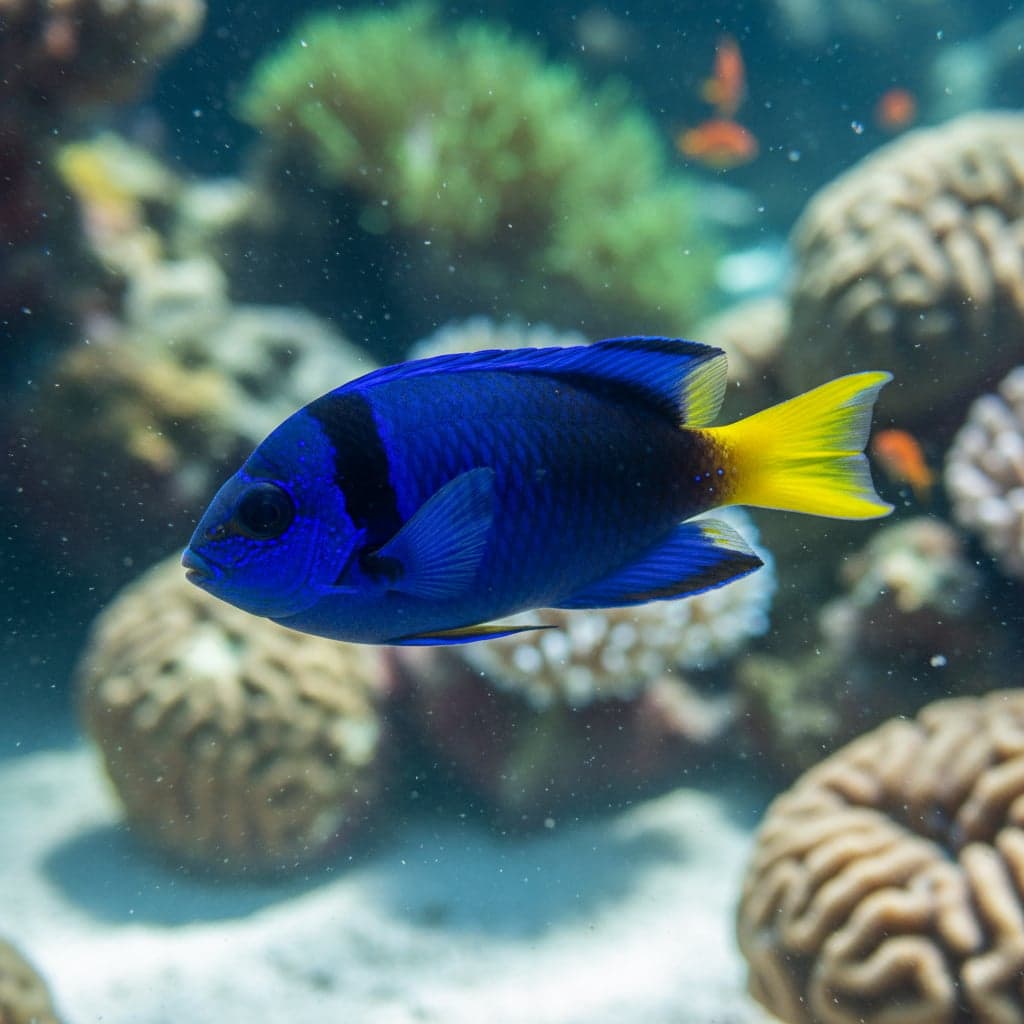
The Blue Star Damselfish (Pomacentrus alleni), also sold as Allen’s damselfish, is a small Indian Ocean reef fish built for colour and for claiming rock. The body is intense neon blue; the belly and lower caudal region flush yellow, with a fine dark line tracing the lower edge. Adults stay around 7 cm (about 3 inches). Hardy, inexpensive and reef-safe with corals, it is an easy marine fish on chemistry and feeding. Temperament is the part that is not beginner-proof.
As with most damsels, toughness arrives with attitude. Tiny does not mean peaceful. Factor the semi-aggressive contract into stocking before the electric blue sells the bag at the shop.
Buy it for a splash of blue in a system that can absorb that energy — not as a peaceful centrepiece for timid stock. Frontmatter lists solitary behaviour for a reason: in typical home volumes this fish is one territory holder, not a peaceful school.
Natural Habitat & Origin
Pomacentrus alleni occurs in the eastern Indian Ocean on coral reefs, staying close to branching coral and rubble. When threatened it darts into cover and returns to the same small patch to feed. Territories are measured in metres on the reef; in a glass box those metres shrink to the whole aquascape.
In the aquarium that maps to structure first. Open sand with a single rock pile leaves nowhere to claim and nowhere to flee, which raises harassment. Dense live rock with caves, overhangs and branching heads lets it pick a home base and spend most of the day in view rather than locked in a corner fight.
Care Requirements
Keep ordinary stable marine water: salinity about 1.024–1.026, pH 8.1–8.4, temperature 24–26°C (75–79°F). The listed minimum of around 75 litres (20 US gallons) is a floor for a single fish with serious rockwork, not a community packing guide. In that footprint the damsel’s territory is the whole rockscape; anything smaller or more passive gets pushed to the glass.
It is exceptionally hardy by marine standards — tolerant of beginner mistakes on feeding and modest parameter drift — but hardness is not a substitute for quarantine. New damsels still carry Cryptocaryon and Amyloodinium from the supply chain. Run arrivals through a separate quarantine tank before they meet the display; see medications for copper protocols that belong in QT, not on a reef with inverts. The old habit of using damsels as live “cycle detectors” is exactly how display tanks inherit ich before the first coral arrives.
Use the Aquarium Tracker to log salinity and temperature against your own readings so a slow drift shows up before the damsel’s colours dull and the chasing gets worse.
Diet & Feeding
Omnivore. Wild fish take zooplankton, algae film and small invertebrates. In captivity it is an eager, undemanding feeder: frozen mysis and brine shrimp, quality marine flakes, small pellets and foods with marine algae content all work. Feed small amounts a couple of times a day rather than one large dump that spikes nutrients and still leaves shy tankmates hungry.
Competition matters more than recipe. In a crowded nano this damsel often eats first and chases second. If neighbours look thin while the blue star stays plump, increase broadcast feeding or rearrange rock so timid fish can reach food without crossing its claimed cave. Marine diets cover staple choices; do not starve other fish to keep one damsel fat.
Behavior & Temperament
Semi-aggressive and territorial, punching well above its size. It harasses smaller or more timid tankmates, especially in small tanks, and remembers who arrived first. Add it last among similarly sized fish so it cannot dominate the whole aquascape from day one. Bold and active, it defends a patch of rock with surprising determination.
Frontmatter solitude is the practical rule. Multiple P. alleni in 75 litres is a squabble, not enrichment. In much larger reefs with broken sightlines, experienced keepers sometimes run more than one damsel species — that is volume and aquascape work, not a licence for a nano gang.
Tank Mates
Pair it with robust fish that ignore its posturing: clownfish, other damsels of comparable grit, larger wrasses, assertive gobies and similar. Avoid very shy or tiny fish, slow anthias that get pinned at feeding time, and anything you bought specifically for a peaceful nano reef vibe.
It is fully reef-safe with corals and ornamental sessile invertebrates — it does not eat polyps. Mobile ornamental shrimp and tiny cleaners can still be harassed in a small footprint even when they are not food. Space and rock complexity dilute that problem; a bare 75-litre box does not.
Breeding
Like other damselfish, Pomacentrus alleni lays demersal eggs on a cleaned surface, guarded by the male. Spawning in home aquaria is occasionally seen; rearing the pelagic larvae is rarely accomplished outside specialist setups. Trade specimens are wild-collected.
Common Health Issues
Among the hardiest marine fish, still able to import ich and velvet under shipping stress. Quarantine new arrivals. Keep water stable. The usual failure mode is not disease chemistry — it is stocking: a beautiful blue damsel in a tank of soft targets becomes a chronic bully, and the stressed neighbours get sick first.
Mindful of temperament when choosing tankmates, P. alleni is otherwise an easy, colourful and resilient fish — a fair first marine livestock choice or a deliberate splash of blue in a reef that can take the attitude. Undersize the system, add it first, and stock timid fish around it, and the neon blue becomes the reason everything else hides.