Blue Triggerfish
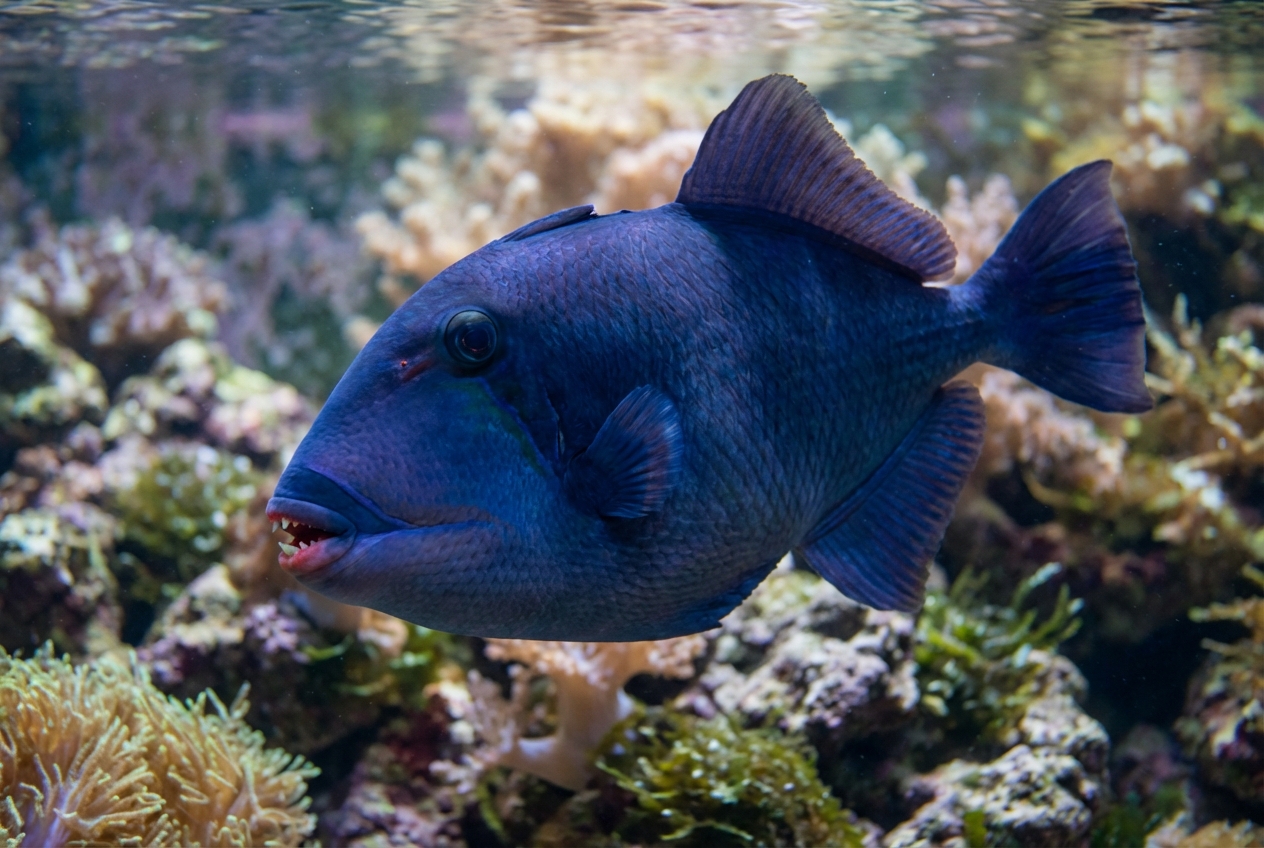
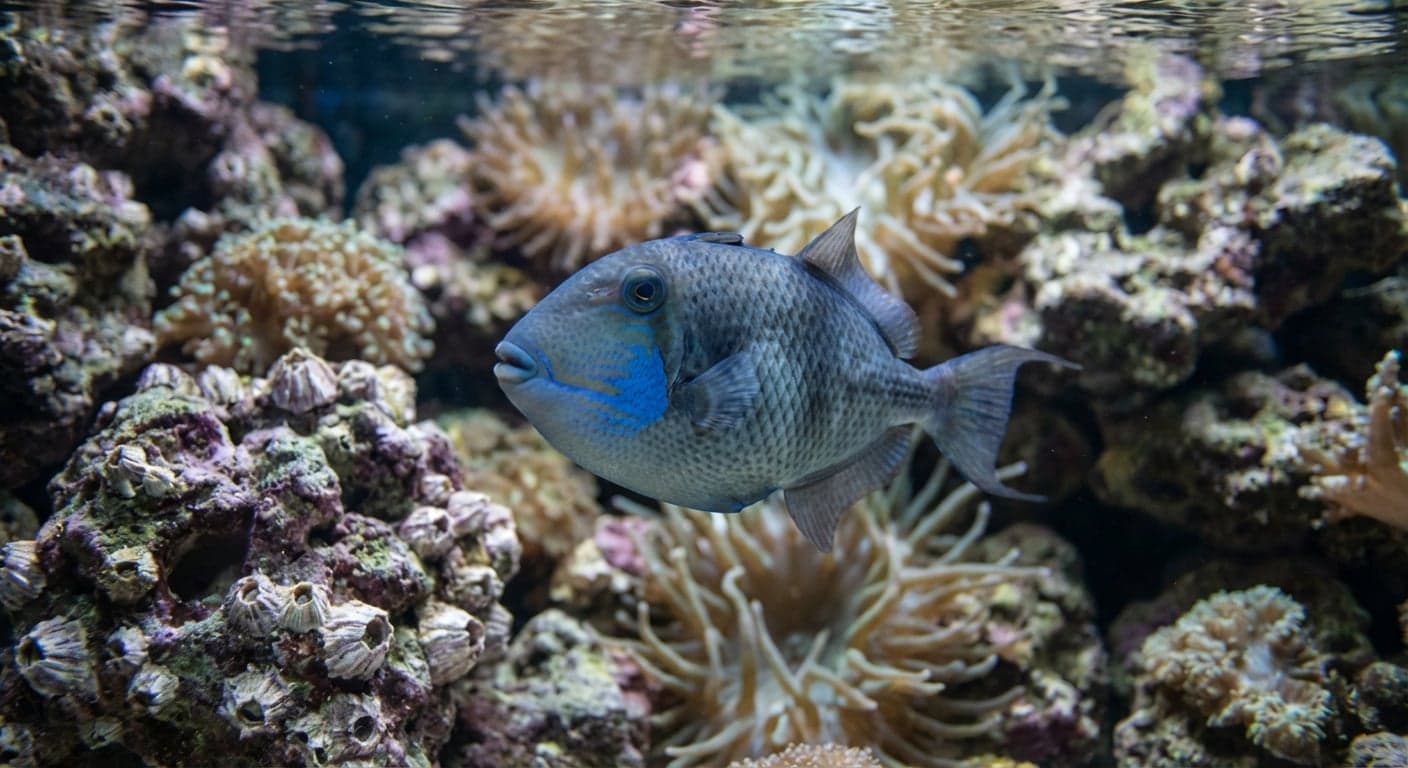
The Blue Triggerfish (Odonus niger), or redtooth triggerfish, is a hardy blue-green Indo-Pacific plankton feeder — relatively peaceful for a trigger but large and active.
Blue Triggerfish
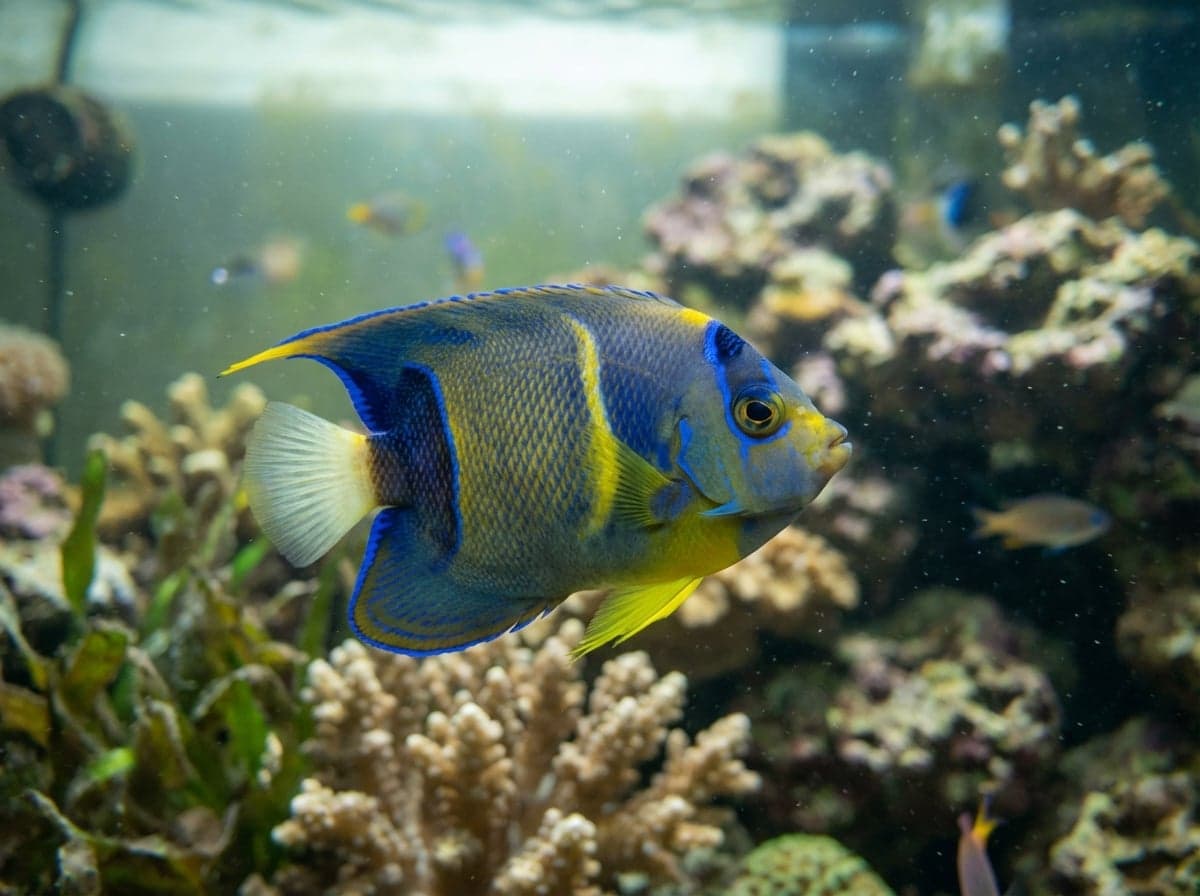
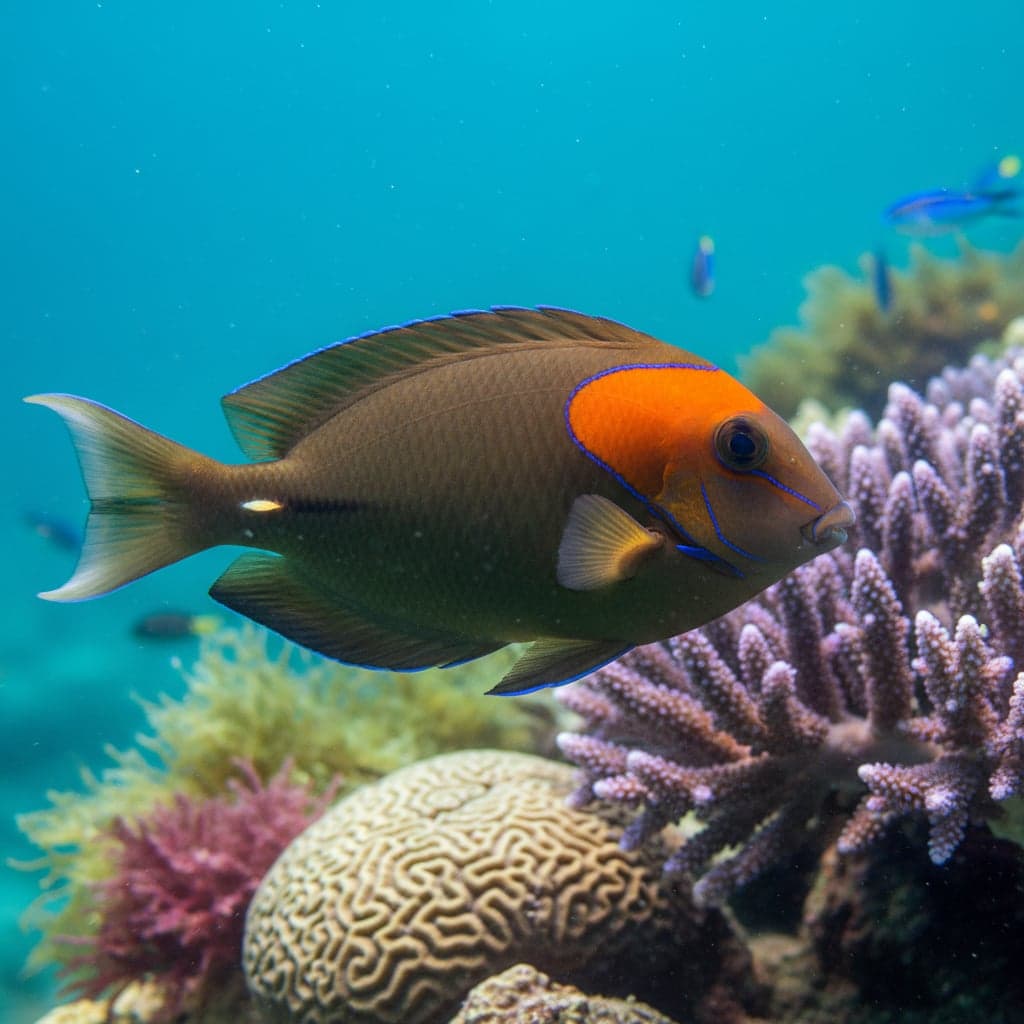
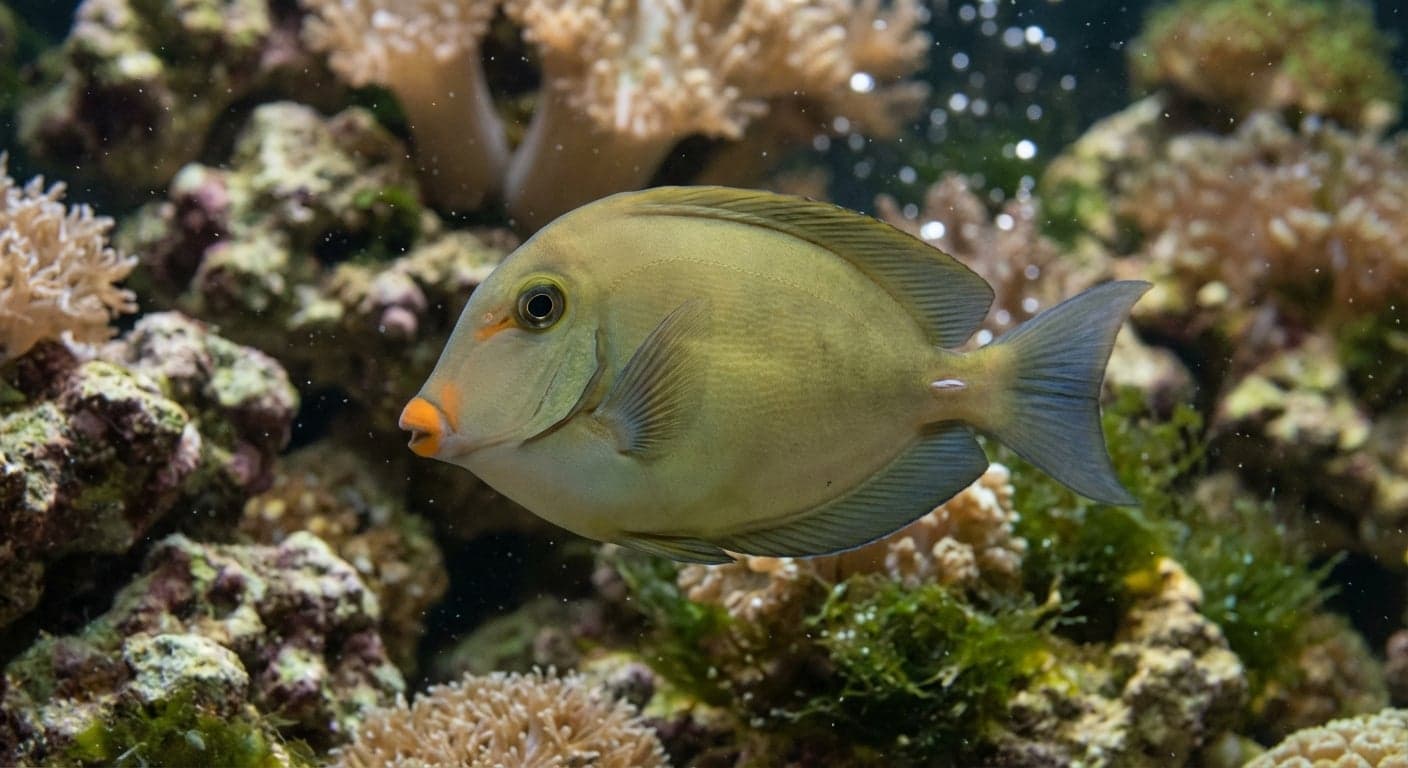
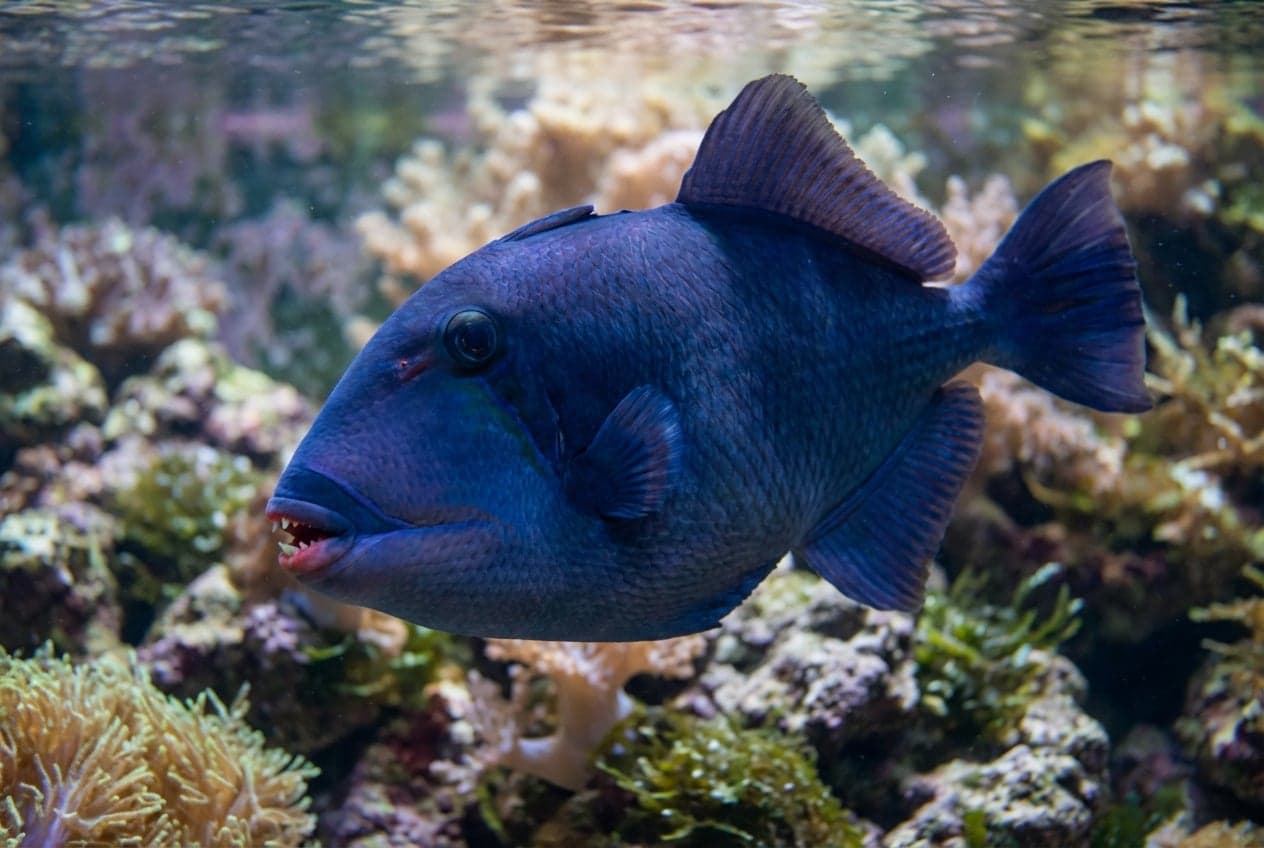
The Blue Triggerfish (Odonus niger), better known as the redtooth triggerfish, is a deep blue-green Indo-Pacific trigger whose colour shifts with mood and light, set off by a lyre-shaped tail and — up close — distinctly reddish teeth. It swims with an undulating gracility that looks nothing like the brick-shaped aggression of a clown or titan trigger. Hardy and relatively mild for the family, it is still a large, powerful fish: space and robust tankmates are not optional personality preferences.
“Peaceful trigger” is a relative term. Juveniles can look community-friendly; adults toward 50 cm (20 inches) rewrite the room. Frontmatter lists Solitary because one Odonus is the honest plan for almost every home system.
As with all large triggers, volume and secure rockwork are the real price of admission. Temperament that ages from mild to assertive is the second. This is not a nano mascot and not a reef safe bet for ornamental shrimp.
Natural Habitat & Origin
Odonus niger is widespread across the tropical Indo-Pacific. Wild fish gather in aggregations on current-swept outer slopes and channels, picking plankton from the water column, and wedge into reef holes when threatened — locking in with the dorsal trigger spine that gives the family its name.
In the aquarium recreate that combination: strong flow, open swimming lanes and caves large enough for an adult to retreat into. Lightweight aquascapes get rearranged. A heavily stacked, unsecured rock pile under a growing redtooth is a collapse waiting for one sideways shove.
Care Requirements
Stable marine water with serious turnover: salinity about 1.024–1.026, pH 8.1–8.4, temperature 24–26°C (75–79°F), and strong, turbulent flow. Adults can approach 50 cm. Plan on about 570 litres (around 150 US gallons) as a working minimum — and prefer systems that are long and open, not just deep. Volume without swimming length still fails an active balistid. Many keepers eventually want more than 570 L once the fish fills out; treat the frontmatter minimum as a floor, not a trophy claim.
Secure rock to the glass or use a stable base. Triggers are strong; they do not need to be destructive specialists to topple a freestanding cave. Quarantine is mandatory. Large wild imports bring marine ich (Cryptocaryon irritans) and marine velvet (Amyloodinium ocellatum) as reliably as any surgeonfish. Observe or treat in QT before the display — medications belong in hospital tanks, not on mixed reefs after an outbreak.
Use the Aquarium Tracker to log salinity, temperature and bioload-driven change schedules. A big omnivore that eats well produces waste; chronic nitrate and oxygen neglect show up as dull colour and irritation long before the fish stops swimming.
Diet & Feeding
Primarily planktivorous in the wild, which is why Odonus is less of a shell-crusher than many triggers — but captivity still means a hearty, varied omnivore diet. Offer frozen mysis and krill, chopped seafood, quality marine pellets and some marine algae or spirulina content. Feed once or twice daily; adults are enthusiastic and reliable feeders once settled.
Do not confuse plankton heritage with a delicate appetite. This fish will take what you give and often sample what you did not intend — small crustaceans included. Keep greens in the mix; an all-meat pellet diet is easy and lazy in the wrong way. Body condition is obvious on a trigger: a pinched abdomen on a juvenile is a diet or parasite problem to solve in QT, not a growth phase.
Behavior & Temperament
Semi-aggressive in honest hobby terms. Young fish are often among the milder triggers; maturity brings territory, assertiveness and less patience for small or timid neighbours. Keep one per tank. Provide caves so the fish can claim a hole instead of claiming the entire water column by chasing.
Toward robust, similarly assertive fish in large systems it can work. Toward small wrasses, gobies and fancy shrimp it becomes a calculated risk that ages badly. The dorsal spine is a real locking weapon — net and handle with awareness, and never force a wedged fish out of rock by yanking.
Tank Mates
House with large, robust fish: tangs, big wrasses, angelfish and other moderately aggressive species that will not be bullied into starvation. Avoid delicate community fish and anything mouth-sized. Reef compatibility is partial at best: corals are often left alone compared with more destructive triggers, but ornamental shrimp, crabs and other mobile inverts are fair game. Fish-only or FOWLR systems are the honest home; “reef with hardy coral and no shrimp” is the compromise some keepers accept knowingly.
Do not lump all “blue triggers” or all balistids on one chart. Odonus niger is milder than a clown trigger and still too much animal for a peaceful mixed reef stocked with expensive cleaner shrimp.
Breeding
Odonus niger is a pelagic spawner and is not bred as a normal home-aquarium project. Trade fish are wild-collected. Captive breeding of triggers remains specialist territory, not shop-floor routine for this species.
Common Health Issues
Hardy, but still highly exposed to marine ich and marine velvet when stressed by capture, shipping or poor oxygen. Lateral-line and skin issues track dirty water and rough handling. Quarantine every fish. Keep flow high, diet varied and rock secured.
A redtooth that starts rearranging rock and harassing tankmates is not “developing personality” in a cute way — it is telling you the system is too small or the community too soft. Give the adult the swimming room a 50 cm body needs, stock robust neighbours, skip the prized shrimp, and this blue-green planktivore is one of the more elegant large triggers for intermediate keepers. Undersize the tank and it becomes another paced, aggressive trigger story.