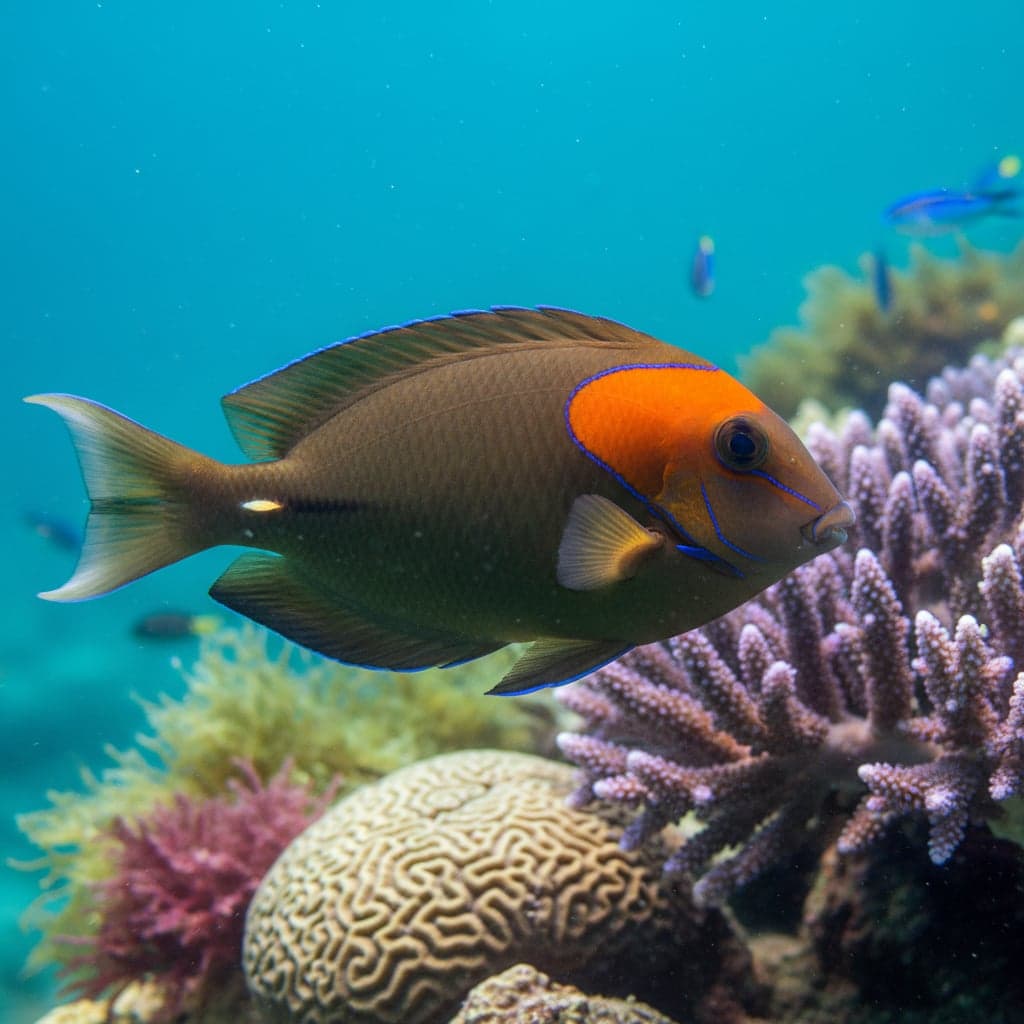
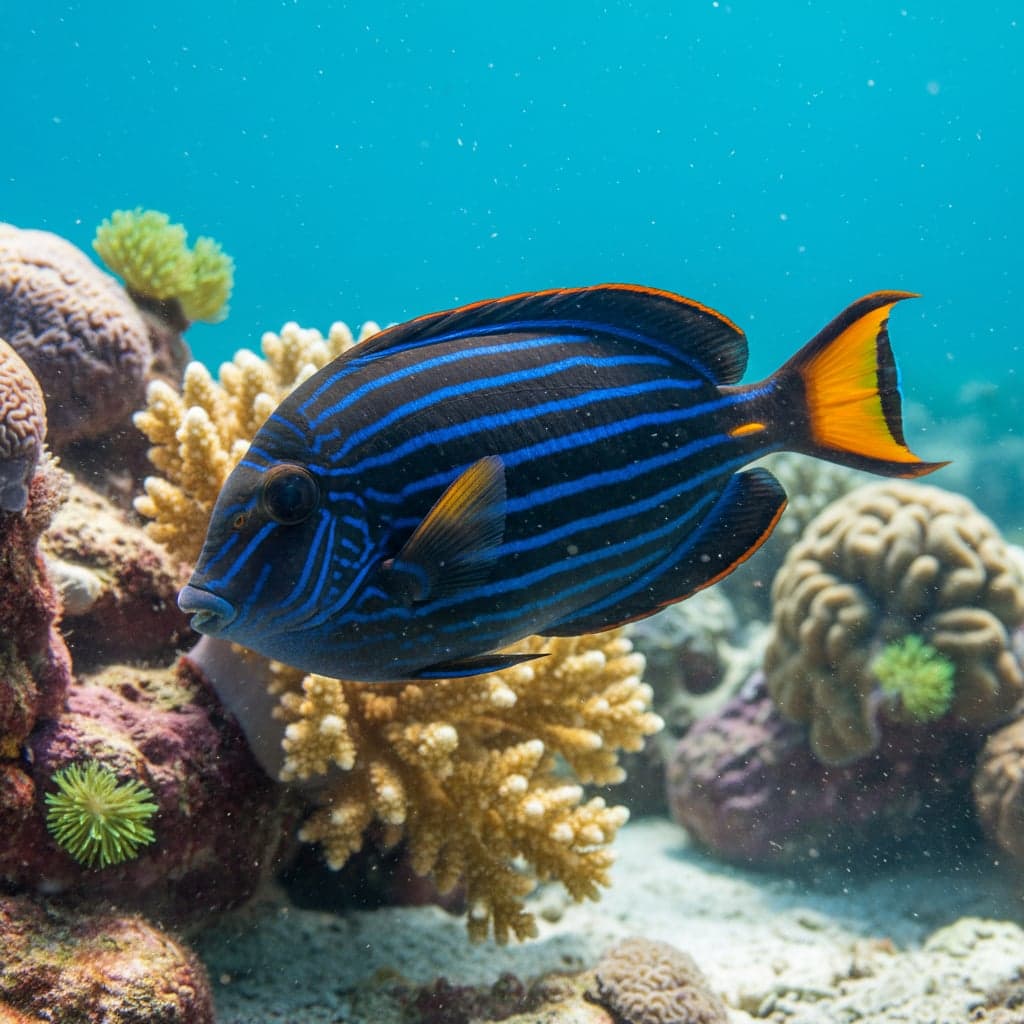
Clown Tang
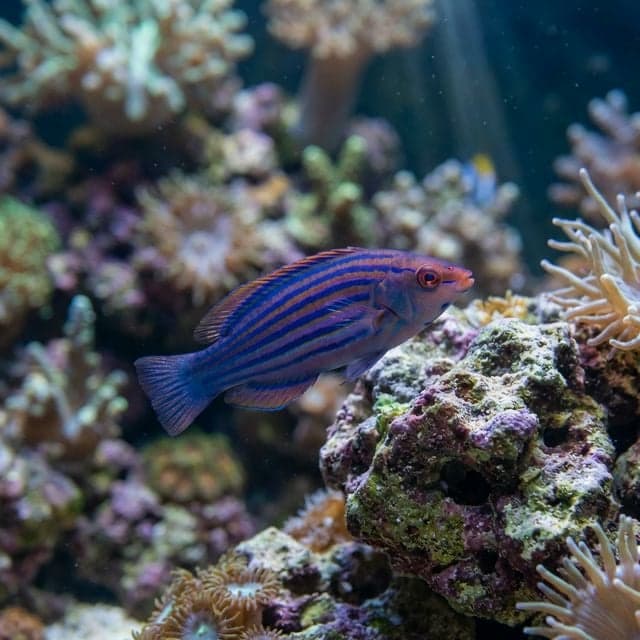
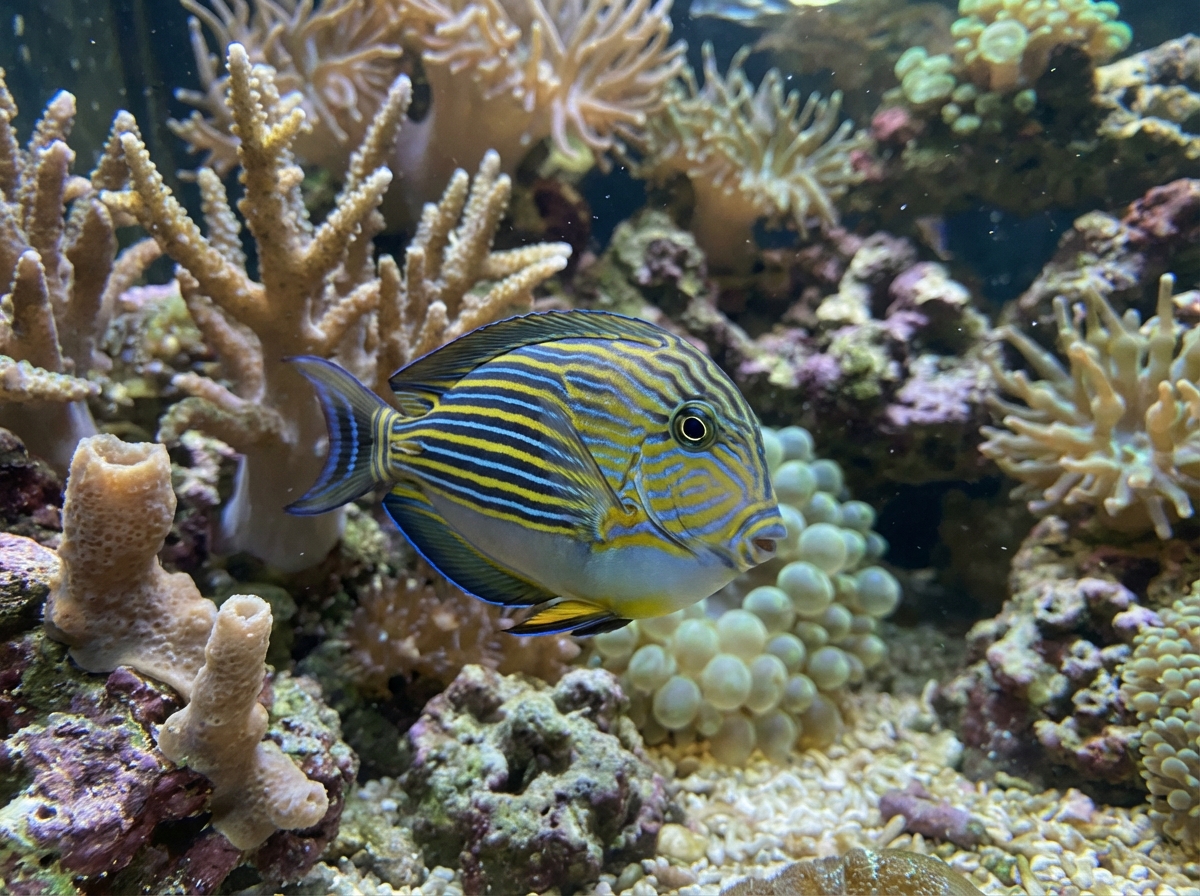
The Clown Tang (Acanthurus lineatus) is a spectacularly striped but highly aggressive and demanding surgeonfish — a reef-safe algae grazer strictly for expert keepers with very large tanks.
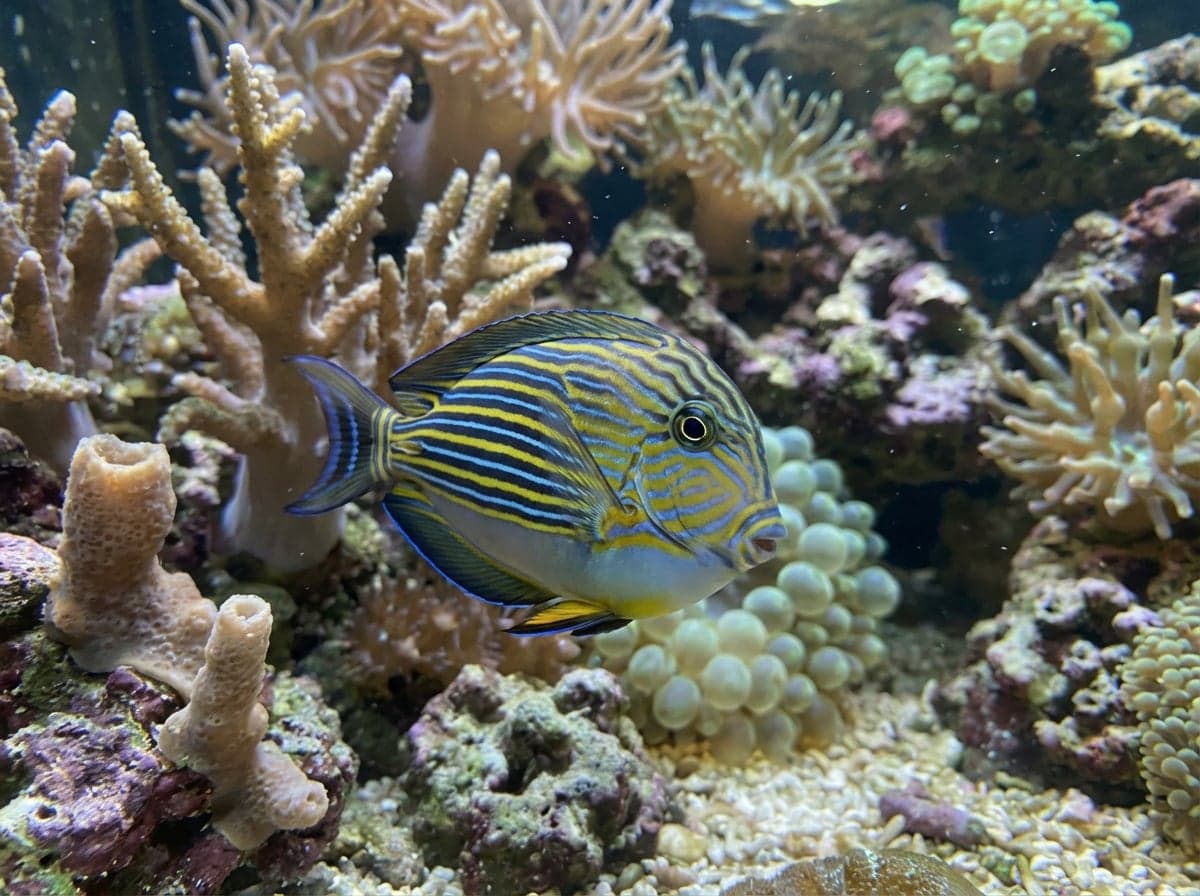
Clown Tang
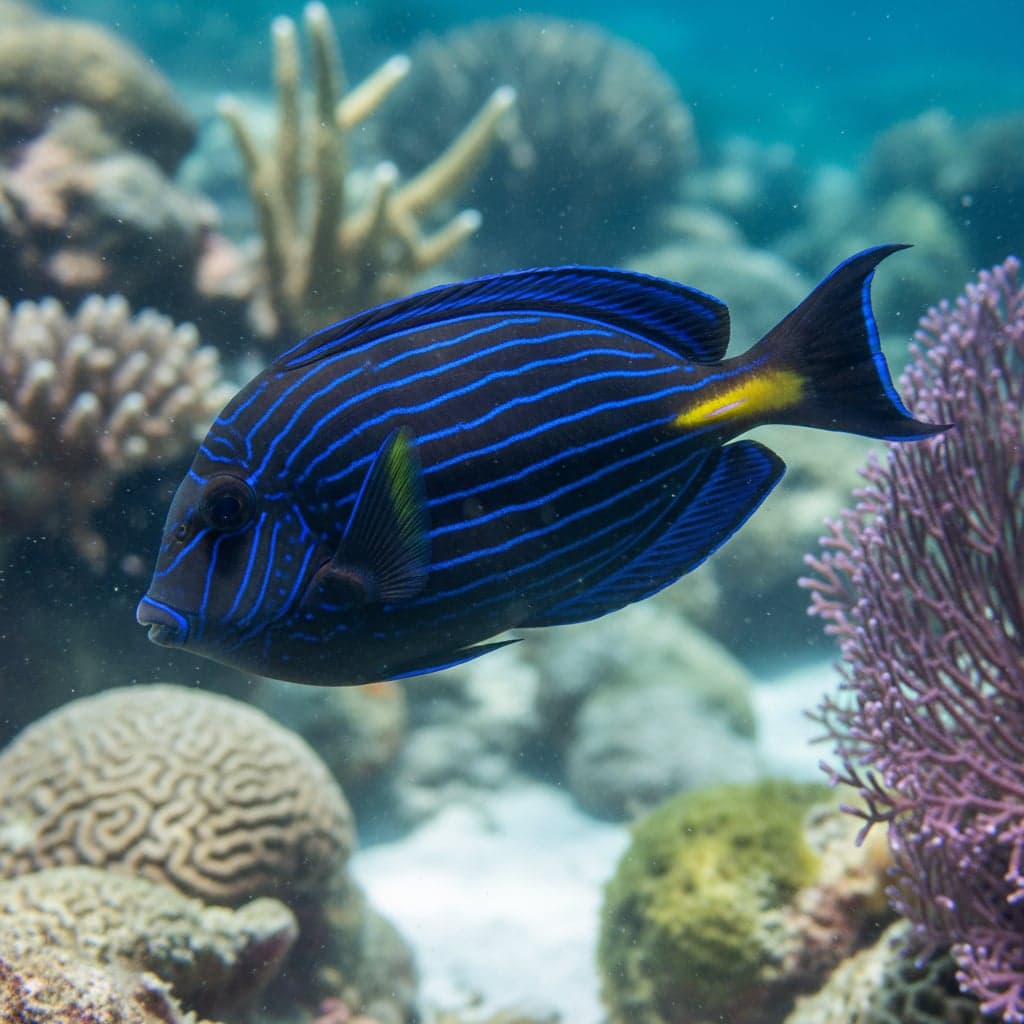
The Clown Tang (Acanthurus lineatus), or lined surgeonfish, is the fish people point at on the reef crest and then buy as a juvenile for a tank that cannot hold the adult. Horizontal bands of electric blue and orange-yellow make it one of the most graphic surgeonfish alive. The same fish is also one of the most aggressive Acanthurus in the hobby, fast-growing, ich-prone and intolerant of stagnant, low-oxygen water.
Beauty is not an argument for stocking it. If you cannot offer a very large footprint, heavy algae, strong flow and a quarantine protocol that actually runs for weeks, buy a poster. This species punishes shortcuts.
Natural Habitat & Origin
A. lineatus is widespread across the Indo-Pacific on shallow, high-energy reef crests and surge zones. Wave action, high oxygen and dense turf algae define the habitat. Individuals defend grazing plots against other herbivores with real violence — the caudal peduncle spines are not decoration.
That ecology maps directly onto captivity failures. A Clown Tang dropped into a quiet, sparsely lit reef with little film algae and mild flow is a surge-zone animal in a pond. It paces, picks fights, and crashes into disease. Recreate the physics: long swimming runs, powerful circulation, excellent gas exchange and surfaces that actually grow grazeable algae.
Care Requirements
Salinity around 1.024–1.026, pH 8.1–8.4, temperature about 24–26°C (75–79°F), with very strong flow and high dissolved oxygen. Adults reach about 38 cm (15 inches). The listed minimum of 700 litres (around 185 US gallons) is a floor, and length matters more than the badge on the sump — a tall, short tank at that volume still fails a cruising herbivore.
Shops sell 8–10 cm juveniles into 200-litre display tanks because the fish fits today. That practice is wrong. The adult size is known; stocking for the bag size is how Clown Tangs end up stunted, aggressive and sick. Plan the adult from day one or do not buy the fish.
Skimming, export and oxygen are not optional extras. This species advertises poor water with flashing, heavy breathing and rapid onset of parasites. Log parameters in the Aquarium Tracker if you want drift caught early; waiting until the stripes look dull is late.
Lighting should support turf and film algae on rock — a dim FOWLR with bare liverock gives the fish nowhere to work between nori offerings. That gap is how "herbivore" specimens slowly fail despite daily seaweed clips.
Handle with extreme care. The scalpel-like spines on the caudal peduncle cut nets, hands and other fish. Bag and net accordingly.
Diet & Feeding
Wild Clown Tangs are dedicated algae grazers on reef turf. Captive diet must stay primarily plant-based: dried marine algae (nori) on a clip, herbivore and spirulina pellets or frozen foods, and as much natural film algae as the system can grow. Feed frequently through the day — grazing herbivores with empty guts become mean and immunocompromised.
Meat-heavy feeding because "it looks hungry" is a common error. Occasional mysis will be taken; a staple of shrimp is not what the gut is built for and correlates with poorer long-term condition in surgeonfish kept as honorary carnivores.
A Clown Tang that stops grazing and ignores nori is already in metabolic trouble. Fix flow, algae availability and parasite status before you invent appetite stimulants.
Behavior & Temperament
This is among the most aggressive surgeonfish routinely offered for sale. It will attack other tangs, often on sight, and will extend that hostility to similar-shaped or similarly coloured fish. In undersized tanks it may harass unrelated species simply because there is nowhere for anyone to go.
Best practice that the trade often ignores: one tang only in the system, added last, into tankmates large and robust enough to ignore intimidation displays. "It was fine with the yellow tang for two weeks" is not a care plan — delayed aggression is normal.
The caudal spines make fights expensive. A stabbed fish can die from the wound or secondary infection even when the Clown Tang looks unharmed.
Tank Mates
Only large, assertive fish in a very large tank: big wrasses, large angels, certain triggers and similarly tough species that will not fold under constant pressure. No other tangs. No shy dwarfs. No anthias that need calm midwater.
Reef-safe is about diet, not manners. It grazes algae rather than coral polyps or clam tissue, so sessile reef invertebrates are generally left alone. The limiting factors are aggression, adult size and swimming demand — not polyp nipping. A "reef-safe" label does not make a 38 cm warrior suitable for a mixed nano reef.
Breeding
Pelagic spawners with planktonic larvae. Home breeding is not realistic. Trade fish are wild-collected, which is why quarantine is non-negotiable rather than optional best practice.
Common Health Issues
Clown Tangs are notorious for marine ich (Cryptocaryon irritans) and marine velvet (Amyloodinium ocellatum). They ship poorly, drop weight in holding, and explode with parasites after a stressful move into a display full of inverts where you cannot use copper.
Run a proper quarantine: separate system, observe for weeks, treat parasites there if needed. Jumping a Clown Tang straight into the show tank because it "looked clean" is how whole reefs get seeded with Cryptocaryon. Copper and reef invertebrates are mutually exclusive — hospital tank, not hope.
Low oxygen and weak flow produce the same cascade: stress, flashing, spots, death. Keep gas exchange high, surface agitation real, and the diet green. Head-and-lateral-line erosion shows up in chronically stressed, poorly fed surgeonfish; fixing the tank beats chasing miracle foods after the pits appear.
Expert difficulty in the frontmatter is not prestige language. It is a warning that most aquariums, and most keepers' schedules, are not built for this fish. If the honest answer to "can I quarantine for a month, feed algae all day, and house 38 cm of aggression alone?" is no, walk away while the fish is still in the shop.