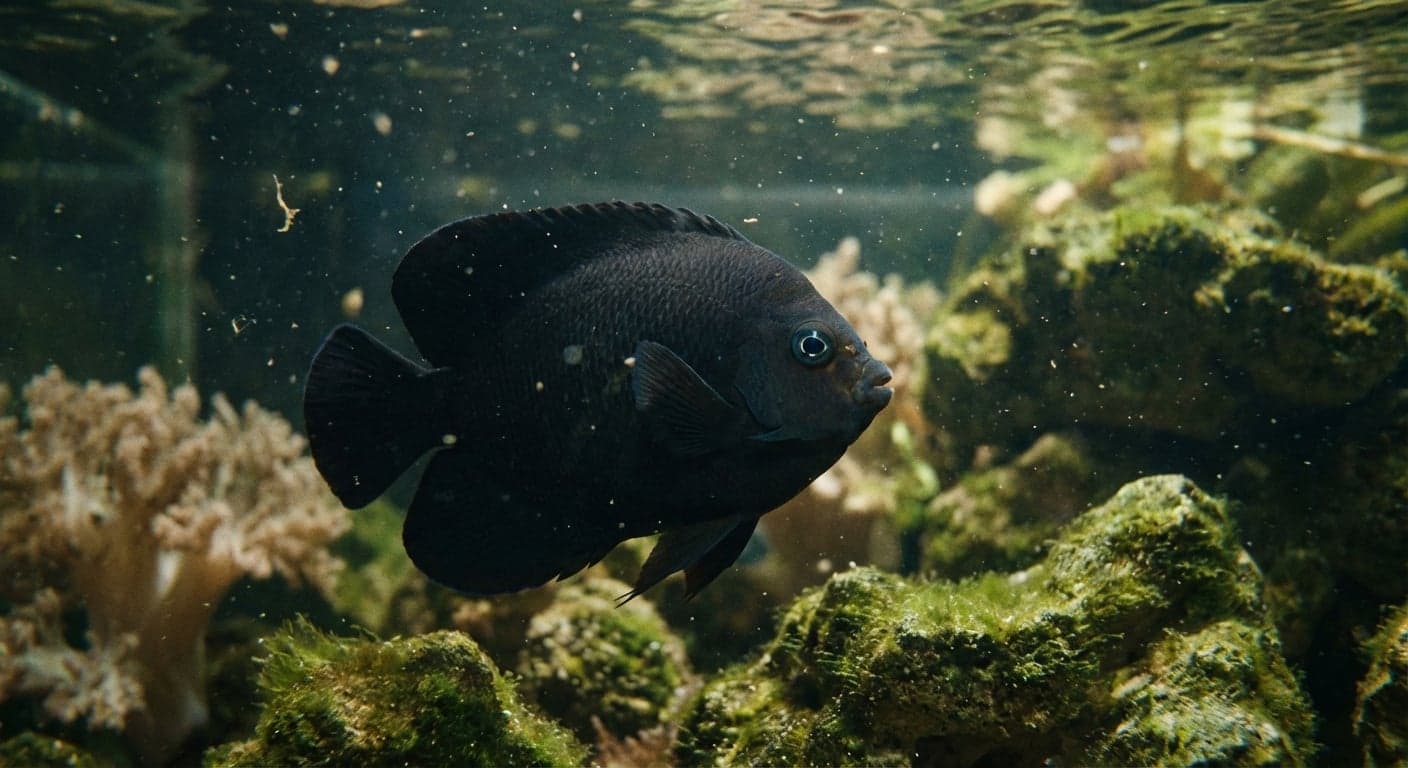
Cream Angelfish
The Cream Angelfish (Apolemichthys xanthurus) is a hardy Indian Ocean marine angel with a yellow tail — one of the more manageable mid-size angels, best kept with reef caution.

Cream Angelfish
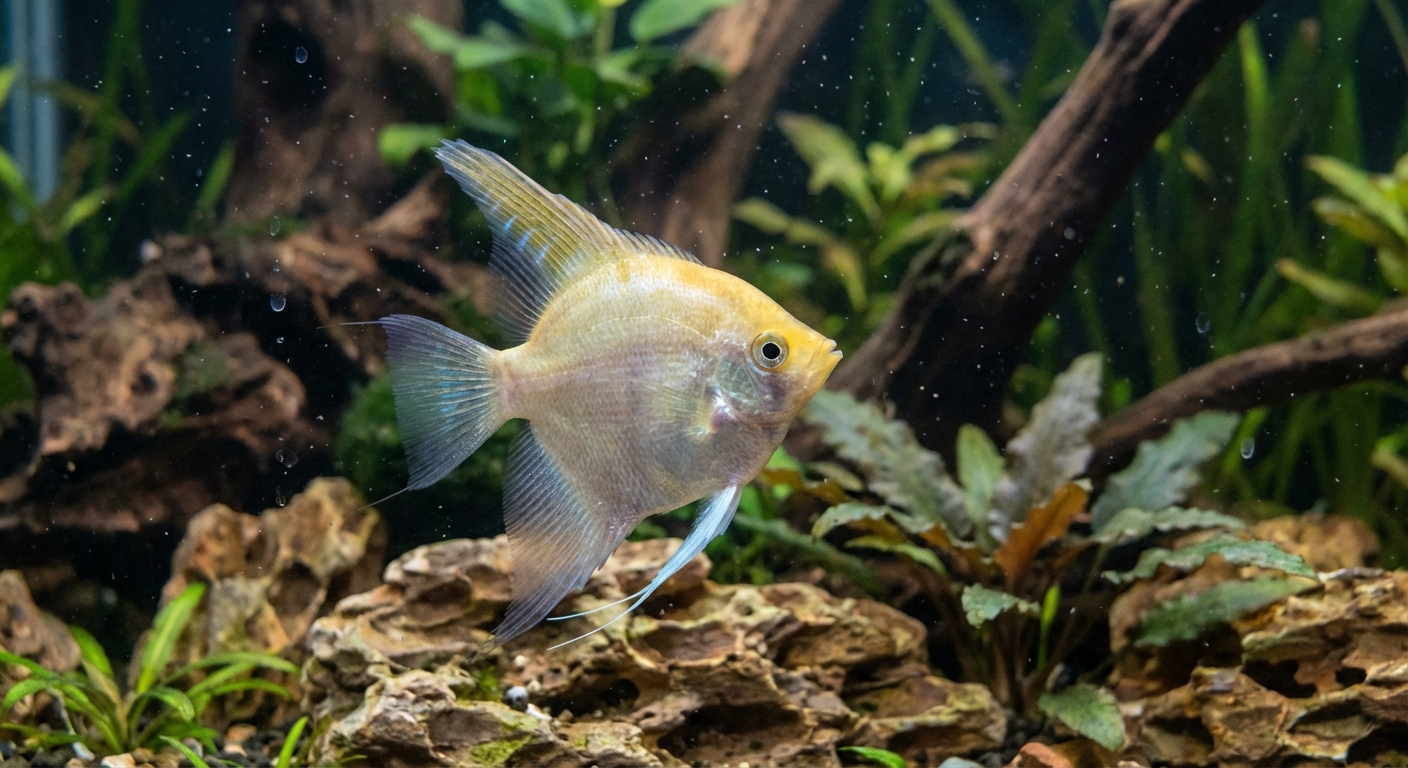
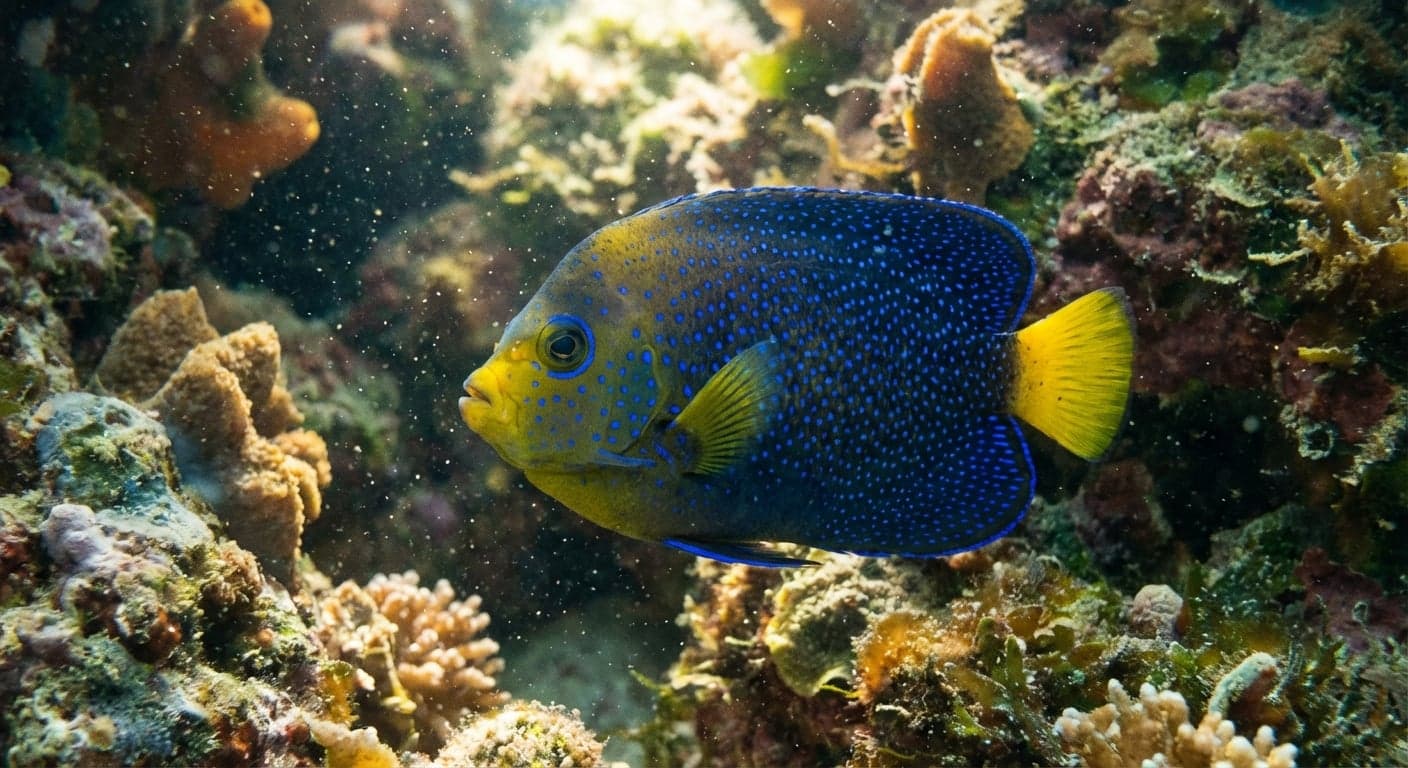
The Cream Angelfish (Apolemichthys xanthurus), also sold as the Indian yellowtail or smoke angelfish, is a mid-size marine angel from the Indian Ocean: creamy grey-brown body, fine scale work, subtle blue edging on face and fins, and a bright yellow caudal fin that reads as a flag from across the room. It is hardier and more diet-flexible than many obligate sponge specialists in the angel trade, which is why experienced keepers treat it as a workable introduction to Apolemichthys — not as a beginner dwarf angel, and not as a coral-safe mascot.
Diet and reef compatibility still need honest planning. Among mid-size angels it is comparatively forgiving; among reef livestock it remains a nipping risk.
Natural Habitat & Origin
Apolemichthys xanthurus is centered on the Indian Ocean, especially waters around Sri Lanka, India and nearby reefs, where it occupies coral and rocky habitat with caves, overhangs and rich invertebrate growth. Wild fish graze sponges, algae and other encrusting matter while working structure. They are usually seen alone or in pairs — not as shoals.
In the aquarium that ecology translates to mature live rock arranged into caves and grazing surfaces, not a bare fish-only box with nowhere to inspect. A system that has run long enough to grow natural films and cryptic life shortens acclimation and supports between-meal foraging.
Care Requirements
Stable reef chemistry: salinity about 1.024–1.026, pH 8.1–8.4, temperature 24–26°C (75–79°F), with nitrate and phosphate kept under control. Adults reach about 15 cm (6 inches). Frontmatter’s roughly 280 litres (about 75 US gallons) is a practical minimum for one fish with serious rock — longer swimming lanes beat tall cubes that leave an angel pacing a short wall.
Live rock should include caves and overhangs for shelter and grazing. Newly imported specimens are often shy; calm cover prevents the “hide until thin” spiral. Flow moderate to strong but broken. Water should stay clean for an omnivore that will be fed several times a day — zero ammonia and nitrite, nitrate managed with changes and export. See ammonia and nitrite and nitrate.
Log parameters in the Aquarium Tracker. Angels advertise chronic neglect as dull colour, eroded slime coat and picky feeding long before they stop swimming.
Diet & Feeding
Omnivore with a sponge-and-encrusting bias in the wild. Captive success tracks whether the fish accepts prepared foods that include sponge or angelfish formulations, not whether it looks pretty on arrival. Base the diet on quality marine angelfish preparations containing sponge, then add herbivore foods, spirulina-based items, frozen mysis and enriched blends. Offer small amounts several times a day and leave mature rock for natural grazing.
Variety matters. A cream angel locked on mysis alone often declines over months even if it “eats every day.” Sponge-inclusive foods, greens and mixed frozen preparations keep the omnivore niche filled. Guidance under marine diets and feeding schedules applies.
Choose a feeding specimen at the shop whenever possible. A fish that already takes pellets or frozen angelfish food in QT is the one that belongs on a reef or FOWLR — not the shy beauty that only picks at rock for a week and then fades. Prove appetite in quarantine before display life gets harder.
Behavior & Temperament
Semi-aggressive in the angel pattern: generally manageable with unrelated fish in different niches, territorial toward other angels and similar mid-water competitors. Frontmatter lists solitary for a reason — one Apolemichthys of this type per typical tank unless the system is very large and territories are split by aquascape.
Introduce thoughtfully. Adding it late to an established community often works better than letting it claim the entire rockscape first. Newly imported fish can be shy; aggression from damsels or large tangs during that window produces a non-feeding angel fast. Toward robust wrasses, anthias and similarly sized community fish it is usually fine once settled.
Tank Mates
Suitable companions are robust, peaceful to semi-aggressive marine fish that do not share the angel niche: tangs in tanks large enough for both, larger wrasses, anthias and similarly sized FOWLR community species. Avoid other angels in smaller systems — including dwarf angels that look harmless until the cream angel decides the cave is exclusive.
Reef safety needs the same honesty as other Apolemichthys. It may nip coral polyps, soft corals and clam mantles. Some individuals ignore hardy LPS for years; others sample everything once. Call it reef-safe with caution: safest in fish-only or FOWLR systems, or on reefs where soft corals and clams are expendable. It is not a coral beauty-style dwarf gamble in miniature — adult reach and nip pressure are mid-size angel territory.
Mobile invertebrates are generally lower risk than sessile targets, but nothing with an angel’s mouth is guaranteed around ornamental shrimp in a small reef.
Breeding
Apolemichthys xanthurus is a pelagic spawner. Eggs and larvae drift; home rearing is not realistic. Trade specimens are wild-collected. Pair behaviour on the reef does not translate to a breeding project in 280 litres.
Common Health Issues
Reasonably durable when diet and space are met, still a classic marine disease importer. Marine ich (Cryptocaryon irritans) and velvet (Amyloodinium ocellatum) hit stressed or freshly imported angels hard. Quarantine under a quarantine protocol and medicate in hospital tanks — copper and many baths destroy reef invertebrates; see medications.
The most common husbandry pitfall is dietary: a specimen that never converts to sponge-inclusive prepared foods. Lateral line and colour issues follow chronic dirty water and vitamin-poor routines. Keep feeding frequent, greens and sponge in the mix, and nitrates honest.
Given volume, a proven eating fish, solitary angel stocking and realistic coral expectations, the Cream Angelfish is one of the more approachable mid-size Indian Ocean angels for intermediate keepers — yellow-tailed presence without the worst sponge-only death spiral, provided reef caution stays in the plan.