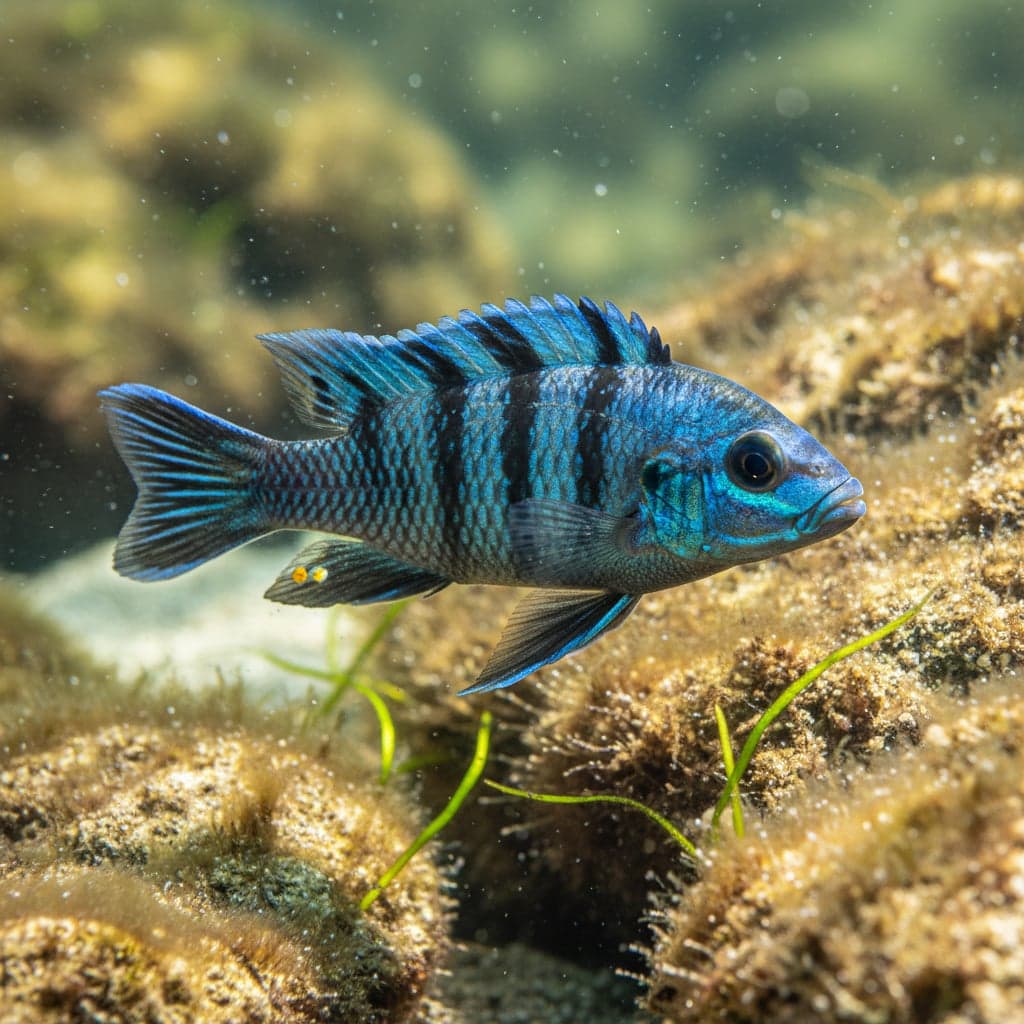
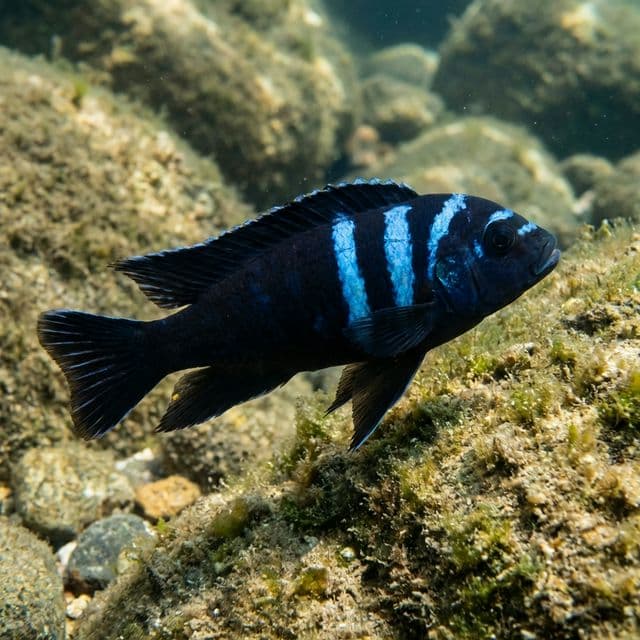
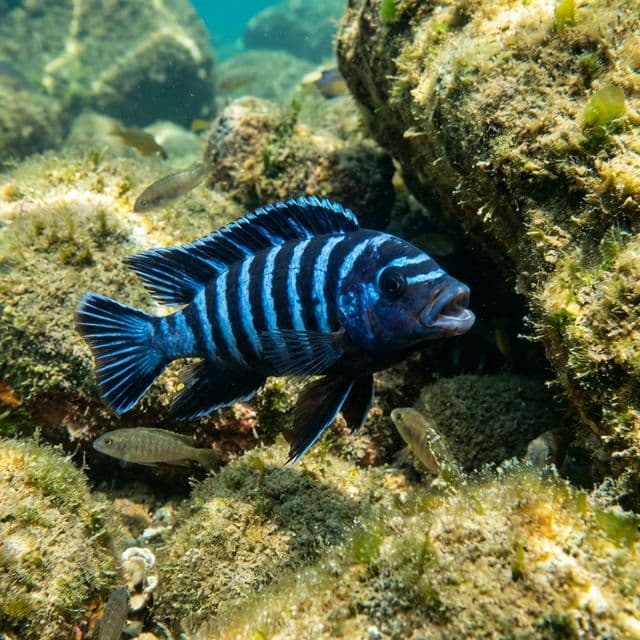
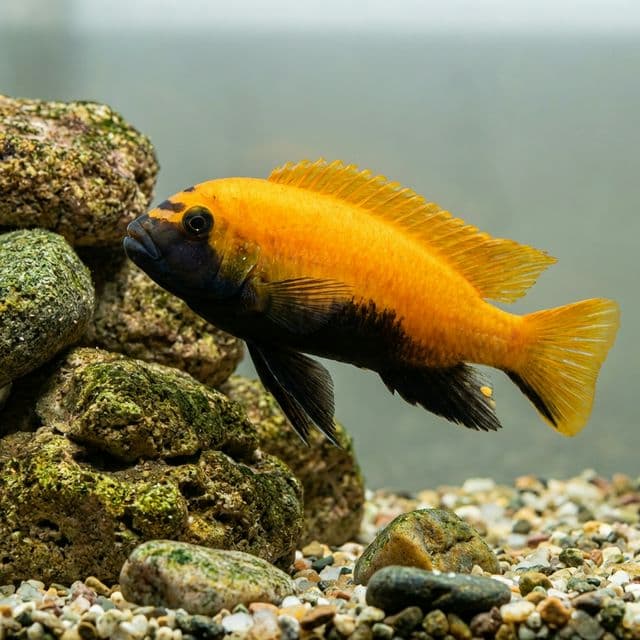
Demasoni: Chindongo demasoni
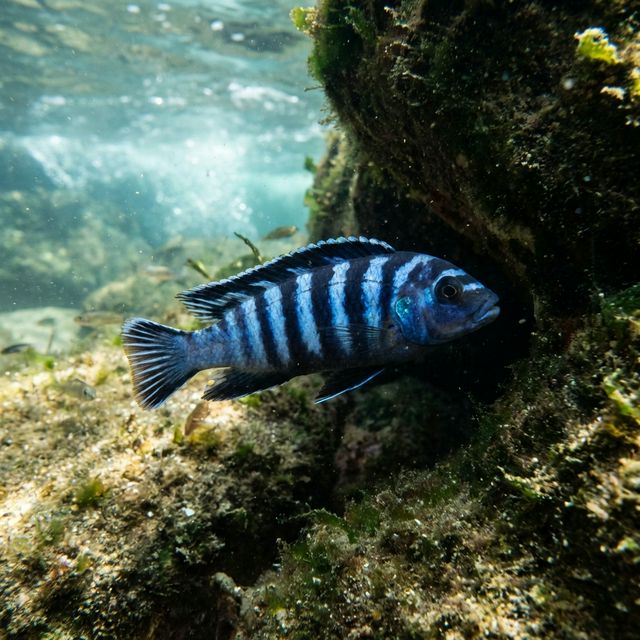
A stunning deep blue and black striped Mbuna. Very aggressive despite its small size.

Demasoni
The Demasoni, scientifically known as Chindongo demasoni, is a captivating freshwater fish that has gained immense popularity in the aquarium hobby due to its striking appearance and engaging behaviors. This small cichlid, native to Lake Tanganyika in East Africa, showcases a mesmerizing combination of deep blue and yellow or white stripes, making it a stunning addition to any aquarium. Its bold coloration not only enhances the visual appeal of a tank but also serves as an attractive focal point, drawing the attention of aquarists and casual observers alike. In addition to its aesthetic charm, the Demasoni's active nature and fascinating behaviors contribute significantly to its esteem among fish enthusiasts.
Robust and resilient, the Demasoni holds significant importance in the aquarium trade, both as a display fish and for recreational breeding. Its relatively small size—usually reaching around 3 inches—combined with its vibrant colors makes it an ideal candidate for both beginner and seasoned aquarists. Moreover, its adaptability to various conditions and social setups has led to increased interest in breeding efforts, resulting in a wider availability of color morphs and variations in the marketplace. As a socially interactive fish, the Demasoni showcases behaviors that are not only entertaining to observe but also contribute to the complex dynamics of community tanks.
Natural Habitat & Origin
The Demasoni hails from the rocky habitats of Lake Tanganyika, where it thrives amongst the crevices and substrates formed by the lake's geological history. The water in Lake Tanganyika is classified as clearwater, characterized by its high mineral content and moderate hardness. With a typical pH range from 7.8 to 9.0, this environment favors species that are well adapted to alkaline conditions. The lake's unique ecosystem features various niches, where the Demasoni takes advantage of the shelter provided by rocks and caves while feeding on small invertebrates and algae present in its surroundings.
In its natural habitat, the Demasoni prefers a stable environment with minimal fluctuations in temperature, typically ranging between 24°C to 28°C (75°F to 82°F). The presence of minerals, particularly calcium and magnesium, contributes to the fish's health and overall well-being. The rocky substrate and plenty of hiding spots not only cater to its territorial nature but also provide ideal conditions for breeding and establishing social hierarchies among groups. This specific habitat ensures that aquarists recreate similar conditions in their tanks to support the health and happiness of their Demasoni.
Care Requirements
To successfully care for Demasoni, maintaining optimal water parameters is crucial. The ideal pH should be kept between 7.8 and 8.6, while the water temperature should range from 24°C to 28°C (75°F to 82°F). Soft to moderately hard water, with a hardness level of 10 to 20 dGH, simulates their natural habitat, promoting overall health and vitality. Demasoni are territorial and require adequate space, so a minimum tank size of 30 gallons is recommended to provide enough territory for each fish and minimize aggressive interactions.
For substrate, a sandy base or fine gravel replicates their natural environment while facilitating safe digging behavior. Providing plenty of rocks, caves, and hideaways aids in creating territories and reduces stress. When it comes to lighting, moderate illumination mimics the natural conditions of Lake Tanganyika, supporting not only the physical comfort of the fish but also any live plants that may be included in the tank. However, many aquarists choose to keep plants at a minimal level to avoid competition for space, as Demasoni can be diggers and rooters.
Diet & Feeding
The Demasoni is primarily an omnivorous fish, thriving on a balanced diet that combines both plant matter and protein. To ensure optimal health, it is recommended to provide a varied diet that includes high-quality cichlid flakes, pellets, and spirulina-based foods. Supplementing with frozen or live foods such as brine shrimp, daphnia, and bloodworms can enhance its diet, promoting vibrant colors and robust growth. Feeding should be conducted 1-2 times daily, with only what the fish can consume within a few minutes to minimize waste and maintain water quality.
Since the Demasoni exhibits a strong inclination for foraging, incorporating sinking pellets may also enhance their feeding behavior, allowing them to search for food as they would in their natural habitat. This helps in providing mental stimulation and creates a more dynamic environment within the aquarium. It’s also important to avoid overfeeding, which can lead to health issues and water quality degradation.
Behavior & Temperament
The Demasoni is known for its energetic and dynamic behavior. Typically exhibiting a semi-aggressive temperament, these cichlids are highly territorial and can display aggression towards their own kind, particularly in smaller tanks. They thrive in groups, but it’s advisable to maintain a proper gender ratio—multiple females for each male—to minimize conflicts and ensure social harmony. Interestingly, Demasoni display vertical swimming patterns and often utilize the upper and mid-water columns of the tank, which may include darting and chasing, especially when asserting dominance or engaging in breeding behavior.
In a community setting, the Demasoni can coexist well with other robust species that can tolerate similar water conditions. However, they may bully smaller or slower-moving tank mates. Careful consideration of tank mate selection is vital to foster a harmonious tank environment that minimizes stress and aggression.
Tank Mates
Selecting compatible tank mates for the Demasoni requires careful consideration due to their semi-aggressive nature. Suitable tank mates include other cichlids from Lake Tanganyika, such as the Yellow Lab (Labidochromis caeruleus) and the Pseudotropheus species, which can hold their own in similar territorial disputes. Other good candidates include larger tetras, such as the Congo tetra and robust barbs, which can withstand the activity level of these dynamic cichlids.
Conversely, it’s best to avoid keeping smaller or more peaceful species like guppies, neon tetras, or other delicate fish, as the Demasoni may chase or harass them, leading to stress or injury. Furthermore, other similarly-sized or aggressive cichlids should be introduced with caution, ensuring ample space and hiding spots are available to deter conflict.
Breeding
Breeding Demasoni in captivity can be rewarding but requires specific conditions. These fish are known to be mouthbrooders, with females carrying fertilized eggs in their mouths until they hatch—often resulting in 6 to 10 free-swimming fry. To encourage breeding, provide a separate breeding tank with a sandy substrate and plenty of hiding spots, enabling the females to establish territories and lay eggs. Maintaining stable water parameters similar to their natural environment, with a temperature at the higher end of their range, can promote breeding behavior.
During breeding, males will exhibit aggressive courtship displays, including color changes and swim posturing. After spawning, the female will take care of the eggs and fry, generally keeping them in her mouth for protection. It’s essential to remove the male after spawning to prevent aggressive behavior towards the female or fry. Once the fry are free-swimming, it is advisable to provide them with a diet of powdered fry food or finely crushed flakes to support their growth in the initial stages.
Common Health Issues
Demasoni, like many African cichlids, can develop ich, Malawi bloat, or bacterial infections when water quality declines or diet is too rich in protein. Maintain hard, alkaline water with strong filtration and regular changes, and avoid overfeeding. Quarantine new fish and watch for clamped fins, bloating, or sudden aggression spikes that signal stress. Stable parameters and a varied, mostly herbivorous diet keep Demasoni colourful and resilient.