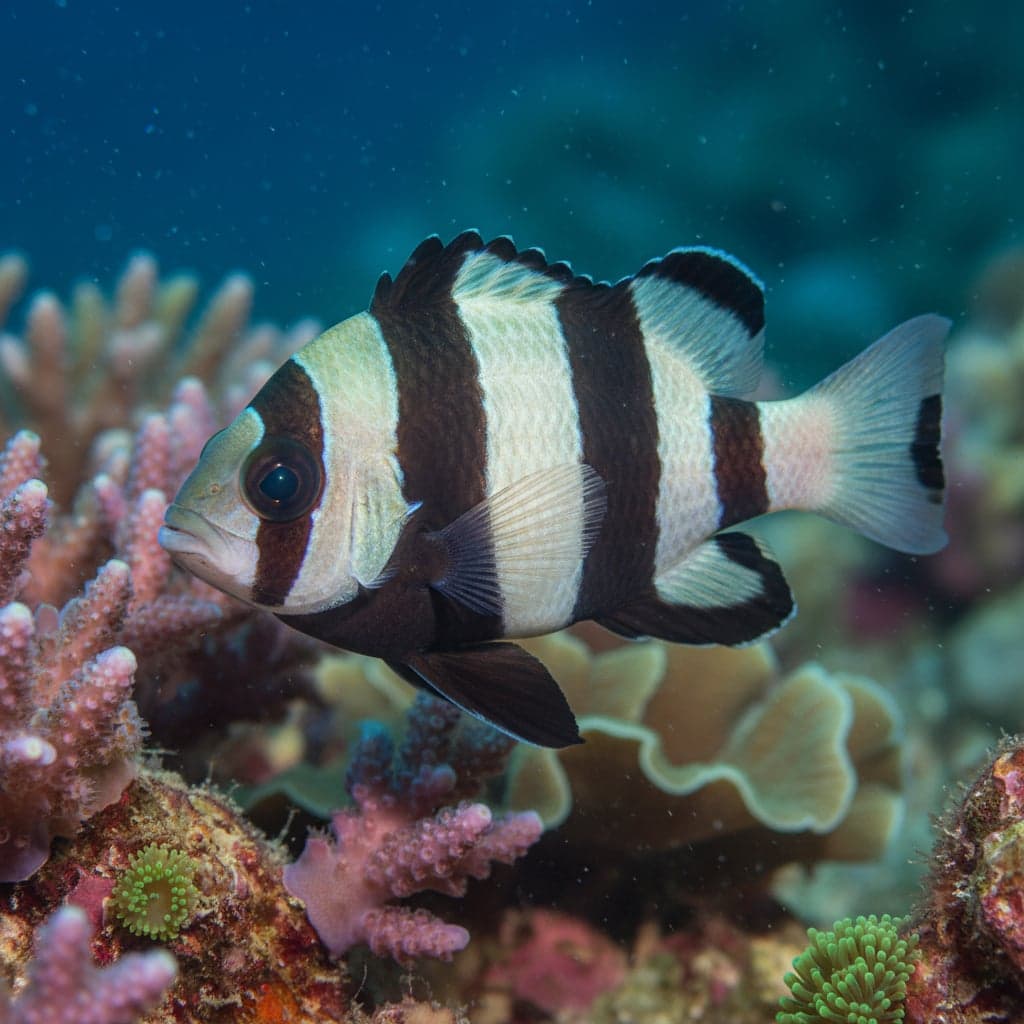
Fijian Panda Damselfish
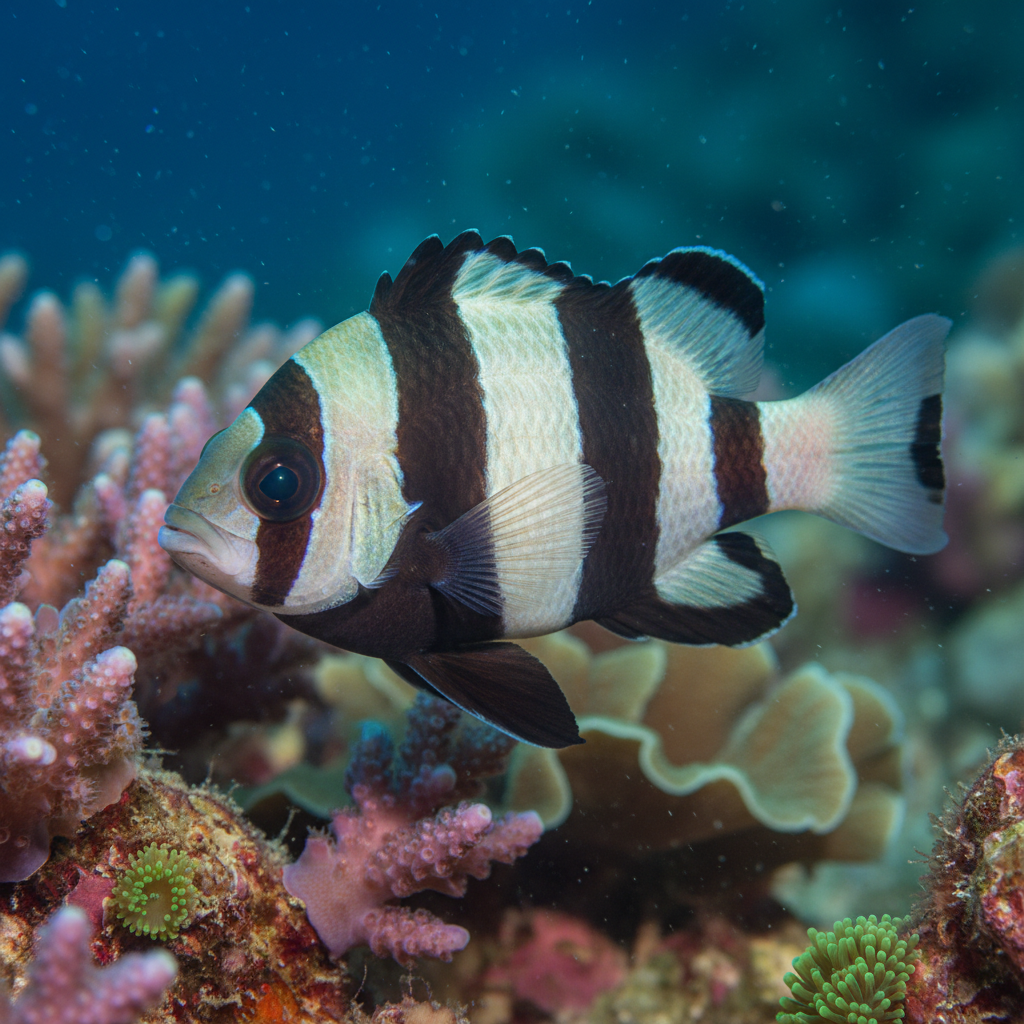
A 6cm damsel banded black and white. Smaller and less aggressive than most damsels, and it holds a small patch of rock.
Fijian Panda Damselfish
The Fijian Panda Damselfish, scientifically known as Amblypomacentrus tricinctus, is a captivating member of the damselfish family that has gained popularity in the aquarium hobby for its stunning appearance and vibrant behavior. This species is characterized by its unique black and white coloration, resembling a panda, hence the name. Its body is predominantly white, adorned with large, bold black spots that enhance its visual appeal, making it one of the most recognizable damselfish species in the aquarium trade. In addition to their striking appearance, Fijian Panda Damselfish are known for their lively activity level, bringing a dynamic presence to any marine setup.
In the context of the aquarium hobby, the Fijian Panda Damselfish holds a significant place due to its hardiness and adaptability, making it ideal for both novice and experienced aquarists. They are regarded as a great addition to reef tanks, as their vibrant colors and engaging nature can elevate the aesthetics of any marine landscape. Moreover, their resilience in fluctuating water conditions emphasizes their importance as a beginner-friendly fish, while still providing an engaging experience for seasoned fish keepers.
Natural Habitat & Origin
The natural habitat of the Fijian Panda Damselfish is primarily found in the warm, shallow waters of the South Pacific, particularly around the coral reefs of Fiji. This species is predominantly located in lagoons and outer reef slopes, where they can be found in both rocky and coral-dominated environments. The water conditions in their natural habitats are typically characterized by clearwater with a significant amount of sunlight penetration, fostering the growth of algae and small invertebrates that serve as food sources. The dynamic ecosystem of the coral reefs is crucial not only for their survival but also for their role in contributing to the biodiversity of the marine environment.
Geographically, the Fijian Panda Damselfish can be found in the coral reefs of numerous islands within the Fijian archipelago. They thrive in warm, nutrient-rich waters, often found at depths ranging from 5 to 25 meters. The environmental context is vital to their well-being, as they rely on the complex reef structures for shelter and breeding, while also exhibiting behavioral traits that adapt them effectively to the varying conditions of their natural habitat.
Care Requirements
To ensure the well-being of the Fijian Panda Damselfish in captivity, specific care requirements need to be met. Optimal water parameters include a pH level in the range of 8.1 to 8.4, a temperature between 75°F to 80°F (24°C to 27°C), and a salinity of 1.020 to 1.025. The hardness of the water should ideally be between 8-12 dGH, which mimics the natural conditions of their reef habitat. An aquarium with a minimum size of 75 litres (20 gallons) is recommended for this less aggressive 6cm Amblypomacentrus — enough swimming room and a small rock patch to claim, without treating it like a typical territorial damsel.
When setting up the tank, a sandy substrate is ideal to support the growth of beneficial microorganisms, as well as the establishment of live rock or coral structures that provide hiding spots and grazing areas. Lighting should be moderate to bright, simulating the reef environment and fostering the growth of algae, which serves as a natural food source. Incorporating both live rock and artificial plants will also create an enriched environment that promotes the health and activity of the Fijian Panda Damselfish.
Diet & Feeding
Fijian Panda Damselfish are omnivorous, requiring a well-balanced diet to maintain their health and vibrancy. Their diet should consist of a variety of flakes and pellets specifically designed for marine fish, which provide essential nutrients and vitamins. Additionally, incorporating frozen or live foods, such as brine shrimp, mysis shrimp, and marine worms can enhance their health and facilitate natural foraging behaviors. It is recommended to feed them small portions multiple times a day to ensure they receive adequate nutrition while preventing overfeeding, which can lead to poor water quality.
As these fish have robust appetites, they will also appreciate supplementing their diet with algae and other herbivorous foods, such as spirulina-based flakes or dried seaweed sheets. This variety not only supports their overall health but also mirrors their natural feeding habits in the wild where they graze on algae growing on rocks and corals.
Behavior & Temperament
The Fijian Panda Damselfish is known for its active and somewhat territorial nature. In the aquarium, they typically assert dominance over other fish, especially if the tank is too small or lacks sufficient hiding places. It is essential to provide ample space and structure within the aquarium to mitigate aggression, allowing these fish to establish their own territories while reducing stress among tank mates. They exhibit a semi-social behavior, thriving in small groups but often engaging in aggressive displays, especially during breeding or territorial disputes.
Positioning within the aquarium is also noteworthy, as Fijian Panda Damselfish tend to occupy the middle to upper levels of the tank. They frequently explore their environment, darting in and out of rocks and coral structures, which emphasizes the need for a well-designed habitat that offers plenty of cover and swimming areas. Their lively nature makes them entertaining to observe, and they often engage in playful behaviors with their peers when conditions are suitable.
Tank Mates
When selecting tank mates for the Fijian Panda Damselfish, it is vital to choose species that can coexist without triggering aggressive behaviors. Compatible tank mates include more docile fish such as clownfish, gobies, and freshly collected wrasses, as these species offer a balance in activity levels and temperament. Additionally, small schooling fish like chromis can add visual interest and movement to the tank without posing a threat to the damselfish.
Species to avoid include aggressive fish, particularly those in the same family, such as other damselfish, as well as larger predatory species or any fish with long fins that may provoke aggression. Keeping only one or a few Fijian Panda Damselfish per tank can help minimize territorial disputes and create a more harmonious environment for all inhabitants.
Breeding
The Fijian Panda Damselfish exhibits fascinating breeding behavior that can be replicated in captivity with the right conditions. During the breeding process, males will display courtship rituals to attract females, often establishing nesting sites on flat surfaces like rocks or substrate. It is crucial to maintain stable water conditions, including temperature, pH, and salinity, to promote successful spawning.
For breeding, a breeding pair may require a separate tank that mimics natural conditions, complete with caves and crevices for the female to lay her eggs. After spawning, the male takes on the responsibility of guarding and aerating the eggs, which typically hatch after several days depending on water temperature. Providing a separate rearing tank for fry will enhance their chances of survival, as the small fish are often vulnerable to predation from adult fish.
Common Health Issues
While Fijian Panda Damselfish are generally hardy, they can still be susceptible to certain health issues in captivity. Some common ailments include marine ich, fin rot, and velvet disease. Maintaining high water quality, performing regular water changes, and quarantining new additions to the tank are essential preventive measures to avoid disease outbreaks.
To promote the health of Fijian Panda Damselfish, use appropriate medications when necessary and consult with a marine veterinarian or experienced reef aquarist if outbreaks persist. Keep salinity and temperature stable, quarantine newcomers, and avoid overcrowding that elevates territorial stress. Treat marine ich, velvet, or fin rot early in a hospital system with reef-safe options when needed. Watch for white spots, dusty film, frayed fins, or sudden lethargy. A varied marine diet supports immunity so Fijian Panda Damselfish stay hardy and vibrant for years.