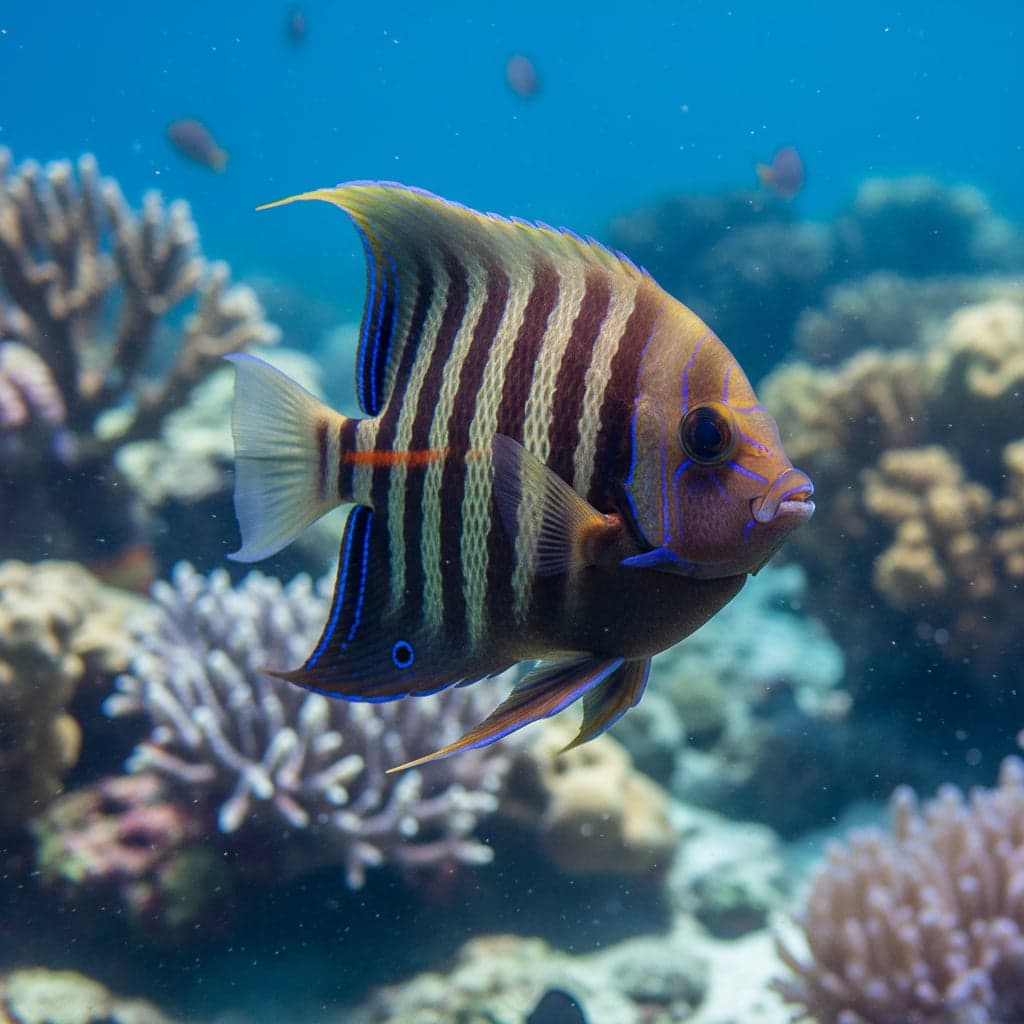
Golden Angelfish
The Golden Angelfish (Centropyge aurantia) is a shy, cryptically colored dwarf angelfish prized for its vibrant orange hue and patterned markings.
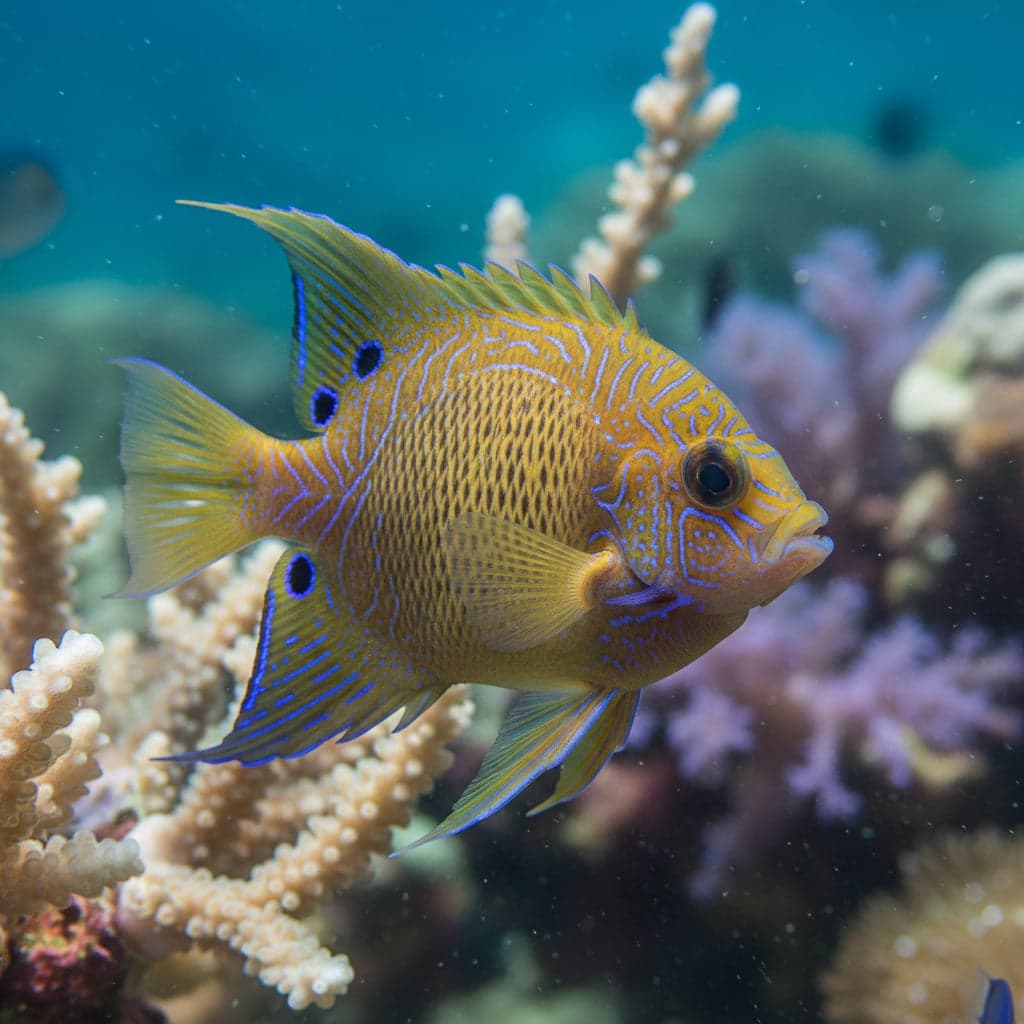
Golden Angelfish
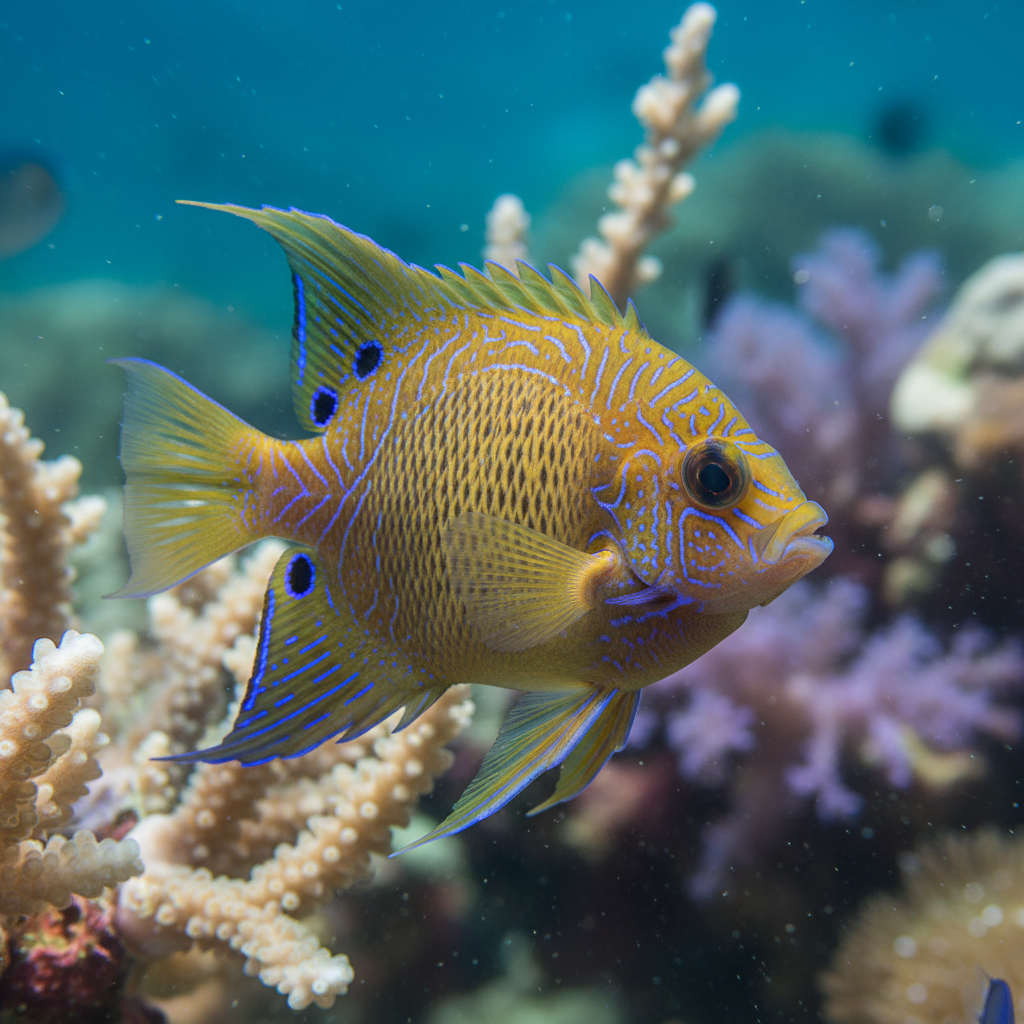
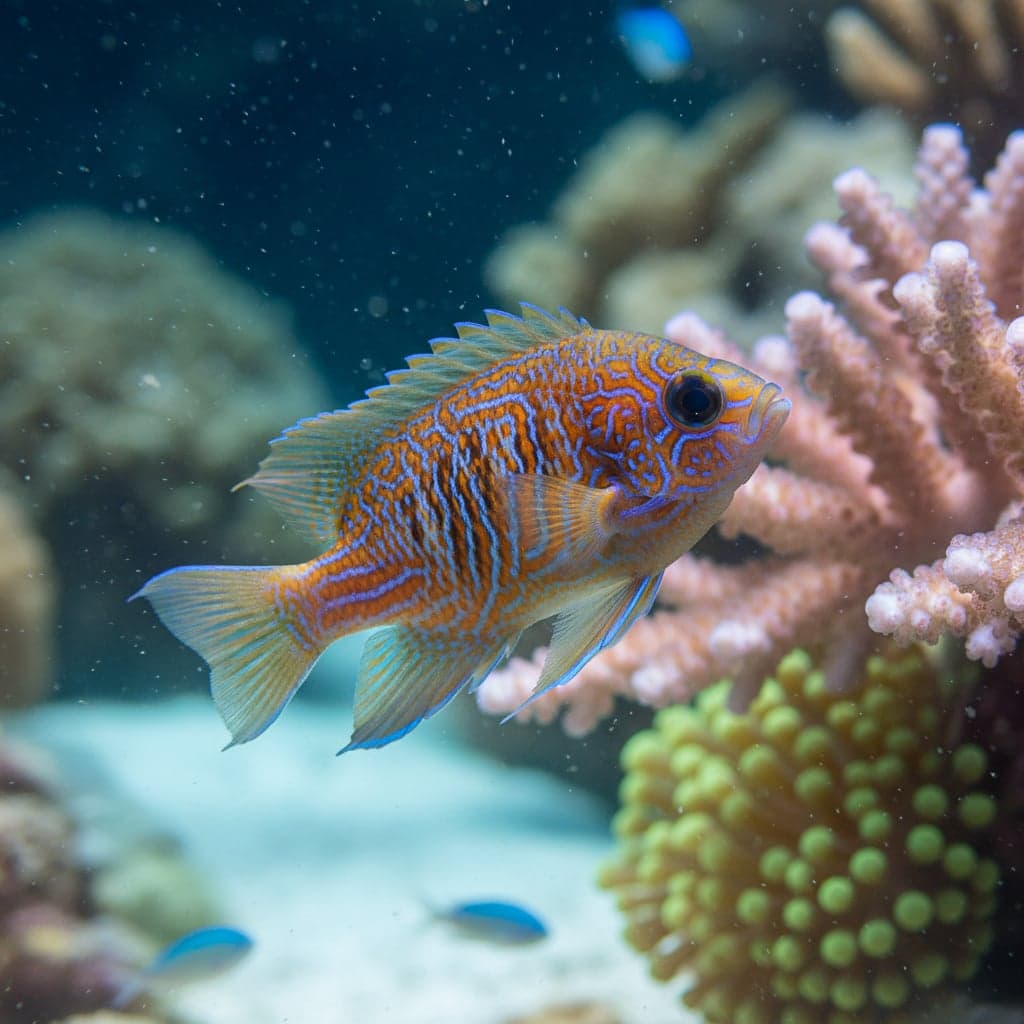
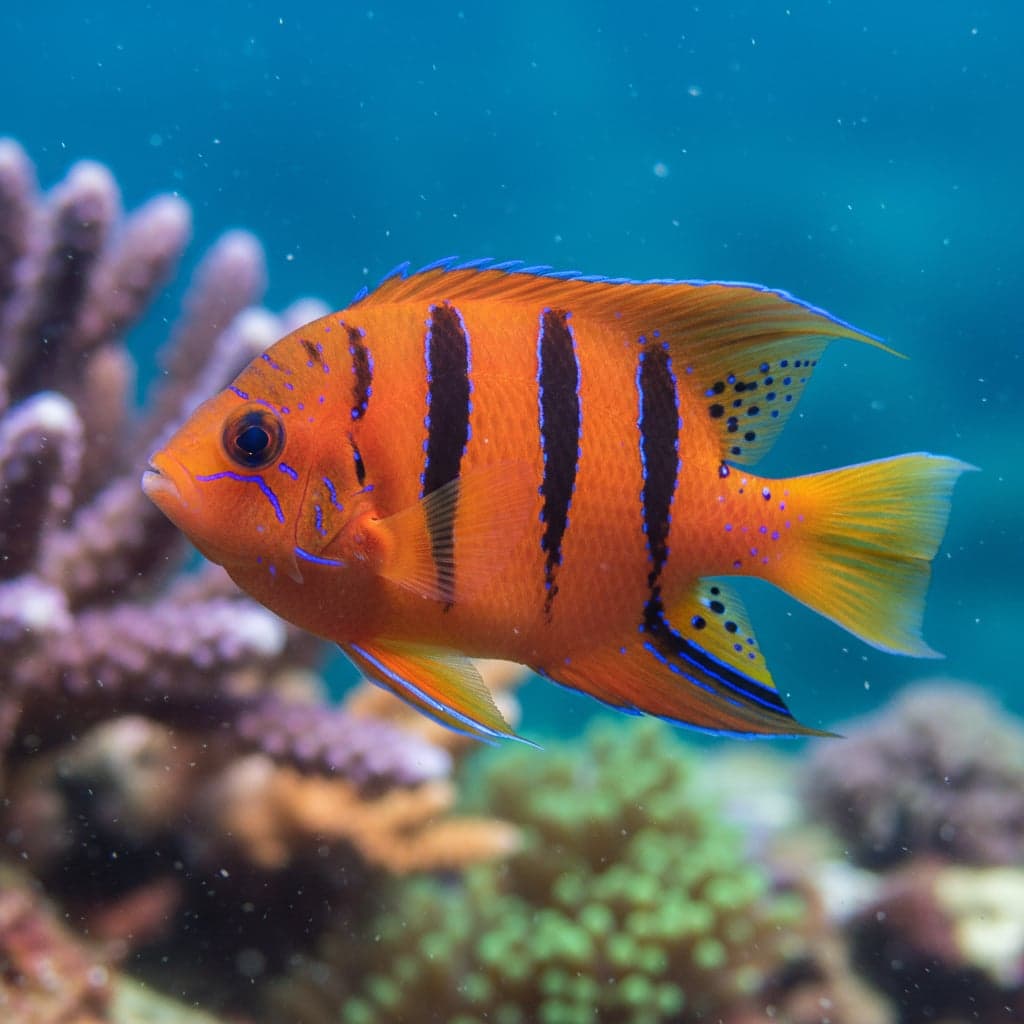
The Golden Angelfish (Centropyge aurantia) is one of the most secretive and elusive members of the dwarf angelfish group. Unlike its more boisterous relatives, the Golden Angelfish is a cryptic species, often spending its entire life deep within the crevices of the reef. It is renowned for its uniform, vibrant golden-orange to reddish coloration, often overlaid with a series of fine, darker orange horizontal lines or vermiculations.
Growing to a maximum length of about 4 inches (10 cm), it is a highly sought-after species for experienced reef keepers who appreciate its subtle beauty and unique, reclusive personality.
Natural Habitat & Origin
The Golden Angelfish is native to the central and western Pacific Ocean, with populations found around the Solomon Islands, Fiji, Samoa, and north to the Caroline Islands. They are typically found in coral-rich areas, particularly near the outer reef slopes or in deep lagoons, usually at depths between 15 and 60 meters. This species is rarely seen in the open, preferring to inhabit the intricate network of caves and "receptacles" within the reef structure.
Care Requirements
Caring for the Golden Angelfish is considered "Advanced" because of its shy nature and specialized feeding habits. It requires high-quality saltwater parameters: pH between 8.1 and 8.4, a temperature of 75°F to 82°F (24°C to 28°C), and specific gravity between 1.020 and 1.025.
A minimum tank size of 40 gallons (approx. 150L) is required, but more importantly, the tank MUST feature extensive rockwork with numerous caves and hiding places. Without a sense of security provided by these hiding spots, the Golden Angelfish will experience extreme stress and may refuse to eat.
Diet & Feeding
In the wild, the Golden Angelfish is an omnivore that primarily grazes on algae, detritus, and small benthic invertebrates found within reef crevices. In the aquarium, they can be difficult to transition to prepared foods. It is essential to have an established "mature" tank with plenty of live rock for them to graze upon initially.
Once acclimated, they should be offered a variety of high-quality foods, including spirulina-based flakes, frozen mysis shrimp, and specialized angelfish preparations containing sponges. Feeding small amounts several times a day is recommended to support their grazing behavior.
Behavior & Temperament
The Golden Angelfish is exceptionally shy and peaceful toward other fish. They are rarely aggressive, although males may defend their territory against other dwarf angelfish.
Due to their reclusive nature, you may only see them during feeding or when the room is quiet. They do best in a calm environment with peaceful tank mates. They are generally considered "reef-safe with caution," as some individuals may nip at certain stony corals or clam mantles if not well-fed.
Tank Mates
Select tank mates that are equally peaceful and not overly boisterous. Good choices include:
- Firefish Gobies
- Royal Grammas
- Small Cardinalfish
- Reef-safe wrasses (Fairy or Flasher Wrasses)
- Peaceful bottom dwellers like blennies
Avoid aggressive or fast-swimming fish that might outcompete the Golden Angelfish for food or intimidate it into permanent hiding.
Breeding
Breeding Golden Angelfish in captivity is extremely rare. Like other Centropyge species, they are synchronous broadcast spawners. In the wild, they rise into the water column at dusk to release their eggs and sperm. Replicating the depth and lighting triggers required for this behavior in a home aquarium is technically challenging, and the microscopic larvae are notoriously difficult to raise.
Common Health Issues
The primary health concern for this species is stress-related illness during acclimation. If they do not feel secure in their environment, they are much more susceptible to Marine Ich and Velvet. They should always be quarantined before introduction to the main display. Providing a high-quality, vitamin-enriched diet will help bolster their immune system and maintain their vibrant orange coloration.