Granulosus Catfish
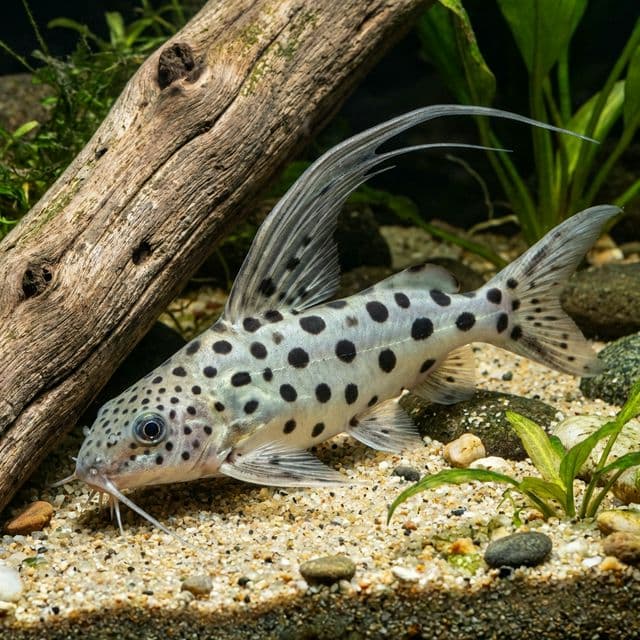
The Granulosus Catfish (Synodontis granulosus) is one of the most elite and prized species from Lake Tanganyika, famous for its deep obsidian body and brilliantly white-edged fins.

Granulosus Catfish
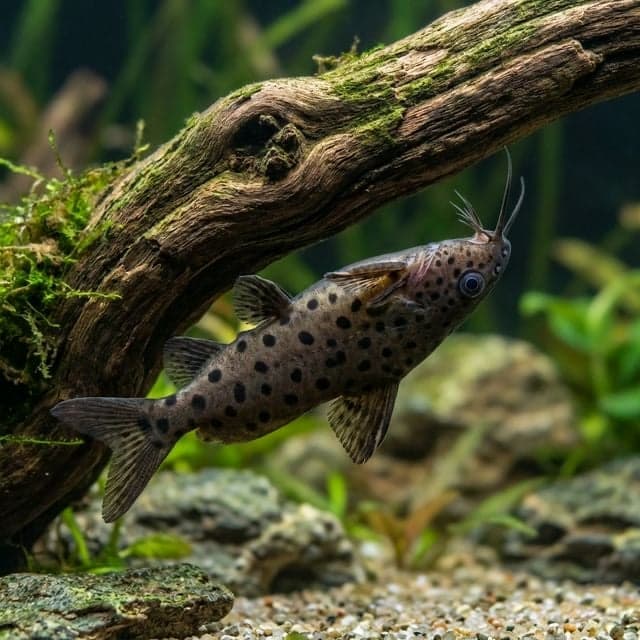
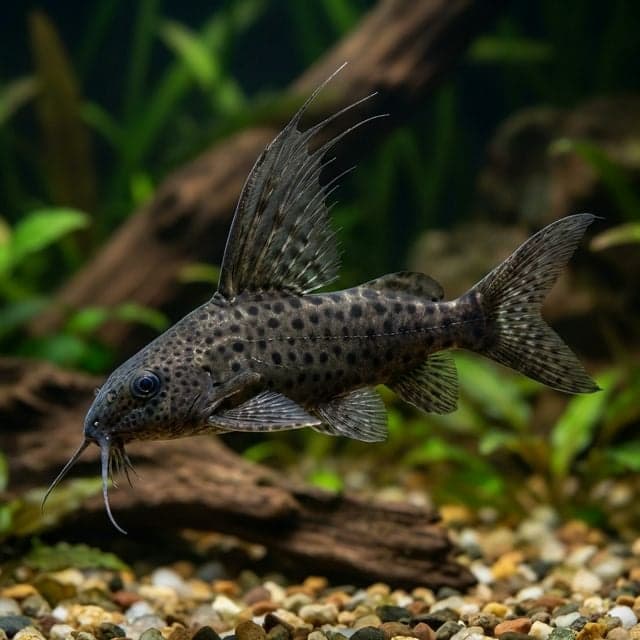
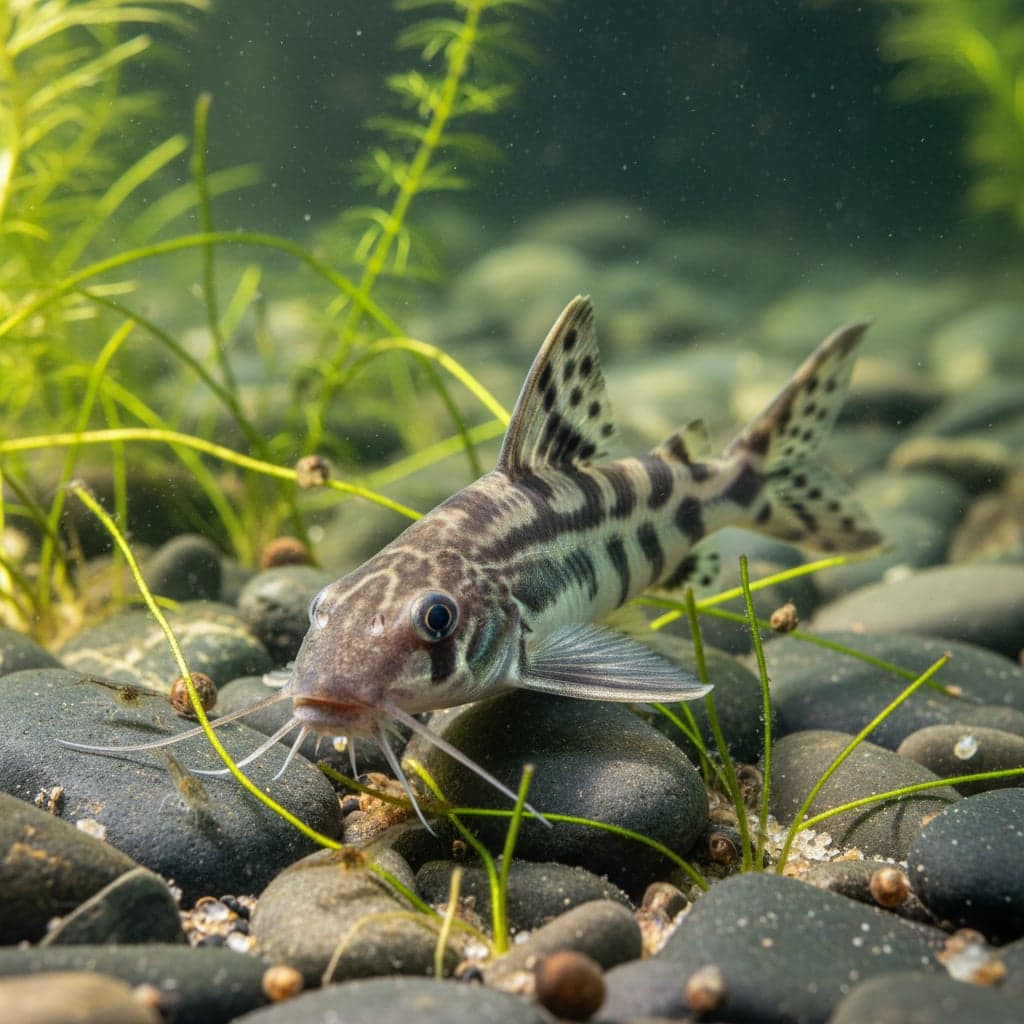
The Granulosus Catfish (Synodontis granulosus) is arguably the most sought-after and expensive member of the Synodontis genus. Endemic to Lake Tanganyika, it is prized for its elegant, minimalist beauty. It possesses a deep charcoal-to-black body, which is dramatically offset by crisp, brilliant white margins on all its fins, including the dorsal, pectoral, and caudal fins.
Growing to about 10-11 inches (27 cm), it is a large and robust catfish. Unlike many other Synodontis which have intricate patterns, the Granulosus relies on its solid, sleek coloration and contrasting fin edges for its striking appearance.
Natural Habitat & Origin
This species is strictly endemic to Lake Tanganyika, one of the African Rift Valley's ancient lakes. It is a deep-water specialist, often found at depths exceeding 20-30 meters, though it can occasionally be found in shallower rocky areas. Lake Tanganyika is famous for its unique water chemistry—it is very hard and highly alkaline (high pH). Replicating these "Rift Lake" conditions is the most critical aspect of keeping this species successfully.
Care Requirements
The Granulosus Catfish is relatively hardy but has strict water chemistry needs. It MUST be kept in alkaline water with a pH between 8.0 and 9.0 and a high carbonate hardness (dKH). The temperature should be maintained between 73°F and 81°F (23°C to 27°C).
A minimum tank size of 75-80 gallons (300L) is required for an adult. The tank setup should feature a sandy substrate with plenty of large rock formations and caves, mimicking the "littoral" rocky zones of the lake. Excellent filtration and regular water changes are essential to maintain the pristine water quality they are accustomed to in the massive, stable environment of Lake Tanganyika.
Diet & Feeding
They are opportunistic omnivores. In the wild, they forage for small crustaceans, insect larvae, mollusks, and any other organic matter they find among the rocks.
In the aquarium, they are not picky and will accept high-quality sinking pellets, flakes, and tablets. However, to maintain their health and deep coloration, their diet should be regularly supplemented with frozen or live foods like mysis shrimp, krill, and chopped seafood. They are primarily nocturnal feeders but will often emerge during the day once they realize food is being served.
Behavior & Temperament
The Granulosus Catfish is generally peaceful toward mid-water fish but can be quite territorial and aggressive toward other bottom-dwellers, especially other Synodontis species. It is usually best kept as a single specimen in all but the largest tanks.
They are relatively active for a "nocturnal" catfish and will often patrol the rocks and substrate during the evening and night. Their elegant swimming style and striking silhouette make them a true centerpiece fish for a Tanganyika biotope setup.
Tank Mates
The best tank mates are other robust Lake Tanganyika species:
- Frontosa Cichlids
- Altolamprologus (Compreciess, Calvus)
- Large Julidochromis species
- Tropheus (if the tank is large enough)
- Other large, peaceful African Cichlids
Avoid housing them with very small fish that might be seen as food, or with delicate species that cannot tolerate the high-pH Rift Lake conditions.
Breeding
Breeding Synodontis granulosus in captivity is extremely rare and considered a major achievement for any aquarist. Unlike the "Cuckoo Catfish" (S. multipunctatus), which is a brood parasite, S. granulosus is a substrate spawner. Success would require a very large, mature group of fish in a specialized setup with perfect water parameters and specific temperature triggers, though documented successes are few and far between in the hobby.
Common Health Issues
They are generally robust but are sensitive to sudden changes in water chemistry. Maintaining a stable, high pH is the most important factor in their long-term health. Like many African Rift Lake species, they can be susceptible to "Malawi Bloat" (or a similar condition) if their diet is too high in fat or if they are stressed by poor water quality. Regular maintenance and a high-quality, varied diet are essential.