Green Panchax
The Green Panchax (Aplocheilus panchax) is a hardy and beautiful surface-dwelling killifish, famous for the bright white 'third eye' spot on its head and its efficiency at consuming mosquito larvae.
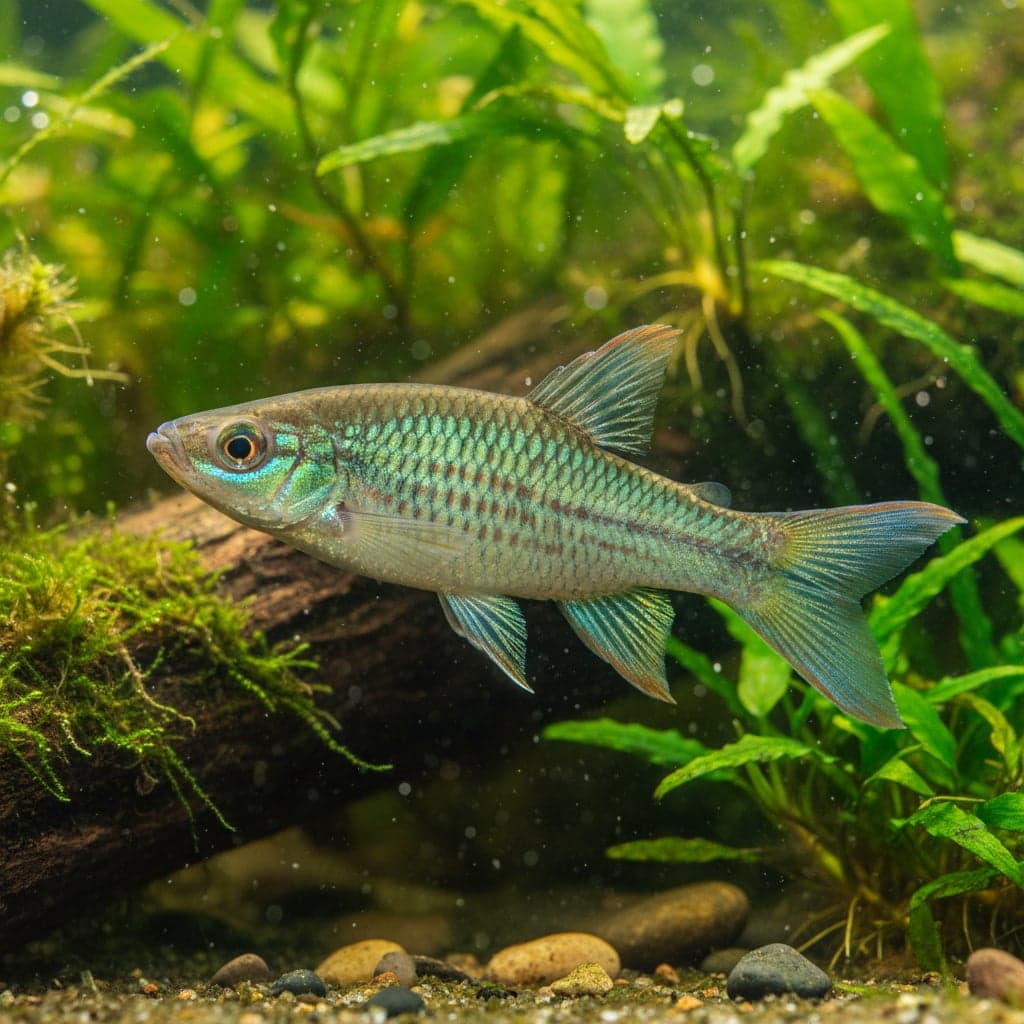
Green Panchax
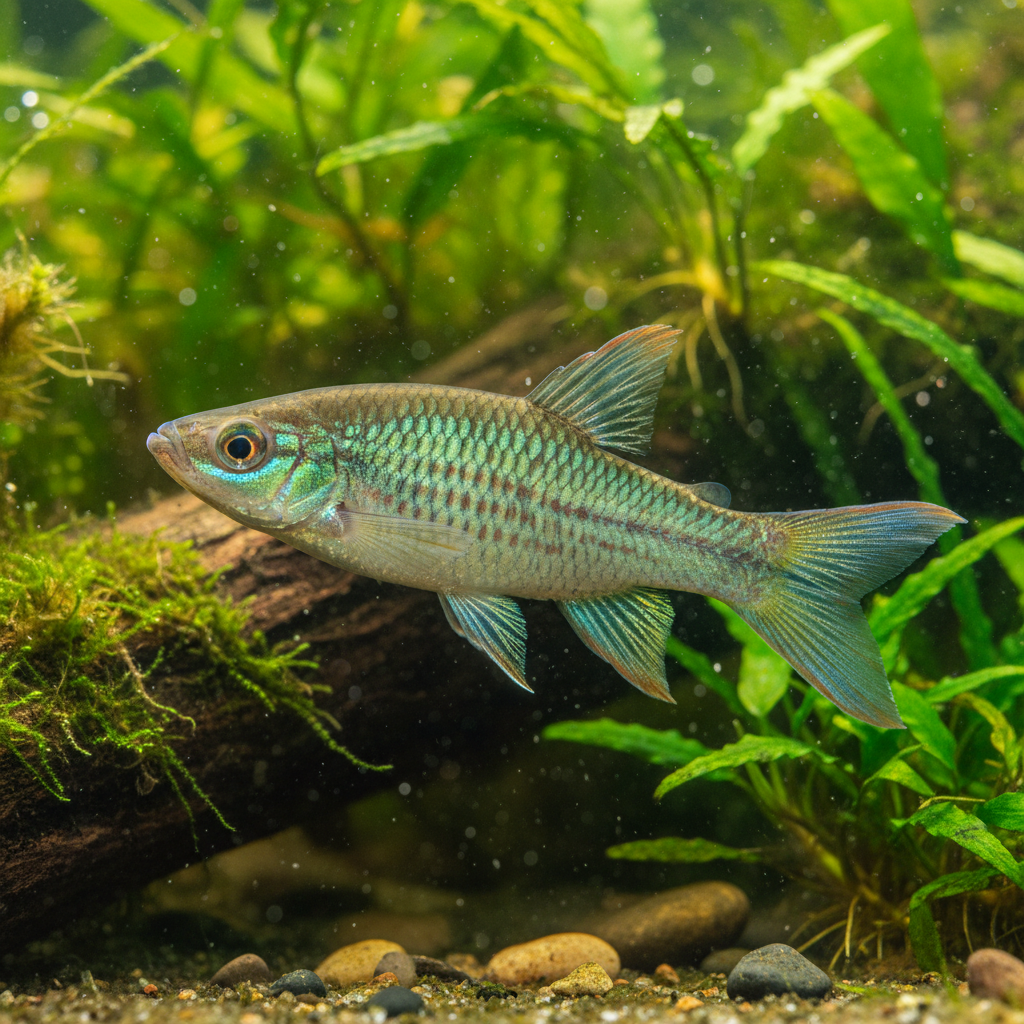
The Green Panchax (Aplocheilus panchax), also known as the Blue Panchax in some regions, is one of the most widespread and resilient killifish in Asia. It features an elongated, pike-like body designed for rapid bursts of speed at the water's surface. Its coloration is a beautiful olive-green to silvery-blue, often adorned with rows of shimmering metallic spots and a dark spot at the base of the dorsal fin.
Growing to about 3.5 inches (9 cm), its most distinctive feature is a bright, reflective white spot on top of its head, directly between its eyes. This "parietal eye" or "third eye" is thought to help the fish detect shadows from predators (like birds) approaching from above.
Natural Habitat & Origin
This species has an enormous range across Southern Asia, from Pakistan and India through to Indonesia and the Philippines. It is a highly adaptable fish found in almost any type of water: clear forest streams, muddy rice paddies, stagnant ponds, and even brackish estuaries. They are strictly surface-dwellers, hovering just beneath the surface tension where they wait for terrestrial insects to fall into the water.
Care Requirements
The Green Panchax is exceptionally hardy, making it a perfect choice for beginners. They can tolerate a wide range of water parameters: a pH of 6.0 to 8.0 and a temperature range of 68°F to 86°F (20°C to 30°C). They can even thrive in low-salinity brackish water.
A minimum tank size of 20 gallons (80L) is required. The most critical setup requirement is a very secure, tight-fitting lid, as they are powerful jumpers and will leap at anything they perceive as an insect above them. The aquarium should be densely planted, especially with floating plants like Salvinia or Water Lettuce, which provide the shade and cover they need to feel secure.
Diet & Feeding
They are specialized surface predators. In the wild, they are famous for their role in "mosquito control," as they consume massive quantities of mosquito larvae and pupae, along with ants, flies, and other small insects.
In the aquarium, they are not picky but prefer meaty foods. They will readily accept high-quality flakes and pellets, but their primary diet should consist of frozen or live foods that stay near the surface, such as bloodworms, daphnia, and wingless fruit flies. Because they are surface-dwellers, ensure they are actually getting food if housed with fast-moving mid-water fish.
Behavior & Temperament
Green Panchax are generally peaceful toward species larger than themselves or those that inhabit different levels of the tank. However, they are predators. Anything that fits in their relatively large mouth (such as tiny fry, small shrimp, or neon tetras) will eventually be eaten.
Males can be somewhat territorial toward each other if space is limited, so providing plenty of surface cover with plants is essential to break lines of sight. They are best kept in pairs or in small groups with more females than males.
Tank Mates
Suitable tank mates include any peaceful species that are too large to be swallowed and do not inhabit the surface:
- Medium-sized Barbs (like Rosy Barbs)
- Gouramis
- Rainbowfish
- Larger Tetras (like Congo Tetras)
- Corydoras and Loaches
- Medium-sized Loricariids (Plecos)
Avoid housing them with very small fish (like Celestial Pearl Danios) or with long-finned, slow-moving fish that might be seen as targets for fin-nipping.
Breeding
They are very easy to breed in the home aquarium. They are "continuous spawners" that lay a few large, adhesive eggs every day among floating plants or spawning mops. To raise the fry, it is best to move the plants containing the eggs (or the adults) to a separate tank. The eggs hatch in 10-14 days. The fry are relatively large compared to other killifish and can immediately accept baby brine shrimp or finely crushed flakes.
Common Health Issues
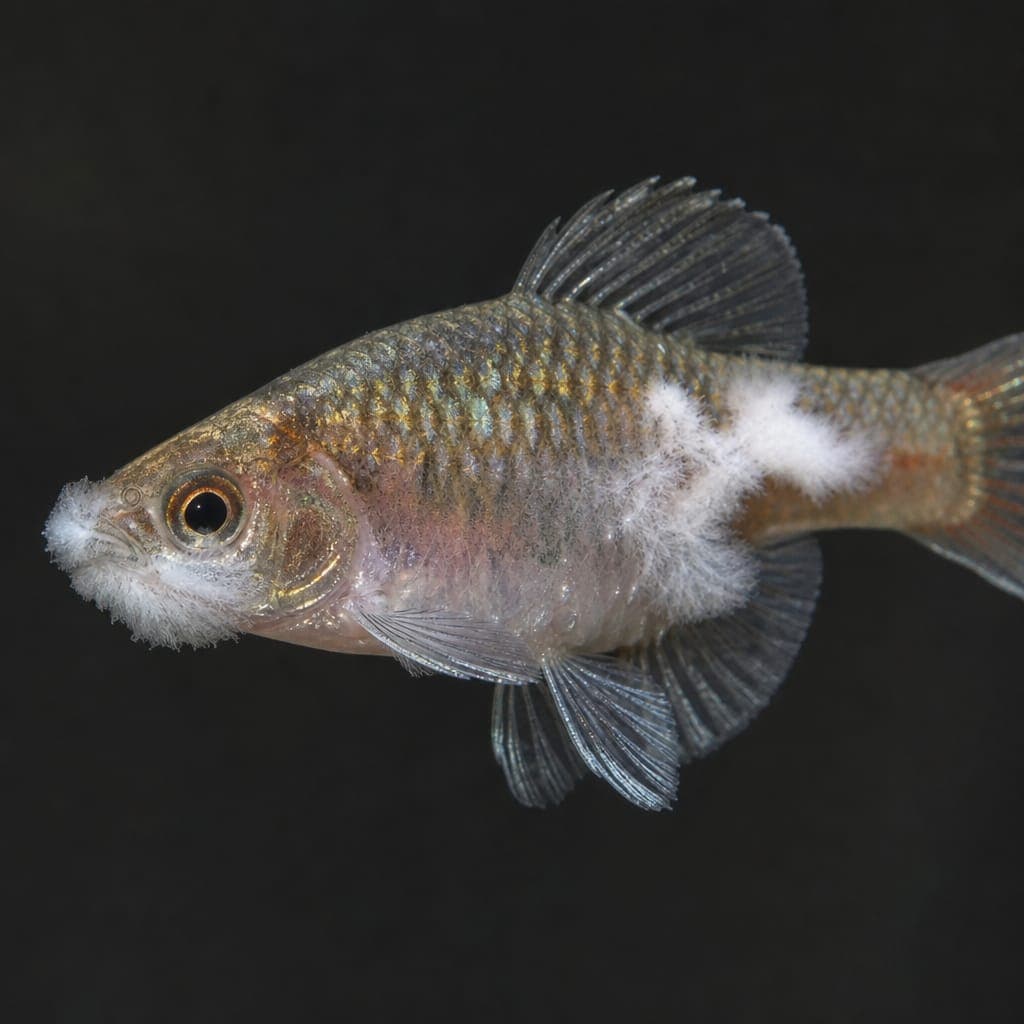
Green Panchax are remarkably resistant to disease. However, like all surface-dwellers, they can be prone to "mouth fungus" (Columnaris) if the water quality is poor or if they injure their snout against the glass. Maintaining clean water and a stress-free environment with plenty of shade is the best preventative measure.