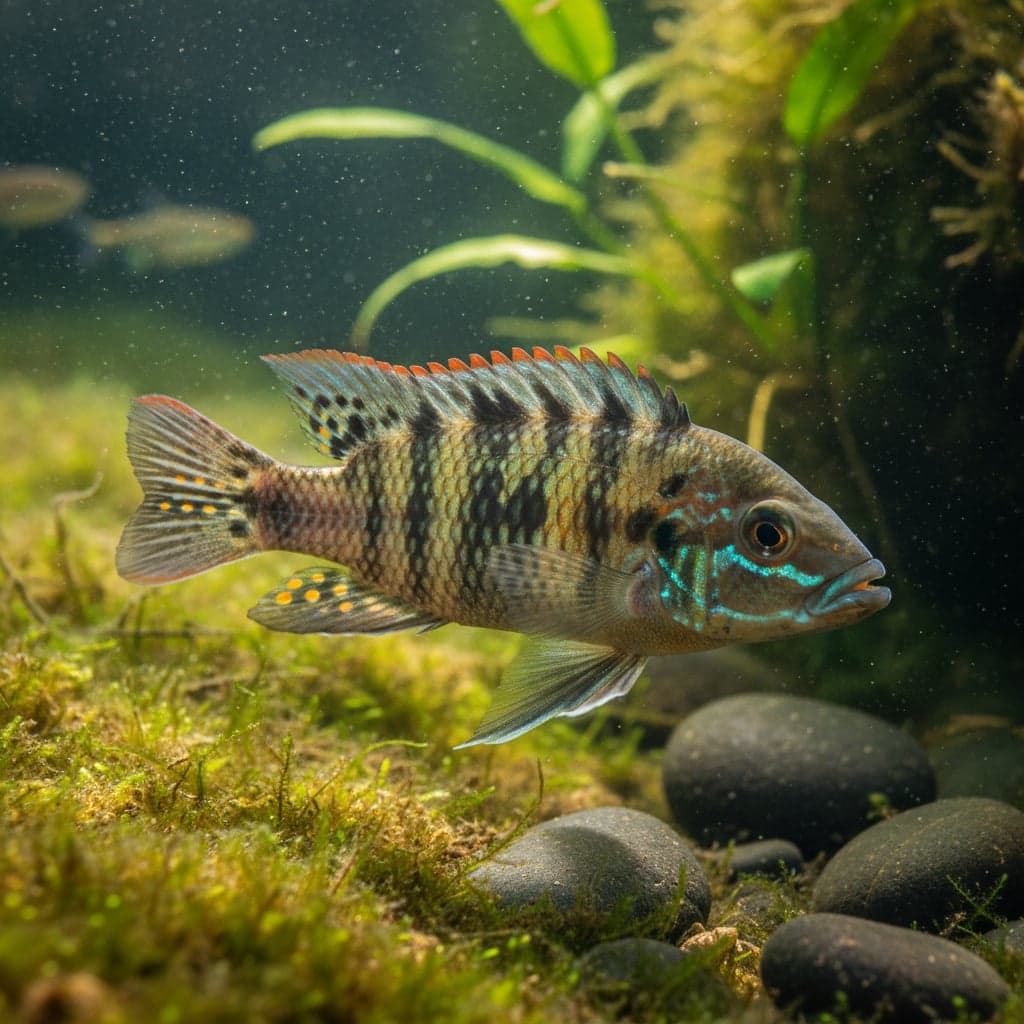
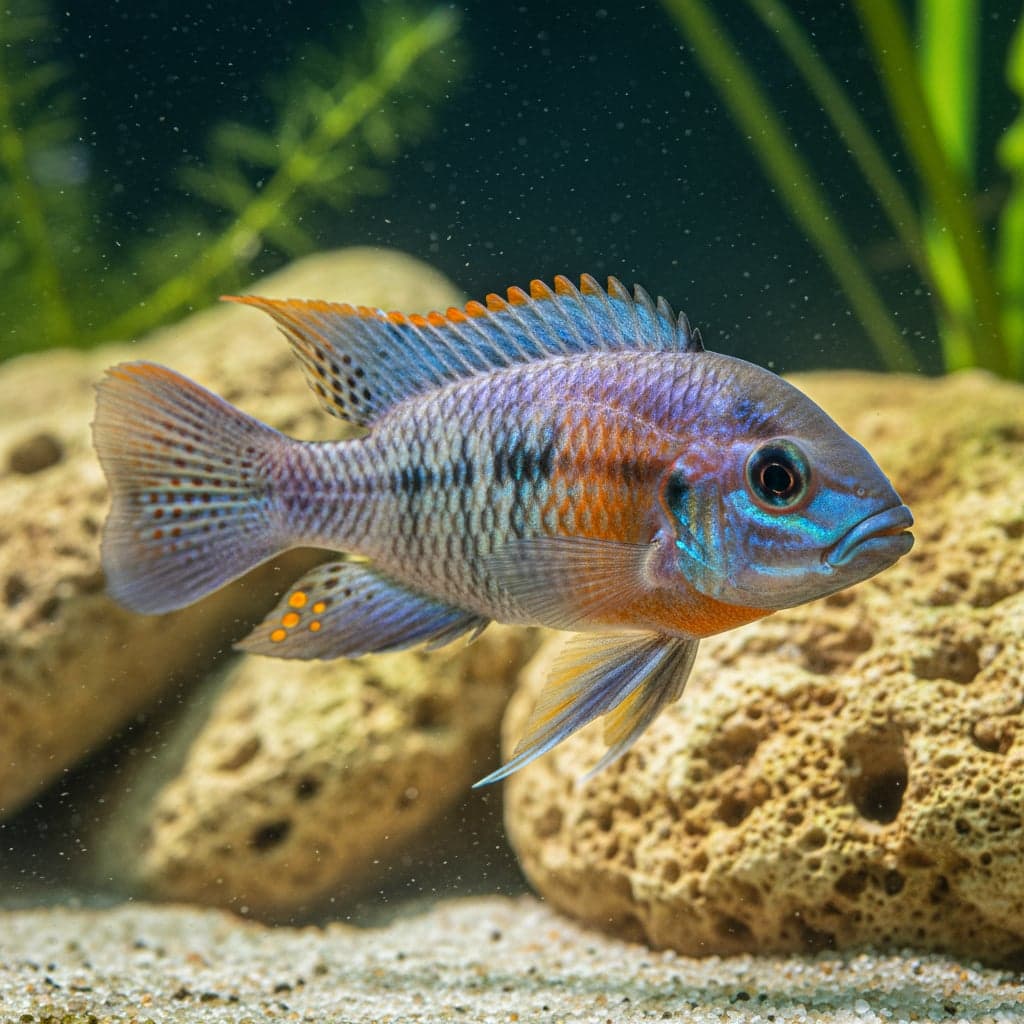
Hap CH44: Haplochromis sp. 'Thick Skin'
The Hap CH44 (Xystichromis phytophagus), also known as the Flameback Haplochromis, is a vibrant and highly aggressive cichlid from Lake Victoria, celebrated as a survivor of a lost ecosystem.
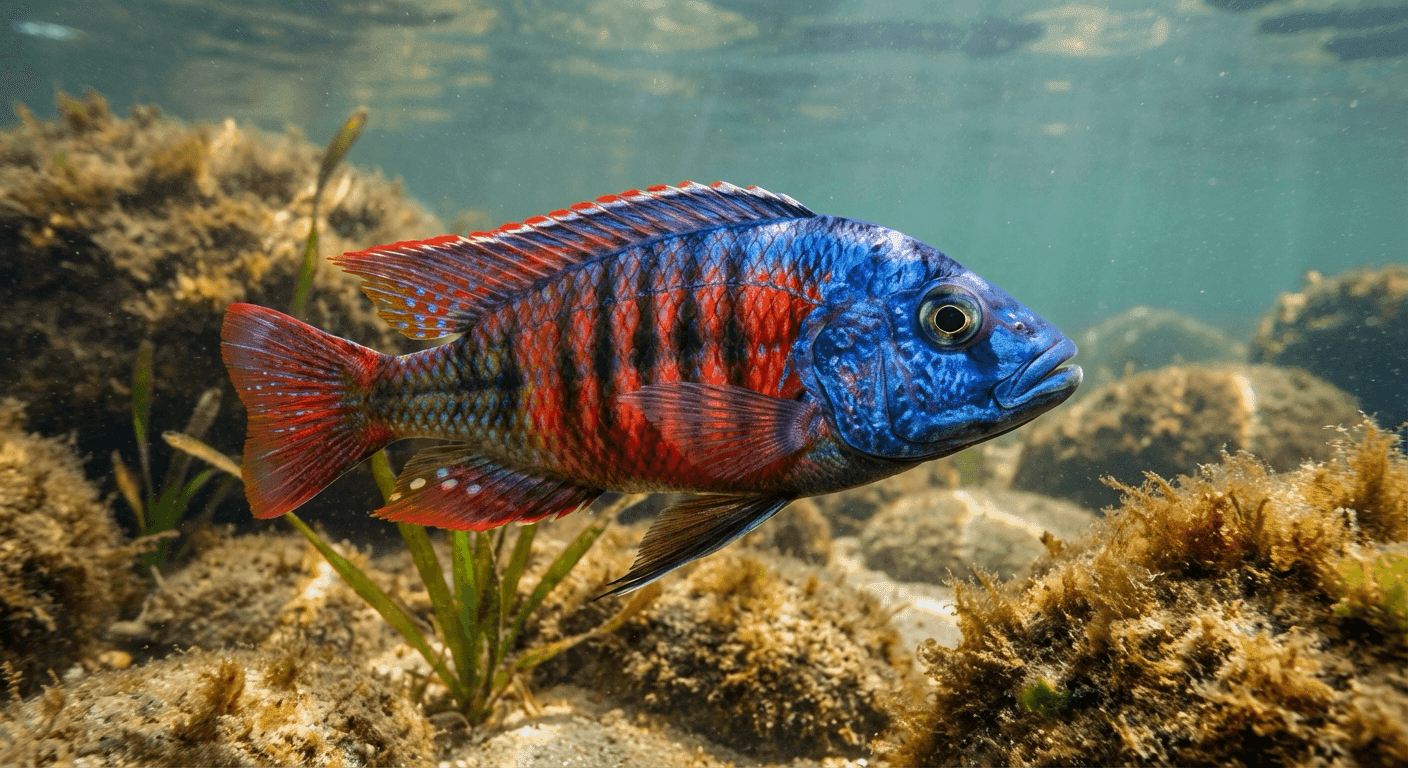
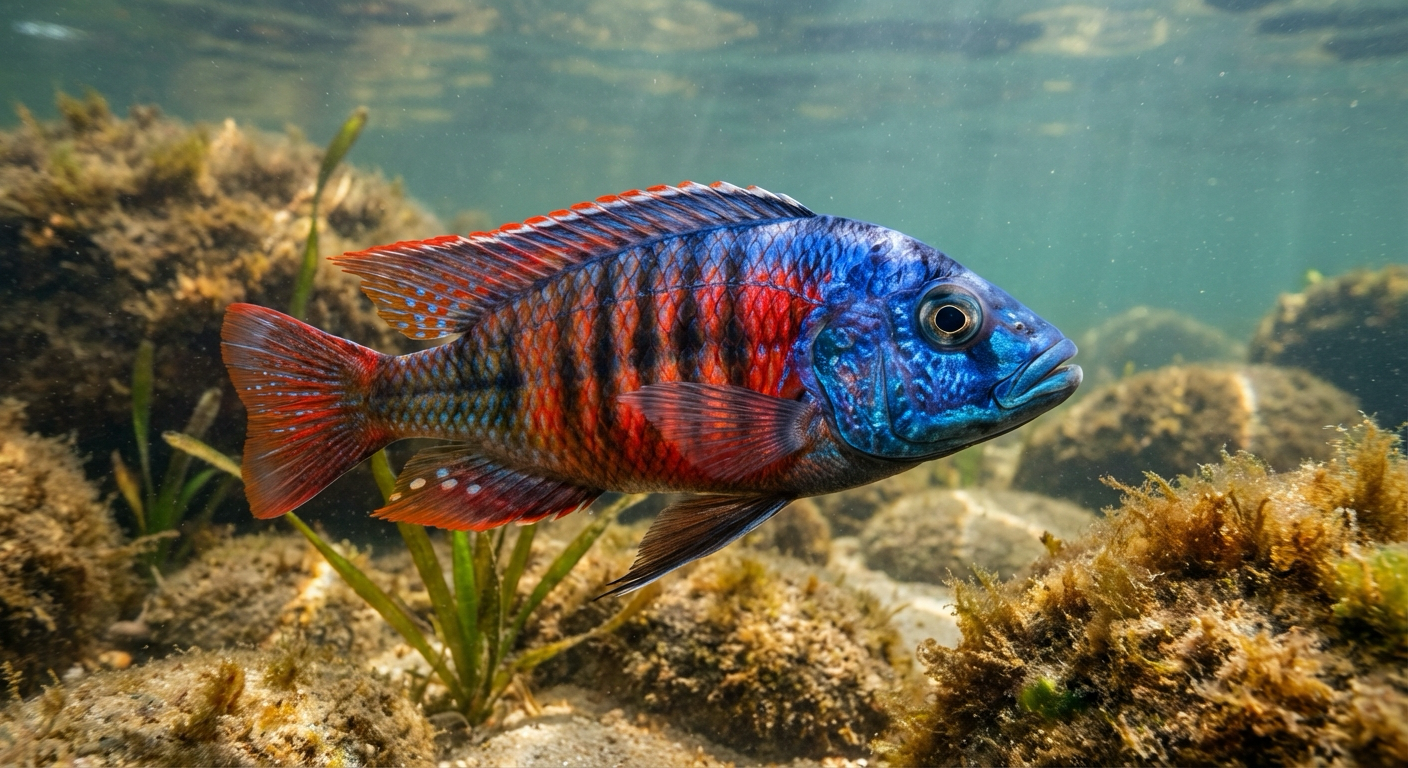
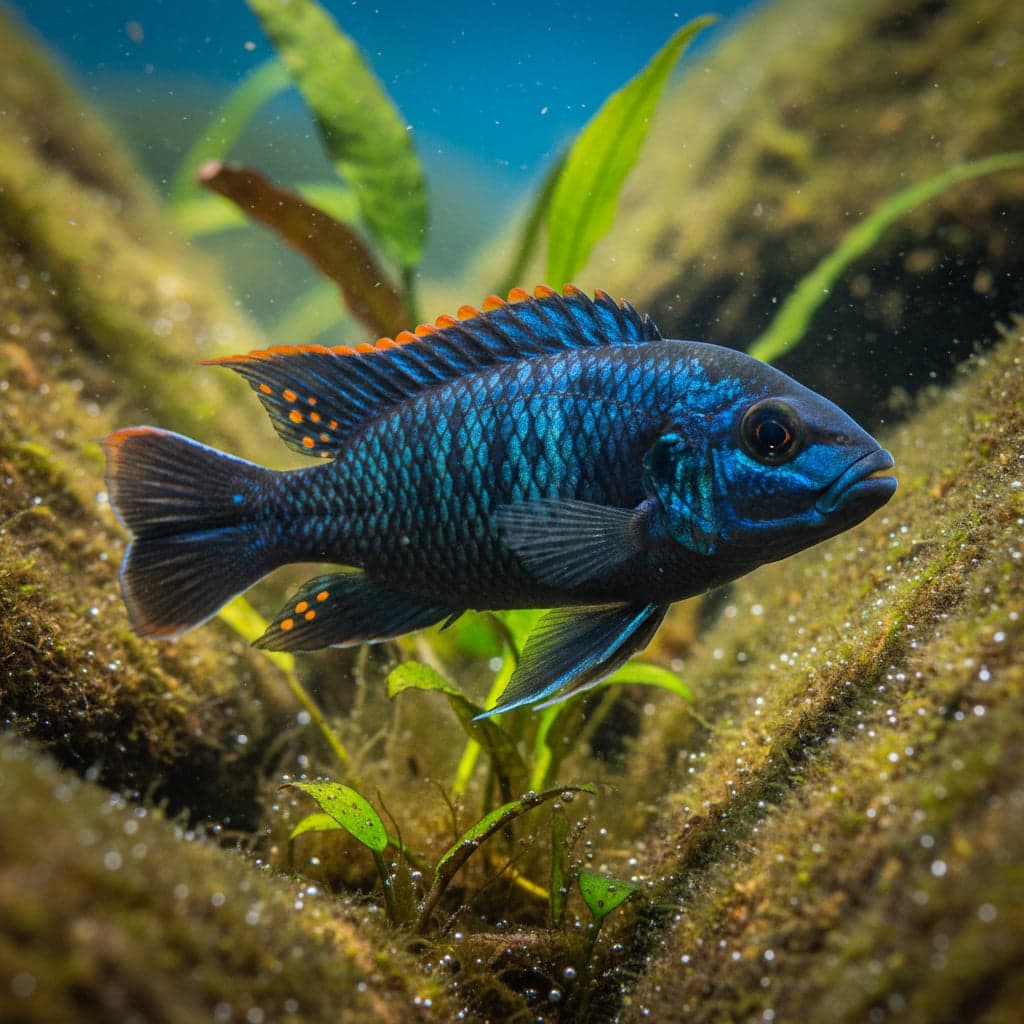
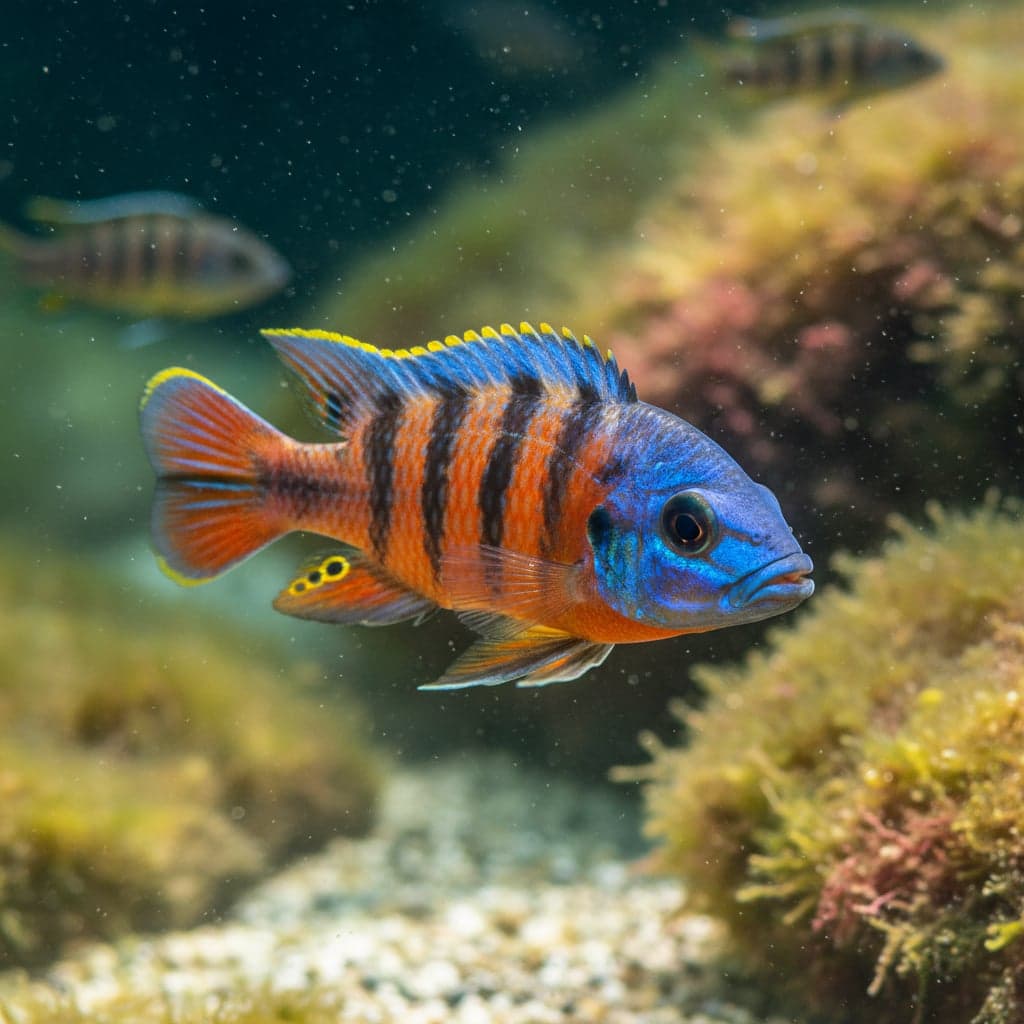
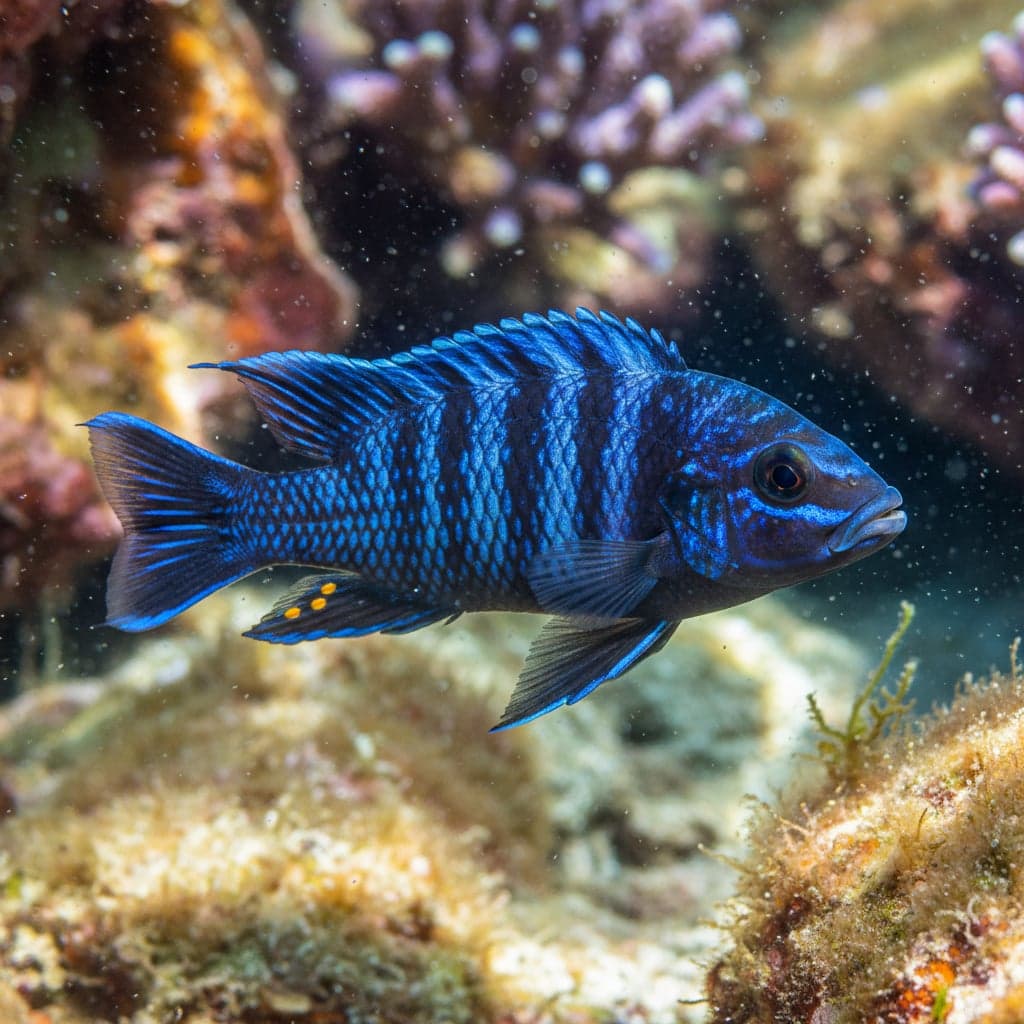
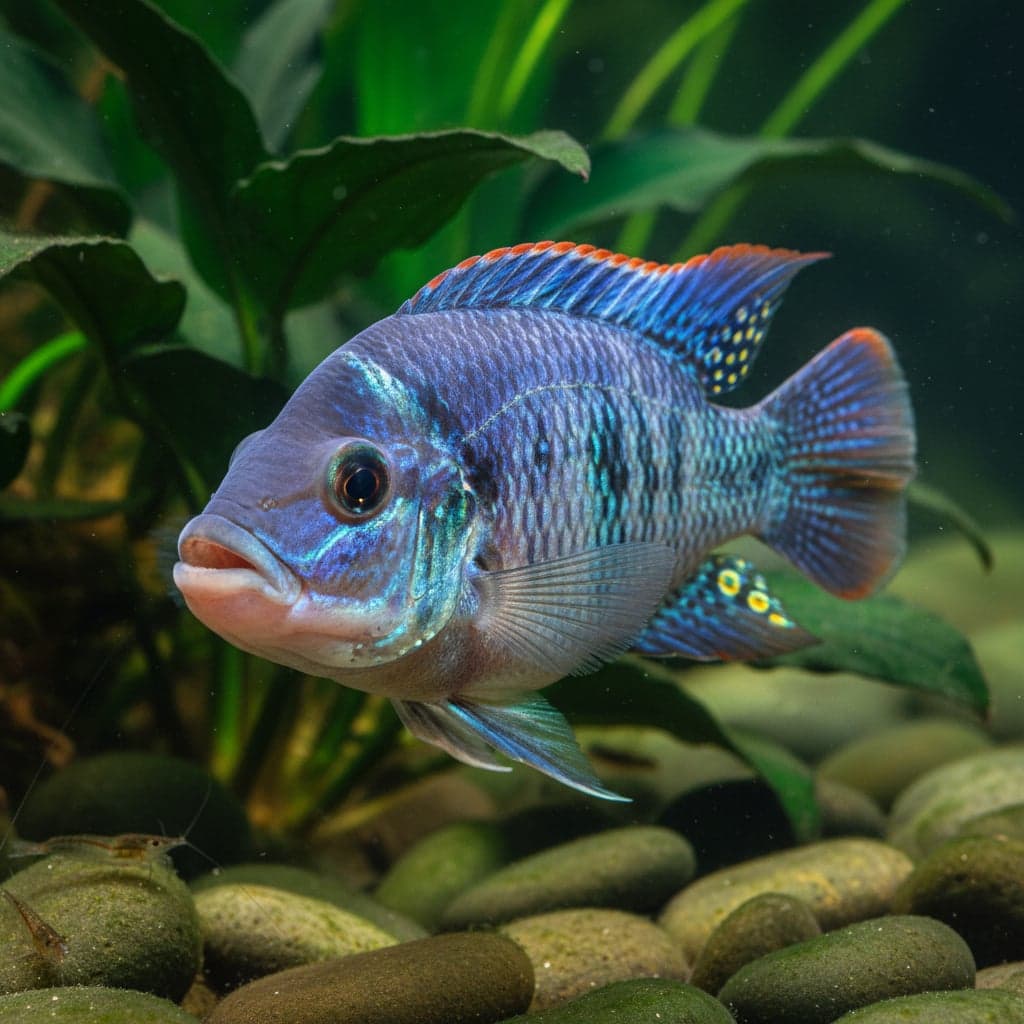
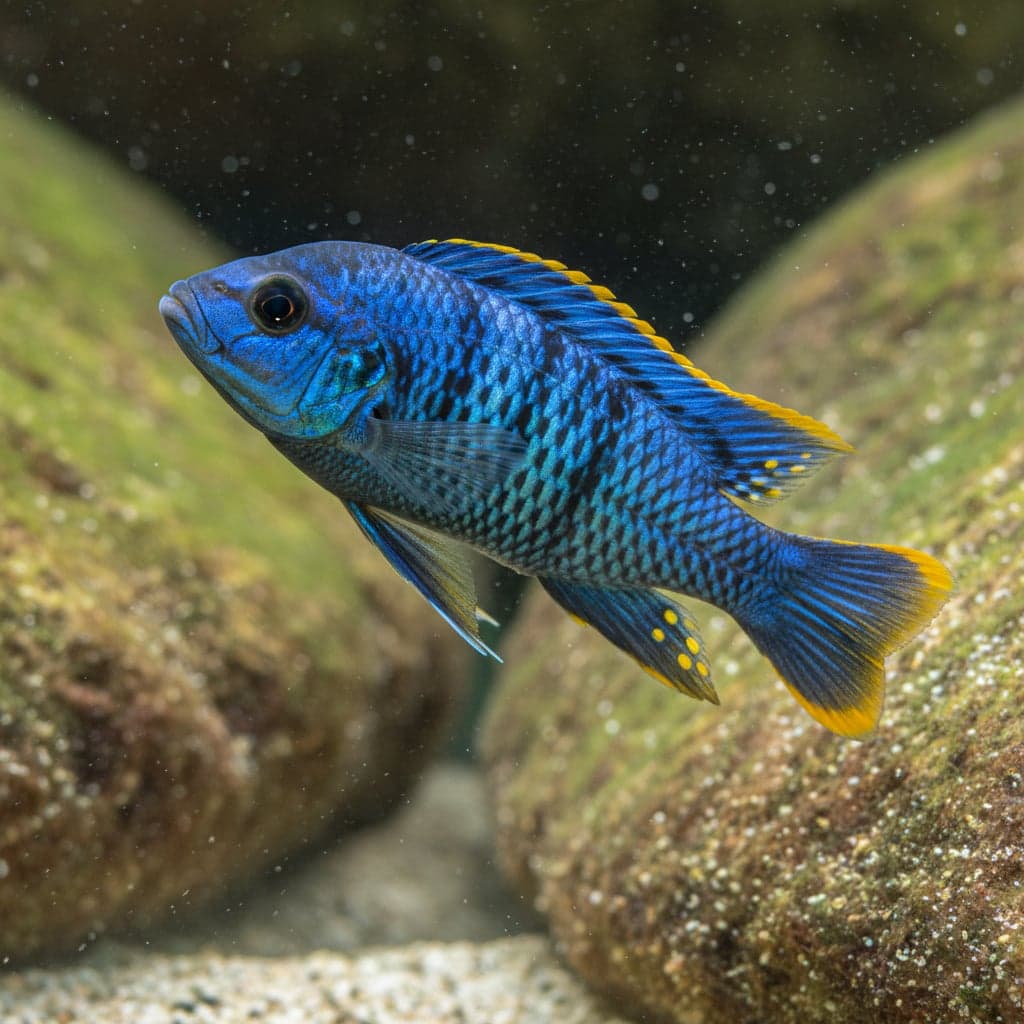
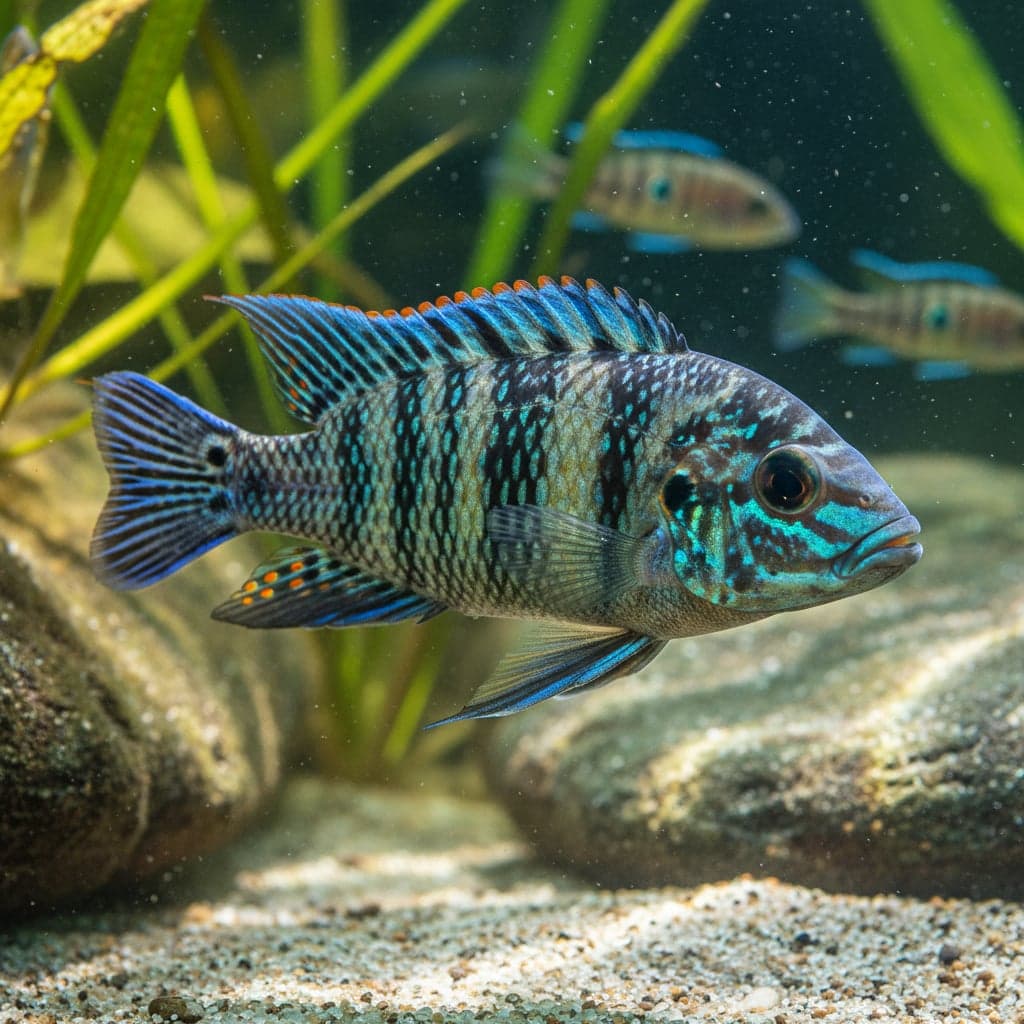
Hap CH44, often referred to as the "Thick Skin" Hap or Flameback Haplochromis, is one of the most popular and visually striking cichlids from the Lake Victoria basin. The males are a riot of color, featuring a bright red or orange dorsal region (hence "Flameback") that transitions into iridescent yellow-green flanks with bold, dark vertical bars.
This species is not just a beautiful pet; it is a conservation success story. In its native Lake Victoria, it has been decimated by the introduction of the predatory Nile Perch and habitat degradation. In fact, many populations of Xystichromis phytophagus are considered Extinct in the Wild, surviving only through the efforts of dedicated aquarists and species maintenance programs.
Natural Habitat & Origin
Hap CH44 is native to Lake Victoria and several surrounding water bodies in East Africa. Unlike the deep, rocky shores of Lake Malawi or Tanganyika, CH44 is typically found in shallower, vegetated areas and among papyrus reeds near the shoreline. They are often associated with rocky outcroppings where they can find protection and forage. The water in Lake Victoria is hard and alkaline, though generally less "extreme" than Lake Tanganyika.
Care Requirements
This cichlid requires a setup that reflects its active and assertive nature. A minimum tank size of 55 gallons (200L) is required for a small group. The aquarium should be decorated with a mix of large rocks and caves to allow for territory formation, but it should also include open swimming space.
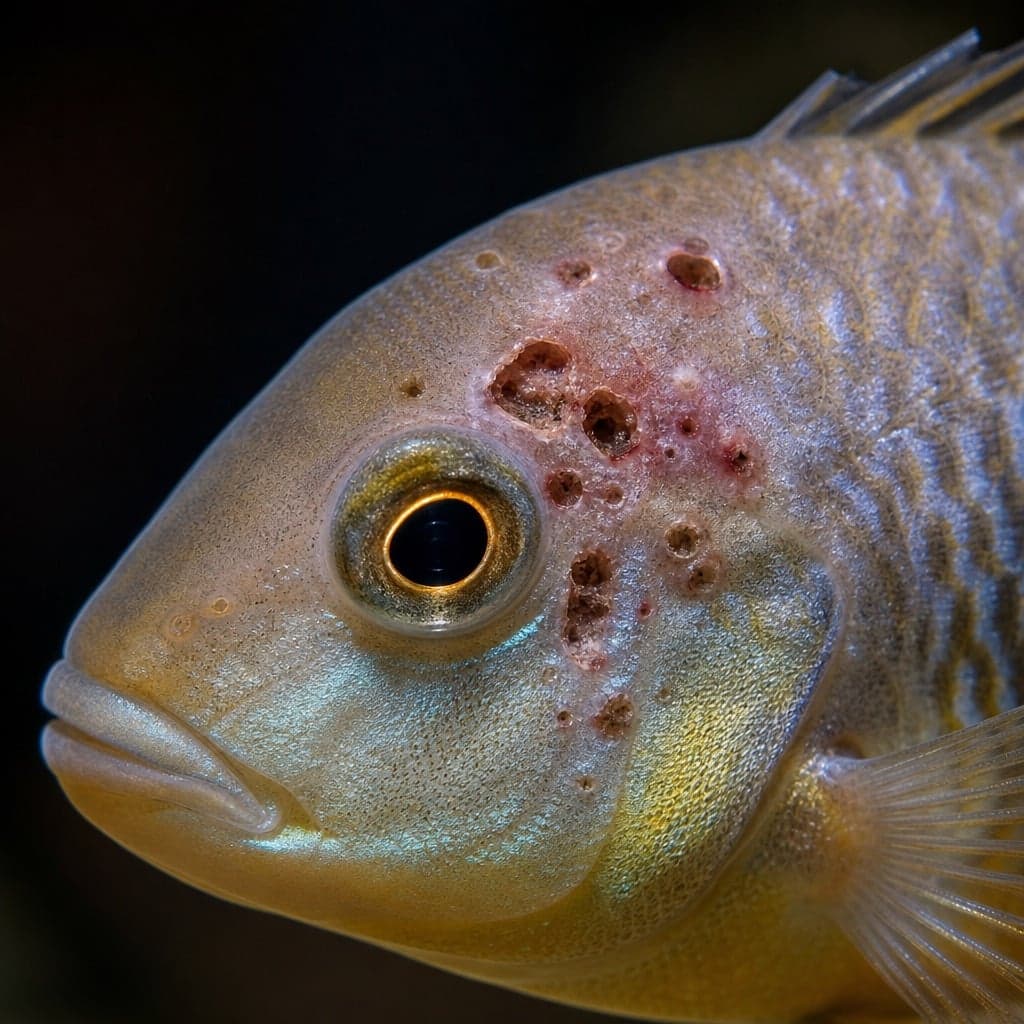
The water must be kept hard and alkaline, with a pH between 7.8 and 8.6 and a temperature between 75°F and 82°F (24°C to 28°C). Like all Lake Victoria cichlids, they are sensitive to poor water quality and nitrate buildup; efficient filtration and regular water changes are essential to prevent "Hole-in-the-Head" disease and maintain their vibrant colors.
Diet & Feeding
Despite the name phytophagus (which implies plant-eating), Hap CH44 is an opportunistic omnivore. In the wild, they consume algae ("aufwuchs"), insect larvae, and small crustaceans.
In the aquarium, they are eager eaters:
- High-quality cichlid flakes or pellets
- Spirulina-based foods to satisfy their need for plant matter
- Frozen or live treats like bloodworms, mysis, and daphnia
Avoid overfeeding, as they are prone to obesity, which can affect their health and reproductive capabilities.
Behavior & Temperament
Hap CH44 is notoriously aggressive, especially for its size. Males are highly territorial and will vigorously defend their space against other males or similar-looking fish. They should ideally be kept in a "harem" setting with one male to three or more females to disperse the male's aggression. In a mixed cichlid tank, they should only be housed with equally robust and assertive species.
Tank Mates
Suitable tank mates include other "Victorian Haps" or similarly sized African cichlids from Lake Malawi (especially Mbuna or Peacocks).
- Kribensis (in very large tanks)
- Red Jewel Cichlids
- Synodontis catfish
- Robust Rainbowfish
Avoid keeping them with peaceful community fish like Tetras or Guppies, which will be harassed or eaten. Also, avoid keeping them with other Xystichromis or Haplochromis species that look similar, as this can lead to hybridization or extreme aggression.
Breeding
They are maternal mouthmbrooders. The male will display intense colors and lead the female to a flat rock or pit to spawn. After fertilization, the female picks up the eggs in her mouth and carries them for about 18-21 days. During this time, she will not eat. The fry can be released into a separate rearing tank and fed finely crushed flakes or baby brine shrimp.
Common Health Issues
They are relatively hardy if their water parameters are met. The most common issues are Malawi Bloat (usually caused by a diet too high in protein/fat) and Hole-in-the-Head disease (linked to poor water quality and mineral deficiencies). Maintaining high pH, high KH, and clean water is the best preventative measure.