Herald's Angelfish: Centropyge heraldi
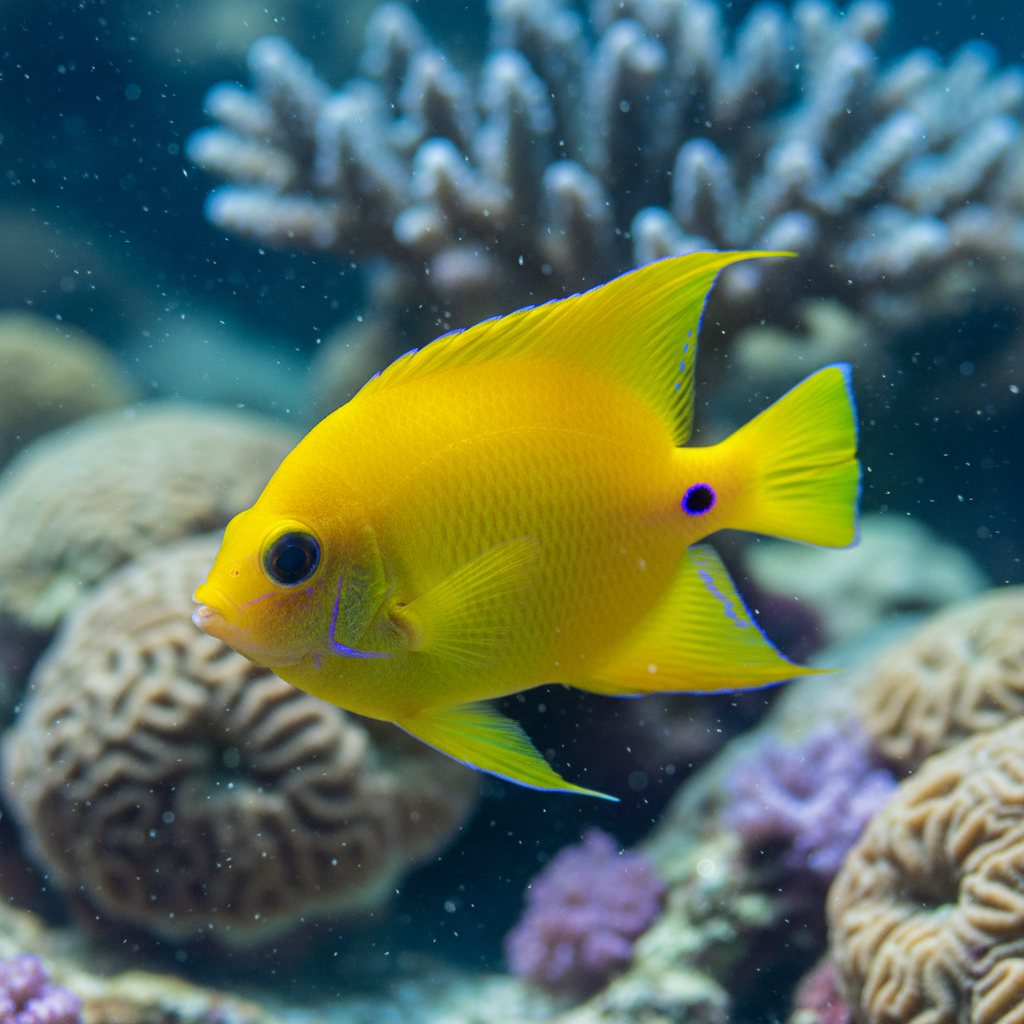
The Herald's Angelfish (Centropyge heraldi), also known as the Yellow Pygmy Angelfish, is a brilliant, entirely yellow dwarf angelfish from the Indo-Pacific.

The Herald's Angelfish (Centropyge heraldi), commonly known as the Yellow Pygmy Angelfish, is a vibrant and hardy member of the dwarf angelfish group. It is defined by its striking, solid yellow coloration that covers every part of its body, including its fins. In the wild, it is often found mimicking the Herald's Blenny or the juvenile Lemonpeel Angelfish, although it can be distinguished by the absence of the blue ring around the eye and the blue gill-cover edge characteristic of the latter.
In the aquarium, the Herald's Angelfish is a popular choice for those wanting the "Lemonpeel" look without some of the sensitivity associated with that species. It is an active, inquisitive fish that will constantly graze on live rock, making it a dynamic presence in any marine setup.
Natural Habitat & Origin
Centropyge heraldi is widely distributed across the Western and Central Pacific, from southern Japan to Australia's Great Barrier Reef and east to the Marshall Islands. They are typically found in seaward reef slopes and lagoon areas at depths of 5 to 45 meters. They are usually seen alone or in small groups (harems) amongst the coral rubble and rocky outcrops where they graze on algae and small invertebrates.
Care Requirements
The Herald's Angelfish is one of the hardier dwarf angelfish, making it suitable for an intermediate marine aquarist. A minimum tank size of 40 gallons (150L) is recommended for a single specimen to allow for its active grazing and territorial nature.
The system must be well-established with plenty of mature live rock. This provides both natural food sources (algae and microfilm) and essential hiding spots. Maintain stable saltwater parameters: a pH of 8.1 to 8.4 and a temperature of 75°F to 82°F (24°C to 28°C). Like all angelfish, they are sensitive to high nitrates and copper-based medications.
Diet & Feeding
In the wild, Herald's Angelfish are omnivores, grazing on algae, detritus, and small benthic invertebrates.
In the aquarium, they should be provided with a varied diet:
- High-quality marine flakes and pellets, particularly those containing Spirulina
- Frozen Mysis shrimp, Brine shrimp, and chopped seafood
- Nori (dried seaweed) attached to a clip
- Regular grazing opportunities on established live rock
Providing a diet rich in vegetable matter is essential for maintaining their brilliant yellow coloration and overall health.
Behavior & Temperament
The Herald's Angelfish is semi-aggressive and territorial, especially toward other dwarf angelfish or fish with a similar body shape or color. It is best to keep only one per tank unless the system is very large and they are introduced as a mated pair. They are generally "reef-safe with caution"—while they mostly graze on algae, they are known to occasionally nip at stony corals (SPS and LPS) and clam mantles, especially if they are underfed.
Tank Mates
Suitable tank mates include other moderately assertive marine species:
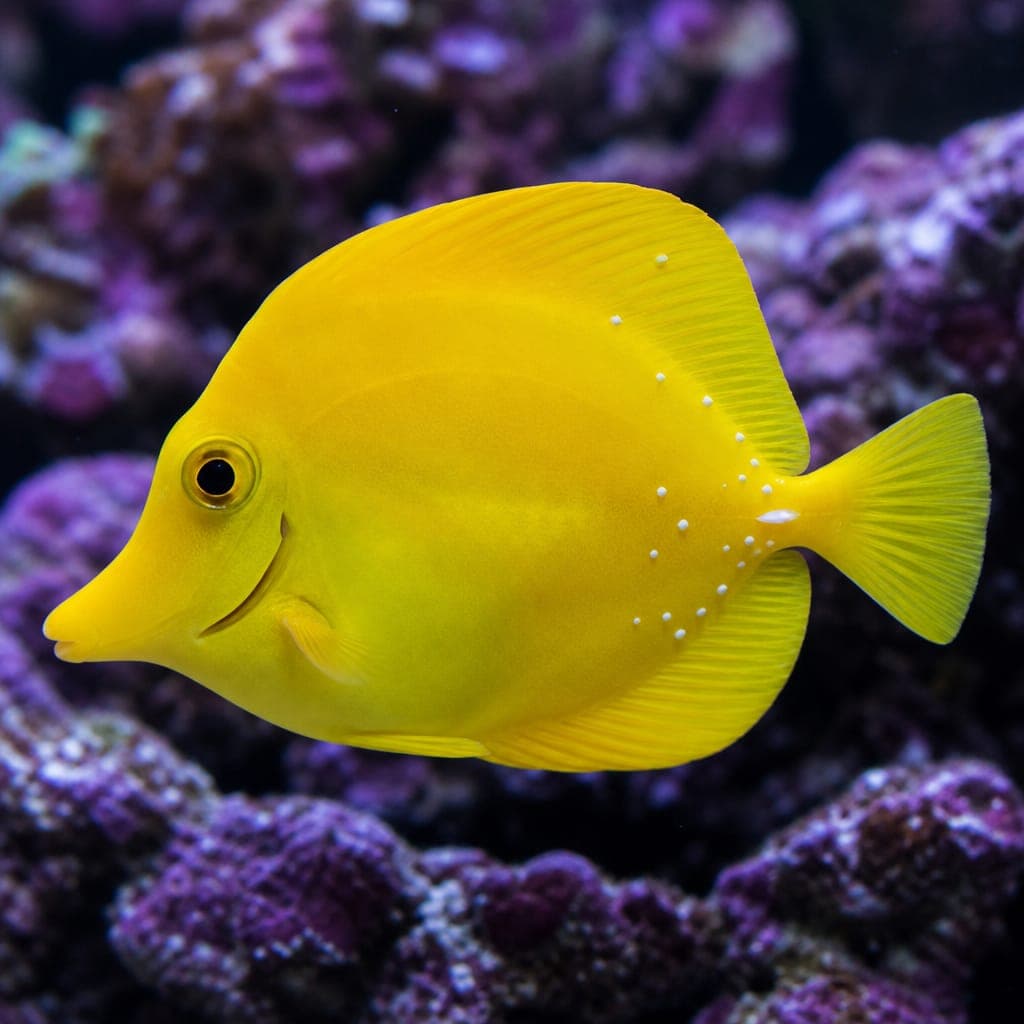
- Tangs and Surgeonfish
- Larger Wrasses
- Damselfish and Clownfish
- Blennies and Gobies
- Hawkfish
Avoid keeping them with very timid species that might be intimidated by their active nature, or with other Centropyge species unless the tank is large enough to allow for separate territories.
Breeding
Like other members of the Centropyge genus, Herald's Angelfish are protogynous hermaphrodites, meaning they are all born female and the dominant individual in a group will transition into a male. They are pelagic spawners, releasing eggs into the water column. Breeding in captivity is extremely difficult due to the complex requirements of the larvae and is rarely achieved by home hobbyists.
Common Health Issues
They are generally hardy but can be susceptible to Marine Ich and Marine Velvet if stressed. They can also suffer from Head and Lateral Line Erosion (HLLE) if their diet is nutritionally deficient or if water quality is poor. Providing a high-quality, varied diet and maintaining a low-stress environment are the best preventative measures.