Indian Butterflyfish: Chaetodon mitratus
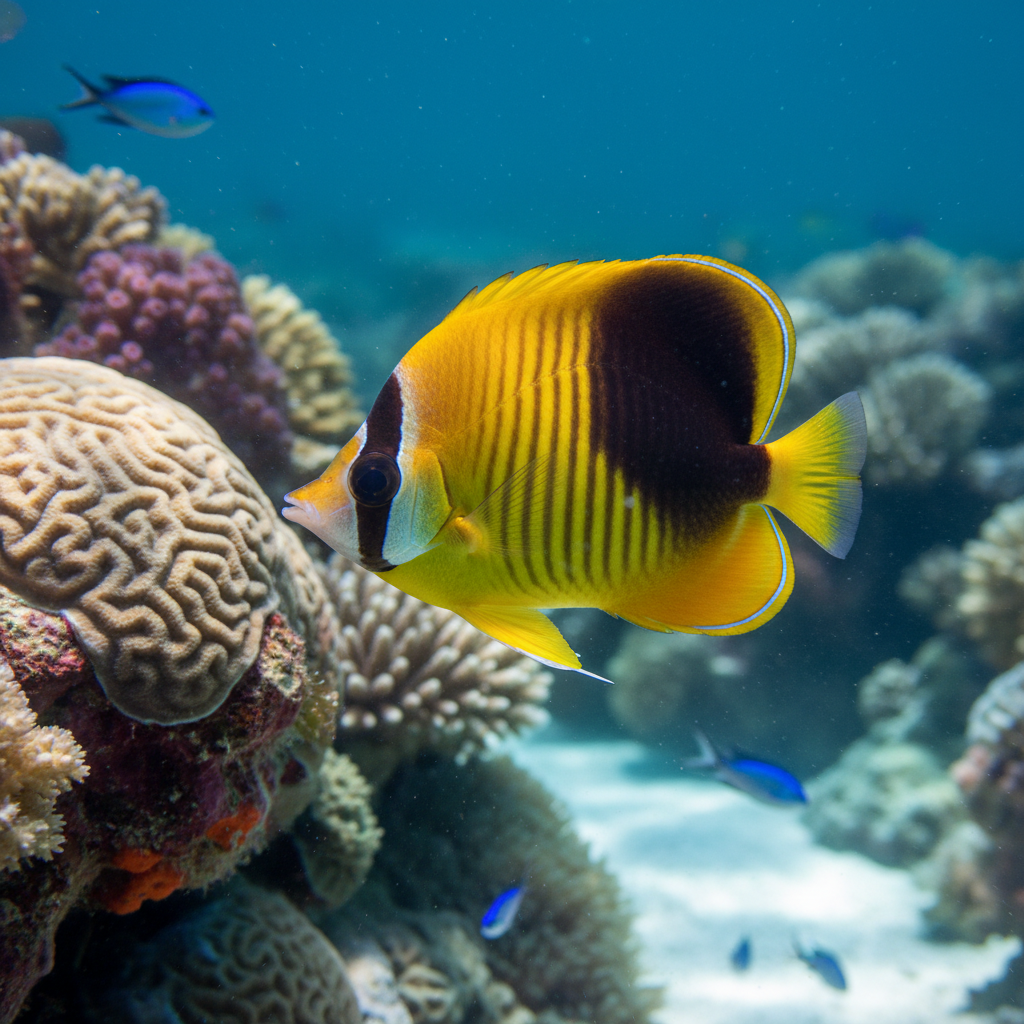
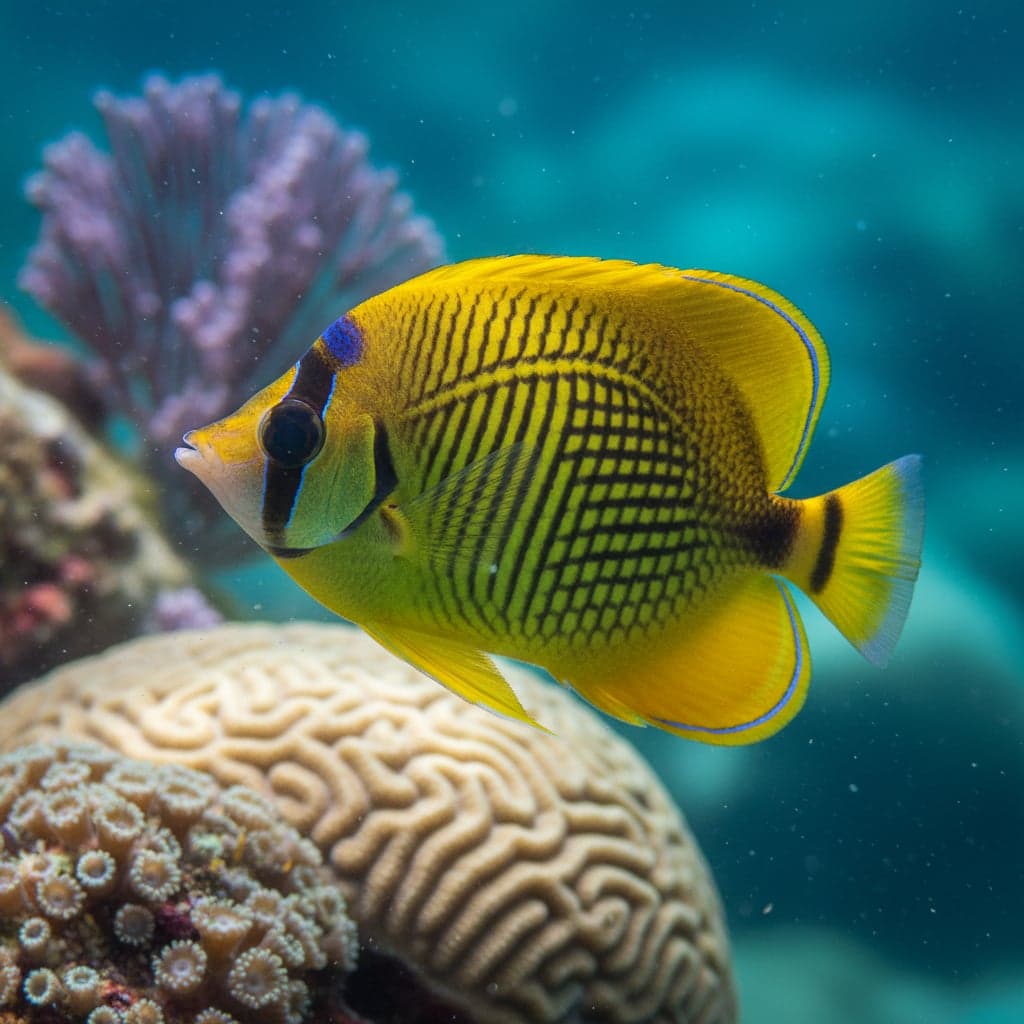
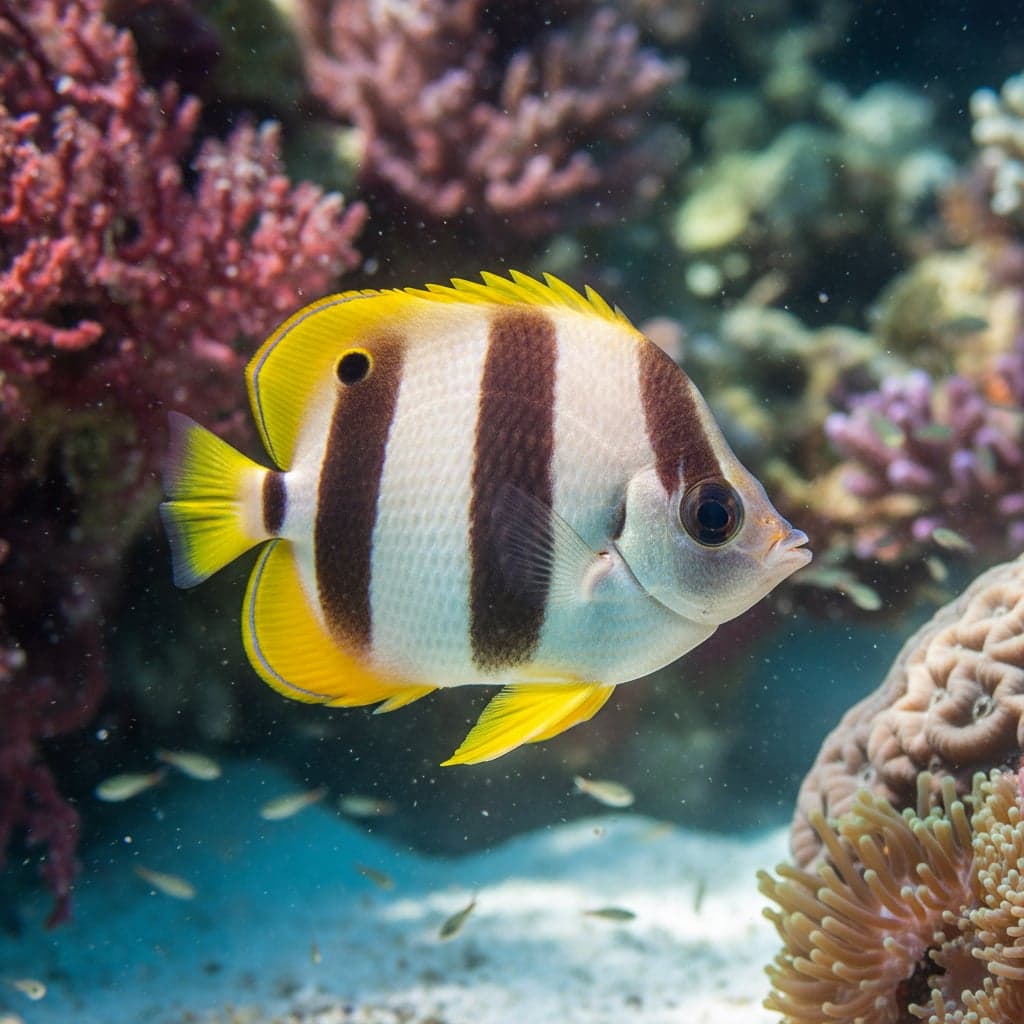
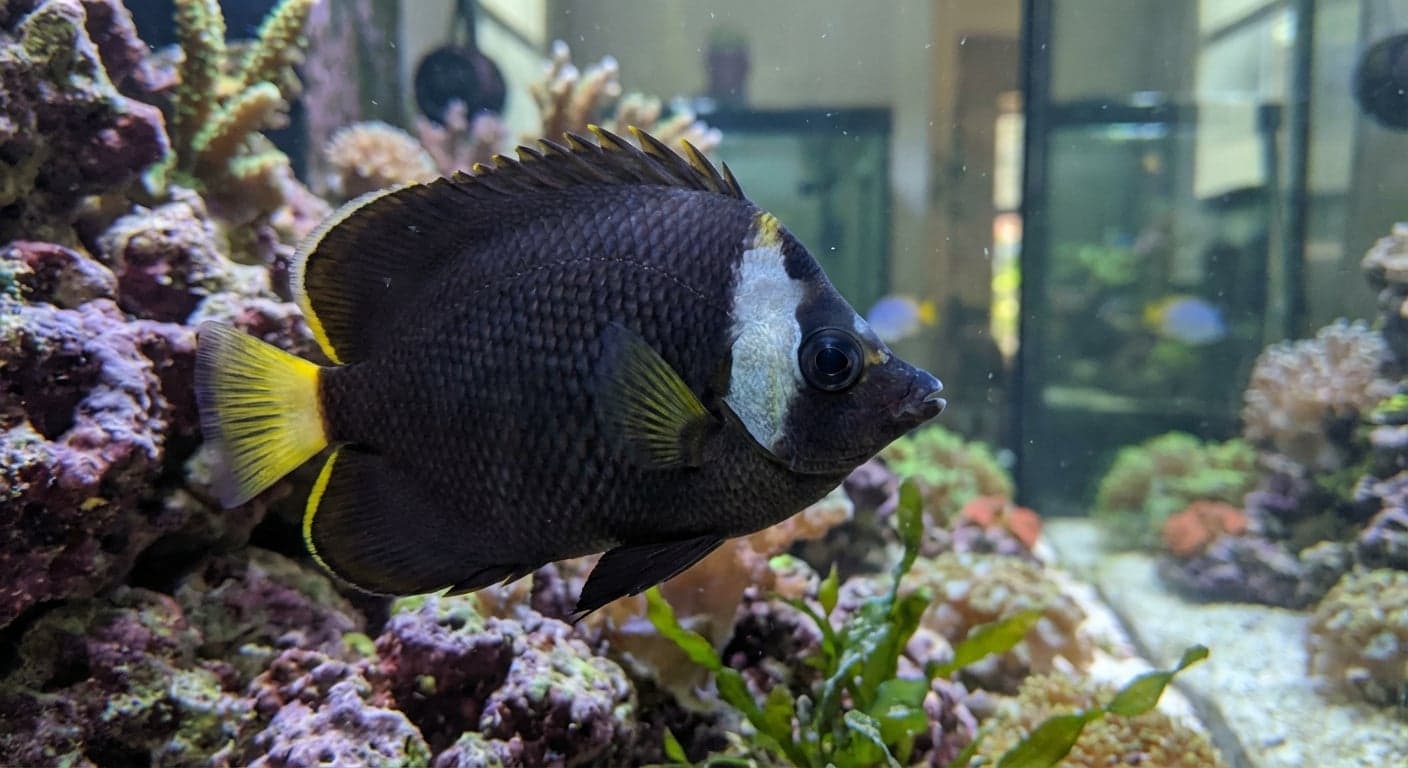
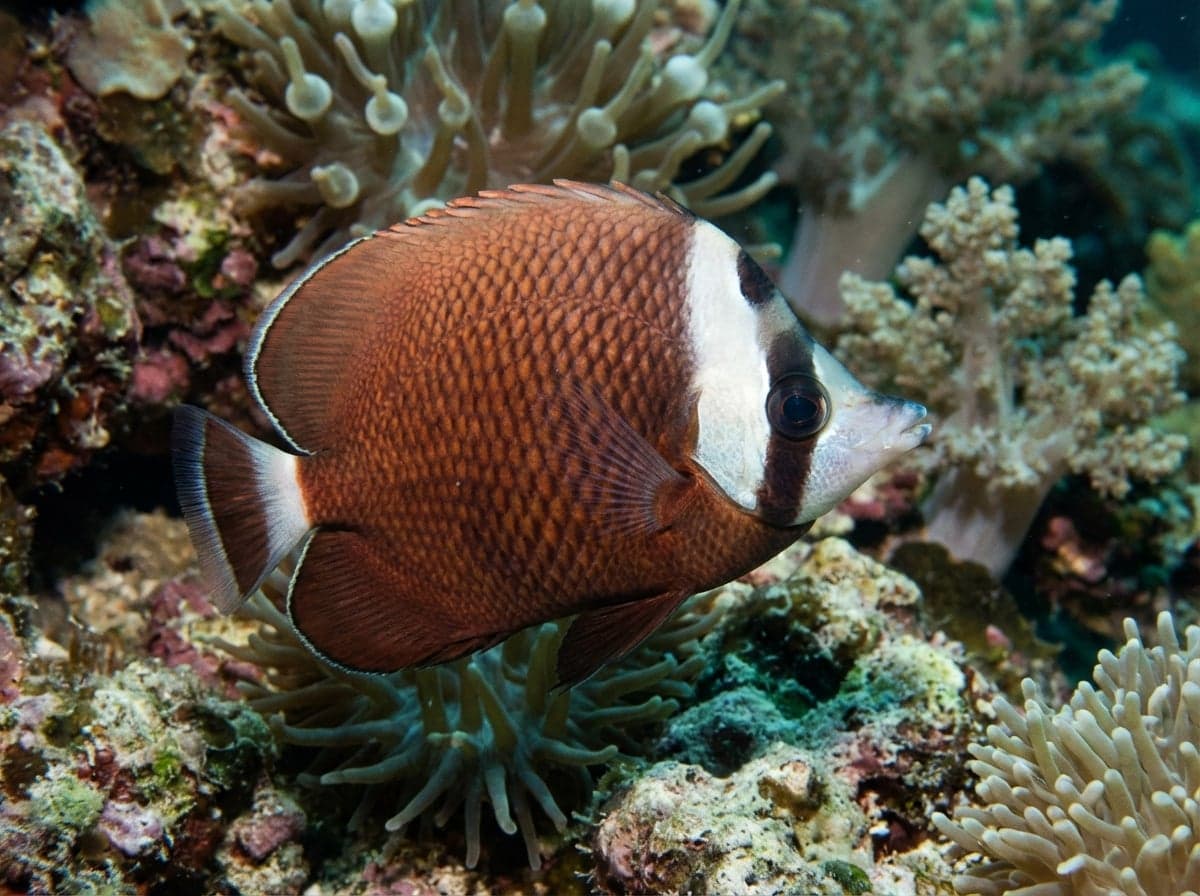
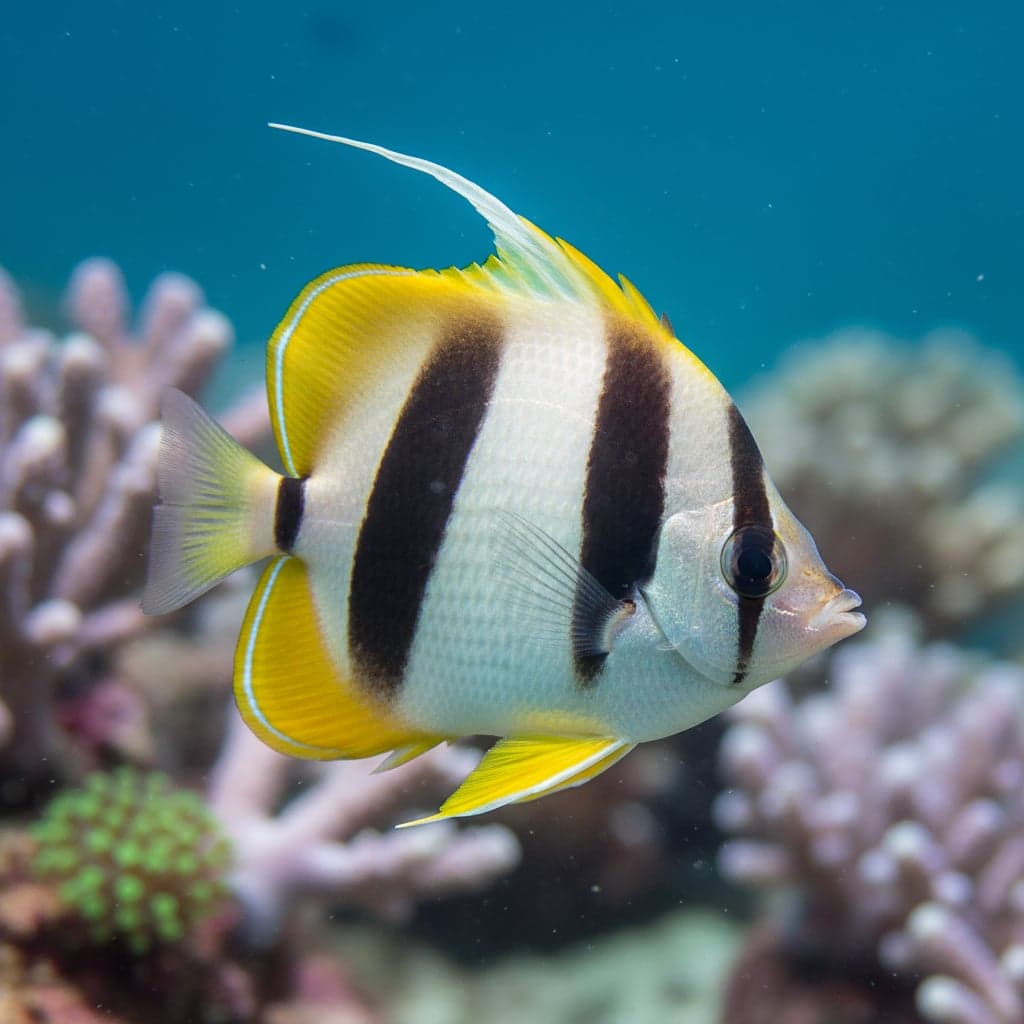
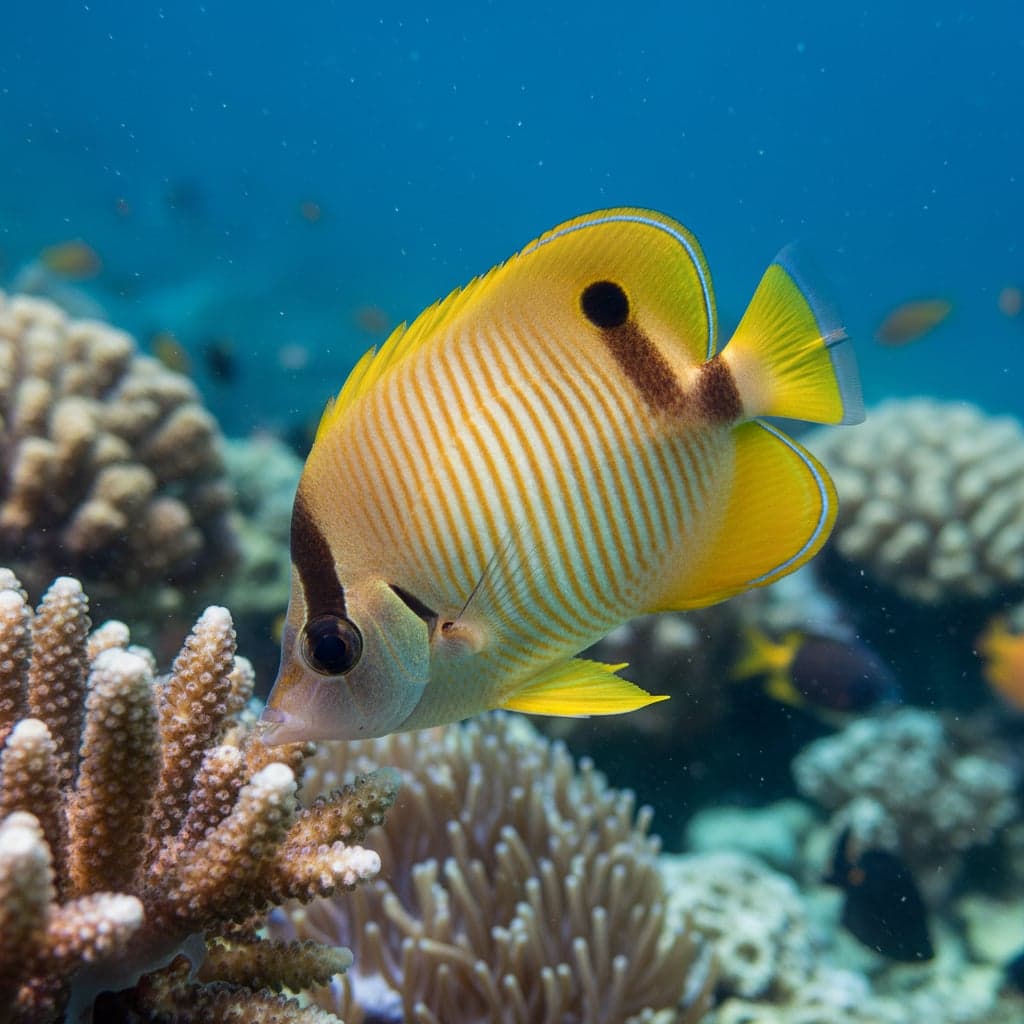
The Indian Butterflyfish (Chaetodon mitratus), also known as the Mitred Butterflyfish, is a prestigious deep-water specialist from the Indian Ocean, prized for its striking black diagonal bands and vibrant yellow body.
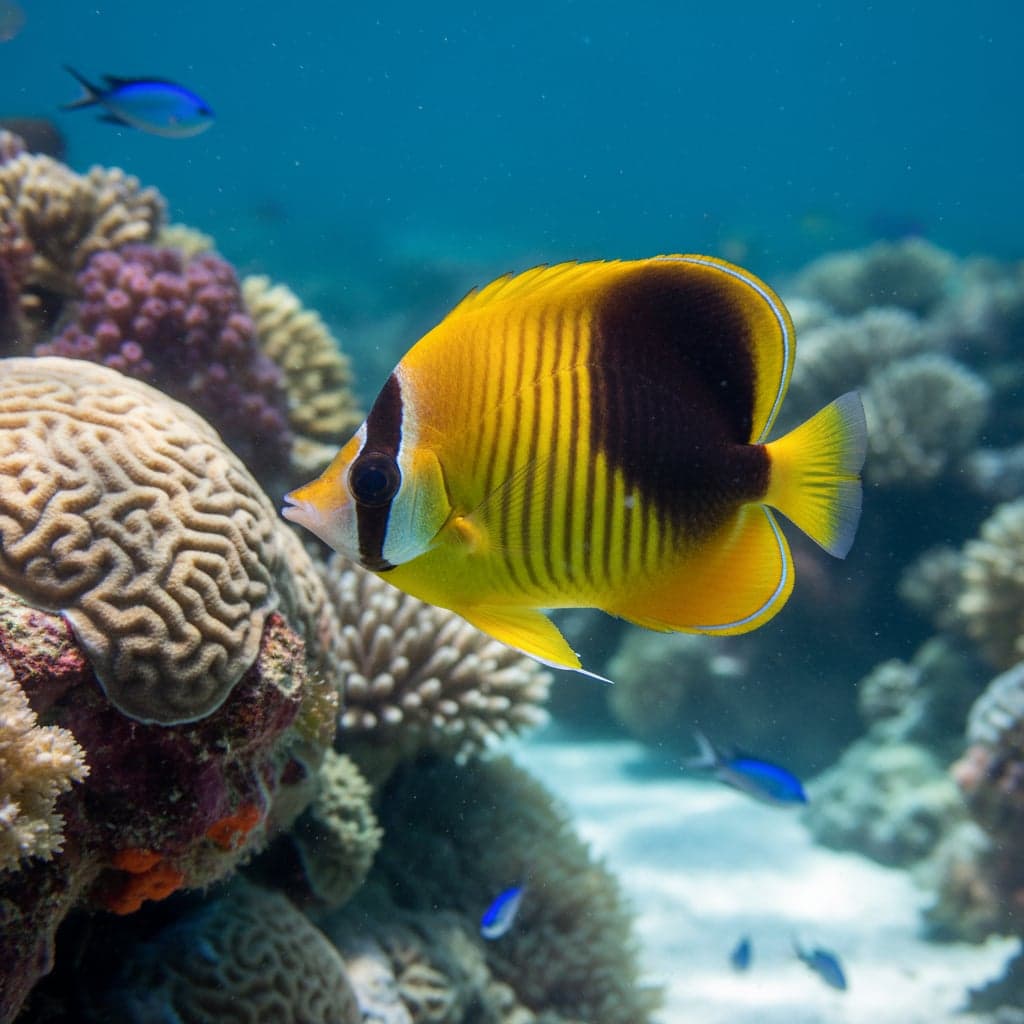
The Indian Butterflyfish (Chaetodon mitratus), often referred to as the Mitred Butterflyfish, is a boutique species highly coveted by advanced marine aquarists. Unlike many common shallow-water butterflies, C. mitratus is a deep-water resident, often found at depths exceeding 50 meters. This makes it naturally adapted to slightly cooler temperatures and lower light levels. Its body is a vibrant, saturated yellow, dramatically bisected by two broad, diagonal black bands—one through the eye and another across the flank—giving it a sharp, geometric aesthetic that stands out in any high-end reef or fish-only system.
In the aquarium, they are hardy once acclimated but require specialized care regarding temperature and diet. They are active explorers that bring a sense of elegance and prestige to sophisticated marine displays.
Natural Habitat & Origin
Chaetodon mitratus is found in the Central and Western Indian Ocean, specifically around the Maldives, Mauritius, and the Chagos Archipelago. They are strictly deep-water reef dwellers, typically inhabiting steep outer reef slopes and drop-offs at depths of 40 to 80 meters. In these environments, they are often seen in pairs or small groups searching for food among coral rubble and gorgonians.
Care Requirements
The Indian Butterflyfish is a demanding species due to its deep-water origins. A minimum tank size of 55 gallons (200L) is required to provide the swimming space this active fish needs.
Maintain stable parameters: a pH of 8.1 to 8.4 and a salinity of 1.023 to 1.025. Crucially, they prefer slightly cooler conditions than standard tropical reefs; keeping the temperature between 72°F and 78°F (22°C-26°C) is ideal for their long-term health. They require excellent water quality with high oxygenation and efficient protein skimming. The tank should feature plenty of live rock structured into caves and overhangs to provide "shaded" areas that mimic their deep-reef habitat.
Diet & Feeding
In the wild, they are primarily carnivores, feeding on small benthic invertebrates, polychaete worms, and occasionally coral polyps.
In captivity, they are generally good eaters but require a high-frequency, protein-rich diet:
- Frequent feedings (3-4 times daily) of high-quality frozen foods
- Mysis shrimp, enriched Brine Shrimp, and finely chopped seafood (scallop, clam)
- High-quality marine pellets and flakes (once acclimated)
- Tip: They are "reef safe with caution." While hardier regarding coral than some butterflies, they may nip at LPS, zoanthids, or clam mantles when hungry.
Behavior & Temperament
They are semi-aggressive but mainly toward other butterflyfish of similar shape or color. Toward most other reef inhabitants, they are peaceful and inquisitive. They are best kept singly or as a bonded pair (if introduced simultaneously). They are bold, active swimmers that spend most of their time patrolling the rockwork and peering into crevices for food.
Tank Mates
Suitable tank mates include other peaceful to semi-aggressive reef species:
- Anthias
- Fairy and Flasher Wrasses
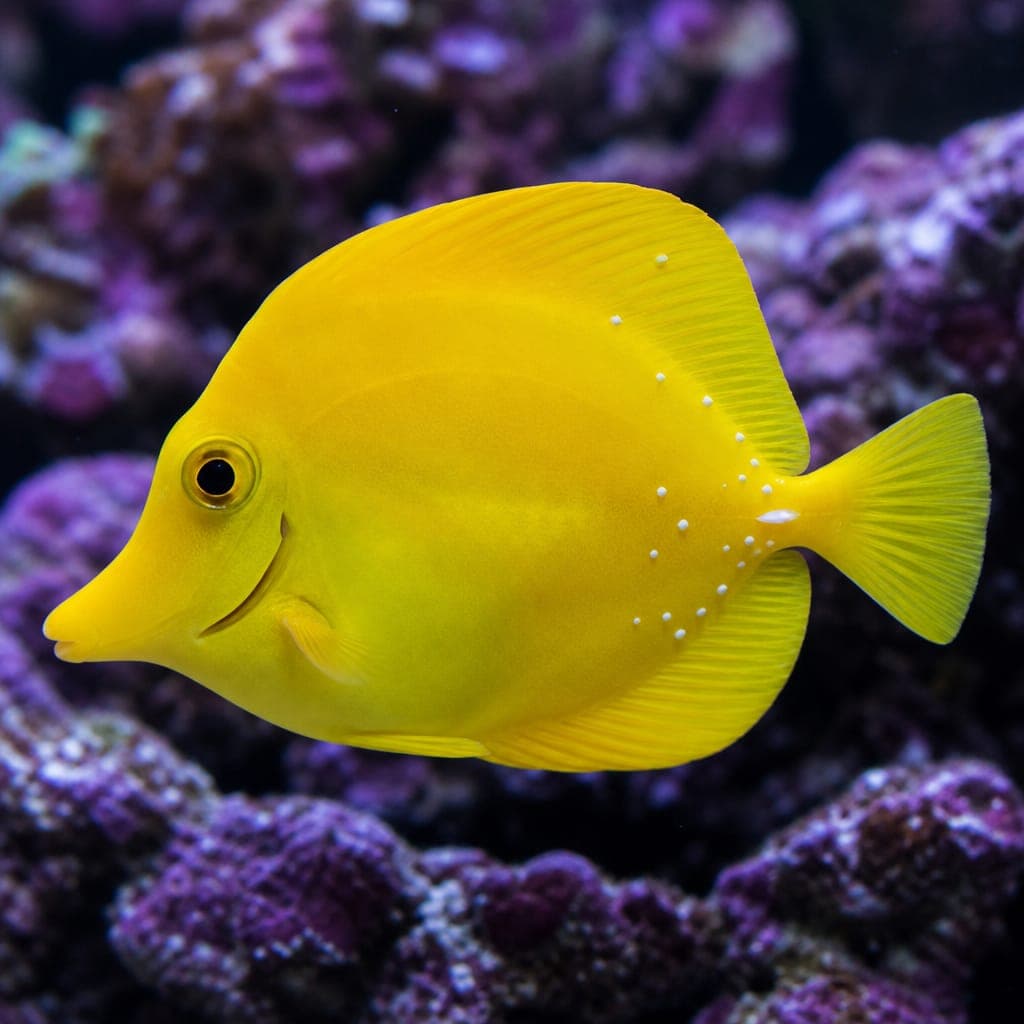
- Tangs (standard reef-safe species)
- Assessors or Grammas (which also appreciate shaded areas)
- Blennies and Gobies
Avoid keeping them with overly aggressive groupers or triggers that may outcompete them for food or keep them in hiding.
Breeding
Breeding Chaetodon mitratus in the home aquarium has not yet been achieved. They are pelagic spawners, releasing eggs into the water column where they drift as plankton. Their deep-water nature and complex larval cycle make captive breeding incredibly difficult, and currently, all specimens in the hobby are wild-caught.
Common Health Issues
The primary challenge is decompresson stress during collection, though modern professional collectors have largely mitigated this. In the aquarium, they are susceptible to Marine Ich (Cryptocaryon) if stressed by temperature swings or poor water quality. It is highly recommended to quarantine this species before introduction to the main display. Maintaining consistent, slightly cooler temperatures and high oxygen levels is the best way to prevent stress-related ailments.