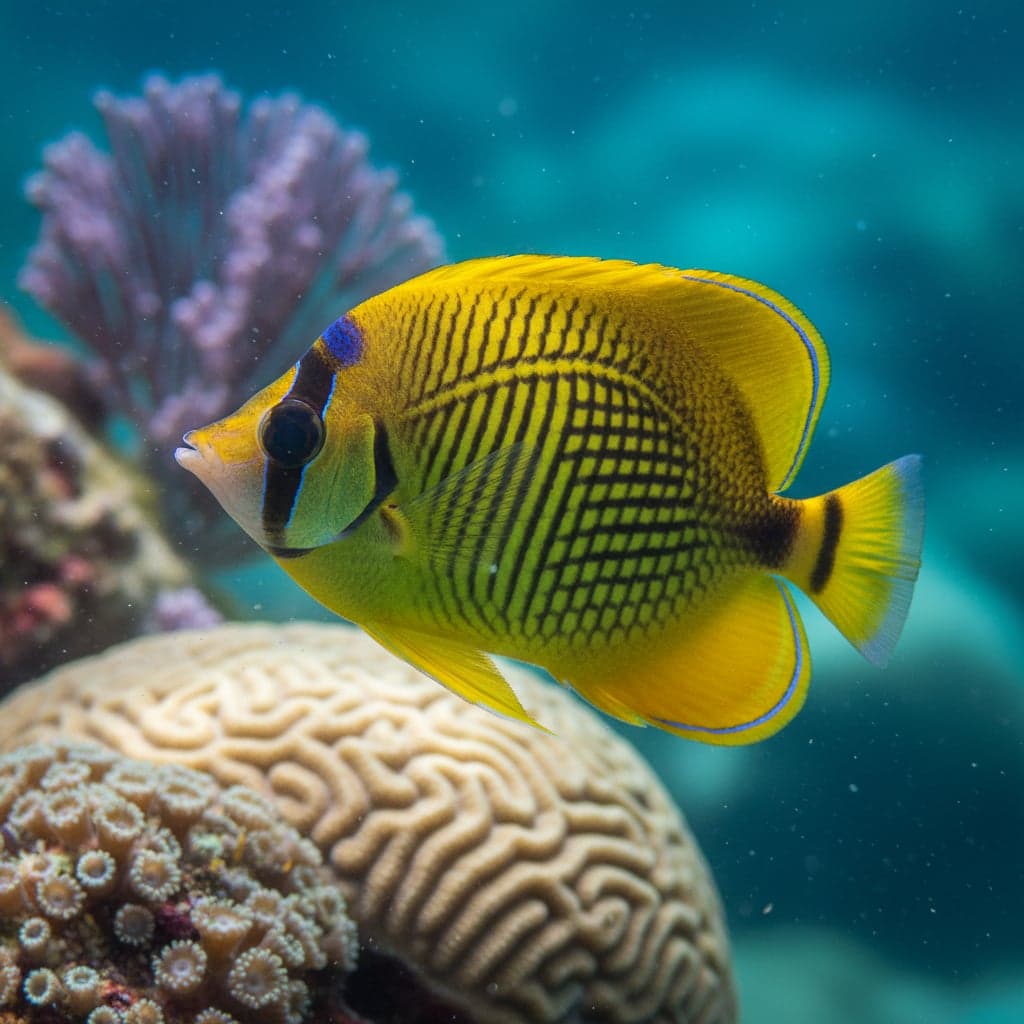
Indian Vagabond Butterflyfish: Chaetodon decussatus
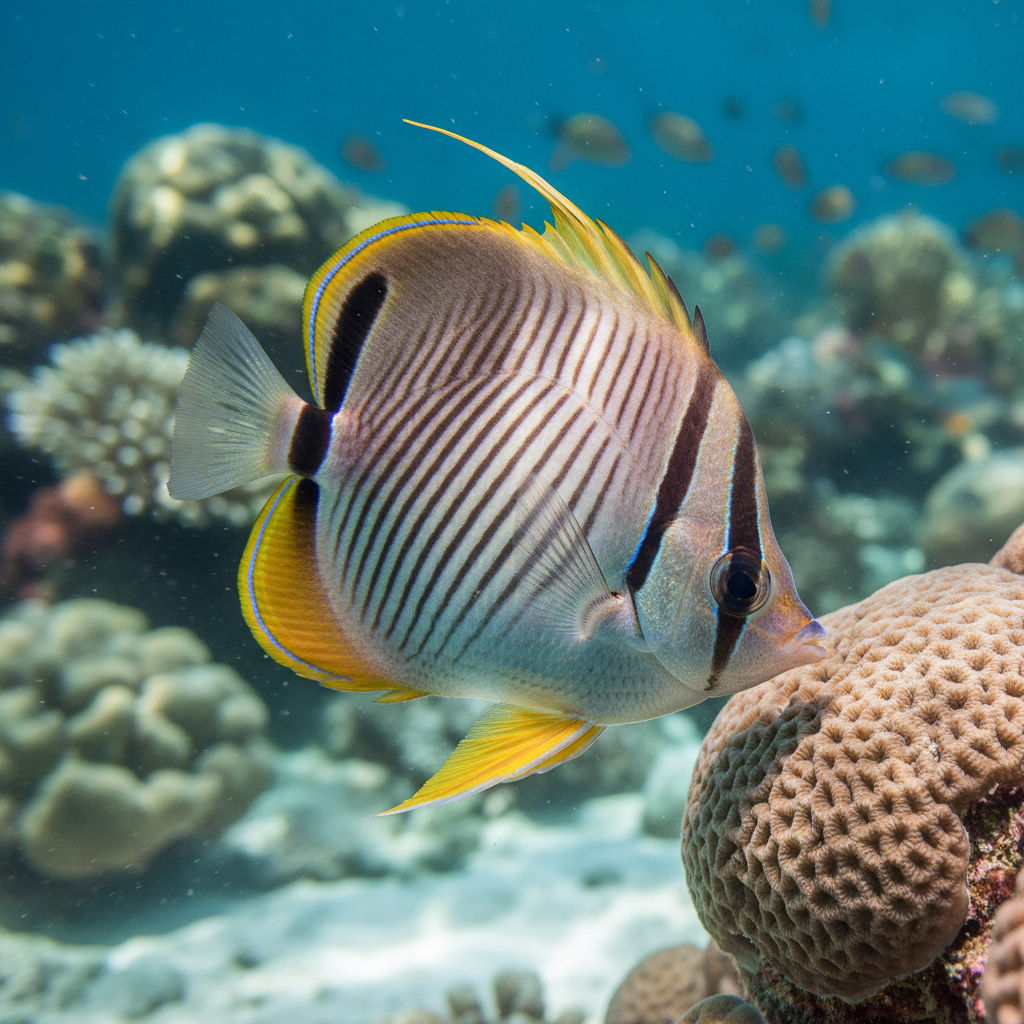
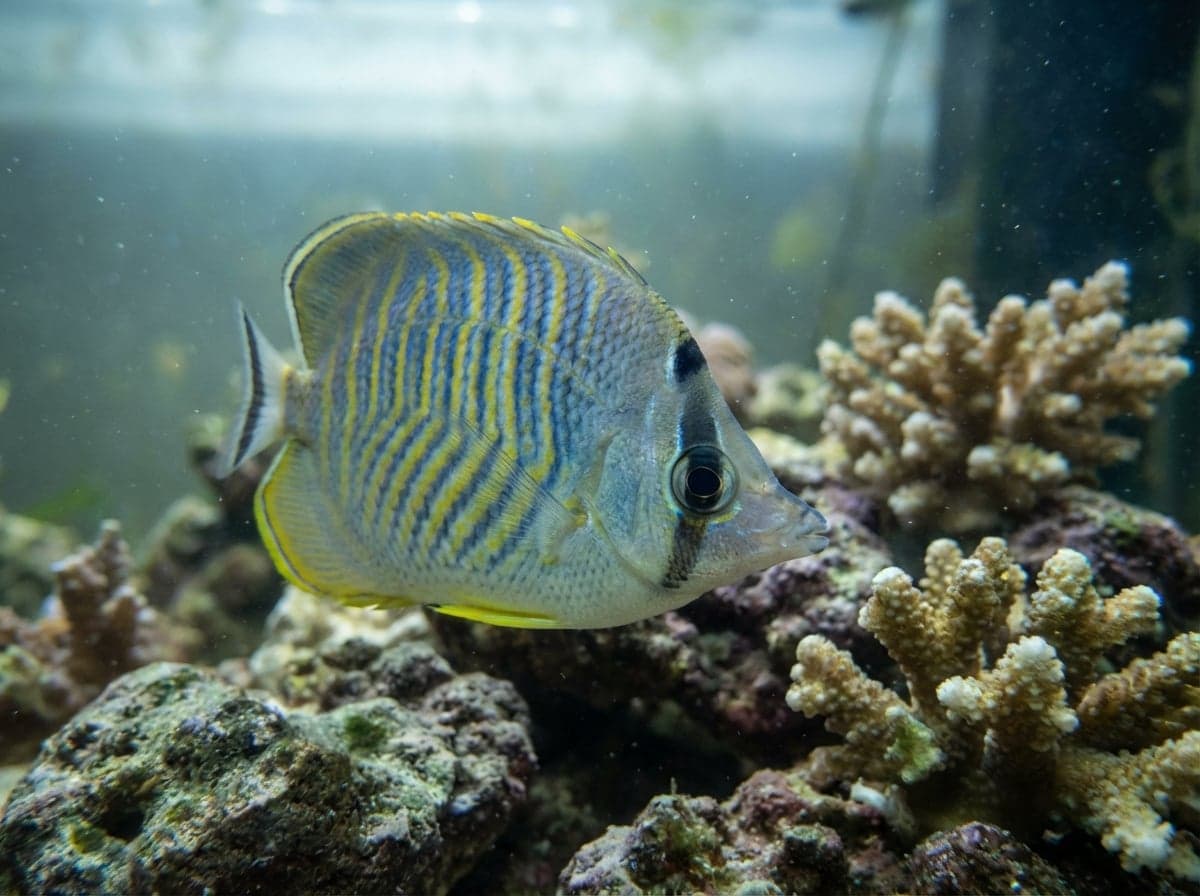
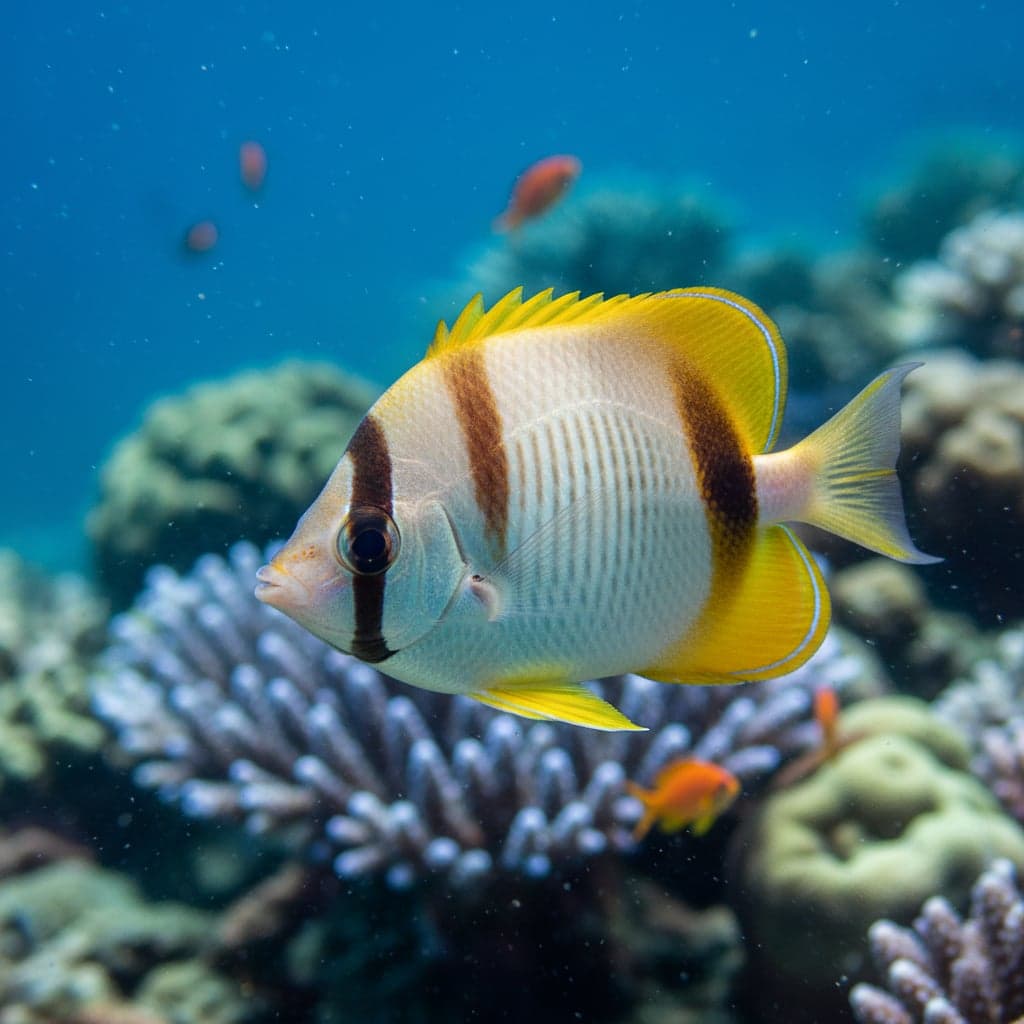
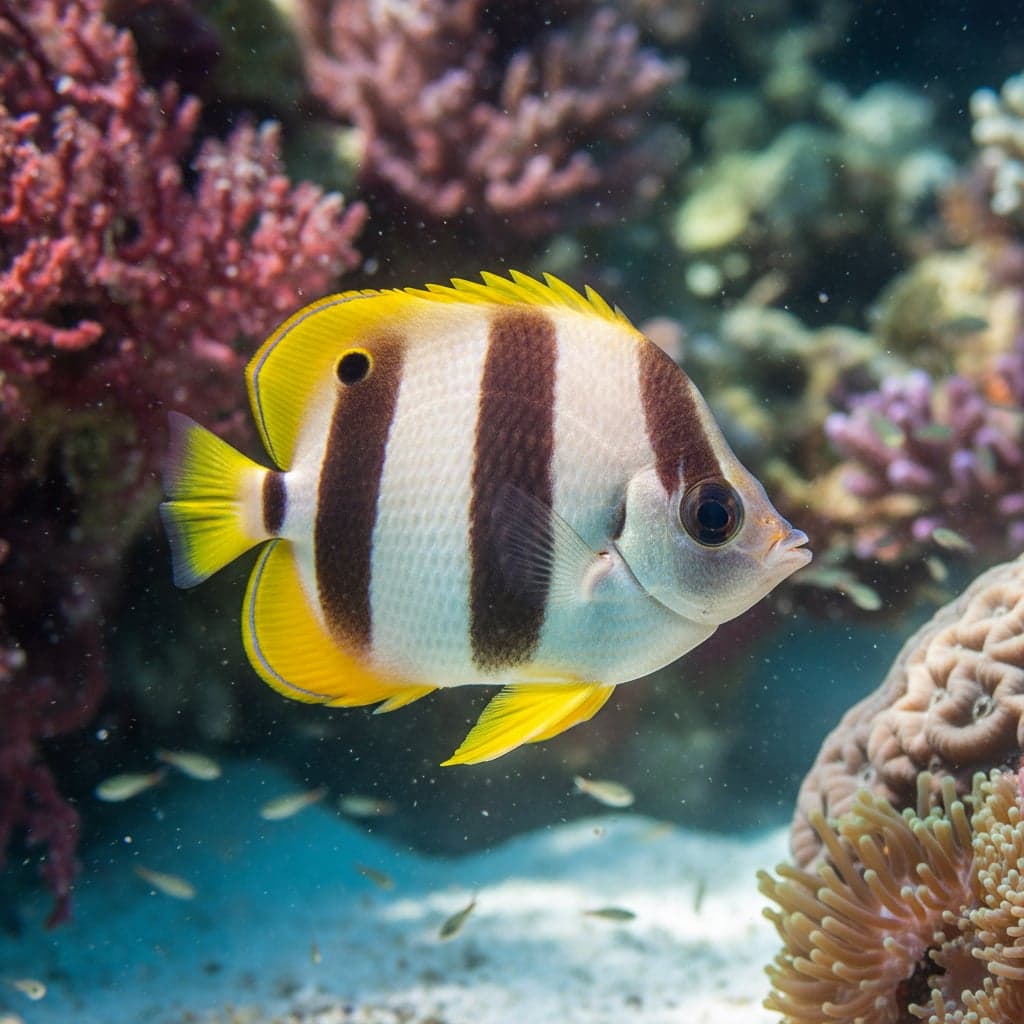
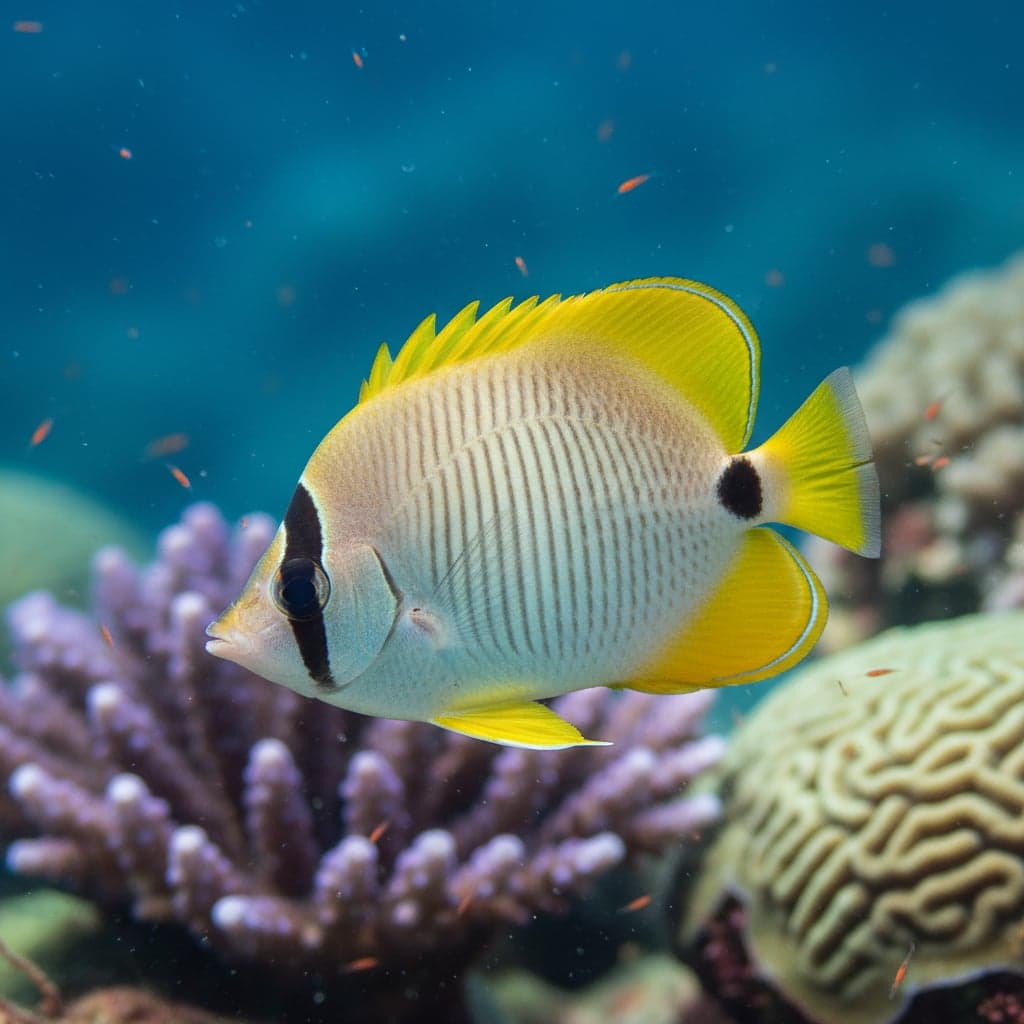
The Indian Vagabond Butterflyfish (Chaetodon decussatus), also known as the Black-veined Butterflyfish, is one of the hardiest and most adaptable species in its family, known for its bold black and white geometric patterns.
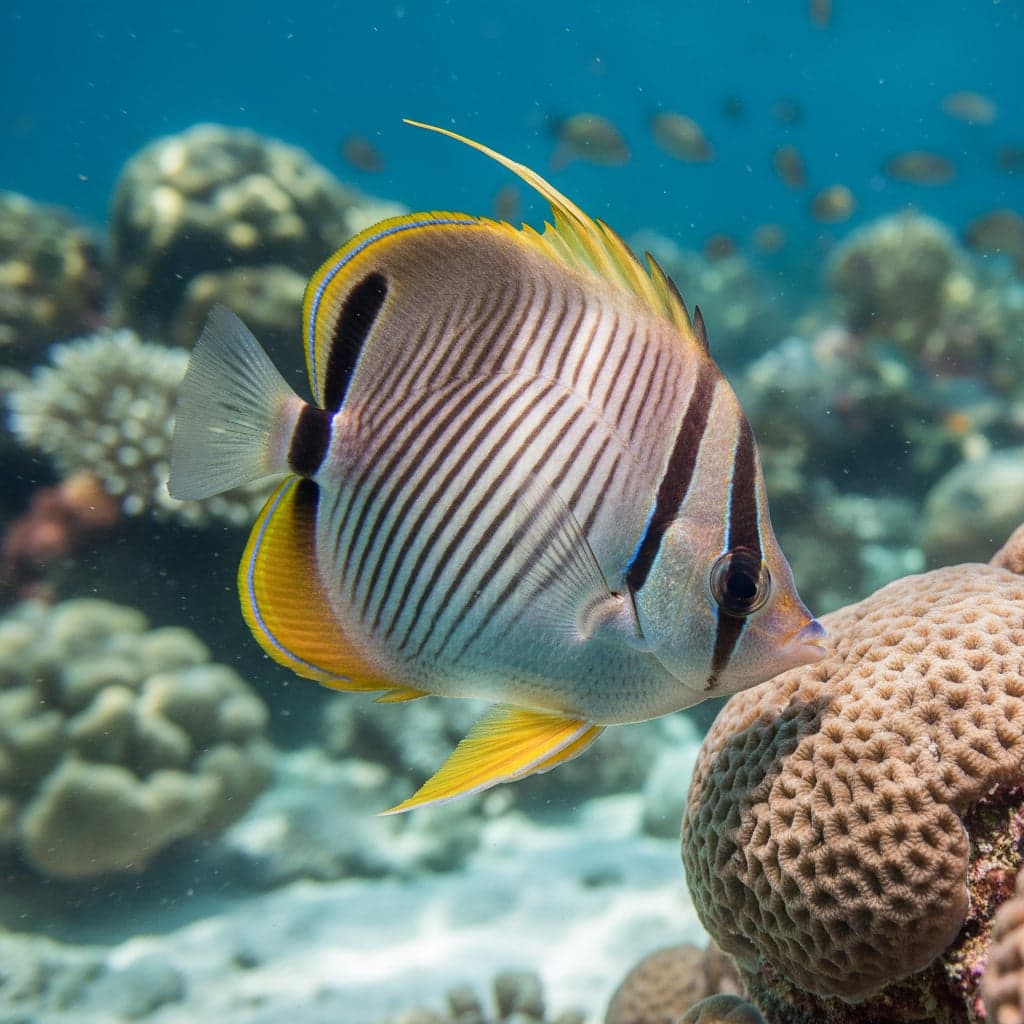
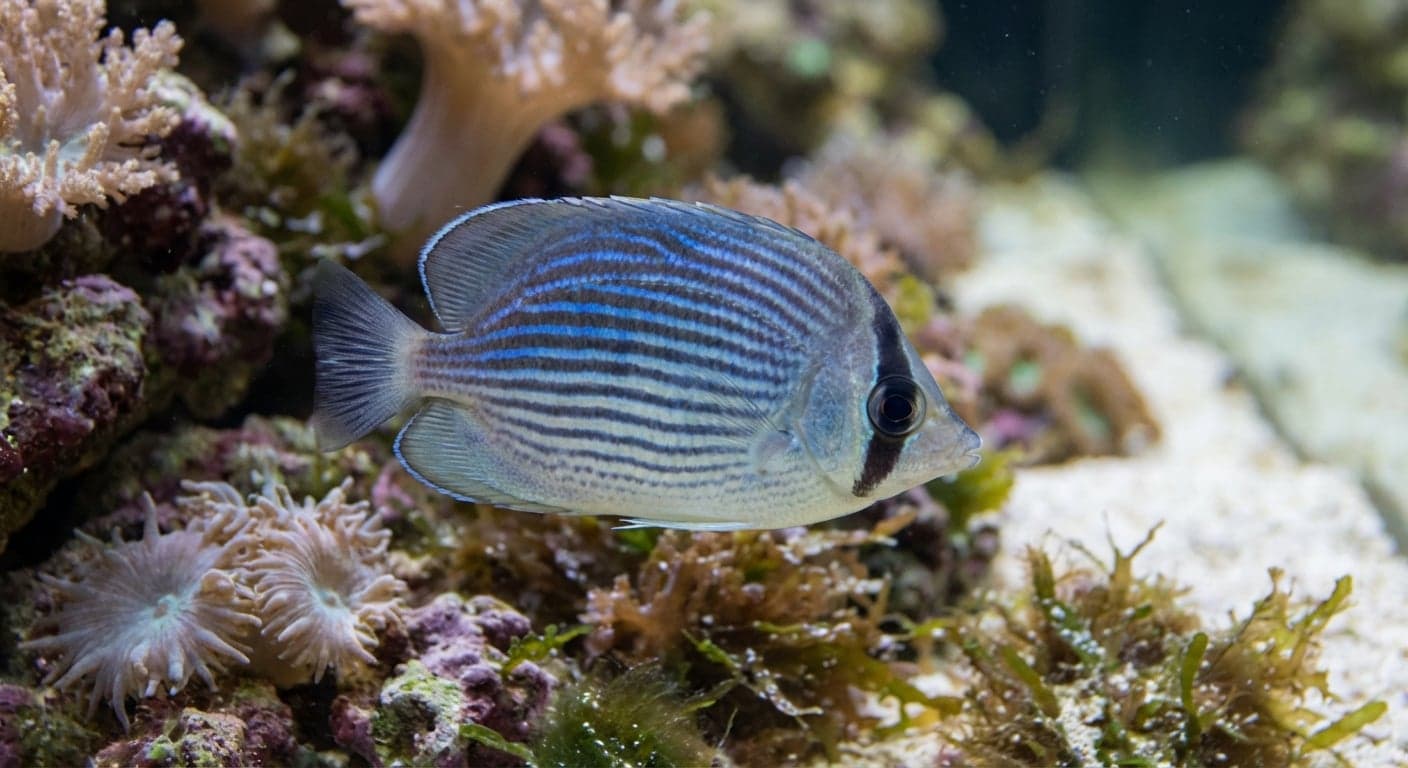
The Indian Vagabond Butterflyfish (Chaetodon decussatus) is a standout species for the marine aquarium, frequently recommended as an "entry-level" butterflyfish due to its exceptional hardiness. It is often confused with its close relative, the Vagabond Butterflyfish (C. vagabundus), but can be distinguished by the large, prominent black area covering the posterior portion of its body and dorsal fin. Its body is adorned with a striking pattern of diagonal black lines that intersect at right angles, creating a sophisticated textile-like appearance over a pearly-white base.
In the aquarium, they are active and inquisitive explorers. They are far less finicky about food than many other butterflies and will quickly acclimate to a variety of prepared marine diets, making them a reliable and visually stunning addition to fish-only or large-scale reef systems.
Natural Habitat & Origin
Chaetodon decussatus is native to the Central and Western Indian Ocean, ranging from the Red Sea and East Africa to the tip of India, Sri Lanka, and the Andaman Sea. They are typically found in a wide range of habitats, from shallow reef flats and lagoons to seaward reef slopes at depths of up to 30 meters. They are often seen in pairs or small groups foraging among coral rubble and rocky outcrops.
Care Requirements
The Indian Vagabond Butterflyfish is an active swimmer that requires plenty of open space. A minimum tank size of 75 gallons (300L) is recommended for a single adult or a bonded pair.
Maintain stable parameters: a pH of 8.1 to 8.4 and a salinity of 1.023 to 1.025. They are hardy and adaptable to a range of standard reef conditions but appreciate moderate to high water movement and high dissolved oxygen levels. The tank should be decorated with extensive live rockwork arranged to create numerous caves, swim-throughs, and shaded overhangs. This allows them to forage naturally and retreat when they feel threatened.
Diet & Feeding
In the wild, they are opportunistic omnivores, feeding on coral polyps, algae, polychaete worms, and small benthic invertebrates.
In captivity, they are generally excellent feeders:
- They readily accept high-quality frozen foods: Mysis shrimp, enriched Brine Shrimp, and finely chopped seafood.
- High-quality marine flakes and pellets (including those with spirulina).
- Daily offerings of algae or seaweed sheets provide essential fiber.
- Warning: They are "reef safe with caution." Like most butterflies, they may nip at various corals, particularly LPS, zoanthids, and clam mantles, especially if not well-fed.
Behavior & Temperament
They are wonderfully peaceful and socialize well with most other reef inhabitants. They are most active during the day and will spend a significant amount of time inspecting the rockwork for food. They are best kept singly or as a bonded pair (introduced together). They are curious and bold, often being among the first fish to greet their owner during feeding times.
Tank Mates
Suitable tank mates include a wide variety of peaceful to semi-aggressive reef species:
- Anthias
- Wrasses
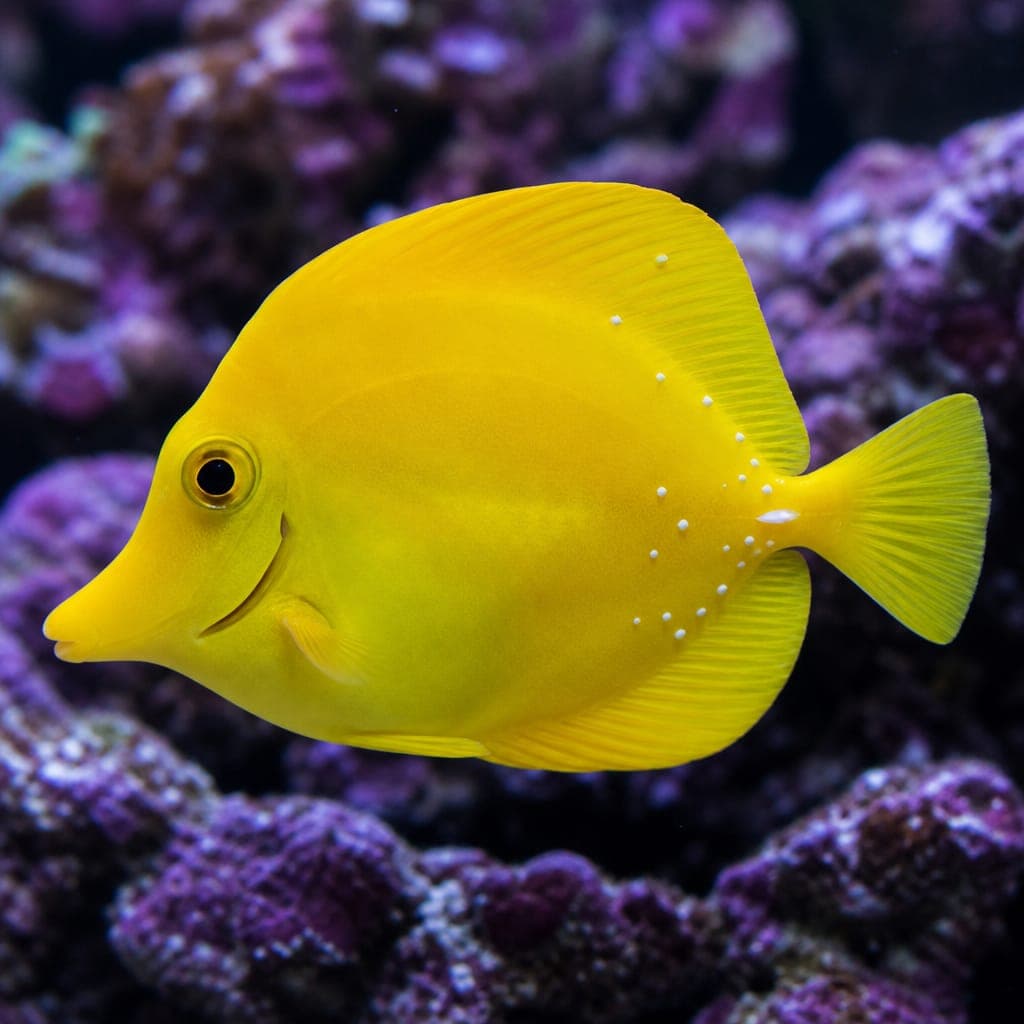
- Tangs
- Clownfish
- Blennies and Gobies
Avoid keeping them with overly aggressive groupers or triggers that might bully them, or with other butterflyfish of similar shape unless the tank is very large and provides separate territories.
Breeding
Breeding Chaetodon decussatus in the home aquarium has not been reliably achieved. They are pelagic spawners, releasing eggs into the water column where they drift as plankton. The complex larval stage and high specialized feeding requirements of the fry make captive breeding a major challenge that has yet to be commercialized. Currently, all specimens in the hobby are wild-caught.
Common Health Issues
They are among the hardiest butterflies but still susceptible to Marine Ich (Cryptocaryon) and Marine Velvet (Amyloodinium) if stressed by poor water quality or sudden temperature changes. Maintaining a stable environment and providing a high-quality, varied diet are the best ways to ensure their longevity. Quarantining new arrivals is always recommended to prevent the introduction of parasites to the main display.