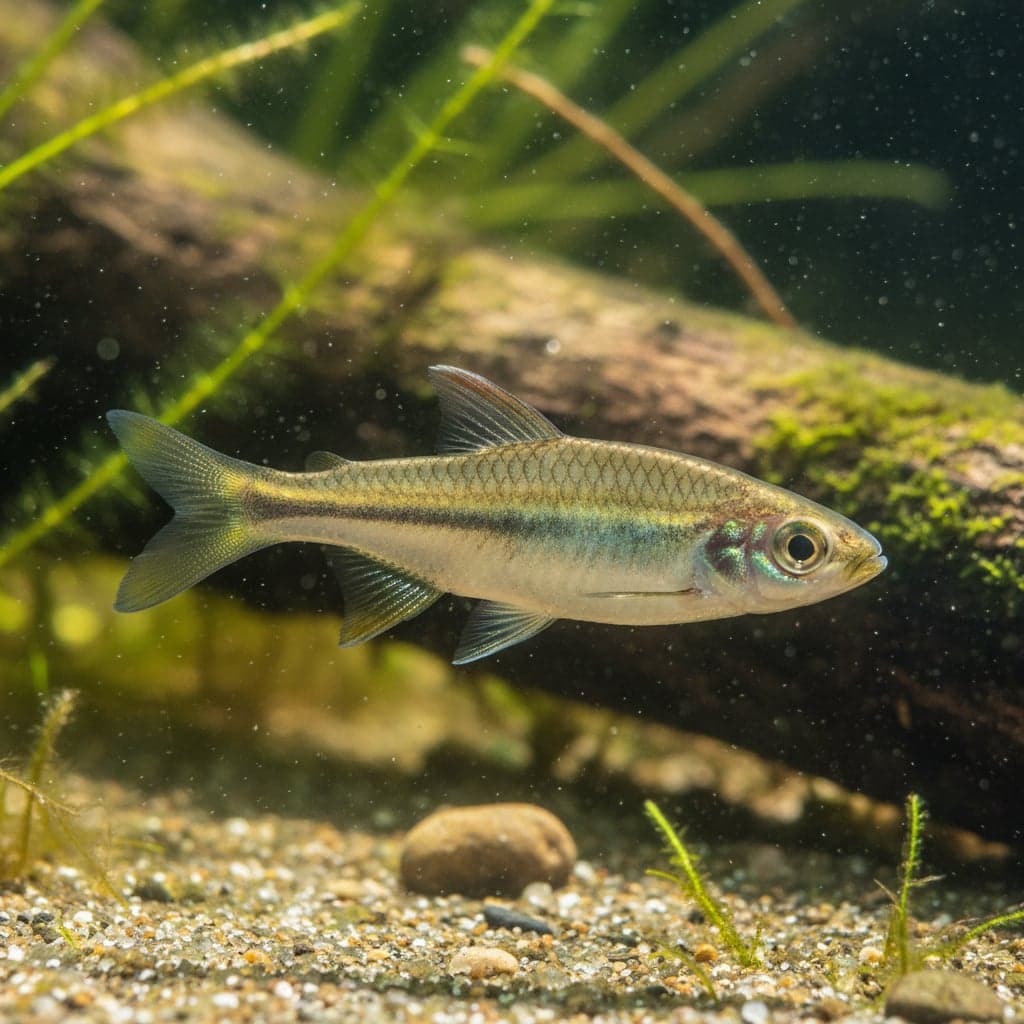
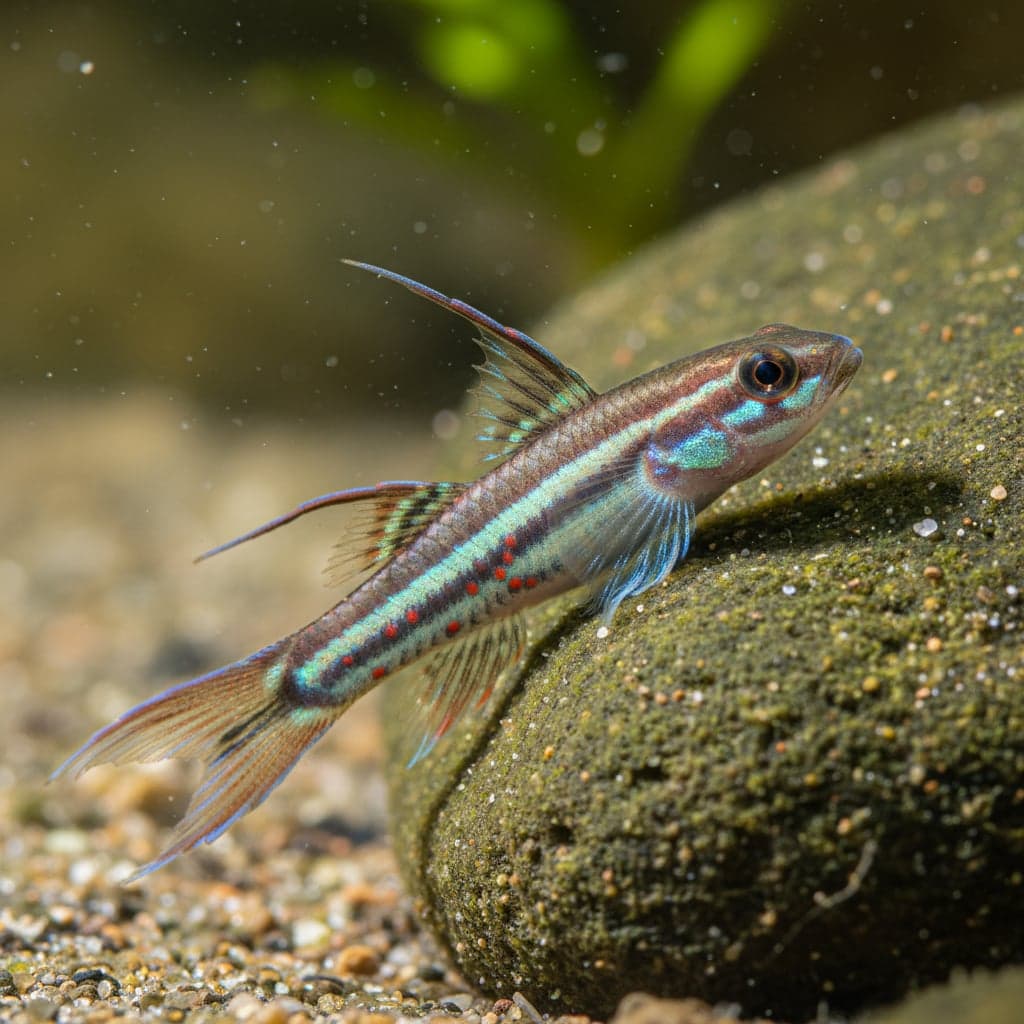
Red-Tailed Climbing Goby: Sicyopterus lagocephalus
The Red-Tailed Climbing Goby (Sicyopterus lagocephalus), also known as the Kanu Goby, is an incredible amphidromous species famous for its ability to climb massive waterfalls using its specialized suckers.

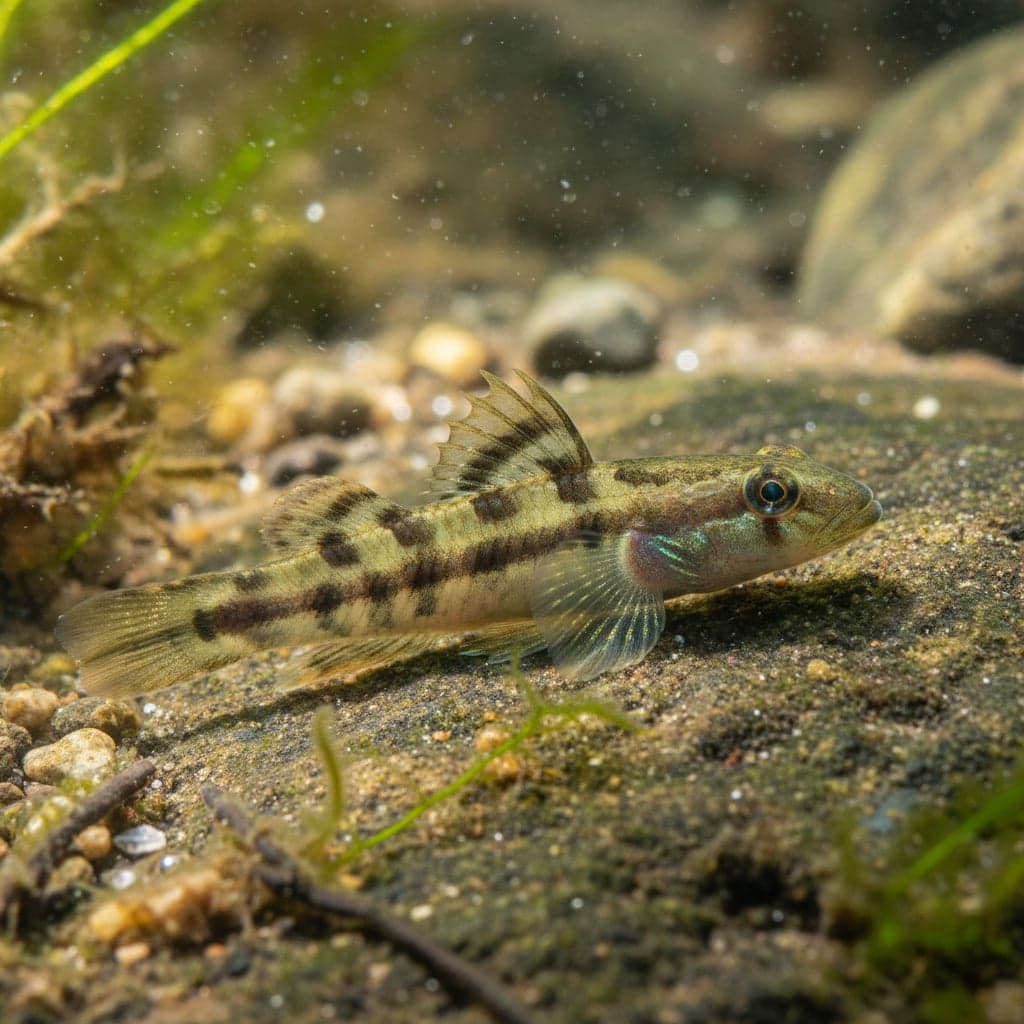
The Red-Tailed Climbing Goby (Sicyopterus lagocephalus), or "Kanu Goby," is one of nature's most accomplished athletes. Found across the islands of the Indo-Pacific, this goby is legendary for its amphidromous life cycle and its gravity-defying climbing abilities. Using its specialized pelvic fin sucker and a robust, muscular mouth, it can literally scale the vertical faces of massive waterfalls to reach the pristine, predator-free headwaters where it spawns. It is defined by its streamlined, cylindrical body and a brilliant, glowing red or orange-red tail that contrasts sharply against its mottled blue-grey body. For the specialized aquarist, it offers a window into the incredible evolutionary ingenuity of island livestock.
In the aquarium, they are industrious and peaceful but require a highly specialized "hillstream" setup. They are primarily biofilm grazers, spending their days rhythmically scraping algae and microorganisms from rock surfaces. They are not swimmers in the traditional sense; they "hop" and "slide" across the substrate with a unique, purposeful motion.
Natural Habitat & Origin
Sicyopterus lagocephalus has a vast distribution, found from the islands of the Indian Ocean to French Polynesia in the Pacific. They are amphidromous: adults live and spawn in the fast-flowing, clear-water streams of volcanic islands. The larvae are swept downstream into the ocean where they develop for several months before returning to the rivers as "post-larvae." To reach their adult habitats, they must often navigate torrential currents and scale vertical cliffs. Their natural environment is characterized by high-velocity water, high oxygen levels, and a substrate of clean boulders and cobbles heavily encrusted with biofilm.
Care Requirements
The Kanu Goby is a specialist species that requires a dedicated "river-style" aquarium. A minimum tank size of 30 gallons (100L) is recommended, but the focus must be on length and water velocity.
Maintain stable, cool-to-temperate parameters: a pH of 7.0 to 8.0 and a temperature of 68°F to 79°F (20°C to 26°C). They demand exceptionally high oxygen levels and strong water movement; a powerful manifold or multiple powerheads are essential. The substrate should consist of smooth, rounded river stones and large boulders. Lighting must be intense enough to promote a thick, healthy layer of green algae and biofilm on the rocks, as this is their primary life-support system. A secure lid is mandatory, as their climbing instincts mean they will explore even the smallest gaps in the tank's rim.
Diet & Feeding
They are specialized herbivore-grazers. Their mouthparts are evolved to "rasp" thin layers of algae and the microscopic organisms (diatoms and cyanobacteria) that live within it.
In captivity, they can be difficult to feed if the tank is too clean:
- They require a constant supply of natural biofilm and algae on the rocks.
- High-quality Spirulina-based wafers and specialized "aufwuchs" pastes can be offered.
- Some individuals will learn to take frozen Bloodworms or Brine Shrimp, but these should only be supplemental.
- Tip: Keeping several sets of stones in a separate, sunlit "algae-growing" tank and rotating them into the main aquarium is an excellent way to ensure they have a constant food source.
Behavior & Temperament
They are peaceful toward other species but can be territorial with their own kind, especially regarding their favorite "grazing stone." Males will display by flaring their fins and vibrating their bodies to defend their territory or attract a mate. They are fascinating to watch as they use their mouths and suckers to climb the glass or navigate the rockwork. They are entirely non-aggressive and will not bother shrimp or other peaceful tank mates. They are quite shy initially but will become bolder as they establish their territory and feeding routine.
Tank Mates
Suitable tank mates must be other high-oxygen, high-current specialists:
- Hillstream Loaches (Sewellia or Gastromyzon)
- Stiphodon Gobies (other species)
- White Cloud Mountain Minnows
- Bamboo Shrimp
Avoid any species that requires slow water, is overly aggressive, or will compete too aggressively for the biofilm.
Breeding
Breeding in a home aquarium is nearly impossible due to their complex amphidromous life cycle. While they will readily spawning and lay eggs in captivity, the larvae require a transition to saltwater to develop, followed by a specific cue to return to freshwater—a sequence of events that is incredibly difficult to replicate in an artificial environment.
Common Health Issues
The primary health concern is starvation in "too clean" aquariums. If they do not have a constant source of biofilm, they will quickly waste away. They are also sensitive to low oxygen levels and high nitrates. Maintaining a specialized "hillstream" setup with intense lighting for algae growth and a high-velocity current is the only way to ensure the Red-Tailed Climbing Goby's athletic beauty and fascinating behaviors remain a highlight of the tank.