Keyhole Angelfish: Centropyge tibicen
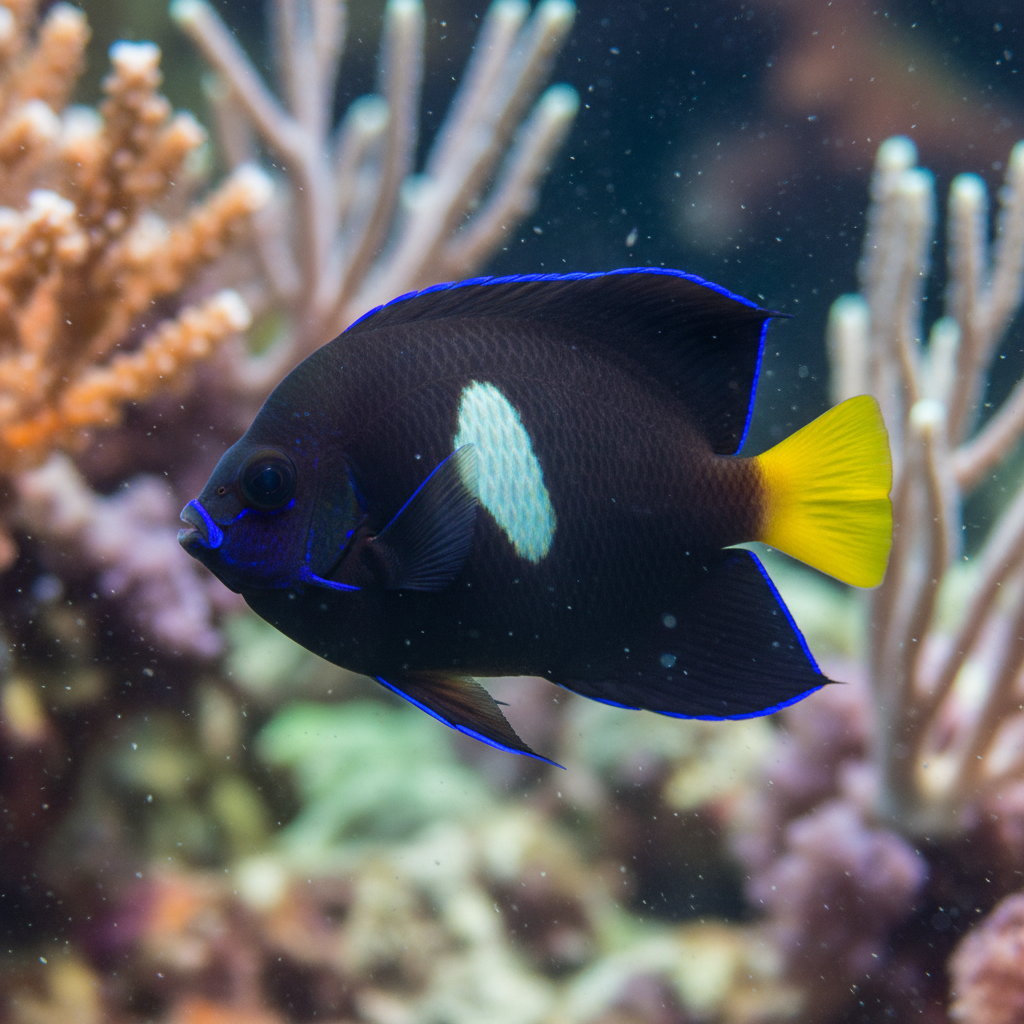
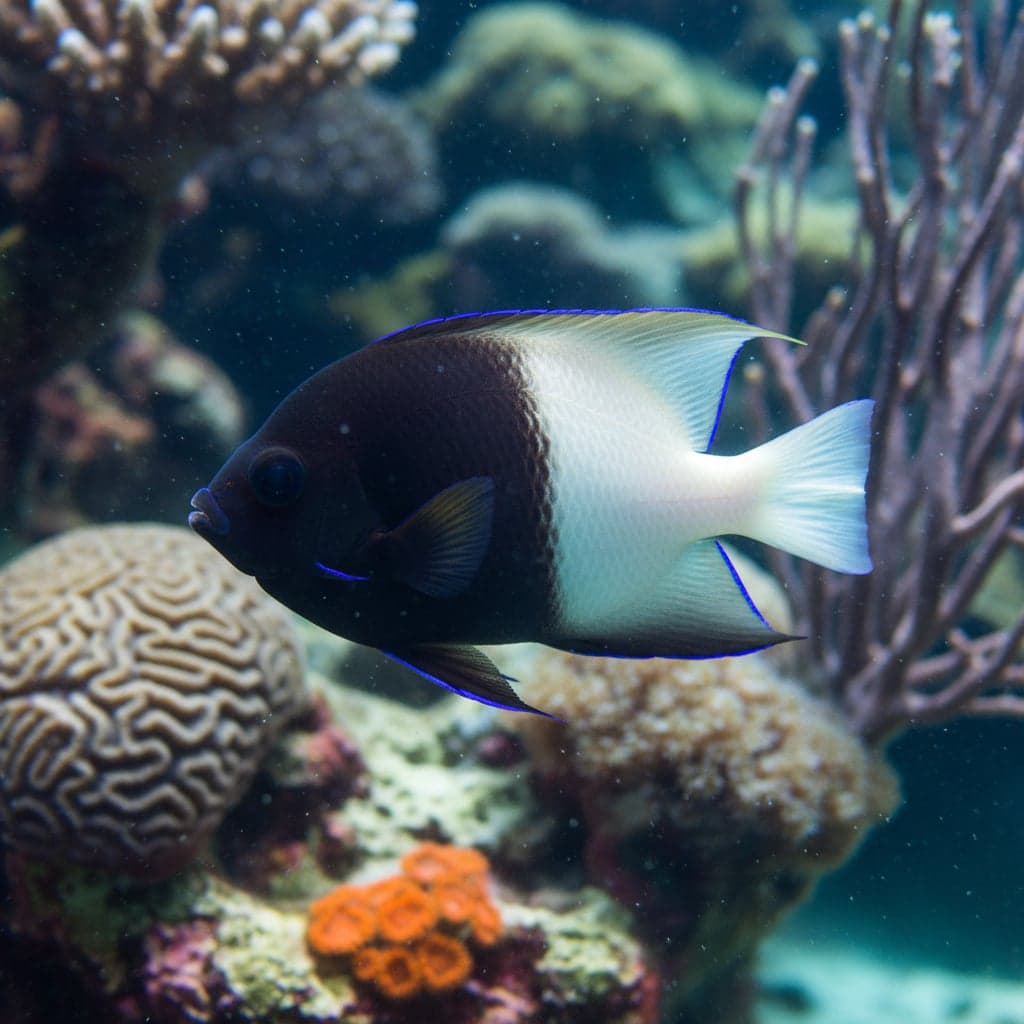
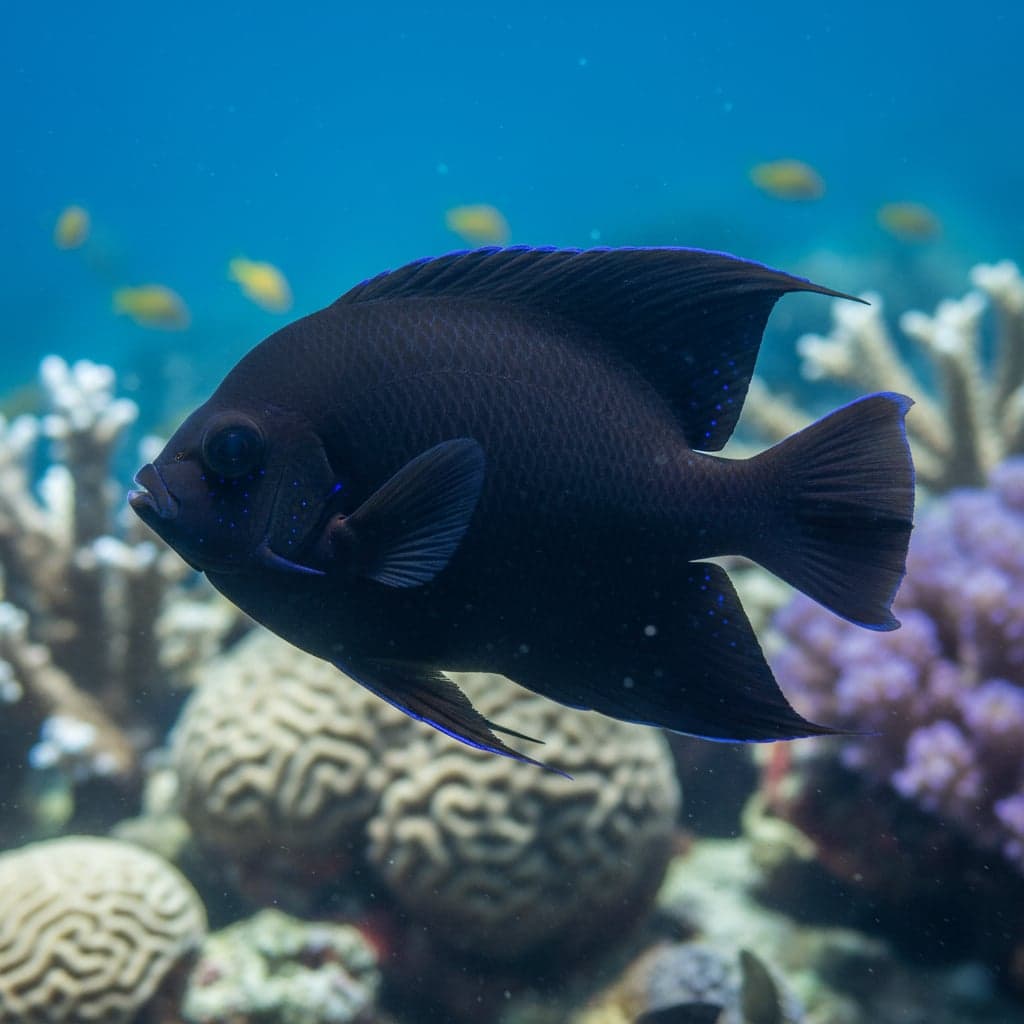
The Keyhole Angelfish (Centropyge tibicen) is the largest and most strikingly contrasted member of the pygmy angelfish genus, featuring a velvety black body with a glowing white "keyhole" spot.

The Keyhole Angelfish (Centropyge tibicen) is a study in elegant contrast. As the largest species in the Centropyge (pygmy angelfish) genus, it commands a presence that belies its "dwarf" classification. It is defined by its deep, velvety soot-black body, which serves as a dramatic canvas for its name-defining trait: a bright, vertically elongated white spot on its side that resembles an old-fashioned keyhole. This stark monochrome aesthetic is further enhanced by its electric-yellow pelvic and anal fin edges, which provide a flickering flash of color as the fish darts through the reef work. For the marine aquarist, the Keyhole Angelfish is a sophisticated and robust choice that brings a unique "architectural" beauty to the aquarium.
In the aquarium, they are active, curious, and remarkably hardy once established. While they are territorial like all angelfish, their larger size makes them more confident and less prone to the "shyness" seen in smaller Centropyge species.
Natural Habitat & Origin
Centropyge tibicen is widely distributed across the Indo-Pacific, found from southern Japan down to the Great Barrier Reef and Lord Howe Island, and extending from the Christmas Islands in the Indian Ocean out to the Line Islands in the Pacific. They inhabit a variety of environments, from the sheltered lagoons and seaward reef slopes to rubble-filled channels at depths of 4 to 55 meters. They are primarily found in areas with rich coral growth and complex rocky structures, where they graze on the thin film of algae and sponges that cover the reef.
Care Requirements
The Keyhole Angelfish is one of the hardier pygmy angelfish, but its larger size means it requires more space than its smaller cousins. A minimum tank size of 55 gallons (200L) is recommended to allow for adequate swimming room and territorial boundaries.
Maintain stable marine parameters: a pH of 8.1 to 8.4, a specific gravity of 1.020 to 1.025, and a temperature of 75°F to 82°F (24°C to 28°C). The tank must feature a massive amount of well-cured live rock, arranged to create endless tunnels, caves, and overhangs. This allows the fish to exhibit its natural foraging behavior and provides a sense of security. They thrive in well-oxygenated water with moderate-to-high flow. While they are generally considered "reef-safe with caution," they may occasionally nip at stony corals (LPS) and clam mantles if not properly fed.
Diet & Feeding
They are active omnivores with a significant focus on algae and benthic micro-organisms. In the wild, they graze almost constantly on algae and sponges.
In captivity, they require a diverse diet:
- High-quality marine flakes and pellets enriched with Spirulina and marine sponge should be the staple.
- They relish live or frozen foods: Mysis shrimp, enriched Brine Shrimp, and finely chopped seafood.
- Tip: Providing dried Nori (seaweed) on a clip daily is an excellent way to suppress their instinct to nip at corals.
- They benefit from being kept in a "mature" aquarium with a high volume of natural grazing surfaces.
Behavior & Temperament
They are semi-aggressive and territorial. While they are peaceful toward unrelated tank mates, they will be intensely aggressive toward other angelfish or fish of a similar shape and color. They should be the only angelfish in the tank unless it is a very large system (100+ gallons). They spend their day rhythmically patrolling the rockwork, "pecking" at the surfaces and staying close to their chosen retreat. They are highly intelligent and will quickly learn the feeding schedule, often approaching the front glass with confidence.
Tank Mates
Suitable tank mates are other robust semi-aggressive or peaceful reef species:
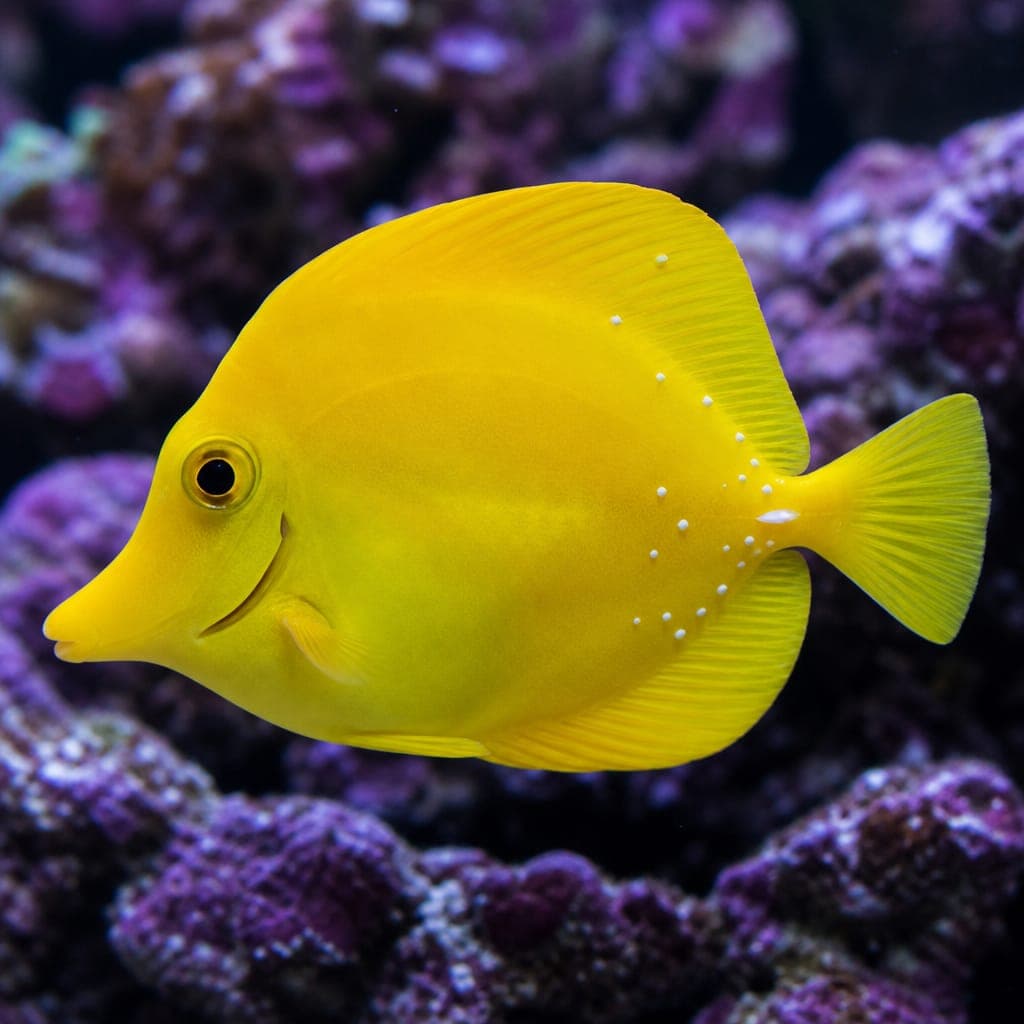
- Tangs (in larger tanks)
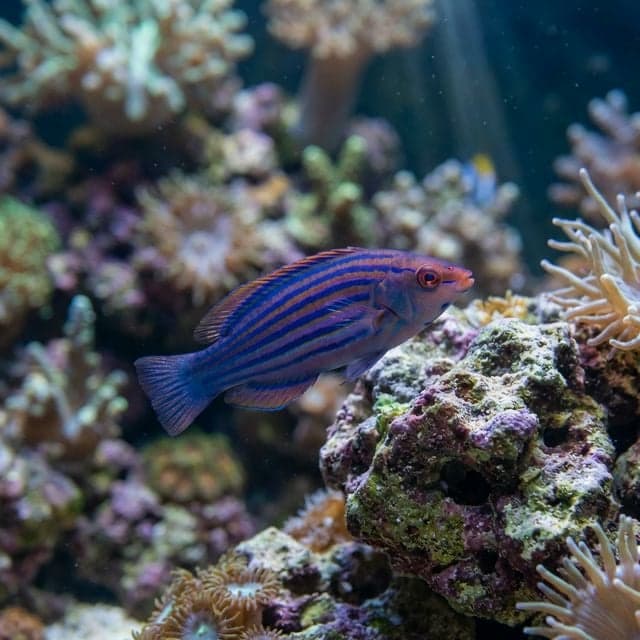
- Wrasses (like Six-line or Fairy Wrasses)
- Damselfish (Chromis or larger Damsels)
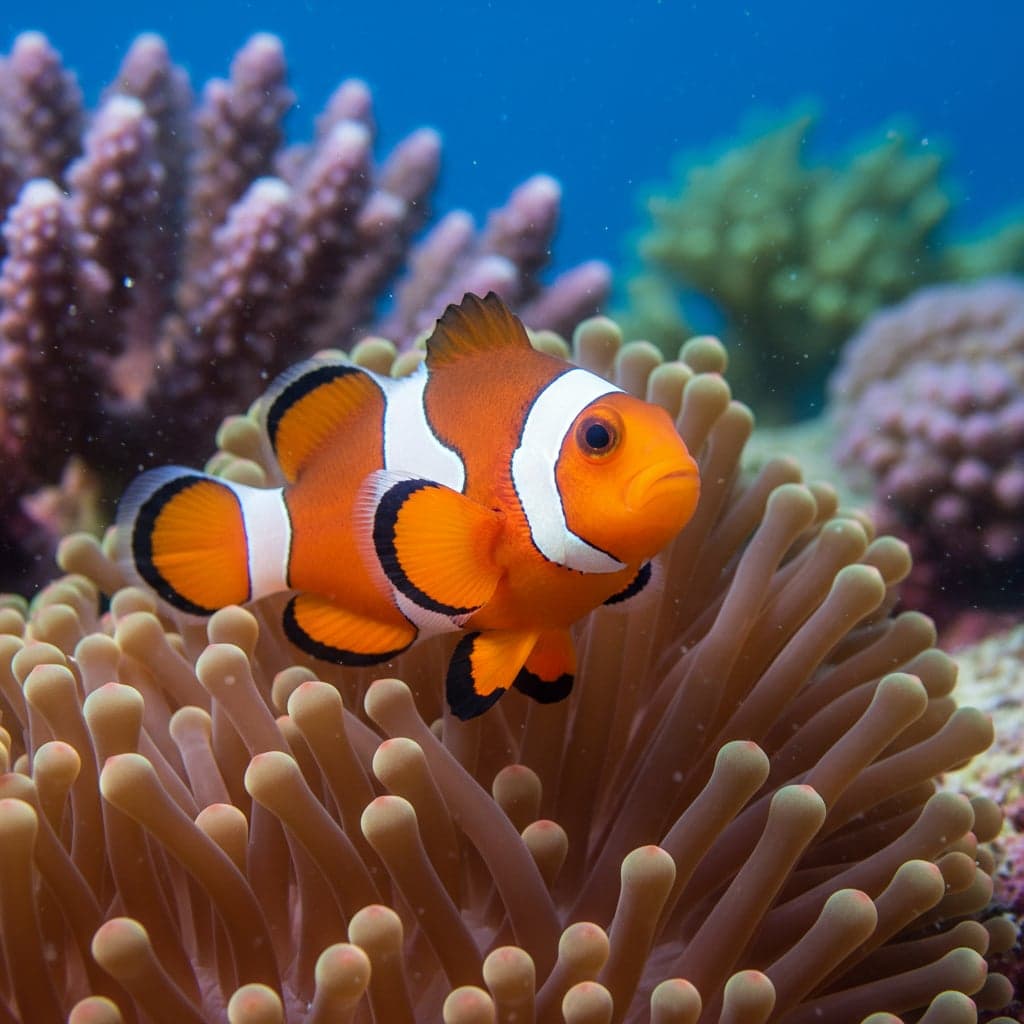
- Clownfish
- Gobies and Blennies
Avoid keeping them with very timid or slow-moving fish that may be bullied, or with larger, highly aggressive species that might consider the angelfish a threat.
Breeding
Breeding Centropyge tibicen in captivity is a complex process and is rarely achieved by the hobbyist. They are pelagic spawners; like most marine angelfish, the pair will engage in a "spawning rise" at dusk, releasing eggs and sperm into the water column. The tiny larvae are exceptionally difficult to raise, requiring specialized live microscopic foods (like Copepods) and precise water quality control.
Common Health Issues
The primary health concern is stress-induced Marine Ich (Cryptocaryon irritans) if water quality is poor or if the fish is constantly bullied. They are also sensitive to rapid drops in temperature or spikes in ammonia. Maintaining a stable, mature environment with plenty of high-quality live rock and a nutrient-dense, varied diet is the best way to ensure their velvety black bodies and shimmering white keyholes remain a highlight of the reef aquarium.