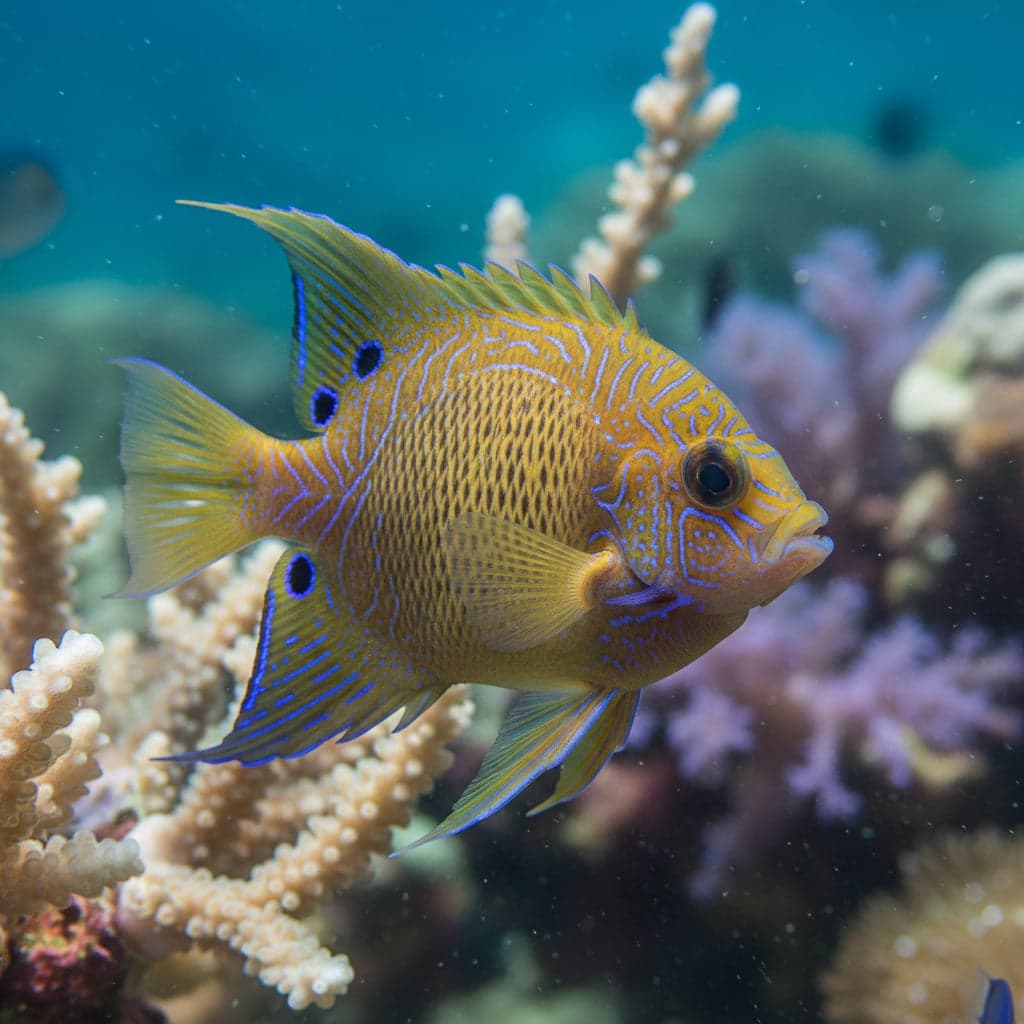
Leaf Scorpionfish: Taenianotus triacanthus
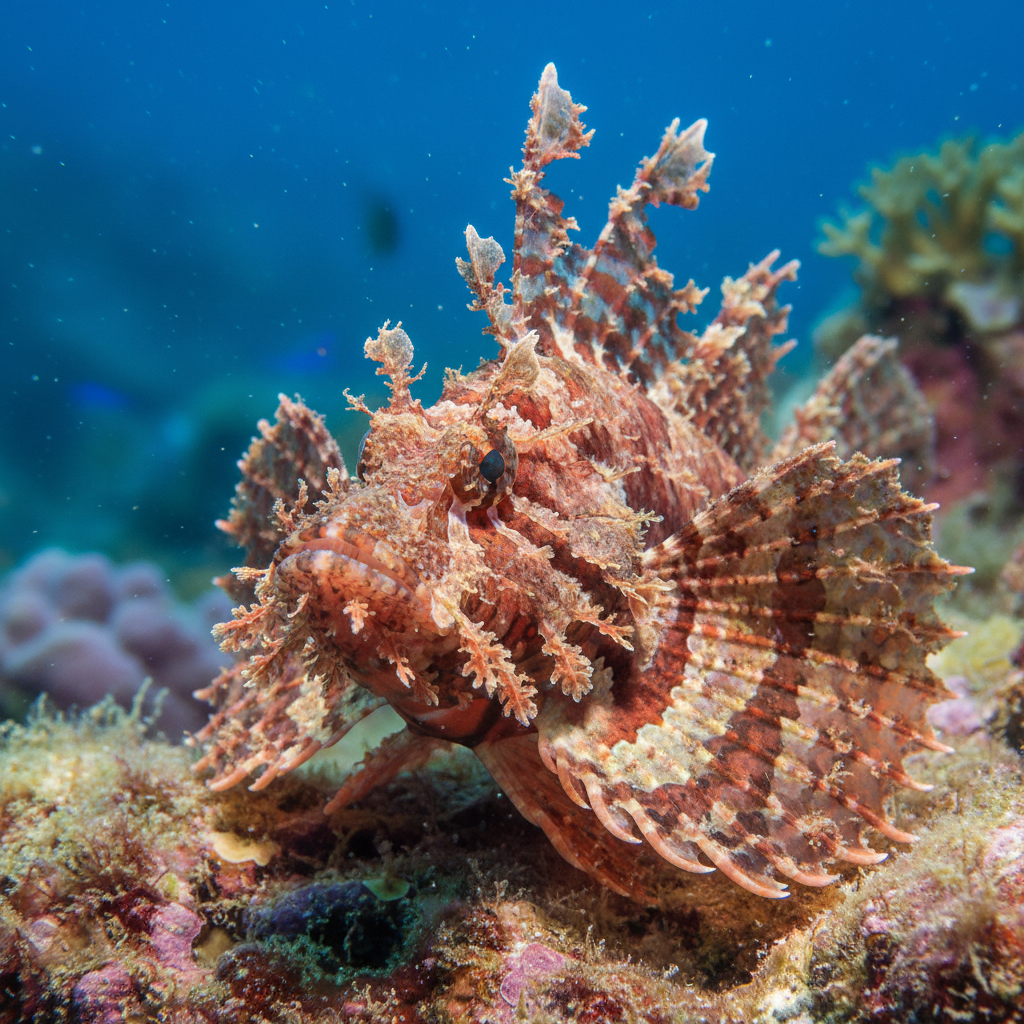
The Leaf Scorpionfish (Taenianotus triacanthus) is a master of biological mimicry, defined by its flat, leaf-like body and its uncanny ability to sway in the current like a piece of drifting debris.
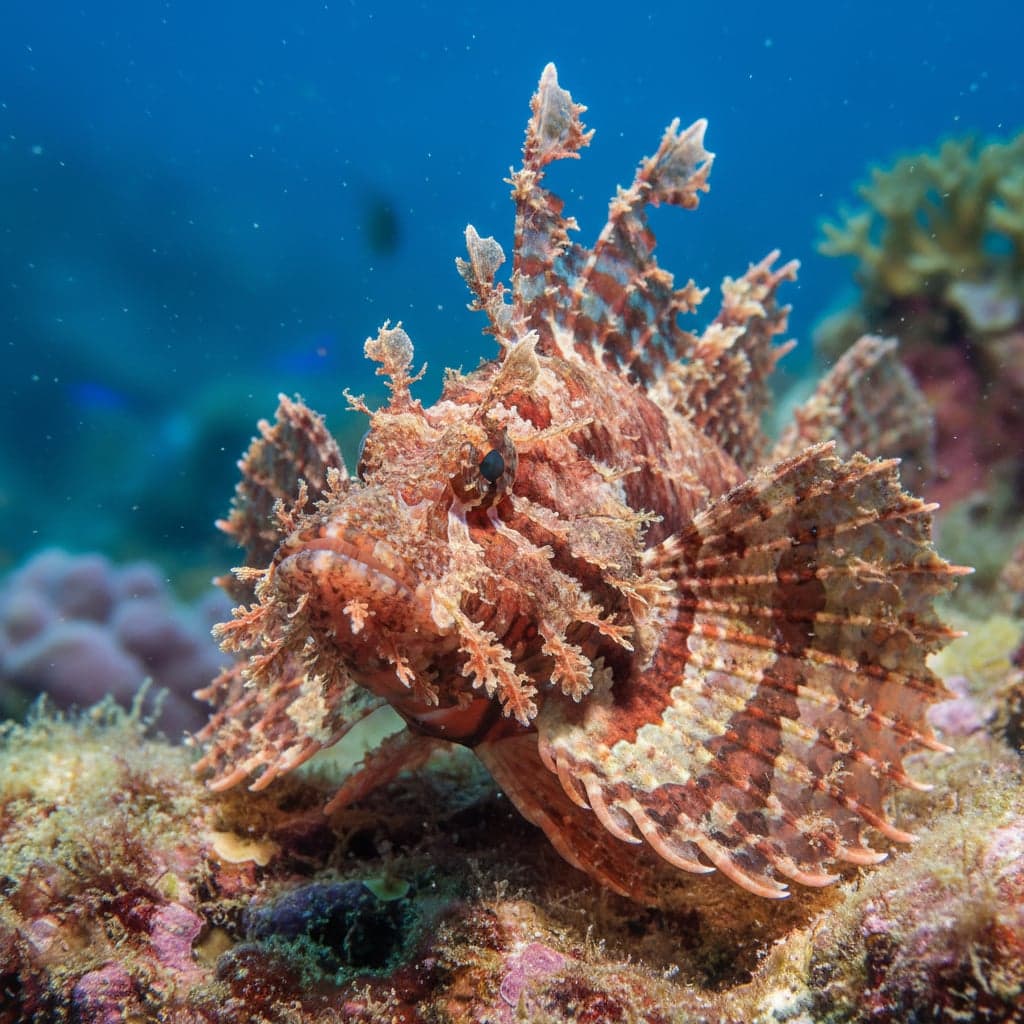
The Leaf Scorpionfish (Taenianotus triacanthus), also known as the Paperfish, is one of the reef's most sophisticated deceivers. It is defined by its extremely compressed, blade-like body and a high, continuous dorsal fin that mimics the ragged edge of a dead leaf or piece of seaweed. Its most extraordinary feature is its "swaying" locomotion: even when sitting still on a rock, the fish will rock rhythmically from side to side to simulate the natural movement of debris in a surge. For the specialized marine aquarist, the Paperfish is a living lesson in evolution—a stationary piece of art that remains perfectly motioness until a tiny shrimp or fish wanders just inches from its massive, gulping mouth.
In the aquarium, they are fascinating but largely inactive. They do not "swim" in the traditional sense; instead, they "walk" across the substrate and rocks using their reinforced pectoral fins, moving only when necessary to find a better ambush point.
Natural Habitat & Origin
Taenianotus triacanthus is widely distributed throughout the Indo-Pacific, from East Africa to the Galapagos Islands and north to the Ryukyu Islands. They are shallow-reef specialists, typically found on coral reef flats or in surge zones at depths of 1 to 20 meters. These areas are characterized by constant wave action and high debris, which provides the perfect "noise" for their mimicry to be effective. Interestingly, they are often found in pairs or small groups in the wild, each fish often displaying a completely different color morph (from bright yellow to mottled brown or ghostly white) to better blend with the local flora.
Care Requirements
The Leaf Scorpionfish is a hardy species but requires specialized feeding and a quiet environment. A minimum tank size of 30 gallons (110L) is sufficient, provided the system is mature and stable.
Maintain stable marine parameters: a pH of 8.1 to 8.4 and a temperature of 75°F to 81°F (24°C to 27°C). CRITICAL SAFETY NOTE: This fish possesses highly venomous dorsal spines. Extreme caution must be used during maintenance or when moving the fish; a sting is extremely painful and can cause severe systemic reactions. The aquarium should feature plenty of rockwork and macro-algae, giving the fish a variety of textures to mimic. They prefer moderate, surge-like flow that allows them to exhibit their natural swaying behavior.
Unique Behavior: Moulting
Unlike almost any other fish, the Leaf Scorpionfish regularly sheds its entire outer layer of skin. This "moult" occurs every few weeks and is thought to help remove algae and parasites that accumulate on their stationary bodies. During this time, the fish may appear dull or "cloudy" and will refuse to eat. Do not attempt to help the fish shed; it is a natural process that ensures their "leaf" camouflage remains convincing and functional.
Diet & Feeding
They are strictly ambush predators, feeding primarily on tiny shrimp and small fish.
In captivity, the primary challenge is transitioning them to non-live foods:
- They should be initiated with live ghost shrimp or very small feeder fish.
- With patience, they can often be trained to take "stationary" frozen foods (like silversides or large Mysis) using a feeding stick to wiggle the food in front of them.
- Tip: They have a very slow metabolism. Do not feed them every day; 2 to 3 times per week is sufficient to maintain their weight without polluting the water.
- They have a massive "vacuum" mouth; any fish or shrimp small enough to fit in their mouth will eventually be eaten.
Behavior & Temperament
They are strictly peaceful toward anything they cannot eat. They will ignore corals and larger fish entirely. They are solitary by nature but can be kept in pairs in a medium-sized tank. Because they are so stationary, they are easily bullied by aggressive tank mates or outcompeted for food by fast-swimming species like Tangs or Wrasses. They are best kept in specialized "predator" nano tanks or quiet reef systems.
Tank Mates
Suitable tank mates are other peaceful species that are too large to be eaten:
- Larger Clownfish and Cardinalfish
- Blennies and Gobies
- Larger marine shrimp (with caution, as large Paperfish can be ambitious)
- other sedentary species like Frogfish (in larger systems)
Avoid keeping them with aggressive Dottybacks, large triggerfish, or any species that might nipped at their delicate, leaf-like fins.
Breeding
Breeding the Leaf Scorpionfish in captivity is rare. They are pelagic spawners. In the wild, pairs will rise into the water column at night to release eggs and sperm. While courtship is occasionally seen in stable reef systems, successfully rearing the pelagic larvae is a sophisticated task requiring specialized live foods that has not been standardized in the home aquarium.
Common Health Issues
The primary health concern is starvation due to a failure to transition to prepared foods. They are also susceptible to bacterial infections if their "skin shedding" process is interrupted by poor water quality. Maintaining a quiet, stable environment with a protein-rich, infrequent diet is the best way to ensure the prehistoric-looking Leaf Scorpionfish remains the master of mimicry in your reef.