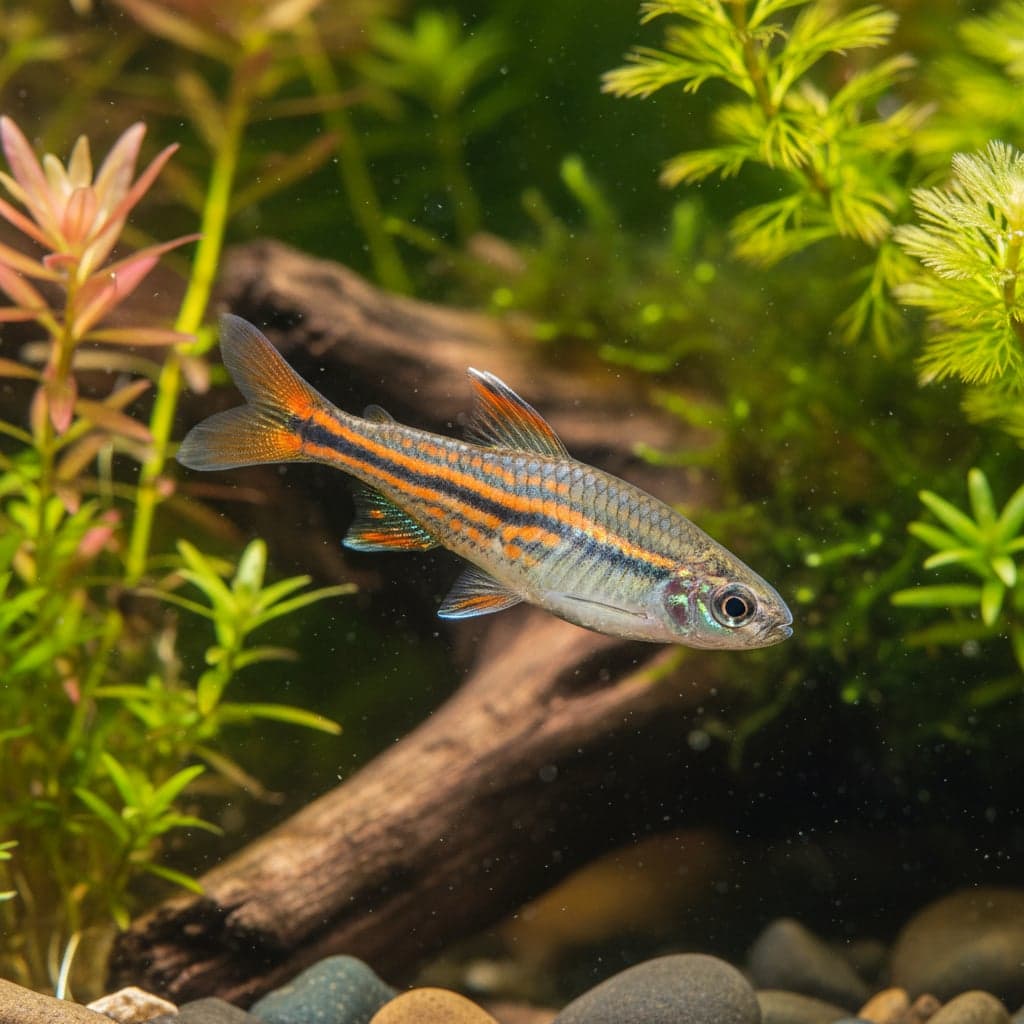
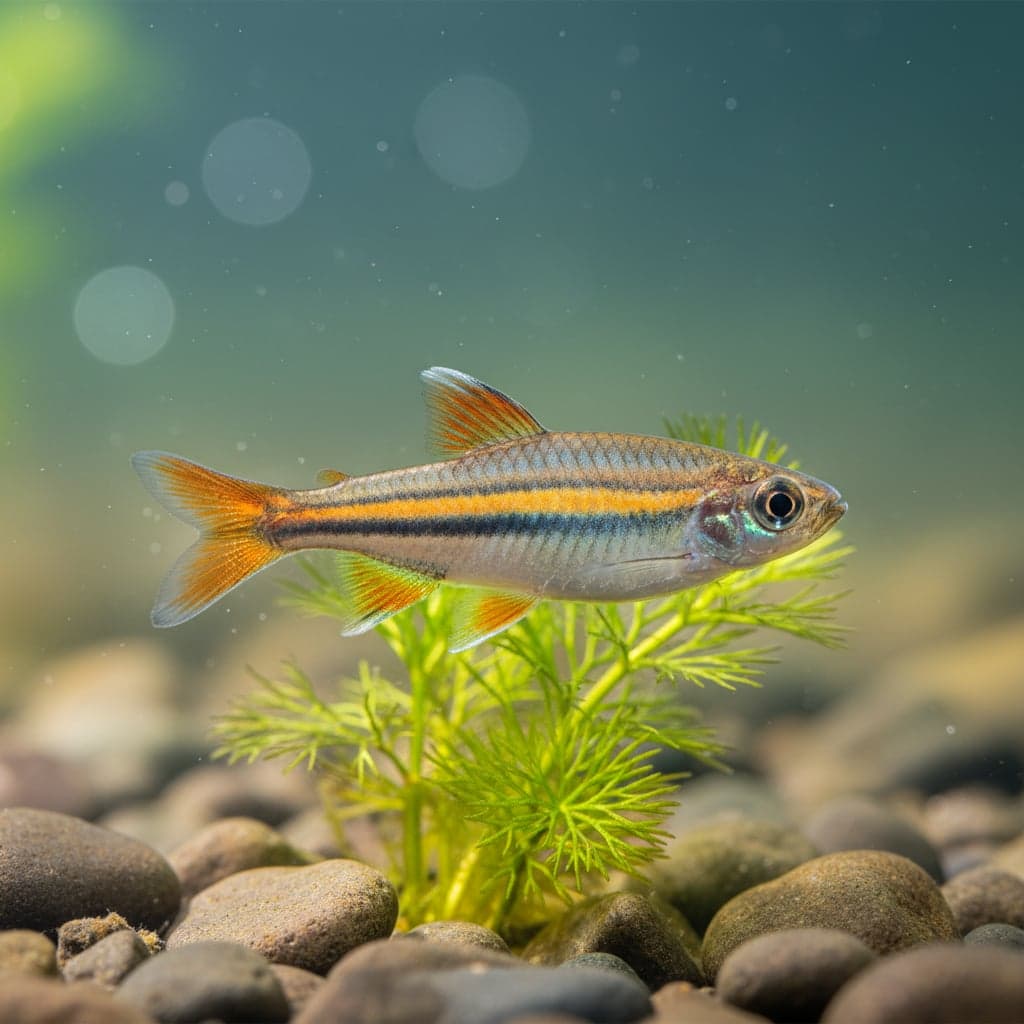
Leopard Danio: Danio rerio var. frankei
The Leopard Danio (Danio rerio var. frankei) is a tiny, hardy, spotted form of the zebra danio — a fast, peaceful schooling fish ideal for beginner community tanks.
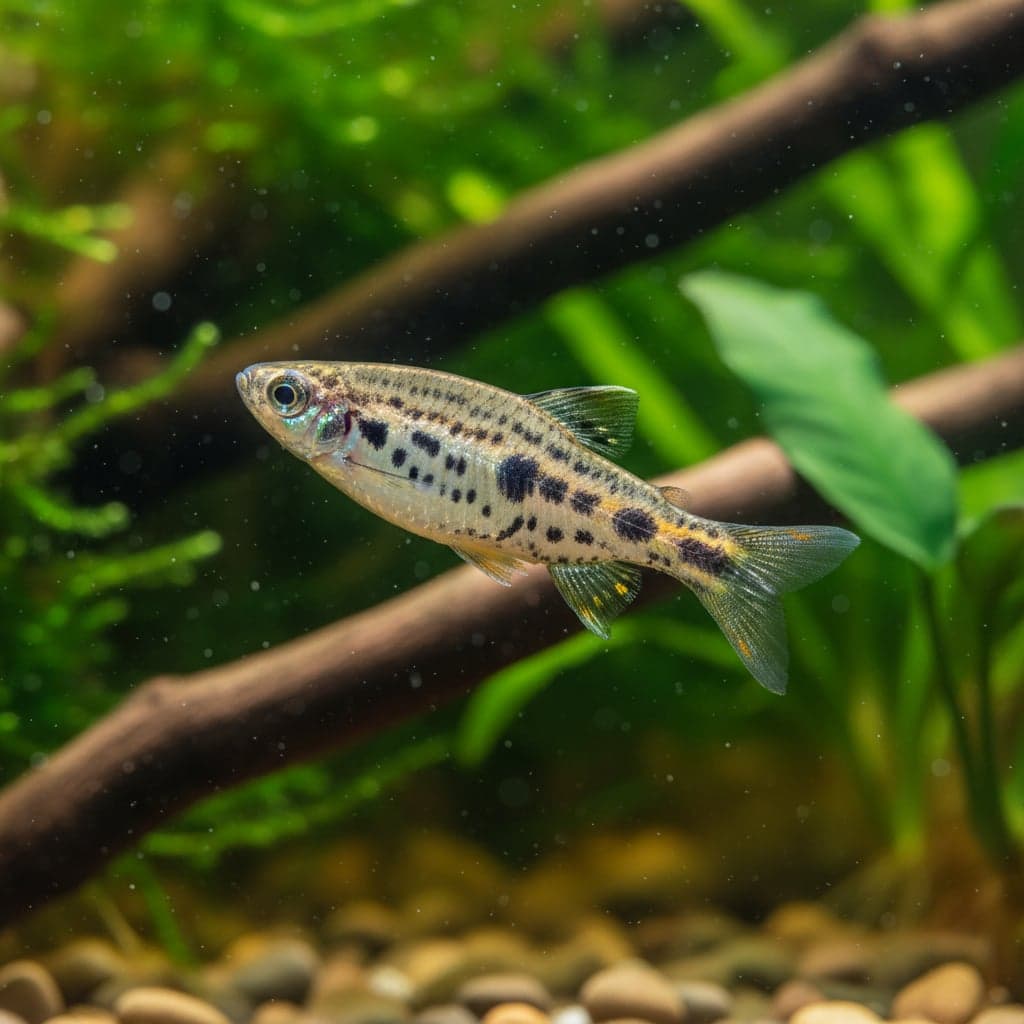
Leopard Danio
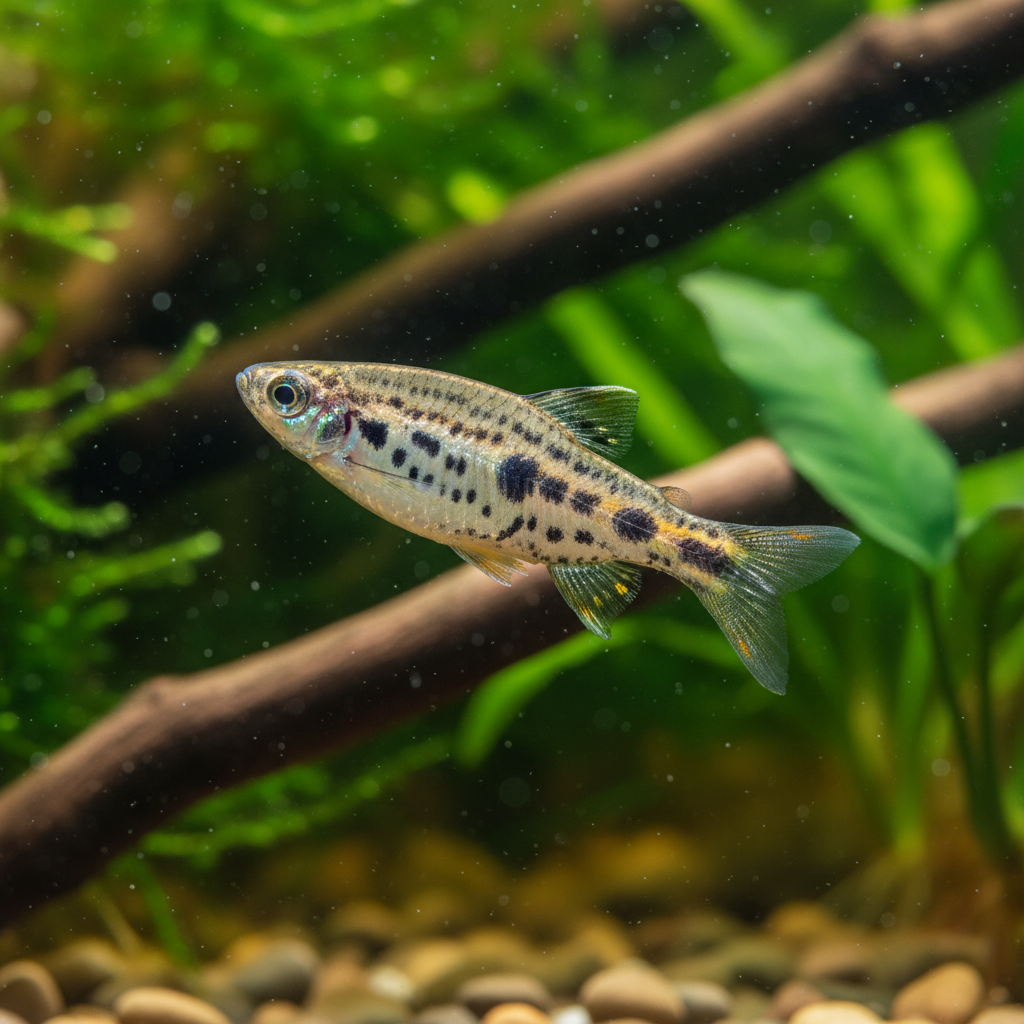
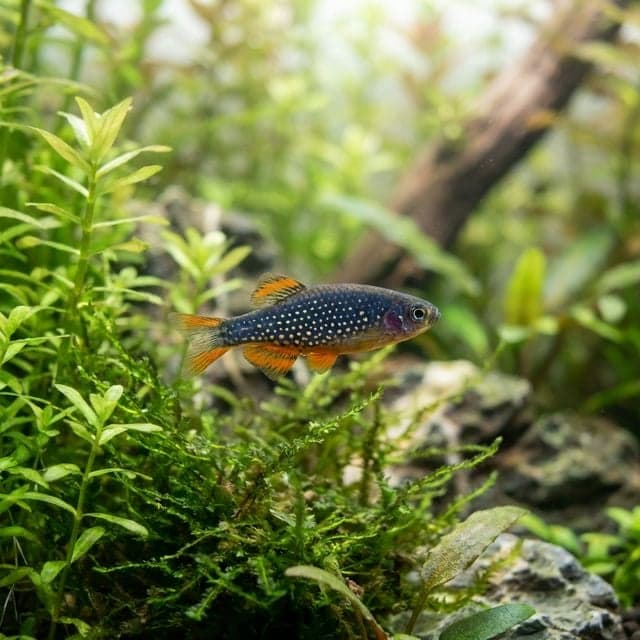
The Leopard Danio (Danio rerio var. frankei) is a spotted colour form of the familiar zebra danio — instead of the wild type's horizontal stripes, it wears a fine peppering of dark spots over a gold-bronze body. Tiny, tireless and almost indestructibly hardy, it is one of the classic beginner fish, darting in energetic shoals near the top of the tank. It is the same species as the zebra danio, simply a long-established aquarium variety.
Cheap, lively and forgiving, it is a superb first fish and a great way to bring movement to a community aquarium.
Natural Habitat & Origin
The zebra danio (and its leopard form) originates from South Asia, where wild fish live in streams, rice paddies, ditches and slow rivers — variable, often cooler waters. This adaptable background is exactly why the fish tolerates such a wide range of aquarium conditions. The leopard form itself is an aquarium-developed variety rather than a separate wild population.
In the aquarium it appreciates open swimming space near the surface, some planting around the edges, and a current it can play in.
Care Requirements
Provide clean water with a pH of around 6.5–7.5 and a temperature of about 18–25°C (64–77°F) — notably, it tolerates cooler temperatures than most tropicals and can even suit an unheated room in a temperate climate. A tank of around 60 litres (about 15 US gallons) or more suits a proper shoal, with a secure lid, as danios are accomplished jumpers. It is extremely hardy and forgiving of beginner mistakes.
Diet & Feeding
The Leopard Danio is an omnivore that eats small invertebrates, insect larvae and plant matter in the wild. In the aquarium it readily takes good-quality flake and micro-pellets, supplemented with frozen or live foods such as daphnia, bloodworms and brine shrimp. Feed small amounts once or twice a day; it is an eager, undemanding feeder.
Behavior & Temperament
This is a peaceful, highly active shoaling fish that should be kept in a group of at least six — ideally more — to feel secure and show natural behaviour. In too small a group it may become nippy. It spends its day zipping around the upper levels of the tank, bringing constant energy to a community.
Tank Mates
Good companions are other peaceful community fish of similar size — other danios, rasboras, small tetras, corydoras catfish and peaceful barbs. Avoid very slow or long-finned fish that the danios' restless energy might stress or fin-nip. Its activity and hardiness make it an easy fit for most peaceful community tanks.
Breeding
The zebra danio (Danio rerio var. frankei) is one of the easiest egg-scattering fish to breed and a famous laboratory model organism. A well-conditioned group will scatter eggs over plants or substrate; providing a layer of marbles or a spawning mop protects the eggs from being eaten. The fry are small but straightforward to raise on fine foods.
Common Health Issues
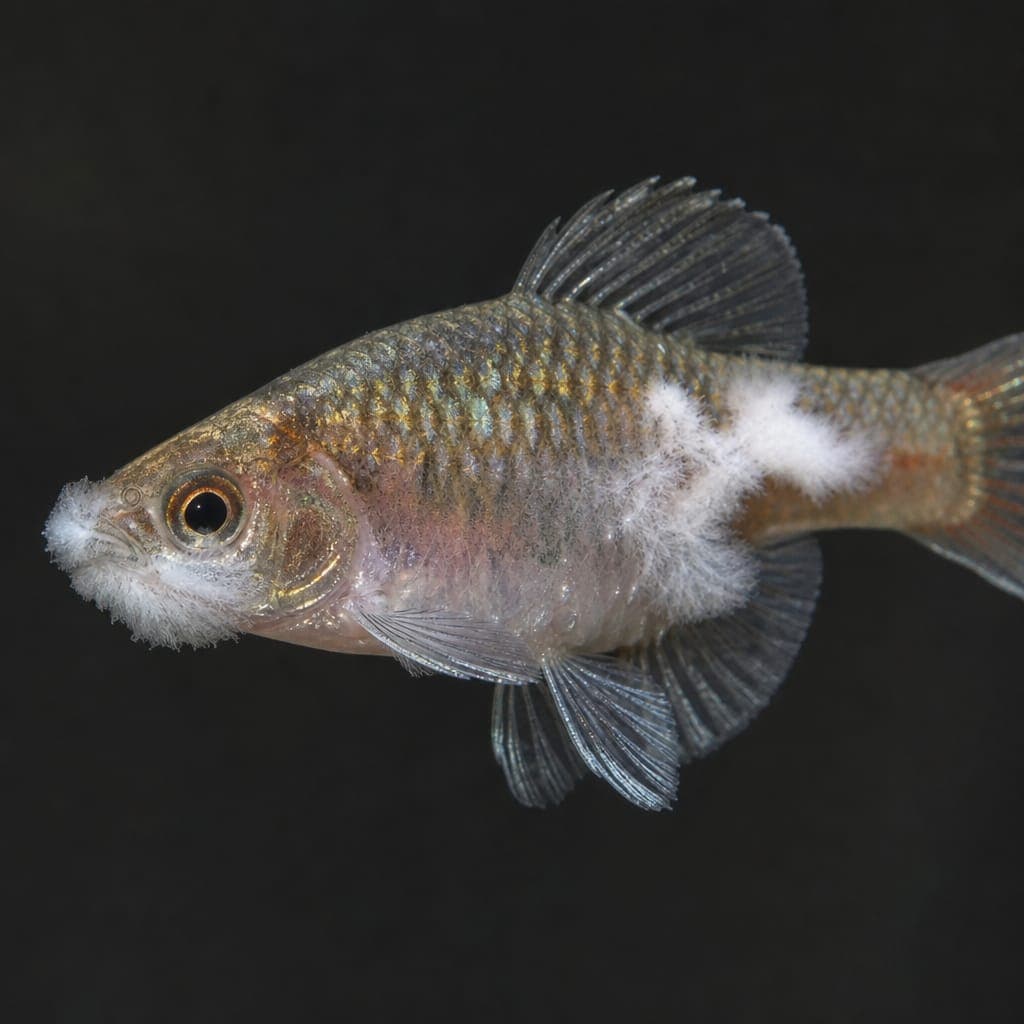
The Leopard Danio is among the hardiest aquarium fish, but it can still be affected by white spot (Ichthyophthirius multifiliis) and the usual bacterial and fungal issues in poor water. Maintain clean, stable water, keep it in a proper shoal to reduce stress, and secure the lid against jumping. Given those basics it is a dependable, long-lived and beginner-friendly addition to a community aquarium.