Longfin Anthias: Pseudanthias ventralis
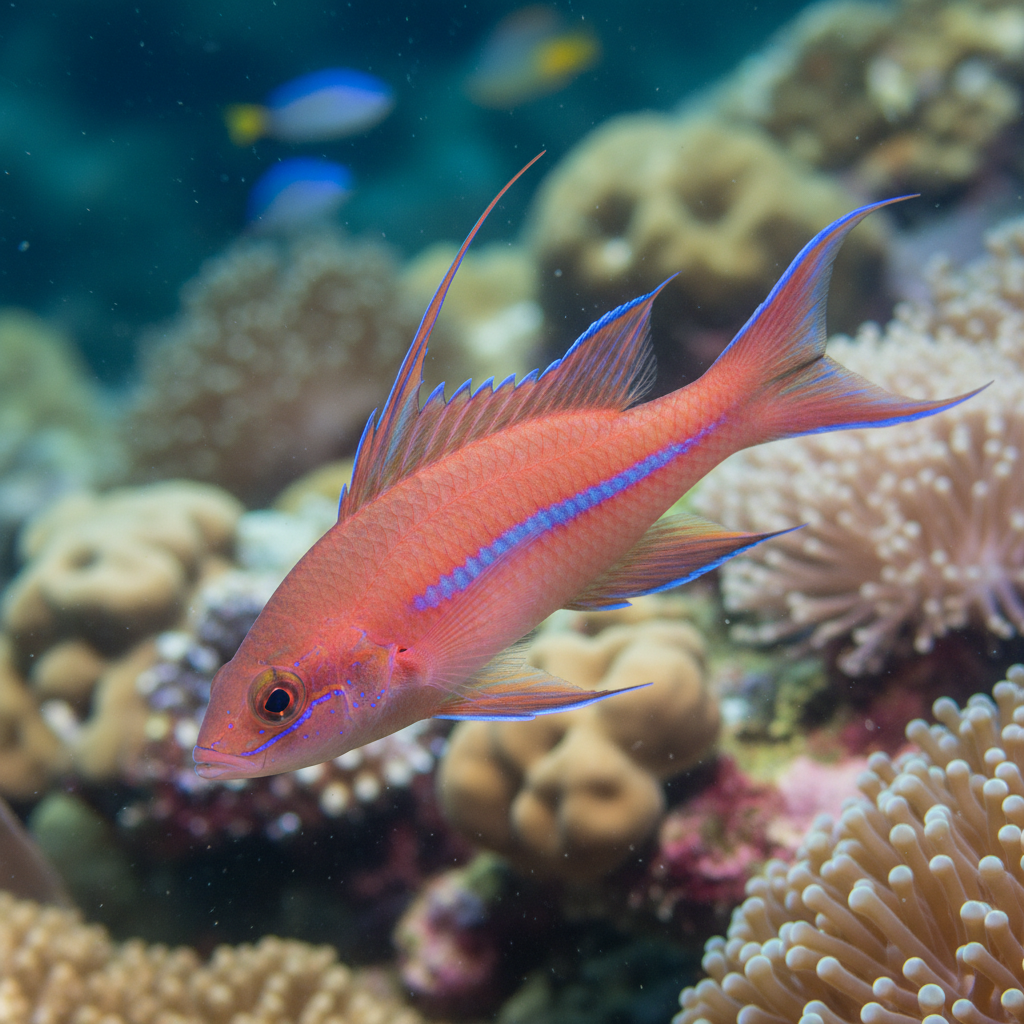
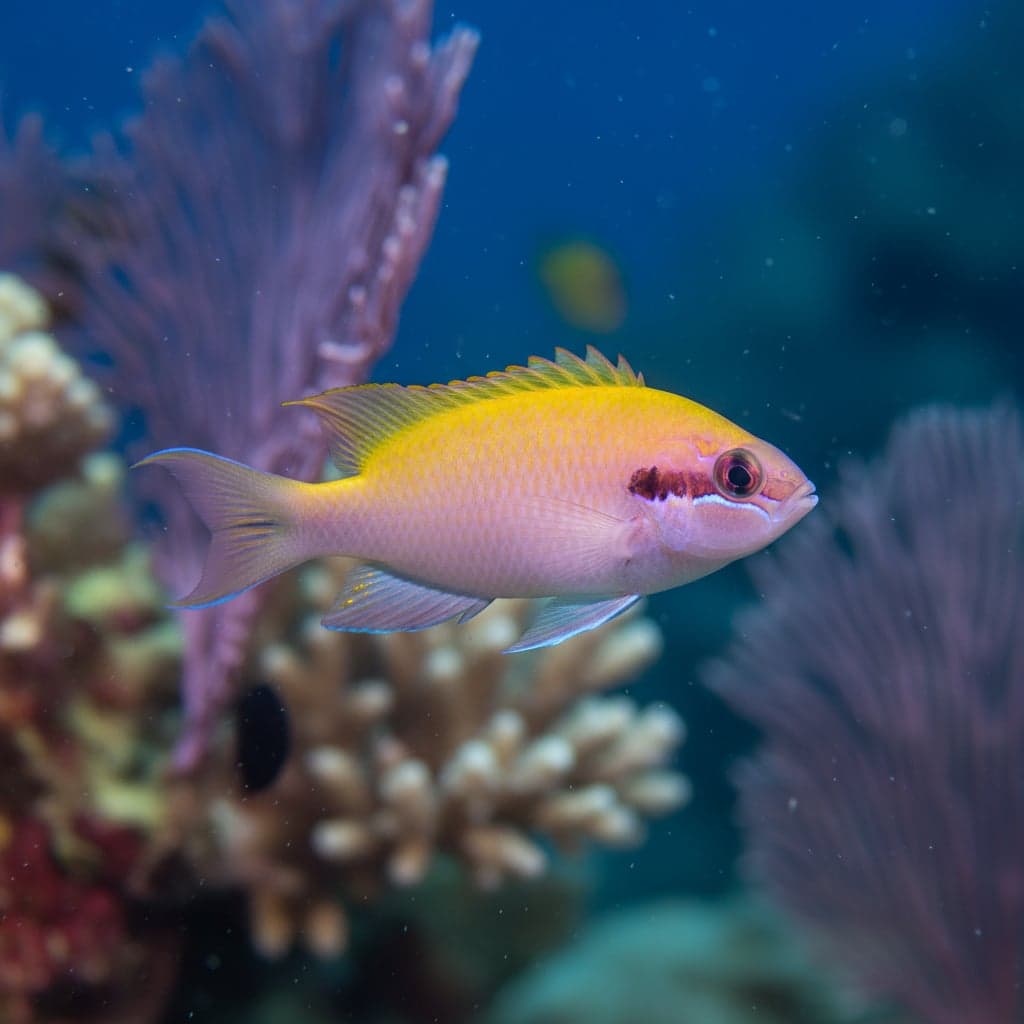
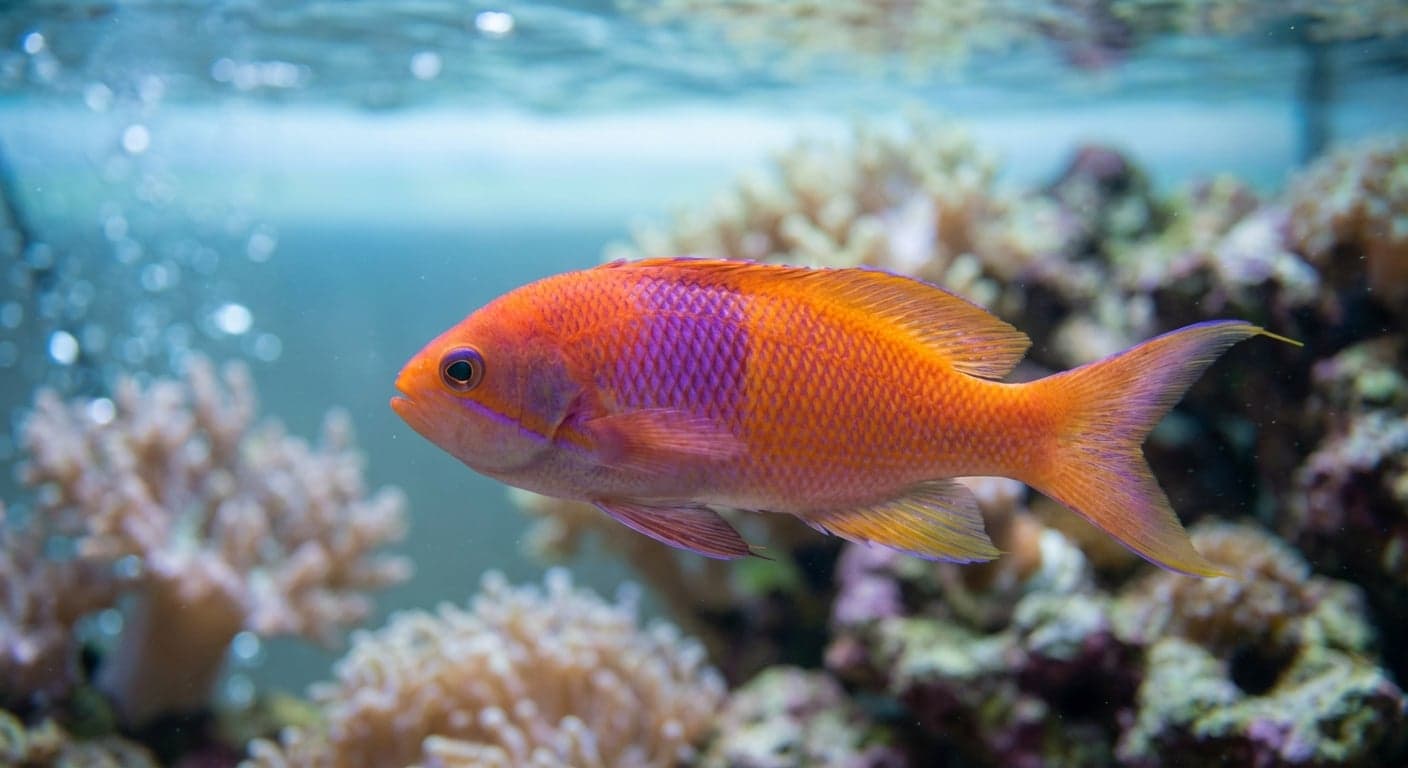
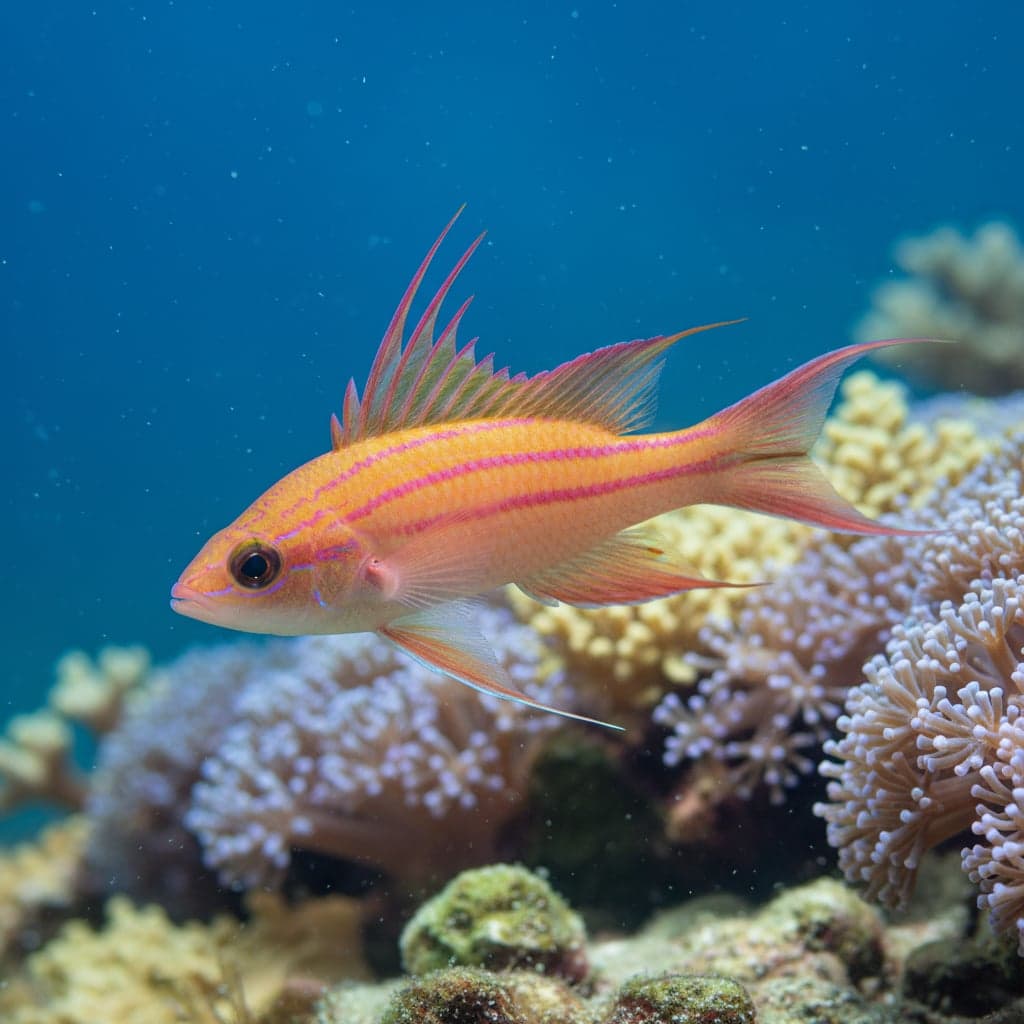
The Longfin Anthias (Pseudanthias ventralis) is a jewel of the deep reef, defined by its stunning gradient of purple, yellow, and red, and its magnificent, filamentous pelvic and dorsal fins.

The Longfin Anthias (Pseudanthias ventralis), often called the Deep-water Anthias, is one of the most coveted and visually striking members of the subfamily Anthiadinae. It is defined by its intricate mosaic of electric purple, vibrant yellow, and sunset orange, which shifts in intensity depending on the social status of the individual. Its most signature feature is the extraordinarily elongated, filamentous pelvic and dorsal fins of the males, which they use in mesmerizing "flashing" displays during territorial sparring or courtship. Unlike many common Anthias, this is a high-sensitivity, deep-water specialist that requires a dedicated environment to maintain its brilliant coloration and cryptic behavior.
In the aquarium, they are the definition of "dynamic elegance." They are best kept in a shoal where the constant movement of their flowing fins and the shifting hierarchies of the group create a true masterpiece of reef activity.
Natural Habitat & Origin
Pseudanthias ventralis is widely distributed across the Western and Central Pacific, ranging from the Ryukyu Islands to the Great Barrier Reef and the Cook Islands. They are deep-water reef specialists, typically found at depths of 40 to over 100 meters (130-330 ft). They inhabit steep outer reef slopes, drop-offs, and caves where the light is dim and the water is consistently cool and rich in zooplankton. They are usually found in large, loose shoals hovering just outside the safety of deep overhangs, where they feed on the planktonic "soup" carried by the currents.
Care Requirements
The Longfin Anthias is an Advanced-difficulty species primarily because of its deep-water origins and its requirement for frequent manual feeding. A minimum tank size of 40 gallons (150L) is required for a small shoal.
Maintain stable parameters: a pH of 8.1 to 8.4 and a temperature of 70°F to 78°F (21°C to 26°C). CRITICAL CARE NOTE: They are highly sensitive to bright light. The aquarium should feature plenty of shaded areas, caves, and overhangs using stable live rock structures. Moderate to low lighting is essential to prevent stress and ensure they feel secure enough to feed. They also require high-volume filtration and strong, laminar current to simulate the oxygen-rich, nutrient-dense environments of the reef wall. TIP: They are prone to decompression issues; ensure you are purchasing specimens from a reputable source that practices proper deep-sea capture and acclimation protocols.
Diet & Feeding
They are zooplanktivorous carnivores, naturally feeding on tiny crustaceans, fish larvae, and other planktonic organisms.
In captivity, their fast metabolism and deep-water origins make them high-maintenance feeders:
- They SHOULD be fed at least 3-4 times per day to prevent wasting (starvation).
- They MUST have frequent offerings of high-quality frozen foods: Vitamin-enriched Mysis shrimp, Calanus, and Cyclops are essential.
- Tip: They are "sight" feeders. Offering live Brine Shrimp or Copepods can be very effective at triggering an initial feeding response in newly introduced individuals.
- They rarely accept dry foods initially, but can sometimes be transitioned to high-protein micro-pellets over time.
Behavior & Temperament
They are peaceful and extremely shy. They MUST be kept in a group (1 male to 4+ females) to feel secure; a solitary individual will often hide indefinitely and eventually starve. They are protogynous hermaphrodites, where the dominant female in the group will transition into a male if the primary male is lost. They spend the majority of their time "hovering" near the entrance of caves or beneath overhangs, retreating into the rockwork at the slightest sign of danger.
Tank Mates
Suitable tank mates are other peaceful, non-aggressive reef species:
- Fairy Wrasses and Flasher Wrasses
- Firefish and Dartfish
- Bicolor Blennies or Cardinalfish
- Peaceful Tangs (in larger setups)
- All corals (Reef Safe)
Avoid keeping them with aggressive, fast-moving, or boisterous fish (like large DOTTYBACKS, Damsels, or aggressive Triggers) that will outcompete them for food or bully them back into the shadows.
Breeding
Breeding Pseudanthias ventralis in captivity is exceptionally rare. In the wild, they are pelagic spawners, usually breeding in pairs at dusk. The eggs and larvae drift with the plankton. Their deep-water requirements and complex larval development stages make them nearly impossible to reproduce in a standard closed aquarium system.
Common Health Issues
The primary concern is Nutritional Deficiencies and Decompression Sickness. They are also prone to Uronema and Marine Ich (Cryptocaryon) if stressed. Maintaining a cool, low-light environment with very frequent high-quality feedings is the best way to ensure the exquisite and rare Longfin Anthias remains a healthy, vibrant centerpiece of your deep-reef display.