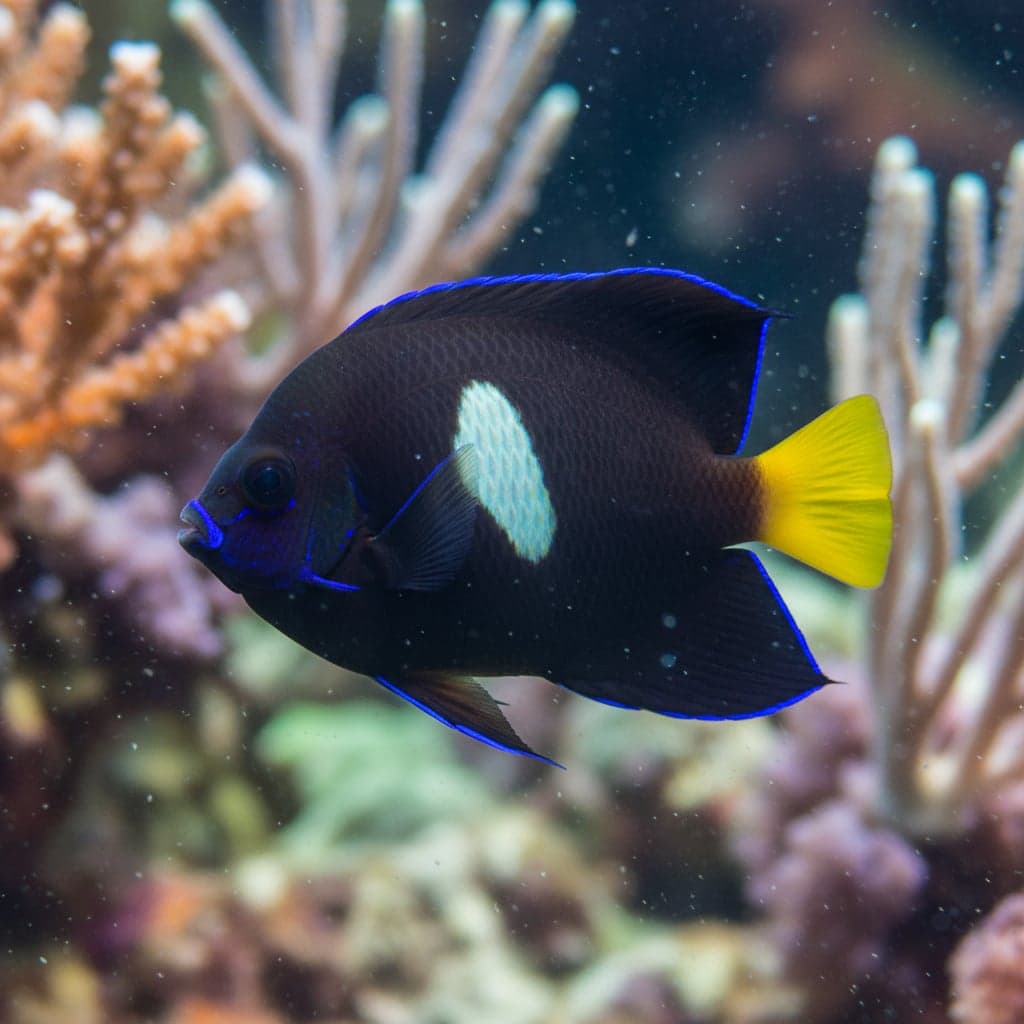
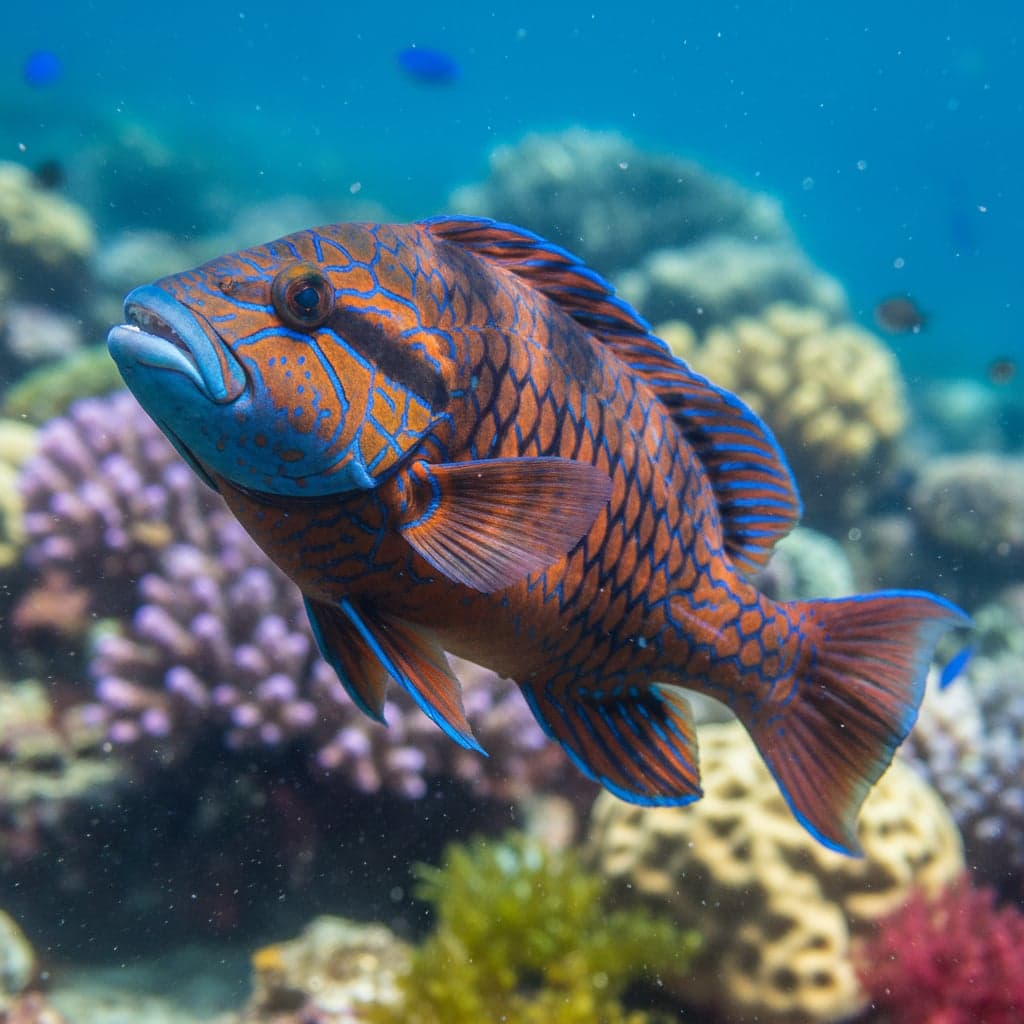
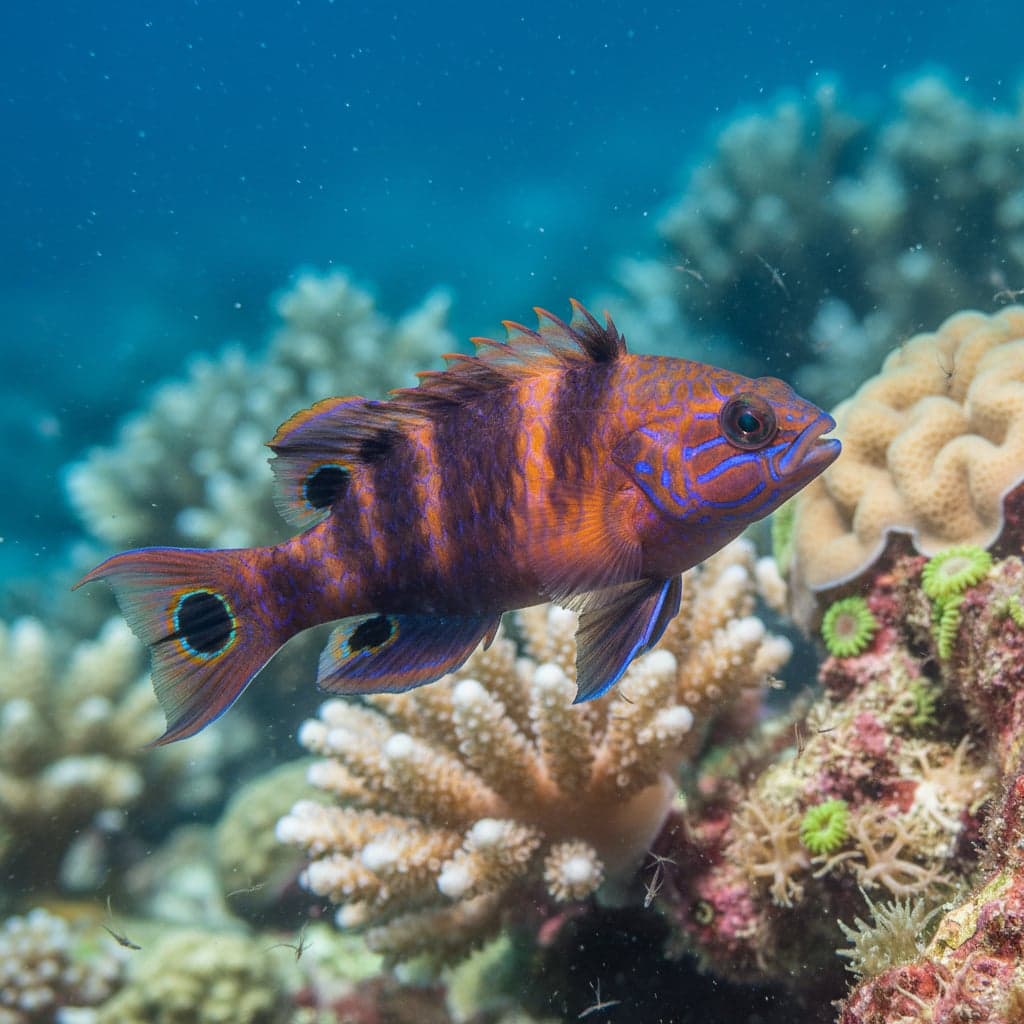
Longnosed Hawkfish: Oxycirrhites typus
The Longnosed Hawkfish (Oxycirrhites typus) is an icon of the reef, legendary for its red-and-white 'plaid' pattern and its unique habit of perching on high corals to survey its territory.

The Longnosed Hawkfish (Oxycirrhites typus)—often spelled Longnose Hawkfish—is the definition of "reef character." It is defined by its striking red-and-white grid or 'plaid' pattern that covers its entire body and its exceptionally long, tapered snout. Unlike most fish that swim constantly, the Hawkfish lacks a swim bladder and is a specialized percher; it uses its thickened, finger-like pectoral fin rays to "grip" onto corals, gorgonians, and rocks. It spends its day as a vigilante of the reef, sitting motionless on a high vantage point and watching the water column with independently moving eyes before launching a lightning-fast ambush on passing prey.
In the aquarium, they are the "watchmen." They are inquisitive, hardy, and possess a distinct personality that often makes them more like a pet than a specimen.
Natural Habitat & Origin
Oxycirrhites typus is widely distributed across the Indo-Pacific, from the Red Sea and East Africa to the Gulf of California. They are reef-wall specialists, typically found at depths of 10 to 100 meters. They have a strong symbiotic preference for Gorgonians (Sea Fans) and Black Corals, where their checkered pattern provides perfect camouflage against the complex branches. They are solitary hunters, establishing a specific "home" perch that they will defend against other hawkfish while remaining largely indifferent to other species.
Care Requirements
The Longnosed Hawkfish is an Intermediate-difficulty species because, while hardy, it has a high jumping risk and specific predatory instincts. A minimum tank size of 30 gallons (120L) is required for an adult.
Maintain stable marine parameters: a pH of 8.1 to 8.4 and a temperature of 75°F to 82°F (24°C to 28°C). CRITICAL CARE NOTE: They are notorious jumpers. The aquarium MUST have a tight-fitting lid or mesh cover, especially if they are startled or during the night. The setup should focus on vertical rockwork and high perching spots. Providing a Sea Fan (live or artificial) or branching corals like Acropora will satisfy their natural perching instinct and drastically reduce their stress. TIP: They are "ambushers"; ensure the tank has moderate to high flow to keep the water well-oxygenated.
Diet & Feeding
They are carnivorous ambush predators, naturally feeding on small crustaceans and occasionally very small fish.
In captivity, they are active feeders with a robust appetite:
- High-quality marine pellets and flakes will often be accepted once acclimated.
- They MUST have frequent meaty foods: Mysis shrimp, Brine shrimp, and finely chopped seafood (shrimp, scallop).
- Tip: They are "plankton-pickers" in the wild. Offering food into the current and watching them "dash" from their perch is one of the highlights of keeping them.
- They have a high metabolism; feeding twice a day is recommended to maintain their lean, muscular profile.
Behavior & Temperament
They are semi-aggressive and territorial towards other Hawkfish. In a standard home aquarium, they should be kept as solitary specimens. They are generally peaceful towards larger fish, but their "watchful" nature can be intimidating to very shy bottom-dwellers. They are "reef-safe" with corals, but they view small ornamental shrimp and very small crabs as food. If you have prized Peppermint or Sexy shrimp, the Longnosed Hawkfish is not a suitable tank mate.
Tank Mates
Suitable tank mates are other robust reef species:
- Tangs and Angelfish
- Anthias and Chromis
- Clownfish and Dottybacks
- Blennies and Gobies (too large to be eaten)
- All corals
Avoid keeping them with very small, slender shrimp or very small, placid fish that may fit in their mouths. Never keep them with other Hawkfish species unless the tank is very large (500L+).
Breeding
Breeding Oxycirrhites typus in captivity is rare but documented. They are pelagic spawners, typically breeding in pairs during the twilight hours. The male and female perform a spiraling ascent into the water column to release eggs and sperm. The resulting larvae are planktonic and require specialized, high-intensity live foods to rear, making them a significant challenge for the home hobbyist.
Common Health Issues
They are exceptionally hardy and resistant to many common diseases. The primary concern is Physical Injury from jumping or "Internal Parasites" in wild-caught specimens. Maintaining a covered, well-structured reef environment with a high-protein diet is the best way to ensure the iconic and intelligent Longnosed Hawkfish remains a healthy, vigilant part of your marine display.